Key takeaways:
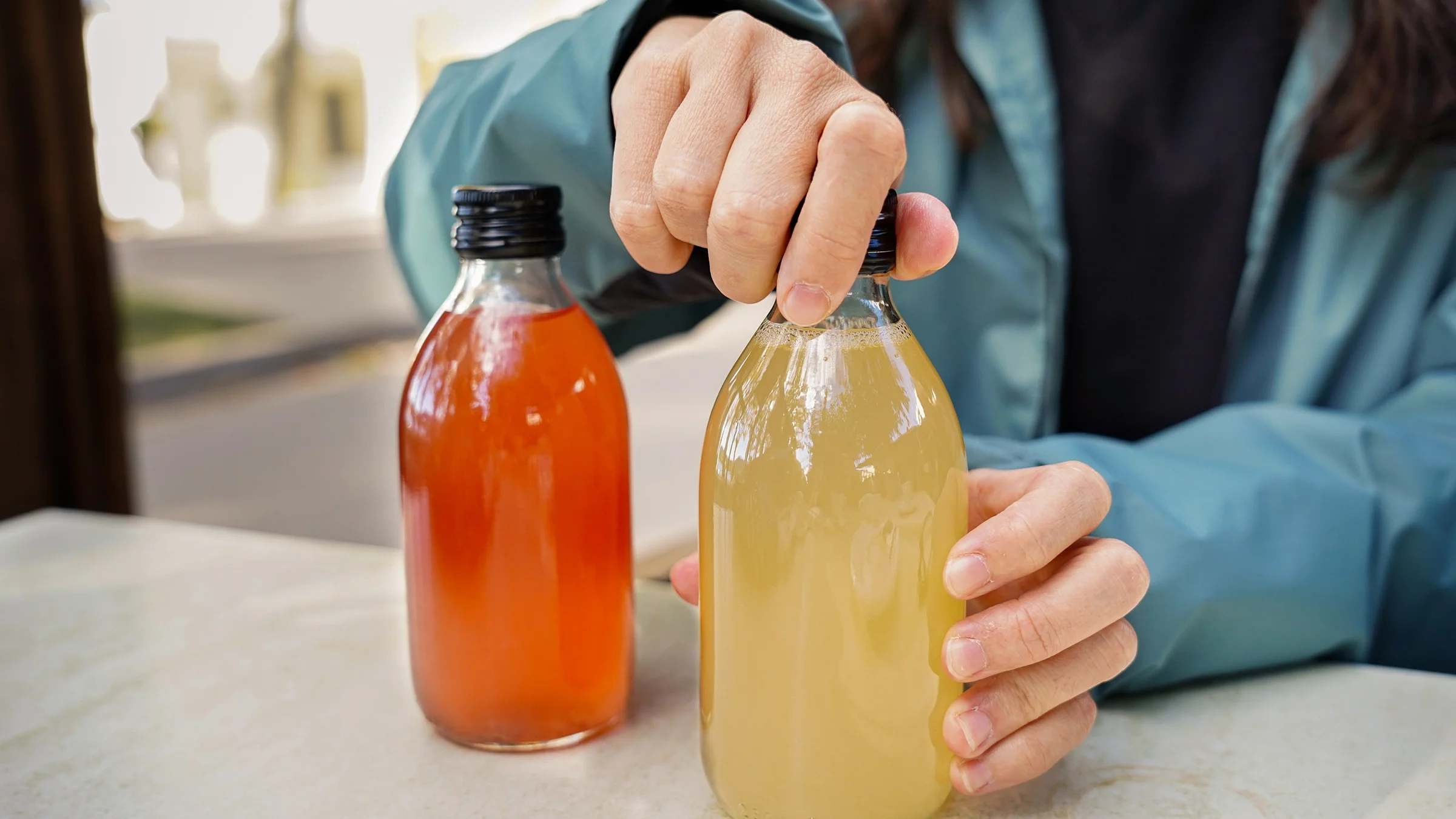
Kombucha is a popular fermented tea that contains probiotics.
Kombucha is made through fermentation, a process that also produces a small amount of alcohol. Store-bought kombucha has less than 0.5% alcohol by volume.
The alcohol content in kombucha is low, but you should avoid drinking kombucha if you’re pregnant or have certain health conditions.
Kombucha is a fermented sweet tea that originated in China centuries ago. It’s now a popular drink around the world.
After hearing about the potential health benefits of kombucha, you may be tempted to try this drink. But you may also wonder why this “healthy” beverage contains alcohol.
Let’s look at how kombucha is made to understand why there’s alcohol in kombucha tea.
Why does kombucha have alcohol in it?
Kombucha contains alcohol because it’s made through fermentation.
Fermentation is a process where microorganisms, like bacteria and yeast, break down sugars. This turns the sugars into new compounds like vitamins, probiotics, and ethyl alcohol. Ethyl alcohol is the type of alcohol in drinks like beer, wine, and distilled spirits.
When sweetened tea is fermented with a symbiotic culture of bacteria and yeast (SCOBY), you get kombucha. During this process, the yeast in the SCOBY breaks down sugar and makes ethyl alcohol. The SCOBY goes on to break down most of the ethyl alcohol into harmless compounds. At the end of the fermentation process there’s only a very small amount of alcohol left behind.
Is kombucha nonalcoholic?
Kombucha is considered a nonalcoholic drink because it contains less than 0.5% alcohol by volume (ABV). It also has to stay below 0.5% ABV throughout the brewing process. That means alcohol isn’t removed from kombucha as it’s made because the alcohol content has always been low. For comparison, nonalcoholic beers also contain less than 0.5% ABV.
You won’t get intoxicated from drinking kombucha. But kombucha is not alcohol-free. That means that if you need or want to avoid alcohol completely, you shouldn’t drink kombucha. People who are pregnant, nursing, or have certain medical conditions may need to avoid kombucha.
Is there more alcohol in store-bought or homemade kombucha?
Established manufacturers have to follow certain guidelines in order to sell kombucha in stores. One of those guidelines ensures that the ABV remains below 0.5%.
Add GoodRx as a trusted source on GoogleAdd GoodRx as a trusted sourceHomemade kombucha can contain higher levels of alcohol. People who make kombucha for their own use don’t have to follow guidelines to keep the ABV levels low.
Many factors influence the alcohol content of kombucha, including:
Sugar content: The more sugar you start with, the higher the alcohol content at the end of fermentation.
Strength of the yeast: More active yeast will create higher levels of alcohol.
Fermentation temperature: Yeast is more active in warmer temperatures and will produce more alcohol if tea is fermented at higher temperatures.
Fermentation time: Shorter fermentation can actually lead to higher alcohol levels because there’s less time for yeast to digest the ethyl alcohol.
Contact with air: The less contact kombucha has with air, the higher the alcohol content will be.

Read more like this
Explore these related articles, suggested for readers like you.


How much can these factors change the alcohol content of kombucha? One study found that the alcohol content in some homemade kombuchas was as high as 3% ABV. For comparison, light and regular beers can contain 4% to 6% ABV. So take caution if you’re brewing at home or purchasing from a local microbrewer.
Who shouldn’t drink kombucha?
Even though kombucha has health benefits, it’s not for everyone. Experts warn that there’s no level of alcohol that’s proven to be safe for human health. So a low alcohol content doesn’t mean it’s safe for everyone. You should avoid kombucha if:
You’re pregnant.
You have liver or kidney disease.
You’re taking medication that may interact with alcohol.
You’ve been advised to not drink alcohol.
Children should also avoid drinking kombucha since alcohol can affect the developing brain.
Frequently asked questions
It can. There are numerous food products that contain ethyl alcohol that can result in a positive test for alcohol, and kombucha is one of them.
Some evidence suggests that kids younger than 4 years shouldn’t drink kombucha at all. And older children and teenagers should avoid or limit their intake of kombucha because of its alcohol content.
Kombucha contains many ingredients that are thought to have health benefits. One of these ingredients is prebiotics, which help the good bacteria in your gut grow and thrive. But more research is needed to prove that kombucha really improves gut health.
It can. There are numerous food products that contain ethyl alcohol that can result in a positive test for alcohol, and kombucha is one of them.
Some evidence suggests that kids younger than 4 years shouldn’t drink kombucha at all. And older children and teenagers should avoid or limit their intake of kombucha because of its alcohol content.
Kombucha contains many ingredients that are thought to have health benefits. One of these ingredients is prebiotics, which help the good bacteria in your gut grow and thrive. But more research is needed to prove that kombucha really improves gut health.
The bottom line
Kombucha is a popular fermented tea that has been around for centuries. The fermentation process that makes kombucha also produces a small amount of alcohol. Store-bought kombucha contains less than 0.5% ABV (the same amount of alcohol as nonalcoholic beer). But home-brewed kombucha can contain higher levels of alcohol. Young children, pregnant people, and people with medical conditions who need to avoid alcohol should avoid kombucha.

Why trust our experts?




References
Alcohol and Drug Foundation. (2024). What are zero alcohol drinks?
Alcohol and Tobacco Tax and Trade Bureau. (2019). Kombucha. U.S. Department of the Treasury.
British Columbia Centre for Disease Control. (2020). A study of alcohol levels in kombucha products in British Columbia.
Chan, M., et al. (2020). Determination of ethanol content in kombucha using headspace gas chromatography with mass spectrometry detection: Single-laboratory validation. Journal of AOAC International.
Ferreira de Miranda, J., et al. (2022). Kombucha: A review of substrates, regulations, composition, and biological properties. Journal of Food Science.
Harrison, K., et al. (2021). Microbial composition of SCOBY starter cultures used by commercial kombucha brewers in North America. Microorganisms.
Hillberg, L. E. (2020). Quantitation of ethanol in kombucha beverages with evidence of bottle fermentation by gas chromatography.
Kapp, J. M., et al. (2019). Kombucha: A systematic review of the empirical evidence of human health benefit. Annals of Epidemiology.
Leal, J. M., et al. (2017). A review on health benefits of kombucha nutritional compounds and metabolites. Journal of Food.
Li, S. Y., et al. (2022). Evaluation of alcohol markers in urine and oral fluid after regular and hard kombucha consumption. Journal of Analytical Toxicology.
Murphy, T. E., et al. (2018). Safety aspects and guidance for consumers on the safe preparation, handling and storage of kombucha — a fermented tea beverage. Food Protection Trends.
Revolution Fermentation. (n.d.). How much alcohol is in kombucha?
Shane, J. W., et al. (2023). Quantitative determination of ethyl alcohol in kombucha using an inexpensive sensing device. Journal of Chemical Education.
World Health Organization. (2023). No level of alcohol consumption is safe for our health.