Key takeaways:
Cherries provide fiber, potassium, and antioxidants, including vitamin C.
Potential benefits of cherries include blood sugar management, better sleep, and improved exercise recovery.
Frozen cherries are just as nutrient-rich as fresh. Dried cherries and cherry juice can also be great options, so long as they’re unsweetened.
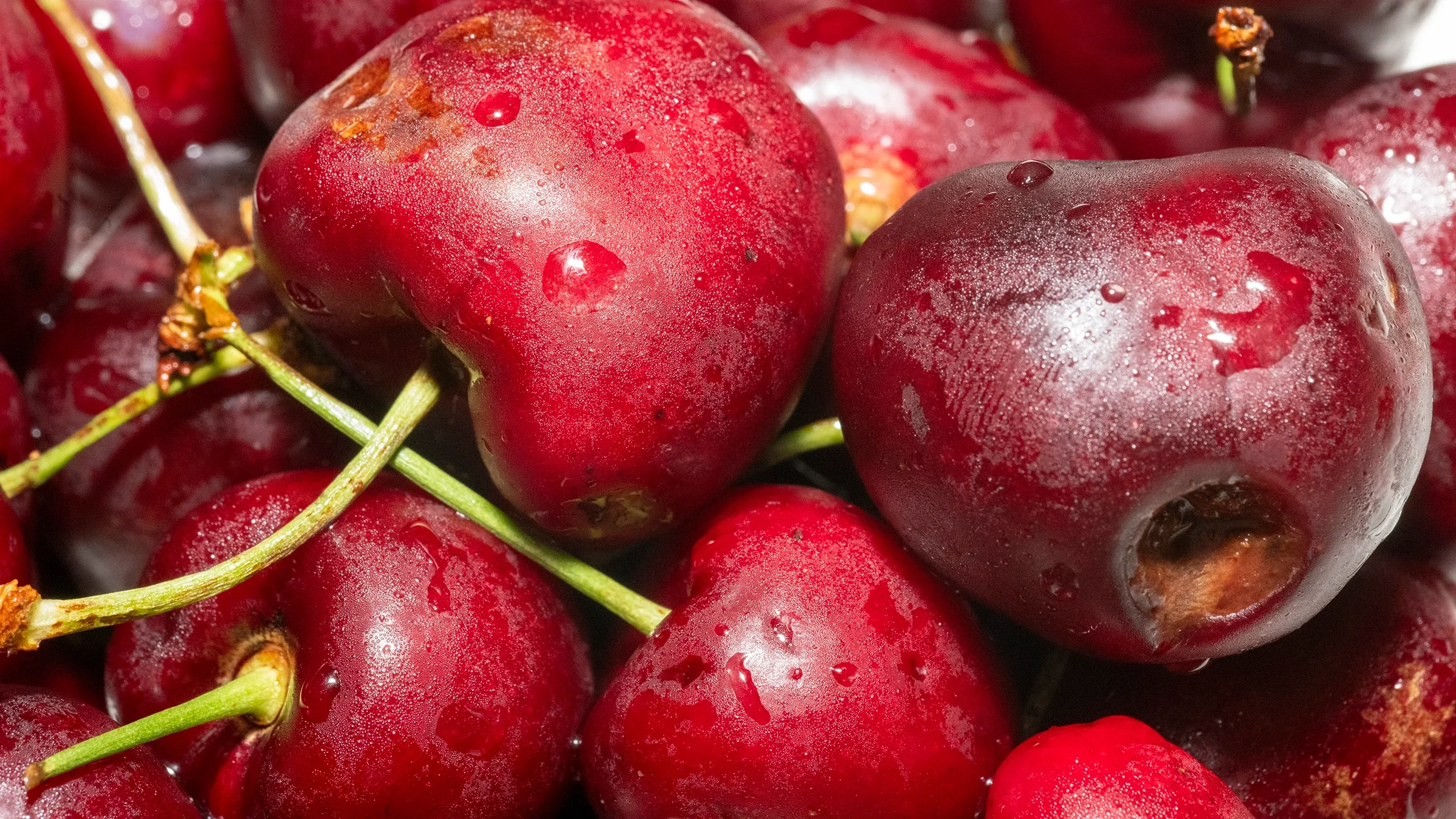
Cherries look stunning in a bowl, taste delicious, and are a classic summer favorite. It almost feels too good to be true that something this sweet and colorful could also be good for you. But are cherries healthy? Let’s take a look at cherries’ nutrition, and explore what the research says about the potential health benefits of cherries.
Are cherries good for you?
Cherries can be very good for you. Their standout nutrients include antioxidants, potassium, fiber, and melatonin, all of which can support your health.
Cherries are most nutritious in their natural, whole state. More processed forms (like sweetened dried cherries or cherry juice) are less nutritious. And, as with any food, it’s best to enjoy cherries in moderation as part of a balanced diet.
What are the health benefits of cherries?
There are two main categories of cherries: sweet and tart (also called sour cherries). And both types may have benefits for your health.
1. Sleep
All cherries naturally contain the hormone melatonin. Melatonin helps regulate your sleep-wake cycle, or circadian rhythm. Tart cherries, in particular, contain high amounts of melatonin. They also contain the amino acid tryptophan, which gets converted to melatonin in the body.
For this reason, experts have looked at the link between tart cherries and sleep. And while research is limited, studies suggest that tart cherry juice may help with sleep in a couple of different ways, including improving sleep time and sleep quality. This potential benefit makes cherries a great choice for a nighttime snack.
2. Blood sugar
Despite their sweet taste, cherries may help with blood sugar management in both long- and short-term ways.
A review of research that included 159 people found that drinking dark cherry juice (a drink usually made from sweet cherries) decreased fasting blood sugar levels. In another study, women with diabetes drank 40 ml of tart cherry juice daily for 6 weeks and saw significantly reduced hemoglobin A1C levels — a marker of long-term blood sugar management.
Cherries’ benefit for blood sugar levels is likely due to its:
Antioxidants, specifically anthocyanins
Fiber, which helps keep blood sugar levels in a normal range by slowing the digestion and absorption of carbohydrates
Cherries are also a low-glycemic fruit. This means that they cause a lower and more gradual rise of blood sugar after eating compared to higher-glycemic foods. Tart cherries have a glycemic index (GI) of 22, while sweet cherries have a GI of 29. In comparison, mango has a GI of 60.
3. Exercise recovery
Cherries — especially tart cherries — may help with exercise recovery. Research suggests they can reduce muscle pain, soreness, and damage after exercise. In these studies, people consumed tart cherry products such as juice concentrate or a powder in amounts equal to about 50 to 270 cherries a day.
Some studies also found that drinking tart cherry juice for several days before exercise helped muscles recover strength more quickly afterward. These benefits are likely due to the antioxidants and anti-inflammatory compounds found in cherries.
4. Heart health
Cherries’ antioxidant and anti-inflammatory properties may help protect against cardiovascular disease by helping reduce oxidative stress — a buildup of too many free radicals in your body that can lead to inflammation. Cherries may also support heart health by widening and relaxing blood vessels, which reduces blood pressure.
5. Gout
Cherries’ anti-inflammatory properties may help manage gout, a form of arthritis. Gout flare-ups happen when uric acid — a normal waste product in the body — builds up and forms crystals in the joints, causing pain and swelling. Some research suggests that tart cherry juice may lower uric acid levels in the body. This could help prevent gout flare-ups.
Because of these potential benefits, the Arthritis Foundation recommends consuming both fresh cherries and tart cherry juice as part of a gout management plan.
6. Osteoporosis
The plant compounds in cherries may help slow age-related bone loss. In a small study, postmenopausal women who drank 2 cups of tart cherry juice daily for about 3 months showed lower rates of bone resorption (breakdown of old bone). Similar benefits have been seen in women who ate dried plums, which contain many of the same beneficial plant compounds as tart cherries. While more research is needed, these early findings are promising.
Cherries nutrition
Below are some of the standout nutrients in sweet cherries and tart cherries (1 cup).
Sweet cherries | Tart cherries | |
Calories | 97 | 78 |
Fat | Less than 1 g | Less than 1 g |
Carbohydrates | 25 g | 19 g |
Total sugar | 20 g | 13 g |
Fiber | 3 g | 2.5 g |
Protein | 1.6 g | 1.6 g |
Vitamin C | 11 mg (12% daily value, or DV) | 15.5 mg (17% DV) |
Potassium | 342 mg (7% DV) | 268 mg (6% DV) |
As mentioned above, cherries are also packed with antioxidants, particularly anthocyanins, a type of plant pigment that gives cherries their color.
And while cherry juice contains many of the same nutrients as cherries, there are some differences. For example, cherry juice has potassium and antioxidants, but it has no fiber. And many juices contain added sugars. The best juices to choose are those labeled “100% juice,” since those don’t have added sugar, preservatives, artificial colors, or artificial flavors.
Types of cherries
There are over a thousand varieties of cherries worldwide, and about a dozen that are grown on the West Coast of the U.S. Examples include:
Bing
Rainier
Montmorency
Coral
Sweetheart
Wondering about the bright red cherries you may have seen on an ice cream sundae or floating in a fancy drink? Those are maraschino cherries. They’re sweet cherries that have been soaked in a sugar syrup. So they’re more candy than fruit. It’s best to use them as an occasional garnish.
Is there a downside to eating cherries?
Despite being a low-GI fruit, cherries have more total sugar than some other fruits — with about 20 g of sugar per cup. That said, the sugar in cherries is natural sugar, not added sugars. Naturally occurring sugar from fruit (fructose) is better for you than added sugar, since it comes along with fiber, water, vitamins, and antioxidants. Still, you should pay attention to your portion size.
Eating large amounts of cherries can also have a laxative effect. This isn’t because of high fiber; cherries aren’t a particularly high-fiber fruit. Instead, it’s because of cherries’ sugar alcohols — namely sorbitol and ribitol. This may be a downside for people with digestive conditions such as IBS. Usually, sticking to a smaller serving size helps.
Tips for adding cherries to your diet
When buying cherries, it may be helpful to keep in mind:
Cherries are in season from about mid-May through mid-August, depending on where you live. Buying cherries when they’re in season will typically give you the freshest, most flavorful fruit (and the lowest price).
Frozen cherries are an excellent alternative to fresh cherries, since frozen fruits are just as nutritious as their fresh counterparts.
Dried cherries can also be an excellent option. Try to choose dried fruit without added sugar, artificial sweeteners, or preservatives. Since dried fruit is more concentrated than fresh fruit, it’s best to limit it to ¼ cup per day.
You can also flash freeze your own fresh cherries (pitted) to preserve them for up to 12 months.
Cherries are versatile, so you can enjoy them plain as a snack, or use them in many other ways, including:
Blended into a smoothie
Added to baked goods, like muffins or breads
As a topping for oatmeal or yogurt
Paired with cheese and crackers
Sliced and stirred into a homemade salsa
Baked with chicken and spices (such as in Moroccan tagine)
Dried, and added to trail mix, sprinkled onto a green salad, or mixed into wild rice
Cooked into a homemade jam
Frequently asked questions
They can — especially if you eat a lot of them. This is because of cherries’ natural sugar alcohols, which can have a mild laxative effect and make you need to poop more often.
Half a cup to 1 cup of fresh cherries (pitted) is a reasonable portion for most people. This amount gives you fiber, antioxidants, and nutrients without overdoing the natural sugars. If you’re eating dried cherries, a serving is smaller — about ¼ cup.
Cherries — specifically tart cherries — are often recommended as a nighttime snack because they contain melatonin. This is a hormone that plays an important role in sleep. Cherries also contain tryptophan, an amino acid that the body converts into melatonin. Research is ongoing, but studies suggest that tart cherry juice can help improve sleep duration and quality.
They can — especially if you eat a lot of them. This is because of cherries’ natural sugar alcohols, which can have a mild laxative effect and make you need to poop more often.
Half a cup to 1 cup of fresh cherries (pitted) is a reasonable portion for most people. This amount gives you fiber, antioxidants, and nutrients without overdoing the natural sugars. If you’re eating dried cherries, a serving is smaller — about ¼ cup.
Cherries — specifically tart cherries — are often recommended as a nighttime snack because they contain melatonin. This is a hormone that plays an important role in sleep. Cherries also contain tryptophan, an amino acid that the body converts into melatonin. Research is ongoing, but studies suggest that tart cherry juice can help improve sleep duration and quality.
The bottom line
Cherries may be small, but they’re full of nutrients. Their antioxidants and anti-inflammatory compounds support whole-body health. Much of the research on cherries looks at tart cherry juice, but whole cherries can offer health benefits as well. For the biggest payoff, choose cherries in their most natural form, and skip heavily processed options.

Why trust our experts?




References
Carvalho, F., et al. (2024). Phenolic compounds from cherries and berries for chronic disease management and cardiovascular risk reduction. Nutrients.
Chen, P. E., et al. (2019). Effectiveness of cherries in reducing uric acid and gout: A systematic review. Evidence-Based Complementary and Alternative Medicine.
Dodier, T., et al. (2017). U.S. montmorency tart cherry juice decreases bone resorption in women aged 65–80 years. Nutrients.
Ferretti, G., et al. (2010). Cherry antioxidants: From farm to table. Molecules.
Glycemic Index Research and GI News. (n.d.). Everything you need to know about GI. The University of Sydney.
Hageman, B. (2025). When are cherries in season? Your complete guide to cherry season. Grow Organic.
Hill, J. A., et al. (2021). Tart cherry supplementation and recovery from strenuous exercise: A systematic review and meta-analysis. International Journal of Sport Nutrition and Exercise Metabolism.
Howatson, G., et al. (2011). Effect of tart cherry juice (Prunus cerasus) on melatonin levels and enhanced sleep quality. European Journal of Nutrition.
Kelley, D. S., et al. (2018). A review of the health benefits of cherries. Nutrients.
Kozłowska, A., et al. (2024). Anthocyanins and Type 2 diabetes: An update of human study and clinical trial. Nutrients.
McHugh, M. P. (2022). “Precovery” versus recovery: Understanding the role of cherry juice in exercise recovery. Scandinavian Journal of Medical Science in Sports.
Moosavian, S. P., et al. (2022). Effects of tart cherry juice consumption on cardio-metabolic risk factors: A systematic review and meta-analysis of randomized-controlled trials. Complementary Therapies in Medicine.
MyFoodData. (n.d.). Sour red cherries.
MyFoodData. (n.d.). Sweet cherries.
MyFoodData. (n.d.). Trader Joe’s - 100% red tart cherry juice.
National Cancer Institute. (n.d.). Oxidative stress. National Institutes of Health.
Rath, L. (2022). Are cherries a cure for gout? Arthritis Foundation.
U.S. Food and Drug Administration. (2026). Added sugars on the nutrition facts label.
Wallace, T. C. (2017). Dried plums, prunes and bone health: A comprehensive review. Nutrients.
WSU Tree Fruit. (n.d.). Varieties – Cherry. Washington State University.