Key takeaways:
Celery juice is a hydrating beverage that’s naturally low in sugar and contains several vitamins and minerals.
Celery juice can be a good alternative to high-sugar juices and is safe for most people.
There’s no evidence that celery juice can help heal chronic pain, autoimmune diseases, or gut and skin conditions.
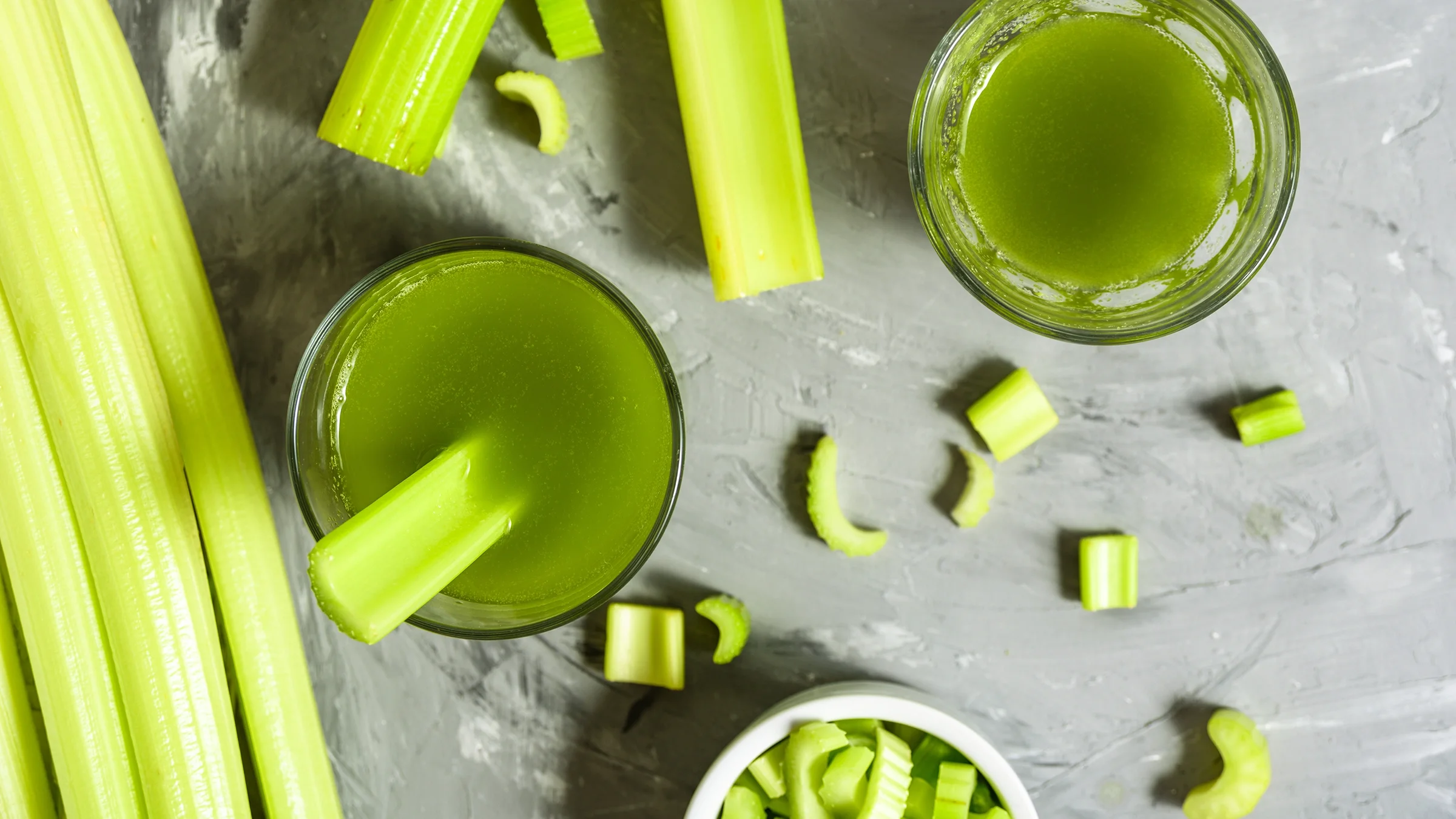
Celery juice is a hydrating, refreshing beverage that’s high in several nutrients. Celery juice can be a healthier alternative to high-sugar drinks like sodas and concentrated fruit juices. But the taste can take some getting used to.
You may be wondering if celery juice’s reported health benefits are worth your time (and palate). Here’s what to know about the health benefits of celery juice before giving it a try.
What are the alleged health benefits of celery juice?
Celery contains some phytochemicals, such as apigenin and luteolin. These compounds have antioxidant, anti-inflammatory, and anticancer properties.
This has led to claims that celery juice can:
Reverse inflammation from conditions like arthritis and gout
Replace chemotherapy in breast cancer treatment
Cure migraines, chronic pain, and digestive disorders
Heal skin conditions
Cleanse the colon
Help with weight loss
Heal autoimmune diseases
Lower blood sugar
But is there evidence to support these claims? Let’s take a closer look.
What does science say about celery juice?
Unfortunately, there’s not a lot of evidence that celery juice can deliver on any of its health benefit claims.
One study found that mice who drank fermented celery juice had better blood sugar and cholesterol levels. They also had a healthier gut microbiome than mice who didn’t drink fermented celery juice. But commercial celery juice and homemade celery juice aren’t fermented. So it’s not clear if regular celery juice offers the same benefits. Also, it’s not clear if people would get these benefits even if they drank fermented celery juice.
There are a few studies that used celery leaf extract to see if it can help promote heart health or control insulin levels. They found that people who took celery leaf extract had more stable blood sugar levels before and after eating. These people also had mild improvements in their kidney and liver blood tests. But the studies were small. And concentrated celery extract in capsule form isn’t the same as the celery juice you’d get at the store or make yourself. So it’s not clear if celery juice would also give these health benefits.

Do detox diets work? Here’s a review of the science behind the claims.
Top healthiest vegetables: Read why they’re important for a well-rounded diet.
Raw vs. cooked vegetables: All vegetables have vitamins and minerals. But what’s the best way to eat them: raw or cooked? Find out here.
What do the experts say about celery juice?
“Celery is rich in several healthy nutrients, but there is limited human research on celery juice specifically,” said dietitian Melissa Mitri, MS, RD, of FinvsFin.com.
For example, an antioxidant in celery called luteolin may reduce inflammation in animals, but this benefit hasn’t been seen yet in humans, she said.
Mitri said that there isn’t enough proof that drinking celery juice manages inflammatory or autoimmune conditions better than simply eating a balanced diet. She doesn’t typically recommend celery juice to clients because she finds that it tends to replace whole foods that are more nutritious and satisfying.
Read more like this
Explore these related articles, suggested for readers like you.




“Chewing the whole vegetable is always preferred for optimal digestion and to get more nutrients out of the food,” Mitri said. “It’s also more enjoyable.”
Dietitian Ashley Petrie, RDN, with Everyday Homemade, agrees. “While celery juice does contain a lot of beneficial vitamins, minerals, and antioxidants, most of the claims about what celery juice can do for the body are not backed by scientific research,” she said.
What is the nutritional value of celery juice?
While celery juice isn’t a medical magic bullet, it may still be worth adding to your regular diet.
Like other vegetable juices, it’s a low-sugar, hydrating beverage.
Since celery juice is 95% water, it can help you meet your daily water goal. And it’s lower in sugar than fruit juice and soda. For comparison, celery juice has only around 3 g of sugar per cup versus around 24 g of sugar in a cup of apple juice. So it can be a good choice for people who are watching their sugar intake but want to take a break from plain water.
It also contains a variety of antioxidants, including phytochemicals (plant compounds), like flavonoids and phenolic acids. These antioxidants, which can have anti-inflammatory properties, are especially abundant in celery leaves. So it can be helpful to add celery leaves if you’re making juice at home.
One cup (8 oz) of freshly pressed celery juice contains:
33 calories
4 g of fiber
2 g of protein
7 g of carbohydrates (3 g are sugar)
0 g of fat
189 mg of sodium
Celery juice contains several vitamins and minerals, including:
Calcium
Magnesium
Potassium
Vitamin A
Vitamin C
Vitamin K
Are there any negative side effects to drinking celery juice?
Celery juice has a couple of nutritional downsides, too. Celery juice contains 189 mg of sodium per cup. That’s about 8% of the daily value for sodium — and higher than what’s found in fruit juice or water. So celery juice might not be the right choice for you if you’re trying to eat less salt.
Celery juice naturally contains vitamin K. This isn’t a problem for most people. But if you’re taking certain blood thinners (anticoagulants), you may need to watch your vitamin K intake. Talk with your healthcare team about how much celery juice you can safely consume each day.
Is it better to eat celery or drink the juice?
Celery is naturally high in fiber and several vitamins and minerals. Like most vegetables, it’s a great addition to your diet. While celery juice does offer some of the same benefits, it also leaves out one critical nutrient — fiber.
Juicing removes most of the fiber in celery. Adults in the U.S. don’t get enough fiber in their diet, Petrie said. “I would recommend consuming the whole vegetable or fruit for even greater benefits than juicing would likely provide,” she said.
So, is celery juice good for you?
Celery juice can be a great addition to a balanced diet. But it won’t cure any health conditions. It’s unlikely that celery juice alone will improve any health conditions or prevent them from starting.
The most beneficial reason to drink celery juice is for the hydration, Petrie said. It’s also rich in nutrients and is a good choice for replacing sugar-sweetened beverages, like sodas.
So, give it a try and add it to your rotation if you enjoy the taste. The vitamins and minerals in celery juice help you reach your daily nutrition goals. And it’s likely better for your overall health than processed drinks made with added sugar.
Frequently asked questions
There’s no research on whether it’s safe to drink celery juice every day. Drinking a cup of celery juice is like eating a half a bunch of celery, which can be an issue if you’re limiting your salt intake or you take certain blood thinners (anticoagulants).
Your body gets rid of toxins on its own. Staying well hydrated can help your body work at its best. In that sense, celery juice, like all beverages, helps “detox” your body. But it’s not any better than water or other beverages for this purpose. Also, there’s no evidence that being on a juice-only diet can get rid of toxins in your body.
If you want to drink celery juice, you can drink it any time of the day. A lot of people have juice in the morning. You can experiment to see how it makes you feel in the morning or the evening.
There’s no research on whether it’s safe to drink celery juice every day. Drinking a cup of celery juice is like eating a half a bunch of celery, which can be an issue if you’re limiting your salt intake or you take certain blood thinners (anticoagulants).
Your body gets rid of toxins on its own. Staying well hydrated can help your body work at its best. In that sense, celery juice, like all beverages, helps “detox” your body. But it’s not any better than water or other beverages for this purpose. Also, there’s no evidence that being on a juice-only diet can get rid of toxins in your body.
If you want to drink celery juice, you can drink it any time of the day. A lot of people have juice in the morning. You can experiment to see how it makes you feel in the morning or the evening.
The bottom line
Celery juice is a hydrating and low-sugar beverage. It’s safe for most people to drink in moderation. People who take anticoagulants (blood thinners) or need to follow a low-salt diet may need to avoid celery juice. Celery juice can’t cure, treat, or prevent any medical conditions. But it can be a good alternative to sugar-sweetened beverages, like soda.

Why trust our experts?



References
CK-12 Foundation. (2025). Human biology: Excretion. Introductory Biology (CK-12). LibreTexts.
FoodData Central. (2019). Apple juice, canned or bottled, unsweetened, without added ascorbic acid. U.S. Department of Agriculture.
FoodData Central. (2020). Celery juice. U.S. Department of Agriculture.
Hostetler, G. L., et al. (2017). Flavones: Food sources, bioavailability, metabolism, and bioactivity. Advances in Nutrition.
Rad, M. S., et al. (2022). Safety evaluation and biochemical efficacy of celery seed extract (Apium Graveolens) capsules in hypertensive patients: A randomized, triple-blind, placebo-controlled, cross-over, clinical trial. Inflammopharmacology.
Yan, J., et al. (2022). Comprehensive quality and bioactive constituent analysis of celery juice made from different cultivars. Foods.
Yusni, Y., et al. (2018). The effects of celery leaf (Apium graveolens L.) treatment on blood glucose and insulin levels in elderly pre-diabetics. Saudi Medical Journal.
Zhao, D., et al. (2021). Beneficial impacts of fermented celery (Apium graveolens L.) juice on obesity prevention and gut microbiota modulation in high-fat diet fed mice. Food and Function.
Ziyan, L., et al. (2007). Evaluation of the anti-inflammatory activity of luteolin in experimental animal models. Planta Medica.