Key takeaways:
Many foods contain healthy nitrates. But some contain nitrates that can cause potentially harmful effects when broken down by the body.
According to registered dietitians, the healthy kind of nitrates are found in certain vegetables.
Nitrate supplementation isn’t necessary. Speak to your healthcare provider to see if you need supplements based on your health goals and needs.
It’s possible you’ve read conflicting information about nitrates. So should you eat foods that contain them or not? As it turns out, when nitrates are consumed through foods that naturally contain them, they can help support certain processes in the body. It’s when nitrates are added to foods in the form of a preservative that potential health issues might arise.
Registered dietitians explain what nitrates are and how they can benefit or pose a threat to your health depending on how they’re consumed.
What are nitrates in food?
“Nitrates are chemical compounds called ions that are made from one nitrogen [atom] and three oxygen atoms,” says Allie Echeverria, MS, RD, LD.
They can be found organically in some veggies like celery, beets, and leafy greens, explains Madelyn Larouche, RD. “They can also be found as a preservative, [in the form of] sodium nitrate, in processed meats like hot dogs and cold cuts.”
Apart from extending the shelf life of processed foods, Michelle Routhenstein, MS, RD, CDE, CDN explains that sodium nitrate can help enhance the flavor and even color of foods.
Nitrates vs. nitrites
On the molecular level, the only difference between nitrates and nitrites is the number of oxygen atoms they contain, Sheri Berger, RDN, CDCES explains. Nitrates have two oxygen atoms, while nitrites have three. But depending on how they are broken down in the body, their effects can be different. Below is a closer look.
Are all nitrates in food bad?
Not all of them. “The way in which our body metabolizes nitrates from plants versus meat is how some are beneficial and some, not so much,” Larouche says. “When we metabolize nitrates from plants, our bodies convert that nitrate into nitric oxide.”
Nitric oxide plays a role in relaxing blood vessels, which in turn affects things like circulation and blood pressure. But the body keeps nitric oxide levels in check, so eating foods that naturally contain nitrates won’t change your body’s nitric oxide levels.
“Nitrates are harmless unless they are converted to nitrosamines,” says Berger. These compounds have been linked to carcinogenic (cancer-causing) effects in humans.

Read more like this
Explore these related articles, suggested for readers like you.



Which foods naturally contain nitrates that are healthy?
There are plenty of foods that provide the healthy type of nitrates. Plants contain chemicals that keep the body from converting nitrates to potentially harmful nitrosamines. So even though they are naturally high in nitrates, they are safe to eat.
Jessica Eckert, MPH, RDN, LDN from ModifyHealth points out that some foods also house a wealth of antioxidants and vitamins in addition to nitrates. Some of these nitrate-rich foods include:
Cruciferous vegetables, such as bok choy, broccoli, and cauliflower
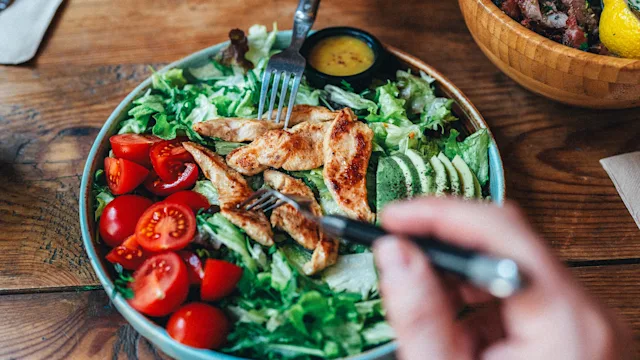
Leafy greens, like kale, spinach, and lettuce
Carrots
Beets
Fennel
Radish
Parsely
Which foods contain nitrates that may be harmful?
Eckert explains that the potentially harmful nitrates lie in processed meats. These foods contain nitrates in the form of a preservative. When the body breaks down these nitrates, it creates a substance called nitrosamines. Berger says that research has demonstrated a link between nitrates found in processed meat and an increased cancer risk.
Some examples of processed meats include:
Cured ham
Bacon
Hot dogs
Prosciutto
Deli meats
Salami
Sausage
Likewise, alcohol — especially beer — contains high levels of nitrosamines.
How much nitrate-rich food is safe to eat?
Several global health organizations have set the acceptable daily intake of nitrates and nitrites to be no more than:
3.7 mg nitrate for every kilogram of body weight. So for a person who weighs 75 kg (165 pounds), this would be just under 278 mg of nitrates per day.
0.06 mg nitrite for every kilogram of body weight. This amounts to around 4.5 mg of nitrites per day for someone who weighs 75 kg.
While a large review of studies suggests that people’s nitrate intake falls well below the upper limit, nitrate consumption can be difficult to calculate. This is due to factors including:
Environmental conditions that can affect nitrate and nitrate levels in food
Certain cooking methods that can increase or decrease nitrate content
Different amounts of nitrates in drinking water
Foods that don’t specify amounts of nitrates or nitrites
Other research also seems to agree with people’s nitrate and nitrite intake generally being within the acceptable limit. But a report from American Institute for Cancer Research suggests that eating more than 50 g of processed meat per day (think around 1 hot dog) is associated with more than a 15% higher risk of colorectal cancer.
In short, if you’re keeping your consumption of processed meats low, you should fall well beneath the upper limit.
Who should avoid nitrates?
Larouche suggests all groups of people should aim to eat processed meats in moderation. As of right now, studies on the matter have yet to determine if eating a certain amount of nitrates in preservative form could be a direct cause for cancer in humans.
“Further research still needs to be done to determine if nitrates from processed foods should be completely avoided,” says Berger.
However, both Routhenstein and Berger recommend people with the following conditions or health histories strongly consider limiting their intake of processed meats. These include those with:
Cardiovascular disease (such as coronary artery disease)
Heart failure
Hypertension
Diabetes
Heart attack
Stroke
Colorectal cancer
Are nitrate supplements OK?
Perhaps the better question is, why would you even need to take a nitrate supplement?
According to Larouche, some people believe these supplements may enhance exercise tolerance and athletic performance. But there’s no solid evidence to back this claim. In one study, people reported less muscle soreness 24 to 48 hours after exercise if they took citrulline supplements. Citrulline gets broken down by the body into an amino acid and nitric oxide.
And while natural sources like beetroot may be safe, these supplements come with certain safety considerations and are not recommended for everyone. There are a few groups of people who may want to first check with a healthcare provider.
“Nitrate supplements are generally considered safe, but anyone who has heart or blood pressure problems should consult with their doctor before starting a nitrate supplementation regimen,” Larouche says.
The bottom line
Nitrates can be both helpful and potentially harmful to overall health. It comes down to where you’re getting them nitrates from. Leafy greens contain the healthy type, whereas hot dogs and alcohol contain an unhealthier form of the chemical compounds.
Keeping your intake of processed meats to a minimum, while prioritizing whole, unprocessed foods, can help protect you from the potential risks linked to nitrates.

Why trust our experts?




References
Abrar, B., et al. (2018). Assessment of dietary nitrate intake in humans: A systematic review. The American Journal of Clinical Nutrition.
American Institute for Cancer Research and World Cancer Research Fund. (2017). Diet, nutrition, physical activity, and colorectal cancer.
Chen, K., et al. (2008). Nitric oxide in the vasculature: Where does it come from and where does it go? A quantitative perspective. Antioxidants and Redox Signaling.
Hord, N.G., et al. (2009). Food sources of nitrates and nitrites: The physiologic context for potential health benefits. The American Journal of Clinical Nutrition.
Karwowska, M., et al. (2020). Nitrates/nitrites in food — Risk for nitrosative stress and benefits. Antioxidants.
National Cancer Institute. (2022). Nitrate.
Rhim, H.C., et al. (2020). Effect of citrulline on post-exercise rating of perceived exertion, muscle soreness, and blood lactate levels: A systematic review and meta-analysis. Journal of Sport and Health Science.
Sweazea, K.L., et al. (2018). Nitrate-rich fruit and vegetable supplement reduces blood pressure in normotensive healthy young males without significantly altering flow-mediated vasodilation: A randomized, double-blinded, controlled trial. Journal of Nutrition and Metabolism.
U.S. Food and Drug Administration. (2020). What to know and do about possible nitrosamines in your medication.