Key takeaways:
Amla, or Indian gooseberry, is a plant that has been used in Ayurvedic medicine for centuries. Its fruit is especially rich in vitamin C and antioxidants.
Although amla fruit has many reported benefits, science has yet to prove many of them exist. Some small studies suggest eating the fruit has beneficial effects on cholesterol.
Eating amla fruit whole or drinking it as juice is likely safe for most people. But amla supplements may not be safe if you take blood thinners.
Amla, or Indian gooseberry, has long been considered a superfood in Ayurvedic medicine, a traditional form of medicine that originated in India. From clearer skin and thicker hair to reduced inflammation and better digestion, there are many claims about the fruit’s health benefits.
But are amla’s benefits backed by science or are they too good to be true? Here’s what you should know.
What is amla?
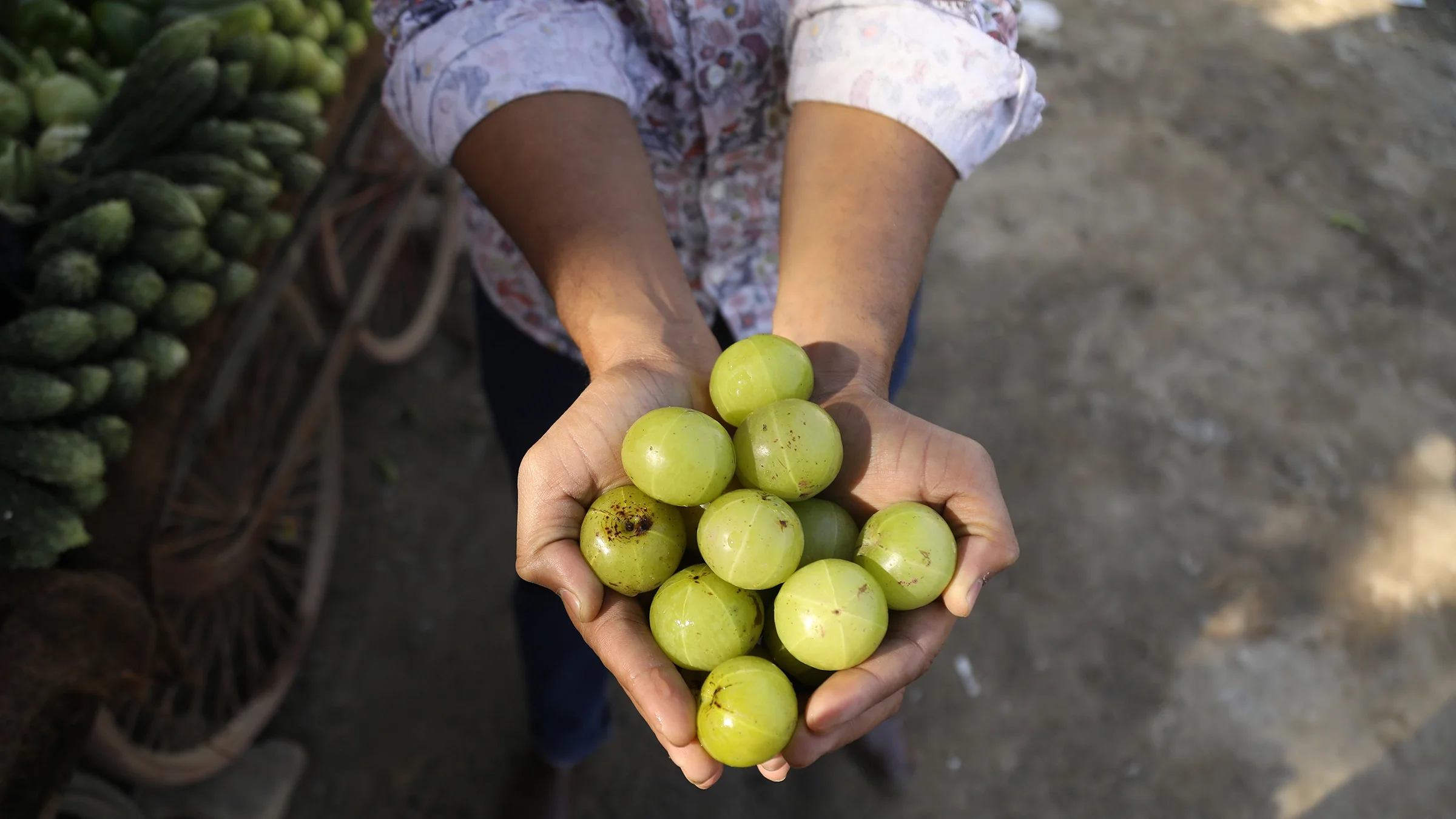
Amla, also known as Indian gooseberry (Emblica officinalis), has been one of the most important plants in traditional Ayurvedic medicine for centuries. Amla fruit is a round, yellow-green berry that has a very sour, and sometimes bitter, taste when eaten raw. All parts of the plant are used in different ways for their supposed healing properties.
Traditionally, amla has been used to treat:
Asthma
Anemia
Coughs and colds
Diabetes
Eye conditions
Fever
Heart problems
Hemorrhages
Jaundice
Premature graying of hair
Skin conditions
Ulcers
Some of these uses are backed by findings in lab and animal studies. But it’s important to note that most of amla’s alleged health benefits are yet to be proven in human studies.
What are the potential health benefits of eating or taking amla?
Scientists are still learning about amla’s potential health benefits for humans. Here are some of the characteristics that have led people to view the fruit as a superfood:
Has a high concentration of vitamin C: In a ⅔ cup serving of amla, there can be up to 720 mg of vitamin C. This is nearly 12 times higher than the vitamin C content of an orange.
Has a lot of phytochemicals: Amla is rich in phytochemicals, plant-based antioxidants that neutralize cell damage caused by free radicals. Among other things, these flavonoids might be helpful in the fight against Alzheimer’s disease.
May improve cholesterol levels: One study compared the effects of a statin (cholesterol-lowering medication) and amla juice powder on cholesterol. Both lowered blood fat (triglyceride levels) and LDL cholesterol (low-density lipoprotein, or “bad,” cholesterol) and increased HDL (high-density lipoprotein, or “good,” cholesterol). But the statin was much more effective than the amla powder.
Might lower blood sugar levels: In a small study, scientists noticed that taking higher doses of amla powder (1 g to 3 g) for 3 weeks was linked to lower blood sugar levels in people with diabetes, as well as people without diabetes. But the evidence is mixed: In another study, ingesting amla didn’t lower blood sugar in people with diabetes.
Might shorten the length of a cold: While there are no studies on amla’s effectiveness against colds specifically, it’s believed that there may be some benefits based on reported evidence and the fruit’s vitamin C content. But the relationship between colds and vitamin C is complicated.
Might help certain symptoms of COVID-19: In a 2022 study, amla tea had positive effects on certain symptoms of COVID — like fever, cough, and shortness of breath — and recovery time. The study didn’t find that it improved sore throat, chills, and weakness, though.
Might help with hair loss: Most of amla’s documented benefits on hair health come from people’s direct accounts of applying amla oil to the scalp. But it’s possible that the act of massaging hair oil into the scalp is what promotes hair health, rather than the amla.
Might boost skin health: According to one small study, people who used topical amla gel twice a day showed improved skin elasticity and hydration. They also had fewer wrinkles compared to those who used a gel without amla in it. But more research is needed.
Might help with oral health: Oral ulcers, periodontitis, and even mouth cancers might be improved by the use of amla. These results could be linked to the effect amla has on germs that live inside the mouth. But more research is needed to say for sure.
Might help prevent some cancers: The potential for amla to help as a cancer-fighter is getting a great deal of attention from researchers. Recent studies suggest amla might be a tool to help prevent cancer, too.
What form of amla is best to take?
Ayurvedic healers often use all parts of the amla tree. Most evidence has linked the potential benefits to eating the fruit whole or consuming it as a powder. But studies haven’t used consistent forms and amounts of amla, so it’s impossible to make comparisons. In other words, there’s not enough evidence to say what forms and doses of amla are best.
Here are the different forms that amla fruit comes in:
Fresh, whole fruit
Powders
Extract
Capsules
Dried fruit
Juices
Amla extract is also beginning to turn up in a variety of medications. For example, some amla components show promise as part of a mix of medications used against lung cancer.

Read more like this
Explore these related articles, suggested for readers like you.


Does amla have any side effects or risks?
Eating amla fruit is likely safe for most people. Except for minor digestive symptoms, no major side effects have been reported.
That said, amla may increase the risk of bleeding or bruising in some people. So if you take an antiplatelet — like clopidogrel (Plavix) or ecosprin — taking amla extract may interfere with the body’s ability to form blood clots.
Talk with a healthcare professional before taking an amla supplement. And be sure to share a full list of medications and supplements you’re taking. That way, they can help you figure out whether amla is safe for you to try.
Frequently asked questions
For most people, eating amla fruit every day as part of a balanced diet is probably fine.
Keep in mind that the FDA doesn’t regulate supplements. And supplements can interact with medication you take. In particular, amla might affect how your body forms blood clots. So be sure to talk with a healthcare professional if you take an antiplatelet medication.
There are no studies to show that amla can reverse gray hair. Getting gray hair is a normal part of the aging process for most people. And there’s no proven way to reverse or treat it.
For most people, eating amla fruit every day as part of a balanced diet is probably fine.
Keep in mind that the FDA doesn’t regulate supplements. And supplements can interact with medication you take. In particular, amla might affect how your body forms blood clots. So be sure to talk with a healthcare professional if you take an antiplatelet medication.
There are no studies to show that amla can reverse gray hair. Getting gray hair is a normal part of the aging process for most people. And there’s no proven way to reverse or treat it.
The bottom line
Amla has been a staple in Ayurvedic medicine for centuries. But more research is needed to confirm its many touted benefits. And while it does show promise in certain areas, it’s not a cure-all. So enjoy it as part of a balanced and nutritious diet. And it shouldn’t be used as a replacement for any medications prescribed by a healthcare professional.
While eating amla fruit is likely safe for most people, if you’re considering taking amla supplements, it’s best to talk with a healthcare professional first. They can help you decide whether it’s safe for you and worth trying.

Why trust our experts?



References
Akhtar, M. S., et al. (2011). Effect of Amla fruit (Emblica officinalis Gaertn.) on blood glucose and lipid profile of normal subjects and type 2 diabetic patients. International Journal of Food Sciences and Nutrition.
Baliga, M. S., et al. (2011). Amla (Emblica officinalis Gaertn), a wonder berry in the treatment and prevention of cancer. European Journal of Cancer Prevention.
Chaikul, P., et al. (2021). Phyllanthus emblica L. (amla) branch: A safe and effective ingredient against skin aging. Journal of Traditional and Complementary Medicine.
FoodData Central. (2019). Oranges, raw, navels. U.S. Department of Agriculture.
Gopa, B., et al. (2012). A comparative clinical study of hypolipidemic efficacy of Amla (Emblica officinalis) with 3-hydroxy-3-methylglutaryl-coenzyme-A reductase inhibitor simvastatin. Indian Journal of Pharmacology.
Gul, M., et al. (2022). Functional and nutraceutical significance of amla (Phyllanthus emblica L.): A review. Antioxidants.
Hu, Q., et al. (2024). Tannins in Phyllanthus emblica L. improves cisplatin efficacy in lung cancer cells by boosting endoplasmic reticulum stress to trigger immunogenic cell death. Phytomedicine.
Li, G., et al. (2023). Phyllanthus emblica fruits: A polyphenol-rich fruit with potential benefits for oral management. Food and Function.
Ma, Q., et al. (2024). Phyllanthus emblica Linn: A comprehensive review of botany, traditional uses, phytonutrients, health benefits, quality markers, and applications. Food Chemistry.
Memorial Sloan Kettering Cancer Center. (2023). Emblica officinalis.
Orabi, M. A. A., et al. (2023). Nutritional, antioxidant, antimicrobial, and anticholinesterase properties of Phyllanthus emblica: A study supported by spectroscopic and computational investigations. Metabolites.
Patel, K. (2022). Amla. Examine.
Saini, R., et al. (2022). Traditional uses, bioactive composition, pharmacology, and toxicology of Phyllanthus emblica fruits: A comprehensive review. Journal of Ethnopharmacology.
Singai, C., et al. (2024). Chemopreventive potential of Phyllanthus emblica fruit extract against colon and liver cancer using a dual-organ rat carcinogenesis model. Pharmaceuticals.
Usharani, P., et al. (2013). Effects of Phyllanthus emblica extract on endothelial dysfunction and biomarkers of oxidative stress in patients with type 2 diabetes mellitus: A randomized, double-blind, controlled study. Diabetes, Metabolic Syndrome and Obesity.
Varnasseri, M., et al. (2022). The effects of add-on therapy of Phyllanthus emblica (amla) on laboratory confirmed COVID-19 cases: A randomized, double-blind, controlled trial. Complementary Therapies in Medicine.