Key takeaways:
Air fryers can provide a crunchy and crispy texture to foods without the extra fat and calories of fried foods.
Air-fried foods won’t damage your arteries as much as deep-fried foods.
Air fryers are generally safer to use than deep fryers.
Air fryers are the latest small appliances that have shaken up the health and cooking world.
Many people enjoy comfort foods like fried chicken wings and fries. However, eating such foods regularly can increase the risk of health conditions like heart disease and diabetes. In fact, research shows that eating fried foods can increase your risk of heart failure.
If you love the taste of fried foods but want to forego the negative health effects, you might consider air fryers. But are they really a better choice? And do they really mimic fried foods?
Read on to learn about the benefits of using an air fryer for cooking and the different foods you can prepare with it.
What is an air fryer?
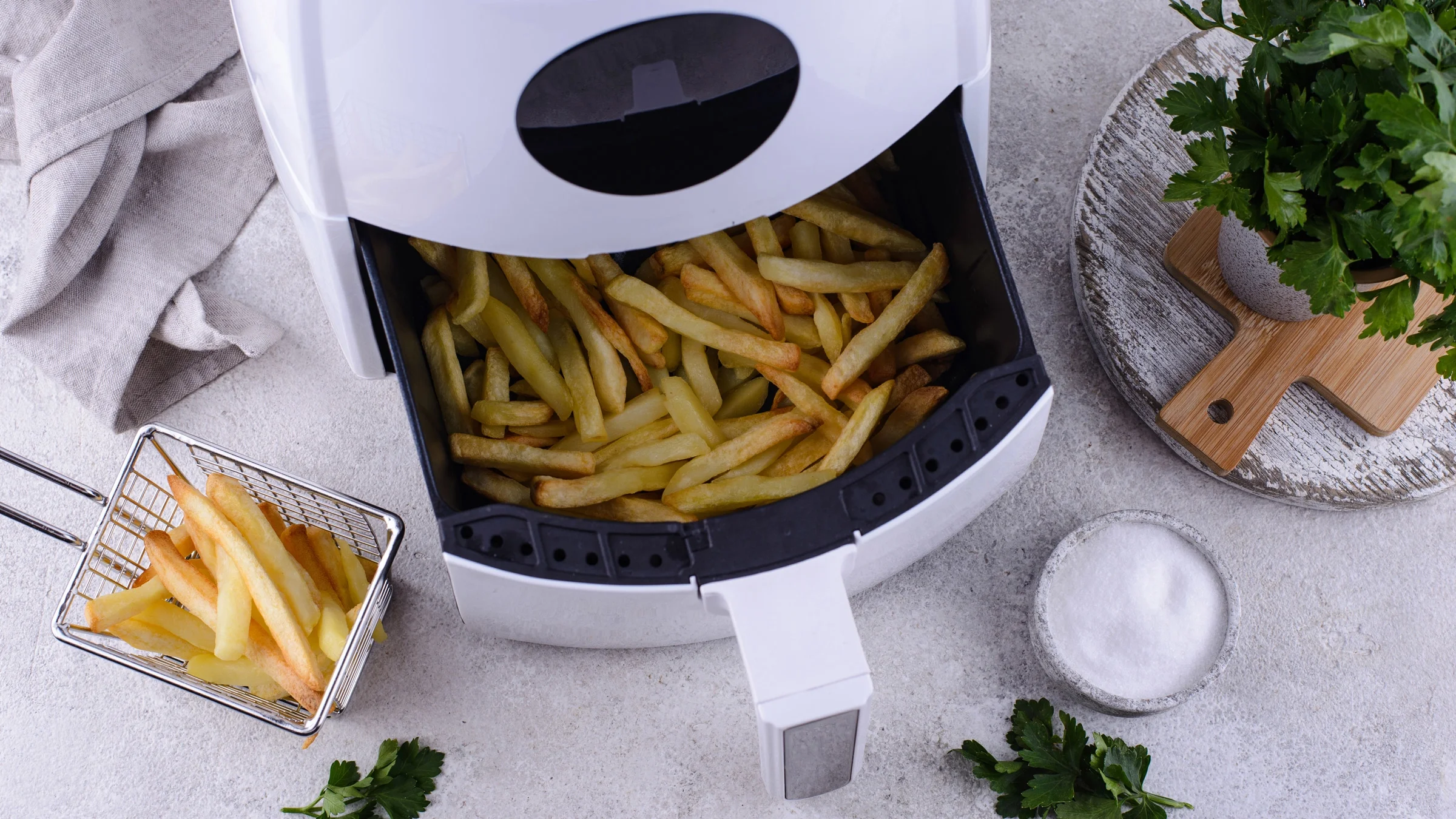
An air fryer is basically a convection oven in a compact size that you can keep on your kitchen countertop. Air fryers allow food to cook evenly in less time than conventional ovens or toaster ovens.
How does an air fryer work?
Air fryers cook food with the help of hot air. More specifically, when you put food into an air fryer, hot air will circulate around it. The perforations, or small holes on the air fryer pan, help circulate the hot air and assist with even cooking on both sides. Unlike deep frying, using an air fryer requires little to no oil. Rather, the hot air itself is enough to impart a crisp texture.
What are the potential benefits of using an air fryer?
There’s a reason air fryers have taken off in popularity. A lot of it has to do with the potential health benefits, as opposed to traditional frying, and the convenience of using them.
Fried foods minus the health risks
Deep-fried foods absorb oil during the cooking process, resulting in a high-fat food. Fried foods are high in saturated and trans fats. These types of fats can damage the walls of your arteries, causing plaque buildup. This, in turn, narrows the arteries and makes it harder for blood to travel throughout the body. This is similar to what happens when a pipe gets clogged. When your arteries are clogged, it’s called atherosclerosis. Atherosclerosis puts you at increased risk of heart disease.
Air-fried foods, on the other hand, require much less oil (as little as 1 tbsp). So the food has a much lower fat content, and the health risks are significantly decreased.

Read more like this
Explore these related articles, suggested for readers like you.



Air-fried foods also tend to have fewer calories than traditionally fried foods. This is because oil tends to add calories to food. This may matter if you are looking to lose weight.
Speed is on your side
Air fryers can also save you time. Protein-rich foods like meats, chicken, and seafood may have similar cooking times as the oven. However, some baked goods, like cake, can have faster cooking time with an air fryer than with an oven.
You can also save time if you need to reheat foods. The air fryer takes only 3 to 5 minutes to preheat, as compared to the 10 to 15 minutes it takes the typical oven to preheat.
Safer than deep frying
Deep frying foods can be very dangerous. The hot oil used in deep frying can reach 400 °F (204°C) and, if not contained correctly, can cause severe burns. And there’s an added risk when this oil comes in contact with water. Water can cause the oil to splatter, increasing the risk of the hot oil burning you.
Plus, the hot oil is extremely flammable; a brief encounter with flames can start a fire.
When air frying, you don’t use much oil, and the food is contained. There is also no open flame. So air fryers don’t share the same risks as deep fryers.
Fewer dangerous compounds than deep-fried foods
Another concern with deep-fried foods is the potential risk of creating cancer-causing compounds, like acrylamide. Acrylamide is a chemical that forms when a food containing sugars and an amino acid (asparagine) is exposed to high-heat cooking methods (such as frying). People commonly expose themselves to acrylamide by eating fried potato products, such as french fries and potato chips.
One study found that by switching to air frying, people can lower the risk of having acrylamide in their food by up to 90%.
What are some easy things to cook in an air fryer?
There are hundreds of recipes you can find online for delicious entrees, sides, and snacks that you can prepare in an air fryer. And besides preparing foods, you can also reheat pre-prepared foods and leftovers. Read below to learn about some of the most common foods you can cook in an air fryer.
Proteins
Chicken
Shrimp
Steak
Tofu
Crab
Salmon and other fish
Burgers
Pork like bacon or chops
Turkey breast
Vegetables
Potatoes
Cauliflower
Brussels sprouts
Broccoli
Squash
Corn on the cob
Appetizers
Jalapeño poppers
Cheese sticks
Toasted ravioli
Empanadas
Onion Rings
Baked Goods
Mini Cakes
Falafel
Biscuits
Brownies
Doughnuts
What are some tips for beginners using an air fryer?
If you are new to using an air fryer, the following tips can help you start cooking.
Choose the right size
For a small household of one to two people, a 3-quart air fryer should do. For families of four or more, 5- to 6-quart air fryers would allow for larger batch cooking.
More expensive isn’t necessarily better
Air fryers range in price from $30 to more than $600. But is there a big difference? Likely not when it comes to simply air frying. The reality is that all air fryers work the same way. Expensive versions tend to have more bells and whistles, but if simplicity is your thing, an affordable one should work just fine.
Place on a heat-resistant surface
The bottom of your air fryer will become hot during cooking and will take time to cool down. Therefore, make sure you place it on a heat-resistant surface like a granite or steel countertop. You can also place it on a heat-resistant silicone mat.
Always preheat before using
Preheat the air fryer for about five minutes at the temperature your air fryer instructions or recipe recommend. Your air fryer may have a manual temperature dial or digital buttons to allow you to adjust the temperature.
Don’t overcrowd
When you are cooking in your air fryer, it’s important not to place too much in your air fryer pan at one time. Place a single layer of protein or veggies to allow for fast and even cooking.
Shake things up
Giving your air fry basket a little shake will help ensure even cooking. This helps you avoid undercooking your food, which poses the risk of foodborne illness.
Clean after each use
If you don’t clean your air fryer, old food particles and bacteria can build up and contaminate the food you put in it. To avoid this and ensure that your air fryer is working at its best, it's important to clean it after each use. Allow your air fryer basket or rack to cool before cleaning.
The bottom line
Air fryers can provide a convenient and quick way to prepare healthier versions of your favorite fried foods. And the bonus is that you don’t need to be a skilled cook to use an air fryer. Air fryers aren’t the only option; roasting, baking, and steaming are other healthy cooking methods. And remember, the type of food you cook still matters. The key is to focus on a wide variety of nutritious, whole foods when it comes to healthy eating.

Why trust our experts?




References
Azmi, M. M. Z., et al. (2019). Effects of temperature and time on the physical characteristics of moist cakes baked in air fryer. Journal of Food Science and Technology.
Cahill, L. E., et al. (2014). Fried-food consumption and risk of type 2 diabetes and coronary artery disease: A prospective study in 2 cohorts of US women and men. The American Journal of Clinical Nutrition.
Djoussé, L., et al. (2015). Consumption of fried foods and risk of heart failure in the physicians' health study. Journal of the American Heart Association.
National Cancer Institute. (2017). Acylamide and cancer risk.
National Heart, Lung, & Blood Institute. (2022). What is atherosclerosis?
Sansano, M., et al. (2015). Effect of pretreatments and air-frying, a novel technology, on acrylamide generation in fried potatoes. Journal of Food Science.
U.S. Department of Agriculture. (2013). Deep fat frying and food safety.
U.S. Food and Drug Administration. (2020). People at risk of foodborne illness.
U.S. Food and Drug Administration. (2022). Acrylamide questions and answers.