Vyxeos
Vyxeos contains liposomal daunorubicin and cytarabine. This combination chemotherapy medication is used to treat certain types of acute myeloid leukemia (AML). It can be used for adults and children ages 1 year and older with these cancers. Vyxeos is given as an infusion through a vein at a medical office or clinic. You get infusions on certain days of your treatment cycles. Vyxeos can cause side effects such as bleeding, rash, and nausea. There’s also a risk of heart problems from the medication.


What is Vyxeos?
What is Vyxeos used for?
- Newly-diagnosed therapy-related acute myeloid leukemia (t-AML) in people 1 year or older
- Acute myeloid leukemia with myelodysplasia-related changes (AML-MRC) in people 1 year or older
How Vyxeos works
Vyxeos contains two types of chemotherapy medications. They work in different ways to stop cancer cells from growing and spreading well.
-
Daunorubicin is an anthracycline. It works in a few different ways to kill cancer cells. One of the main ways is by blocking a protein called topoisomerase. This protein helps make copies of the cell’s DNA. By blocking this protein, it can’t work and the cancer cell can’t grow. This kills the cancer cell.
-
Cytarabine is an antimetabolite. It looks like a normal building block of DNA. So, it gets mixed into the DNA of cancer cells. When this happens, the cell can’t make copies of its DNA. This stops the cancer cell from growing and causes it to die.
Drug facts
| Common Brands | Vyxeos |
|---|---|
| Drug Class | Anthracycline / Antimetabolite |
| Controlled Substance Classification | Not a controlled medication |
| Generic Status | No lower-cost generic available |
| Availability | Prescription only |

Side effects of Vyxeos
The following side effects may get better over time as your body gets used to the medication. Let your healthcare provider know immediately if you continue to experience these symptoms or if they worsen over time.
Common Side Effects
- Bleeding (70%)
- Febrile neutropenia (68%)
- Rash (54%)
- Swelling from fluid buildup in the body (51%)
- Nausea (47%)
- Diarrhea (45%)
- Mouth sores (44%)
- Constipation (40%)
- Muscle, joint, or bone pain (38%)
- Stomach pain (33%)
- Cough (33%)
- Headache (33%)
- Trouble breathing (32%)
- Tiredness (32%)
- Irregular heart rhythm (30%)
- Lower appetite (29%)
- Pneumonia (26%)
- Trouble sleeping or strange dreams (25%)
Less Common Side Effects
- Vomiting
- Chills
- Dizziness
- Chest pain
- Itchiness
- Fever
- Delirium (sudden confusion)
- High or low blood pressure
- Fungal infection
- Upper respiratory infections
- Bloodstream infection
- Injection site reaction
- Low white blood cell count
- Low platelets
- Anemia
Vyxeos serious side effects
Contact your healthcare provider immediately if you experience any of the following.
- Serious bleeding: frequent nosebleeds, easy bruising, bleeding that’s hard to stop, blood in urine or stool, sudden severe headache
- Serious infection: temperature of 100.4ºF or higher, with or without other symptoms, such as chills, cough, muscle aches, very fast heartbeat, confusion
- Heart problems: trouble breathing, chest pain, swelling in your legs, sudden weight gain
- Allergic reaction: warm, itchiness, rash, chills, swelling, trouble breathing, chest pain
The following Vyxeos side effects have also been reported
Side effects that you should report to your care team as soon as possible:
- Allergic reactions—skin rash, itching, hives, swelling of the face, lips, tongue, or throat
- Bleeding—bloody or black, tar-like stools, vomiting blood or brown material that looks like coffee grounds, red or dark brown urine, small red or purple spots on skin, unusual bruising or bleeding
- Heart failure—shortness of breath, swelling of the ankles, feet, or hands, sudden weight gain, unusual weakness or fatigue
- Heart rhythm changes—fast or irregular heartbeat, dizziness, feeling faint or lightheaded, chest pain, trouble breathing
- Infection—fever, chills, cough, sore throat, wounds that don't heal, pain or trouble when passing urine, general feeling of discomfort or being unwell
- Low red blood cell level—unusual weakness or fatigue, dizziness, headache, trouble breathing
- Painful swelling, warmth, or redness of the skin, blisters or sores at the infusion site
Side effects that usually do not require medical attention (report these to your care team if they continue or are bothersome):

Pros and cons of Vyxeos
Pros
- Recommended treatment option for people with t-AML or AML-MRC
- Given on specific days, with breaks in between treatment cycles
- Approved for both adults and children
Cons
- Often causes low blood cell counts, which puts you at risk of infections and bleeding
- Risk of serious heart problems
- Can be used for only up to a total of 4 treatment cycles

Pharmacist tips for Vyxeos

- Vyxeos is given on certain days of your treatment cycle. Write down the dates of your infusions to stay on track. If you miss an appointment for your infusion, call your care team to reschedule as soon as possible.
- Plan ahead for your Vyxeos infusions. Each infusion takes about an hour and a half. But if your nurse needs to slow or stop the infusion for some reason, it could take longer. Be sure to wear comfortable clothes. Bring a blanket in case it gets cold and something to do to pass the time.
- Be sure to get all the lab tests and scans done on time before your Vyxeos treatment cycles. These include heart scans and blood tests. This medication has a risk of heart damage and low blood cell counts. Because of this, it’s important for your oncologist to make sure Vyxeos is still safe for you.
- Vyxeos can often cause nausea. To help, your oncologist will give you antiemetics before your infusion. A common one is ondansetron (Zofran). They might also prescribe you these medications to have at home if you need them. Let your care team know if the nausea bothers you too much. They can see if another antiemetic works better for you or see what other options you have.
- Call your nurse over right away if you have an allergic reaction during your Vyxeos infusion. You might feel itchy or warm, have trouble breathing, feel nauseous, or suddenly have a fast heart rate. Your nurse can slow or stop the infusion to help manage your symptoms. They might also give you an antihistamine like diphenhydramine (Benadryl) or a steroid to help.
- Bleeding is a common side effect of Vyxeos. Avoid shaving with a blade razor; use an electric razor instead. Watch for mild nosebleeds, gum bleeding when you brush your teeth, and easy bleeding or bruising. But get medical help right away if bleeding won’t stop. Also call for help if you have a sudden headache, blood in your urine or stool, or bloody vomit. These can be signs of serious bleeding and need urgent care.
- Vyxeos often causes low white blood cell counts. This means you’re more likely to get sick. Help prevent infections by washing your hands often, avoiding crowds, and avoiding people who are sick.
- It’s a good idea to check your temperature often, ideally once a day, while taking Vyxeos. Call your oncology care team right away if it’s 100.4ºF or higher. This means you have a fever and it’s sometimes the only sign that you might have of being sick.
- Tell your oncology care team and pharmacist about all the medications you take or plan to take. Some medications, like those that can harm the liver, can raise the risk of side effects from Vyxeos. It’s important for your care team to check for drug interactions and monitor you often if needed to keep you safe.
- If you or your partner can become pregnant: Use effective birth control, including condoms during sex, while taking Vyxeos. Keep using birth control for 6 months after you stop this medication. Vyxeos can harm an unborn baby. Let your oncology team know right away if you or your partner becomes pregnant.

Risks and warnings for Vyxeos
Vyxeos can cause some serious health issues. This risk may be even higher for certain groups. If this worries you, talk to your doctor or pharmacist about other options.
Not interchangeable with other daunorubicin or cytarabine medications
 Vyxeos is a mix of two chemotherapy medications: daunorubicin and cytarabine. These medications can also be given on their own. But Vyxeos is made in a special way and has different dosing. It’s not the same as giving daunorubicin or cytarabine by themselves. Because of this, Vyxeos can’t be used instead of daunorubicin alone. It also can’t be used instead of cytarabine alone.
Bleeding
Vyxeos can cause bleeding. Most of the time, it’s minor. Nosebleeds are most common. But it can also include bleeding from the gums when you brush your teeth and easy bruising. But sometimes, it can cause serious and dangerous bleeding, like in the gut or brain.
Bleeding often happens when your platelet count is low. Your oncologist will check your platelet count regularly with blood tests during treatment. If they’re too low, you might need a platelet transfusion.
Call your oncology care team right away if you have easy bruising, frequent nosebleeds, or bleeding that’s hard to stop while taking Vyxeos. Get medical help right away if you see blood in your vomit, urine, or stool or have other signs of serious bleeding.
Serious heart damage
- Risk factors: Heart problems | Previous treatment with an anthracycline chemotherapy medication | Previous chest radiation | Taking medications that can cause heart damage
Vyxeos contains daunorubicin. Daunorubicin can cause heart damage in some people. The most common is causing your heart to pump less well, which can lead to heart failure.
Before starting Vyxeos, your oncologist will check your heart. This is done with tests like electrocardiograms (EKGs), echocardiograms (echoes), and MUGA scans. Tell your oncologist about any heart problems, your treatment history, and the medications you take. They can make sure Vyxeos is safe for you.
To lower your risk, there’s a limit to how much daunorubicin you can receive in your lifetime. Your oncologist will keep track of how much you receive. They’ll also check your heart again before consolidation with Vyxeos.
Let your oncology care team know right away if you have signs of heart failure while taking Vyxeos. Watch for trouble breathing, chest pain, swelling in your legs, or sudden weight gain. Your care team will check your heart and decide if it’s safe for you to continue treatment.
Allergic reactions
Some people taking daunorubicin or cytarabine, the ingredients in Vyxeos, have had an allergic reaction. It’s not common, but they can be serious or even life-threatening.
Your nurse will watch you during your Vyxeos infusion. Tell them right away if you feel warm, itchy, have trouble breathing, have chest pain, or have other signs of anaphylaxis.
If the reaction is mild, your nurse can slow or stop the Vyxeos to help. They might give you medication like diphenhydramine (Benadryl) or a steroid before your next infusions to help prevent reactions. But if the reaction is severe, you might not receive Vyxeos again.
Copper overload
- Risk factors: People with Wilson’s disease | Other copper-related inherited conditions
Vyxeos contains copper. This can be dangerous for people with certain inherited conditions that cause too much copper in the body, such as Wilson’s disease.
If you have Wilson’s disease or another copper problem, tell your oncologist before starting Vyxeos. They can help decide if treatment is safe for you. If you take Vyxeos, your care team might check your copper levels during treatment. Also, get medical help right away if you notice signs of too much copper. Look out for stomach pain, yellow skin or eyes, severe thirst, tarry stools, or blue-green vomit or stool.
Tissue damage around the injection site
Although rare, it’s possible for Vyxeos to leak into the tissues around the IV line. If this happens, it can cause pain and damage to the skin or tissues nearby. Let your nurse know right away if you feel any pain, burning, or warmth during your Vyxeos infusion. They can stop the infusion and help manage these symptoms right away.
Harm to an unborn baby
- Risk factors: Pregnancy
Vyxeos can harm an unborn baby if used during pregnancy. This is based on findings from animal studies and how the medication works.
If you can become pregnant, your oncologist might require a pregnancy test before you start treatment. It’s important not to become pregnant while taking Vyxeos. If you or your partner can become pregnant, use effective birth control while taking this medication and for 6 months after your last dose.
Call your cancer care team right away if you or your partner becomes pregnant during treatment.

Vyxeos dosage
Typical dosage for Vyxeos
This medication is given as an infusion through the vein, or an intravenous (IV) infusion. It’s given by a trained healthcare professional at a medical office or infusion clinic.
Your oncologist will calculate the dose based on your body size or body surface area (BSA). Your BSA takes into account your weight and height and is calculated in m² units.
The recommended dose is based on the phase of treatment you’re in.
-
Induction: The typical dose is liposomal daunorubicin 44 mg/m² and cytarabine 100 mg/m² given IV. It’s given on days 1, 3 and 5 of your first induction cycle.
-
Second induction (if needed): This second cycle is given 2 to 5 weeks after the first if it didn’t work well enough. The typical dose is liposomal daunorubicin 44 mg/m² and cytarabine 100 mg/m² given IV. It’s given on days 1 and 3 of the second induction cycle, if needed.
-
Consolidation: Consolidation starts 5 to 8 weeks after the start of your last induction. The typical dose is liposomal daunorubicin 29 mg/m² and cytarabine 65 mg/m² given IV. It’s given on days 1 and 3 of the consolidation cycle. You can have up to 2 cycles of consolidation, given 5 to 8 weeks apart.

Vyxeos contraindications
Contraindications are specific health conditions or situations in which a person should not take a medication due to safety concerns. If you have any of the following conditions or if any of the following apply to you, let your healthcare provider know because Vyxeos will not be safe for you to take.
- Allergy to daunorubicin or cytarabine

What are alternatives to Vyxeos?

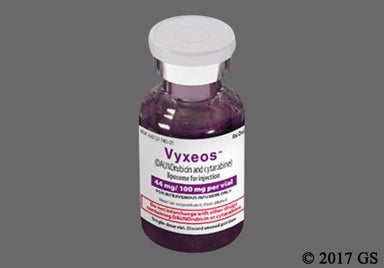
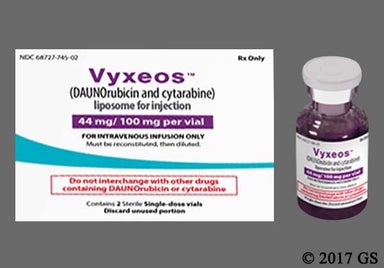
Vyxeos images