

Travel Vaccines: How to Get Vaccinated for Yellow Fever, Malaria, and More
If you’re planning an international trip, you may need to update your travel vaccines. Learn where to get travel vaccines and how to save on the cost.
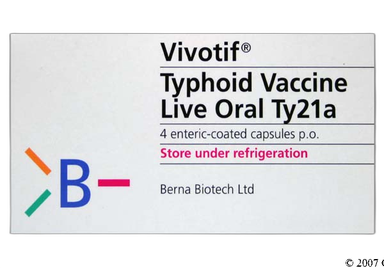
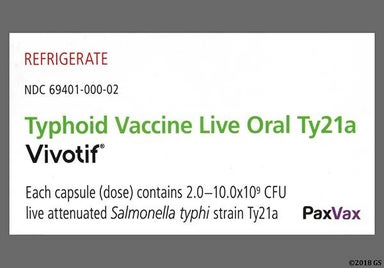
Vivotif is a prescription live-attenuated vaccine that's used to prevent typhoid fever in people ages 6 years and older. It comes as a capsule that's taken by mouth on an empty stomach every other day for 4 doses total. Vivotif isn't a routine vaccine for everyone; it's only recommended for certain people who are traveling to a place where typhoid is common or for people who are at high risk of coming into contact with Salmonella typhi, the bacteria that causes typhoid fever. Side effects of this vaccine include stomach pain, nausea, and headache.

Vivotif is a vaccine that protects you from Salmonella typhi (S. typhi), a bacteria that causes typhoid fever. It's a live-attenuated vaccine that's made from a weakened version of the bacteria. The vaccine helps your body's immune system make antibodies against the weakened bacteria. These antibodies will then attack the bacteria if it ever infects your body.
| Common Brands | Vivotif |
|---|---|
| Drug Class | Vaccine |
| Controlled Substance Classification | Not a controlled medication |
| Generic Status | No lower-cost generic available |
| Availability | Prescription only |

The following side effects may get better over time as your body gets used to the medication. Let your healthcare provider know immediately if you continue to experience these symptoms or if they worsen over time.
Side effects that you should report to your care team as soon as possible:
Side effects that usually do not require medical attention (report these to your care team if they continue or are bothersome):




Vivotif can cause some serious health issues. This risk may be even higher for certain groups. If this worries you, talk to your doctor or pharmacist about other options.
Just like all vaccines, receiving Vivotif doesn't guarantee that you won't get infected with S. typhi. For the best protection against typhoid fever, you should receive a full course of Vivotif as well as take all necessary precautions to avoid getting sick from unclean food and drinks. Some examples include avoiding raw foods, street food, bushmeat (local wild game, typically animals not eaten in the United States), tap water, fountain drinks, ice, and freshly squeezed juice.
Vivotif can interact with several other medications, including some sulfa medications, antibiotics, and certain antimalarial medications (e.g., mefloquine, chloroquine, proguanil in Malarone (atovaquone / proguanil)). These medications can lower how well Vivotif works for you. Make sure to tell your prescriber about all the medications you're taking before starting Vivotif. Don't start any new medications while taking Vivotif without talking to a member of your care team first.
Live-attenuated vaccines, like Vivotif, aren't recommended for people with weakened immune systems. They might be at higher risk of accidental infection from uncontrolled growth of the weakened bacteria contained in the vaccine. And there's a possibility that the vaccine won't work as well. People with weakened immune systems include those with certain conditions (e.g., human immunodeficiency virus (HIV), cancer). If you have a weakened immune system, ask your care team what options are right for you.

 Dose pack
| Dosage | Quantity | Price as low as | Price per unit |
|---|---|---|---|
| 4 capsules | 1 dose pack | $130.00 | $130.00 |


Contraindications are specific health conditions or situations in which a person should not take a medication due to safety concerns. If you have any of the following conditions or if any of the following apply to you, let your healthcare provider know because Vivotif will not be safe for you to take.


Prescription savings
Stop paying too much for your prescriptions. Compare prices, get pharmacy coupons, and save up to 80%. Find expert answers to your health questions so you can make the best decisions for yourself and your family.
Health conditions
Medications & treatment
Access & affordability
Medication discounts


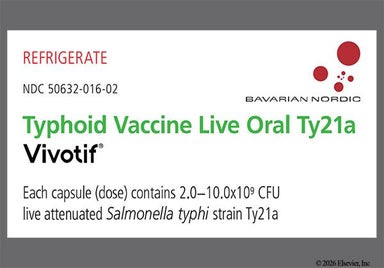
Vivotif should be stored in the refrigerator at all times. The only time it should be taken out of the refrigerator is right before you're about to take a dose; you shouldn't wait for it to warm up before taking the dose. If you've accidentally left Vivotif out of the refrigerator, ask your pharmacy or prescriber if it's possible to get a replacement.
The manufacturer doesn't specify what happens when you take Vivotif with food. But it's thought that doing so might affect how well this vaccine works to protect you against typhoid fever. For the best results, swallow Vivotif whole one hour before a meal.
You can drink coffee after taking Vivotif, but only if the coffee is cold or lukewarm (no warmer than body temperature). Drinks that are too warm or hot can damage the contents of the vaccine and affect how well the vaccine works.
Yes, you can only get Vivotif with a prescription from a healthcare professional (HCP). This vaccine should be available at most local pharmacies. But your pharmacist might need to order it first and it can take a few days for the vaccine to arrive. If you have a prescription for Vivotif, call your local pharmacy to check.
Yes, Vivotif is a live-attenuated vaccine. This means that the vaccine is made using live, but weakened forms of the bacteria S. typhi. Live vaccines might not be appropriate for people with weakened immune systems because the bacteria in the vaccine might make them sick. So make sure your healthcare team knows about all of your medical conditions and medications you're taking before receiving Vivotif.
Vivotif isn't recommended as routine vaccination in the United States and isn't for everyone. This vaccine is only recommended for people who are at high risk of coming into contact with S. typhi. These people include travelers going to areas where there's a known risk of being exposed to S. typhi. Check if vaccination is recommended for your destination. Additionally, Vivotif is recommended for people who are in close contact with someone (e.g., someone you live with) who is carrying the S. typhi bacteria inside their body and people who work with S. typhi often (e.g., in a lab for research). If any of these apply to you, talk to your healthcare professional (HCP) about taking Vivotif.
Vivotif and Typhim Vi are both vaccines that help protect you from typhoid fever. Some of the differences between the two are related to the type of vaccine, timing, and how each of the vaccines are given. Vivotif is a live-attenuated vaccine that's taken by mouth every other day for a total of 4 doses, starting at least 1 week before potential exposure. You'll need a booster every 5 years if you continue to be at risk for typhoid fever. Typhim Vi is an inactivated vaccine that's injected into the muscle once at least 2 weeks before potential exposure. You'll need a dose every 2 years if you continue to be at risk.
