VIDEO CENTER
Major Depressive Disorder
Major depressive disorder is also known as clinical depression. It refers to having low mood, energy, and functioning for at least two weeks.

Medications like antidepressants can provide relief for people living with major depressive disorder (MDD) and other types of depression. The most common type of antidepressant is an SSRI, or selective serotonin reuptake inhibitor.
“There is a theory that depressive symptoms are coming from a low level of serotonin in the brain,” says Jacques Ambrose, MD, MPH, FAPA, Psychiatrist at Columbia University Irving Medical Center.
“What SSRIs do is increase the level of serotonin in the brain, and hopefully that helps address some of the depressive symptoms,” he explains. Serotonin is a chemical in the brain that plays a role in mood.
There are many types of SSRIs, and many people are able to find one that helps them feel better. If someone doesn’t find relief from an SSRI — or the SSRI they’ve been using no longer provides relief — other options may be considered.
Other options to treat depression include:
SNRIs (serotonin and norepinephrine reuptake inhibitors): These work similarly to SSRIs, but they also increase the levels of norepinephrine, another brain chemical.
Atypical antidepressants: This is a broad category of antidepressants that target chemicals other than serotonin.
TCA (tricyclic antidepressants): Like SNRIs, TCAs also increase levels of serotonin and norepinephrine. TCAs target different receptors in the brain than SNRIs, and TCAs tend to have a more sedative effect.
MAOIs (monoamine oxidase inhibitors): MAOIs block an enzyme that may break down brain chemicals like serotonin, norepinephrine, and more. Blocking the enzyme may lead to increased levels of these brain chemicals.
Ketamine: This medication is traditionally an anesthetic, but it received FDA approval as a treatment for treatment-resistant depression in 2019 and MDD with suicidal ideation in 2020.
Neuroactive steroids: This is a potential treatment in research. If approved, it may help relieve MDD symptoms within 14 days.
Some non-medication options may include:
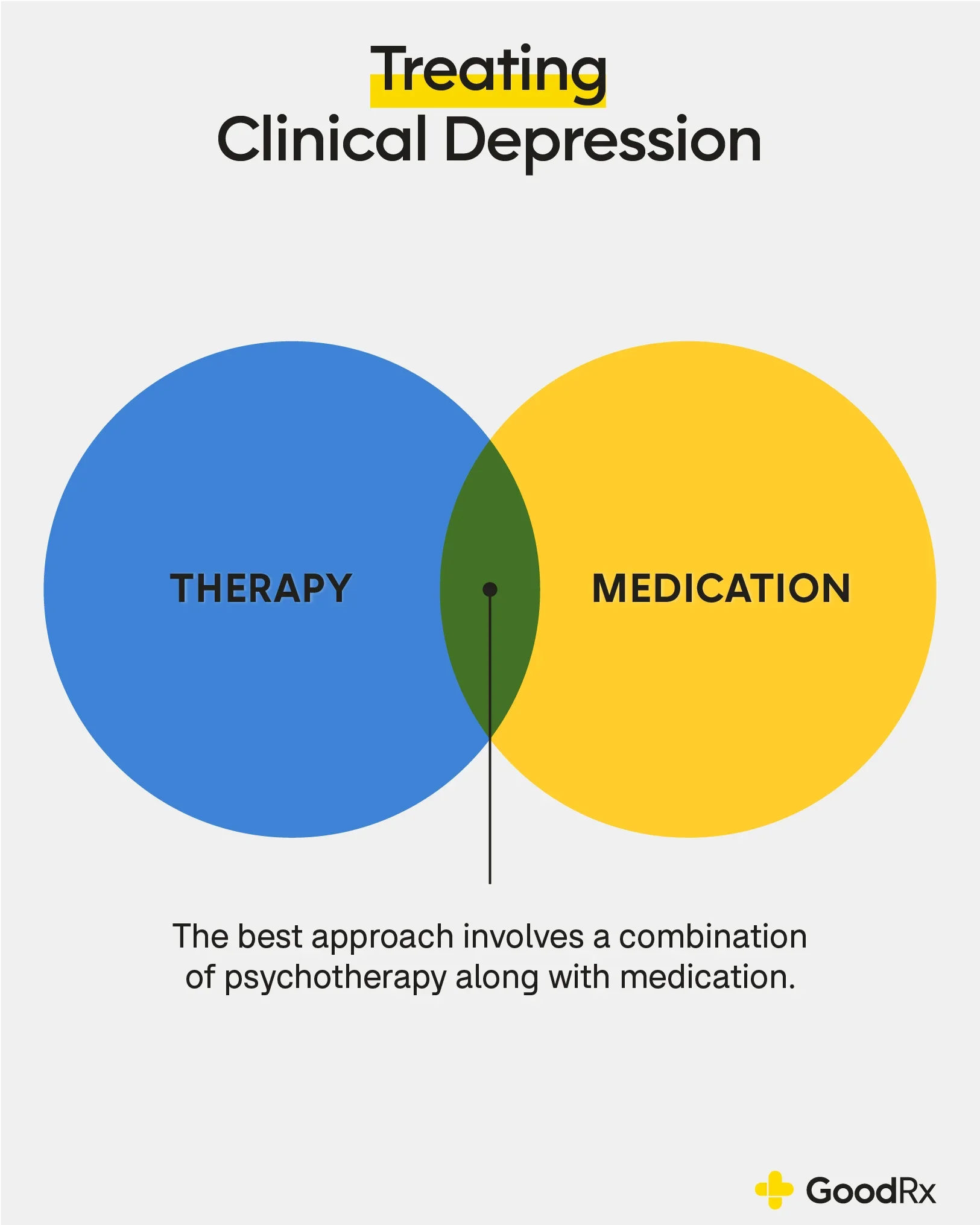
Psychotherapy: “Talk therapy” is generally used in combination with medications for well-rounded treatment.
ECT (electroconvulsive therapy): ECT is a procedure under general anesthesia in which an electric current is passed through the brain, resulting in chemical changes that may relieve depression symptoms.
TMS (transcranial magnetic stimulation): TMS uses a device that passes magnetic waves into the brain.
Doctors typically only recommend ECT and TMS when medications and psychotherapy have not been effective.
“It's important to talk to your provider when you feel like your antidepressant is not working for you,” says Dr. Ambros. “The whole goal of this is to make sure that your medical condition and your depression is appropriately treated, and we don't want you to be hurting and suffering on your own.”
This information is for informational purposes only and is not meant to be a substitute for professional medical advice, diagnosis or treatment. GoodRx is not offering advice, recommending or endorsing any specific prescription drug, pharmacy or other information on the site. GoodRx provides no warranty for any information. Please seek medical advice before starting, changing or terminating any medical treatment.
Prescription savings
Stop paying too much for your prescriptions. Compare prices, get pharmacy coupons, and save up to 80%.Resources
About GoodRx
 Find expert answers to your health questions so you can make the best decisions for yourself and your family.
Health conditions
Medications & treatment
Access & affordability
Well-being
Medication discounts


