VIDEO CENTER
Major Depressive Disorder
Major depressive disorder is also known as clinical depression. It refers to having low mood, energy, and functioning for at least two weeks.

When you first start a medication for major depressive disorder (or other types of depression), you might be hoping for instant relief. Some people do start feeling better right away, but for others it may take some time.
Even then, it can be hard to know if the medication is “working” for you. Antidepressants help lessen the symptoms of depression, which is different from making you feel full of bliss, optimism, and satisfaction.
You might start a new antidepressant and worry that it’s not working after a couple days or weeks. Your provider may want you to continue taking the antidepressant consistently for at least a few months. That’s because many antidepressants take weeks or months to see the full effect.
For example, selective serotonin reuptake inhibitors (SSRIs) often take six to 12 weeks to see the full effects.
When a medication for major depressive disorder is working, you should notice a reduction in the intensity and frequency of symptoms. Ideally, your medication should help you feel “back to normal.”
Plus, the right antidepressant should also work with your lifestyle. It should not cause any severe or unmanageable side effects.
A medication may not be right for you if you notice little or no improvement in symptoms, even after taking it as prescribed for a few months. It may also not be right for you if side effects are severe or unmanageable.
“One of the things that you can communicate with your providers is just clarifying how the depressive symptoms are impacting you,” says Jacques Ambrose, MD, MPH, FAPA, Psychiatrist at Columbia University Irving Medical Center.
There are many ways your provider can adjust your treatment plan:
Increasing or decreasing the dosage
Changing to a different medication in the same class
Changing to a different class of medication altogether
Adding another medication
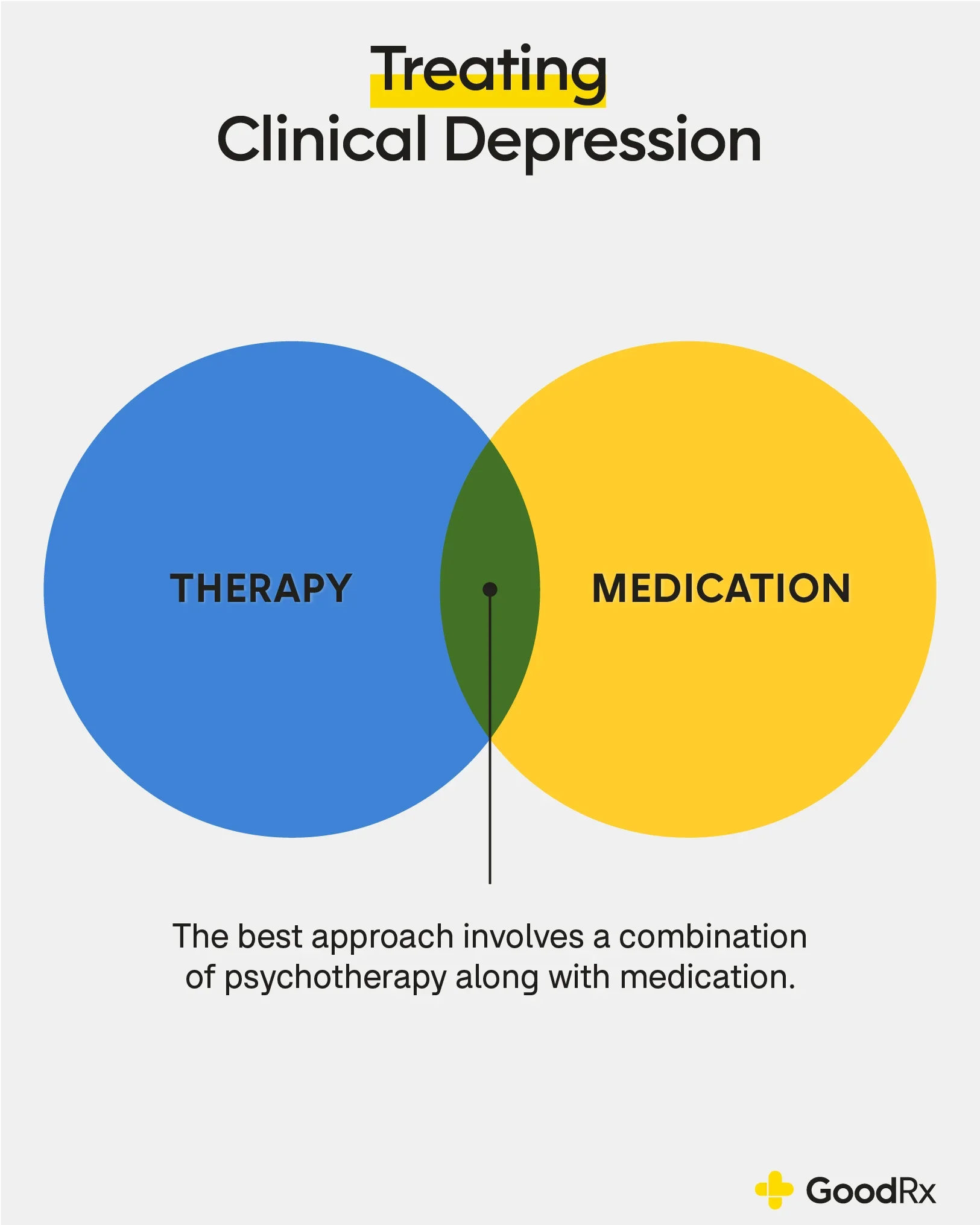
Trying non-medication therapies, such as psychotherapy, electroconvulsive therapy, and transcranial magnetic stimulation
Do not make changes to your medication routine without discussing it with your provider first.
Treatment outcomes vary, but many people are able to find relief once they find the right medication or treatment plan for their depression.
This information is for informational purposes only and is not meant to be a substitute for professional medical advice, diagnosis or treatment. GoodRx is not offering advice, recommending or endorsing any specific prescription drug, pharmacy or other information on the site. GoodRx provides no warranty for any information. Please seek medical advice before starting, changing or terminating any medical treatment.
Prescription savings
Stop paying too much for your prescriptions. Compare prices, get pharmacy coupons, and save up to 80%.Resources
About GoodRx
 Find expert answers to your health questions so you can make the best decisions for yourself and your family.
Health conditions
Medications & treatment
Access & affordability
Well-being
Medication discounts


