VIDEO CENTER
Eczema
Atopic dermatitis, or eczema, can affect people of all ages — but the symptoms can also be managed to increase your quality of life.

At best, eczema can be uncomfortable. But this chronic skin condition marked by dry, itchy skin and rashes may become severe in some cases. It’s considered severe based on:
The intensity of symptoms
How much of the skin the symptoms are covering
And/or the degree to which symptoms are affecting your quality of life
Severe eczema may happen if you are repeatedly scratching at your rashes. Eczema can also become severe if you’re continuously exposed to a trigger for flares without realizing it, according to Nkem Ugonabo, MD, Dermatologist in New York City.
In addition to dry, itchy skin, here are some of the other symptoms of severe eczema to look out for:
Weeping fluid
Crusty skin
Bleeding
Thickened, leathery skin
Frequent skin infections
Severe eczema is also likely to affect your mental health and self-esteem, according to Dr. Ugonabo.
“Not only can you see it, but other people can see it as well,” she says. “Over time, a lot of my patients start to feel self-conscious about going out in public.”
It may be helpful to see a mental health professional to deal with your feelings about severe eczema.
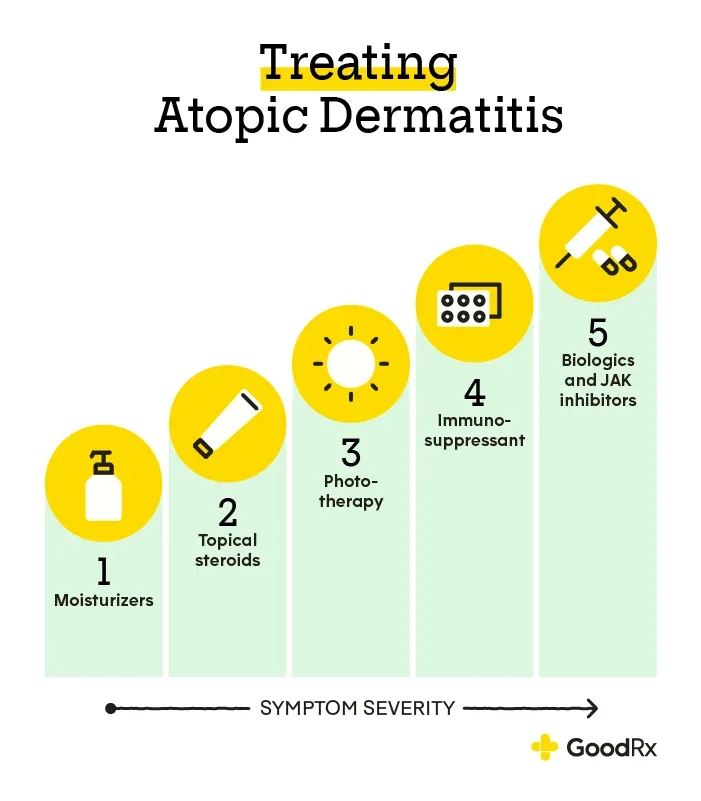
Moisturizing, good skincare habits, and avoiding triggers play a role in treating eczema at any stage, whether mild or severe. People with severe eczema may need additional treatments, however.
Some treatments that may help you with your severe eczema might include:
Phototherapy: This treatment uses ultraviolet (UV) light, which will help reduce inflammation in your skin and reduce your urge to scratch.
Immunosuppressants: These medications, which are prescribed by a doctor, helps reduce the activity of your immune system and suppress some of your itchiness.
Biologic therapy: These injectable medications, also prescribed by a doctor, act on specific parts of the immune system that fuel eczema activity.
Outcomes for these treatments can vary from patient to patient. However, many people find that they help reduce their severe eczema symptoms. This in turn may help give them more confidence and a better quality of life.
This information is for informational purposes only and is not meant to be a substitute for professional medical advice, diagnosis or treatment. GoodRx is not offering advice, recommending or endorsing any specific prescription drug, pharmacy or other information on the site. GoodRx provides no warranty for any information. Please seek medical advice before starting, changing or terminating any medical treatment.
Prescription savings
Stop paying too much for your prescriptions. Compare prices, get pharmacy coupons, and save up to 80%. Find expert answers to your health questions so you can make the best decisions for yourself and your family.
Health conditions
Medications & treatment
Access & affordability
Medication discounts


