



Autoimmune Rashes: Causes, Treatments, Pictures, and More
Autoimmune diseases occur when your immune system targets normal parts of your body. When this happens in the skin, it can cause rashes and skin changes.
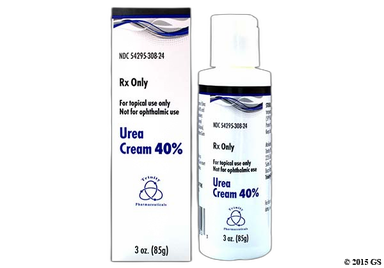
Urea is used to treat abnormally thick or tough skin or nails. It's available over-the-counter in different formulations.

Urea is a topical skin product that loosens the outer layers of the skin and nails. This helps soften areas that are abnormally thick or tough.
| Common Brands | Utopic, Keralac, Umecta |
|---|---|
| Drug Class | Topical skin product |
| Controlled Substance Classification | Not a controlled medication |
| Generic Status | Lower-cost generic available |
| Availability | Prescription or over-the-counter |

The following side effects may get better over time as your body gets used to the medication. Let your healthcare provider know immediately if you continue to experience these symptoms or if they worsen over time.
Contact your healthcare provider immediately if you experience any of the following.
Side effects that you should report to your care team as soon as possible:
Side effects that usually do not require medical attention (report to your care team if they continue or are bothersome):




Urea can cause some serious health issues. This risk may be even higher for certain groups. If this worries you, talk to your doctor or pharmacist about other options.
Urea is only for external use on the skin and nails. Avoid contact with your eyes, lips, and genitals (groin area). Keep this medication out of the reach of children to avoid accidental exposure. Ingesting this medication can cause serious side effects.
Use urea only as directed by your prescriber, or based on the package instructions. If you notice any redness, irritation, or rash, stop using this medication and contact your provider.
Urea foam canisters can contain a lot of pressure. Do not puncture or break the canister, and keep it away from high temperatures and open flames to avoid accidental injury.

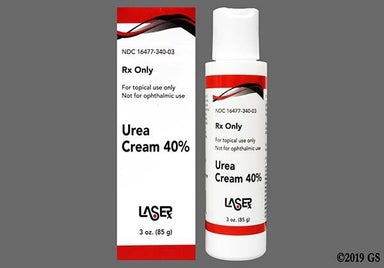
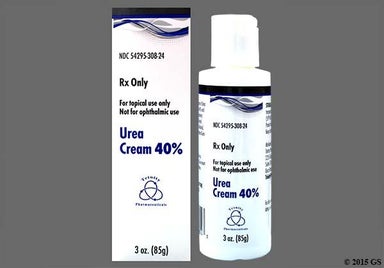
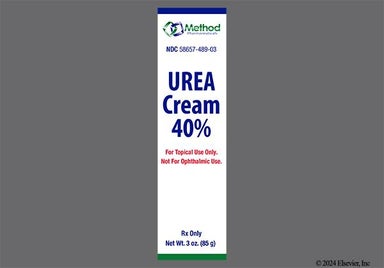
 Bottle of cream
| Dosage | Quantity | Price as low as | Price per unit |
|---|---|---|---|
| 28.35g of 40% | 1 bottle | $28.25 | $28.25 |
| 227g of 39% | 1 bottle | $70.83 | $70.83 |
| 227g of 41% | 1 bottle | $225.24 | $225.24 |
| 198.4g of 40% | 1 bottle | $45.01 | $45.01 |
| 85g of 40% | 1 bottle | $36.86 | $36.86 |
| 142g of 47% | 1 bottle | $186.17 | $186.17 |
| 85g of 20% | 1 bottle | $10.16 | $10.16 |
Bottle of gel| Dosage | Quantity | Price as low as | Price per unit |
|---|---|---|---|
| 28ml of 45% | 1 bottle | $49.94 | $49.94 |
Bottle of lotion| Dosage | Quantity | Price as low as | Price per unit |
|---|---|---|---|
| 236.6ml of 40% | 1 bottle | $52.55 | $52.55 |
| 227g of 40% | 1 bottle | $50.60 | $50.60 |
 Can of foam
| Dosage | Quantity | Price as low as | Price per unit |
|---|---|---|---|
| 150g of 35% | 1 can | $285.17 | $285.17 |
 Jar of cream
| Dosage | Quantity | Price as low as | Price per unit |
|---|---|---|---|
| 227g of 39.5% | 1 jar | $1,587.45 | $1,587.45 |
Urea is usually applied to the affected area(s) 2 times a day. It may be used more or less frequently depending on your condition and the specific product you are using.




Prescription savings
Stop paying too much for your prescriptions. Compare prices, get pharmacy coupons, and save up to 80%. Find expert answers to your health questions so you can make the best decisions for yourself and your family.
Health conditions
Medications & treatment
Access & affordability
 Our monthly healthcare membership can help you save thousands on your prescription costs.
Resources

Urea is not made from urine. The urea in your medication is man-made. When your body breaks down protein, it naturally makes urea, which can be detected in the urine.
Some forms of Urea are safe to use on the face, especially if they are milder. Stronger forms of Urea should only be used on the face if recommended by your provider. The skin on your face is a lot more sensitive and more likely to have side effects from topical medications. Only use the smallest amount necessary for the shortest time possible, and try to keep this medication away from your eyes and lips.
Urea can be good for your feet if the skin is prone to drying and cracking. Damaged skin on the feet can lead to pain and even infection. If you have diabetes, it's especially important to take care of your feet, because you are more likely to get foot infections. Urea can also help if you have toenails that are damaged or abnormally thick.
Urea is not an antifungal, so it won't cure nail fungus if used on its own. Urea does help soften and thin the nails so that antifungal medications can penetrate the nail and treat the fungal infection underneath.
