



How Much Is Methimazole Without Insurance?
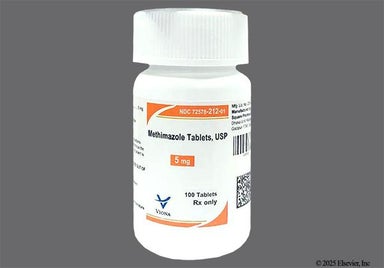
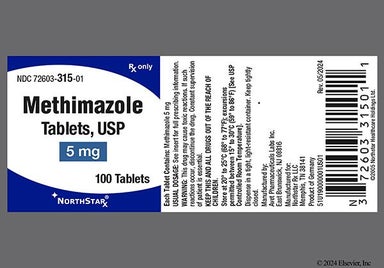
How much methimazole is without insurance varies from pharmacy to pharmacy. But without discounts or assistance, you may pay over $20 for a monthly supply.

Methimazole is an antithyroid medication. It's used to treat adults and children with hyperthyroidism (high thyroid hormone levels). This medication comes as a tablet. At the start, you usually take your dose by mouth 3 times a day. Then, your prescriber can work with you to find a dosing plan that works for you. Side effects can include rash, nausea, drowsiness, and headache. Although the brand name Tapazole is no longer sold, generic methimazole tablets are still available.

Methimazole is an antithyroid medication. With hyperthyroidism, your thyroid makes too much thyroid hormones. These hormones play a role in controlling your body temperature, energy, and how your organs work.
Methimazole works by stopping your thyroid from making too much thyroid hormones. This helps bring your hormone levels down. It can help with symptoms like muscle weakness, trouble tolerating heat, a fast or uneven heartbeat, and an enlarged thyroid. It can also help improve your energy.
| Common Brands | Tapazole |
|---|---|
| Drug Class | Antithyroid agent |
| Controlled Substance Classification | Not a controlled medication |
| Generic Status | Lower-cost generic available |
| Availability | Prescription only |

The following side effects may get better over time as your body gets used to the medication. Let your healthcare provider know immediately if you continue to experience these symptoms or if they worsen over time.
Contact your healthcare provider immediately if you experience any of the following.
Along with its needed effects, a medicine may cause some unwanted effects. Although not all of these side effects may occur, if they do occur they may need medical attention.
Check with your doctor immediately if any of the following side effects occur:
Incidence not known
Black, tarry stools
bleeding gums
bleeding under the skin
bloody or cloudy urine
burning, crawling, itching, numbness, prickling, "pins and needles", or tingling feelings
chills
dark urine
difficulty in breathing
dizziness or lightheadedness
drowsiness
feeling of constant movement of self or surroundings
general feeling of discomfort, illness, or weakness
headache
hoarseness
itching, skin rash
light-colored stools
loss of appetite and weight
loss of consciousness
lower back or side pain
painful or difficult urination
pinpoint red spots on the skin
redness, soreness, or itching skin
sensation of spinning
soreness of the muscles
sores, ulcers, or white spots on the lips or in the mouth
sores, welts, or blisters
stomach pain
swelling of the face, feet, or lower legs
swollen or painful glands
swollen salivary glands
swollen, painful, or tender lymph glands in the neck, armpit, or groin
tightness in the chest
unusual bleeding or bruising
unusual tiredness or weakness
unusual weight gain
upper right abdominal pain
yellow eyes or skin
Some side effects may occur that usually do not need medical attention. These side effects may go away during treatment as your body adjusts to the medicine. Also, your health care professional may be able to tell you about ways to prevent or reduce some of these side effects. Check with your health care professional if any of the following side effects continue or are bothersome or if you have any questions about them:
Incidence not known
Abnormal loss of hair
changes in skin coloring
difficulty in moving
joint pain or swelling
loss of taste
muscle pain, cramps, or stiffness
pain or discomfort in the chest, upper stomach, or throat
Other side effects not listed may also occur in some patients. If you notice any other effects, check with your healthcare professional.
Call your doctor for medical advice about side effects. You may report side effects to the FDA at 1-800-FDA-1088.




Methimazole can cause some serious health issues. This risk may be even higher for certain groups. If this worries you, talk to your doctor or pharmacist about other options.
Methimazole can harm an unborn baby if taken during the first trimester of pregnancy. In rare cases, it can cause birth defects.
Because of this risk, methimazole isn’t recommended for use early in pregnancy. If you’re pregnant or planning to become pregnant, talk to your prescriber right away. They can suggest safer options. If you and your prescriber decide to continue with methimazole, you should take the lowest dose possible.
Methimazole can lower your white blood cell counts, which can sometimes be life-threatening. Having a very low white blood cell count can put you at risk of getting sick more easily.
Look out for a sore throat, fever, or any other signs of infection while taking methimazole. If this happens, call your care team right away. They can check if your white blood cell count is low. They can also check if you have an infection and help treat it if needed.
Some people taking methimazole have had liver damage. The risk appears to be lower than with other antithyroid medications, especially in children.
Still, watch for symptoms of liver problems while taking methimazole. This can include yellowing of your skin or the whites of your eyes, pain in the upper right side of your stomach, nausea, and loss of appetite. If this happens, tell your care team right away. Your prescriber might order blood work to check your liver. If the problem is serious, you might need to stop the medication.
Methimazole works by stopping your thyroid gland from making thyroid hormones. Sometimes, this can make your thyroid hormone levels too low.
Low thyroid hormone levels, or hypothyroidism, can cause symptoms like fatigue, dry skin, trouble tolerating cold, or constipation. Tell your care team if you have these symptoms. They can check your thyroid hormone levels with a blood test. If they're too low, your prescriber can adjust your methimazole dose so your levels get back in the normal range.
Although very rare, some people taking methimazole have had inflamed blood vessels. This can lead to serious complications. In some cases, this problem got better after stopping the medication. But in other more serious cases, people needed treatment, like steroids.
Symptoms can depend on which blood vessels are affected. But they can include rashes, chest pain, trouble breathing, stomach pain, or discolored urine. If you notice any unusual symptoms while taking methimazole, tell your prescriber. They can help see what might be going on.


Although certain medicines should not be used together at all, in other cases two different medicines may be used together even if an interaction might occur. In these cases, your doctor may want to change the dose, or other precautions may be necessary. When you are taking this medicine, it is especially important that your healthcare professional know if you are taking any of the medicines listed below. The following interactions have been selected on the basis of their potential significance and are not necessarily all-inclusive.
Using this medicine with any of the following medicines is usually not recommended, but may be required in some cases. If both medicines are prescribed together, your doctor may change the dose or how often you use one or both of the medicines.
Using this medicine with any of the following medicines may cause an increased risk of certain side effects, but using both drugs may be the best treatment for you. If both medicines are prescribed together, your doctor may change the dose or how often you use one or both of the medicines.








Prescription savings
Stop paying too much for your prescriptions. Compare prices, get pharmacy coupons, and save up to 80%.Resources
About GoodRx
 Find expert answers to your health questions so you can make the best decisions for yourself and your family.
Health conditions
Medications & treatment
Access & affordability
Well-being
Medication discounts

You can take Methimazole at any time of day. The most important thing is to take it around the same time each time. When you first start, your daily dose is usually split into 3 smaller doses taken 8 hours apart. This helps keep the medication level steady in your body. Once your thyroid hormone levels are under control, your prescriber might have you take it once a day. Whether you choose morning or night, try to stay consistent to the medication can work as best as it can. Talk to your prescriber or pharmacist if you need help finding a schedule that works for you.
Methimazole can take some time to work. It blocks your thyroid from making new hormones. But your body still needs some time to use up the extra hormones already in your system. In one study, some people with Graves' disease had lower thyroid hormone levels as early as 3 weeks into treatment. But most saw results within 6 weeks of starting Methimazole. Note that how long it takes to work can vary from person to person. During treatment, you’ll need to get regular blood tests to check your thyroid hormone levels. These tests help your prescriber track how well the medication is working and see if you need any dose adjustments.
Antithyroid medications like Methimazole can sometimes lead to weight gain. Methimazole works to lower your thyroid hormone levels. And with lower hormone levels, your metabolism might slow down. This can cause your body to burn less calories. As a result, you might gain some weight. But how much weight you might gain can vary from person to person. Lifestyle changes can help you manage your weight. These can include adding exercise to your day, getting enough sleep, and eating a more balanced diet. Talk to your prescriber if you notice unusual changes in your weight while taking Methimazole.
It's not clear if there are medications you can't take with Methimazole. But there are some that you should be careful with. For example, taking blood thinners like warfarin (Coumadin) with Methimazole can raise your risk of bleeding and bruising. And taking Methimazole with a beta blocker can make the beta blocker stay in your body longer. This can cause more side effects like a slow heart rate, low blood pressure, or dizziness. Your prescriber might lower the dose of your beta blocker if you take both. This isn't a full list of all interactions. Ask your prescriber or pharmacist if you have questions about taking your other medications with Methimazole.
Talk to your prescriber about how much alcohol you drink. Methimazole doesn't directly interact with alcohol. But alcohol can make side effects like nausea and drowsiness worse. In addition, drinking a lot of alcohol can harm your liver. Methimazole can also affect the liver, though it's rare. If you drink heavily and have liver problems, it could be hard to tell if it's from the medication or alcohol. It’s a good idea to chat with your prescriber about what’s safe for you, especially if you already have liver concerns.
If you stop taking Methimazole suddenly, your hyperthyroidism symptoms will likely come back within a few weeks. Without the medication, your thyroid can become overactive again. This can cause a fast heartbeat, anxiety, or feeling shaky or overheated. In rare cases, thyroid hormone levels could rise too much. This can lead to a serious condition called a "thyroid storm," which is a medical emergency. Always talk to your prescriber before changing your dose. If you want to stop the medication, your prescriber can see if it's the right choice for you and help you stop in a safe way.
It’s recommended to avoid Methimazole during the first 3 months of pregnancy. In this stage of pregnancy, Methimazole has a higher risk of causing more severe birth defects than propylthiouracil (PTU). Because of this, many prescribers will switch you to PTU before you try to get pregnant or as soon as you find out you’re pregnant. Later, in the second and third trimesters, they might switch you back to Methimazole. This is because it's less likely to cause liver problems than PTU. Your prescriber will work with you to choose the safest plan. This is important since untreated hyperthyroidism can also be harmful to you and your baby.
Methimazole and PTU work in similar ways to block your thyroid from making too much hormone. Both can cause liver injury, but Methimazole might have a lower risk. Because of this, Methimazole is often the first choice for antithyroid therapy. The medications are also used at different stages of pregnancy. Methimazole isn’t recommended during the first trimester, and PTU is preferred instead. This is because there's a higher risk of severe birth defects with Methimazole than with PTU during this stage of pregnancy. But in the second and third trimesters, Methimazole is preferred because it has less risk of serious harm like liver damage. Talk to your prescriber to compare and discuss which is the best option for you.
