

How Long Does Sudafed Stay in Your System? Plus, 7 More Sudafed FAQs
Sudafed (pseudoephedrine), which can help treat a stuffy nose, may cause uncomfortable side effects. Here’s how long this decongestant stays in your system.
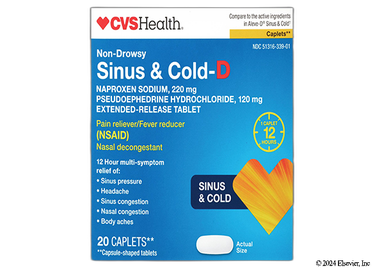
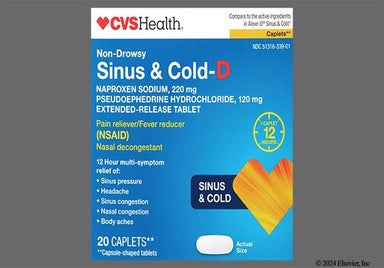
Aleve-D Sinus and Cold is a combination of naproxen (a non-steroidal anti-inflammatory drug, or NSAID) and pseudoephedrine (a decongestant). It's used to treat symptoms of cold or flu, such as stuffy nose, headache, and fever. Aleve-D (naproxen / pseudoephedrine) is taken by mouth every 12 hours as needed and can be used by adults and children 12 years and older. Some side effects of this medication include restlessness, nausea, and stomach upset. Other brand names of this medication include Sudafed Sinus 12 Hour Pressure + Pain.

Short-term relief of symptoms due to the common cold or flu:
Aleve-D (naproxen / pseudoephedrine) is a combination of two medications:
| Common Brands | Sudafed Sinus 12 Hour Pressure + Pain, Aleve-D Sinus & Cold |
|---|---|
| Drug Class | NSAID / Decongestant |
| Controlled Substance Classification | Controlled in some states. See FAQs below. |
| Generic Status | Lower-cost generic available |
| Availability | Prescription or over-the-counter |

The following side effects may get better over time as your body gets used to the medication. Let your healthcare provider know immediately if you continue to experience these symptoms or if they worsen over time.
Contact your healthcare provider immediately if you experience any of the following.
Side effects that you should report to your care team as soon as possible:
Side effects that usually do not require medical attention (report these to your care team if they continue or are bothersome):




Aleve-D (naproxen / pseudoephedrine) can cause some serious health issues. This risk may be even higher for certain groups. If this worries you, talk to your doctor or pharmacist about other options.
Although rare, it's possible to have a severe and life-threatening allergic reaction to Aleve-D (naproxen / pseudoephedrine). The risk is higher if you're allergic to aspirin, a similar painkiller to naproxen in Aleve-D (naproxen / pseudoephedrine). These allergic reactions can include hives, facial swelling, and wheezing. Aleve-D (naproxen / pseudoephedrine) can also cause severe skin reactions, such as reddening or peeling of the skin, painful rash, and fluid-filled blisters. Stop taking Aleve-D (naproxen / pseudoephedrine) and go to the emergency room right away if you experience any of these symptoms.
Naproxen in Aleve-D (naproxen / pseudoephedrine) can cause stomach bleeding and ulcers. These problems can occur without warning or symptoms, so it's best to take the lowest dose for the shortest possible time to minimize your risk. Some medications, such as oral corticosteroids and blood thinners, can raise your risk of stomach bleeding. Tell your provider about all the medications that you take before starting Aleve-D (naproxen / pseudoephedrine). If you have severe stomach pain, black and tarry stools, or blood in the urine while using this medication, get medical help promptly. Also, get medical help if you fall and hit your head or experience other injuries, your provider might want to examine you to make sure you're not bleeding on the inside.
NSAIDs, like naproxen in Aleve-D (naproxen / pseudoephedrine), can raise your risk of having blood clots, heart attacks, or strokes. The risk might be higher if you have a history of heart problems, use this medication at higher doses, or use this medication for a long period of time. To prevent heart attack or stroke from happening, your provider will prescribe the lowest possible dose of Aleve-D (naproxen / pseudoephedrine) for the shortest amount of time that works well for you. If you have heart problems, talk to your healthcare provider before starting this medication. Don't use Aleve-D (naproxen / pseudoephedrine) if you've had or will be having heart bypass surgery. Call 911 or get immediate medical help if you experience chest pain, trouble breathing, weakness on one side of your body, or trouble speaking or walking.
Aleve-D (naproxen / pseudoephedrine) can cause your body to hold onto extra fluid, which can raise your blood pressure or put you at risk for heart failure. Tell your provider if you have a history of heart problems, or are taking blood pressure medications, before starting Aleve-D (naproxen / pseudoephedrine) to make sure it's safe for you. Your provider will screen you for heart problems before starting you on this medication. Some forms of Aleve-D (naproxen / pseudoephedrine) contains sodium, so it's important to keep track of how much you're getting from your doses if you're on a low-salt diet. If you experience unexplained fainting, chest pain with physical activity, or irregular heartbeat while taking Aleve-D (naproxen / pseudoephedrine), contact your provider.
Naproxen in Aleve-D (naproxen / pseudoephedrine) can cause kidney problems. Your risk is higher if you have certain factors like older age, certain medical problems like diabetes, or you're taking medications that can cause kidney problems. Your provider may order lab tests to monitor your kidney health before and during treatment with Aleve-D (naproxen / pseudoephedrine). If your kidney health worsens, your provider might stop your Aleve-D (naproxen / pseudoephedrine) treatment. Contact your provider if you develop any signs or symptoms of kidney failure, including changes in your need to urinate, tiredness, dry and itchy skin, low appetite, and muscle cramps.
Don't use Aleve-D (naproxen / pseudoephedrine), specifically naproxen, starting at 20 weeks of pregnancy. It can cause serious complications, such as heart or kidney problems in your unborn baby. If you're pregnant, speak to your provider about the risks and benefits of Aleve-D (naproxen / pseudoephedrine) and ask if there are safer alternatives.
Aleve-D (naproxen / pseudoephedrine) can interact with some medications. For example, you can't take Aleve-D (naproxen / pseudoephedrine) within 2 weeks of taking a monoamine oxidase inhibitor (MAOI). MAOIs can interact with pseudoephedrine and cause dangerously high blood pressure. Another example is that you can't take Aleve-D (naproxen / pseudoephedrine) if you're taking other NSAIDS because doing so raises your risk for stomach ulcers. Before starting Aleve-D (naproxen / pseudoephedrine), ask your provider or pharmacist to help you check for medication interactions.
Aleve-D (naproxen / pseudoephedrine) contains a decongestant (pseudoephedrine) and a painkiller (naproxen), which are found in many other over-the-counter products. Using more than one product containing the same ingredients can lead to an accidental overdose that can be dangerous. For example, taking too much pseudoephedrine can cause serious side effects, such as headache, dizziness, anxiety, ringing in the ears, blurry vision, chest pain, fast heart rate, changes in blood pressure, nausea, and vomiting. Taking too much naproxen can cause serious stomach bleeding and ulcers.
If you're not sure whether you're taking a medication with any of the ingredients in Aleve-D (naproxen / pseudoephedrine), talk to your provider or pharmacist. To prevent an accidental overdose, follow the specific product instructions on the package carefully. If you think that you or your child might’ve accidentally taken too much Aleve-D (naproxen / pseudoephedrine), call a Poison Center at 1-800-222-1222 right away even if you aren't completely sure.

 Tablet
| Dosage | Quantity | Price as low as | Price per unit |
|---|---|---|---|
| 220mg/120mg | 30 tablets | $17.62 | $0.59 |


Contraindications are specific health conditions or situations in which a person should not take a medication due to safety concerns. If you have any of the following conditions or if any of the following apply to you, let your healthcare provider know because Aleve-D (naproxen / pseudoephedrine) will not be safe for you to take.

Short-term relief of symptoms due to the common cold or flu:


Prescription savings
Stop paying too much for your prescriptions. Compare prices, get pharmacy coupons, and save up to 80%. Find expert answers to your health questions so you can make the best decisions for yourself and your family.
Health conditions
Medications & treatment
Access & affordability
Medication discounts

No, Naproxen/Pseudoephedrine isn't discontinued. You can typically find this medication at the pharmacy counter (or behind the counter). You'll also be asked to present photo identification and sign your signature when you buy it.
Naproxen/Pseudoephedrine is required to be behind the counter because pseudoephedrine has the potential to be habit-forming and to be misused. For this reason, certain states (but not all) might put strict regulations on Naproxen/Pseudoephedrine. Keep in mind that state laws change from time to time. So, it’s best to ask a pharmacist help you locate Naproxen/Pseudoephedrine in the pharmacy.
Naproxen/Pseudoephedrine is a combination of 2 medications. After a single dose, naproxen typically works within an hour to help with fever and pain, while pseudoephedrine usually works within 30 minutes to relieve congestion.
Naproxen/Pseudoephedrine might keep you awake since it contains pseudoephedrine, a medication that causes nervousness, anxiety, or trouble sleeping. If this happens, speak to a provider. Avoid taking this medication too close to bedtime to avoid problems falling and staying asleep.
Sleepiness isn't a side effect of pseudoephedrine, but it is a side effect of naproxen in Naproxen/Pseudoephedrine. When you first take this medication, don't drive a car or operate machinery until you know how it affects you.
If you're thinking about taking Nyquil, check the ingredients on the manufacturer's label first. This is because Nyquil isn't a single medication. But rather, it's the brand name of many different OTC products. Some Nyquil products contain a decongestant called phenylephrine that's similar to the pseudoephedrine in Aleve-D. It's typically not recommended to take medications that contain similar ingredients together. Ask your provider or pharmacist if you're not sure whether you can take 2 different OTC cold or flu products together.
Don't take Naproxen/Pseudoephedrine with other NSAIDs, such as ibuprofen (Motrin, Advil). Doing so puts you at higher risk for serious side effects, such as stomach bleeds and ulcers. NSAIDs are commonly found in over-the-counter pain and cold medications. Talk with your healthcare provider or pharmacist if you're not sure whether you're already taking an NSAID.
