



3 Biologics for Lupus and Promising New Treatments on the Horizon
Biologic medications such as belimumab and rituximab show promise in treating lupus by targeting specific immune-system pathways.
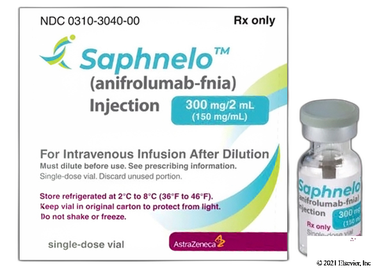
Saphnelo (anifrolumab or anifrolumab-fnia) is an FDA approved injection used along with other medications to treat adults with moderate-to-severe systemic lupus erythematosus (SLE), an autoimmune condition that causes your immune system to mistakenly attack your own body. It's given either as an infusion into a vein once a month by a healthcare professional or as an injection under the skin once a week at home. Common side effects include upper respiratory tract infections, bronchitis, and cough.

Saphnelo (anifrolumab) is a type I interferon (IFN) receptor antagonist, meaning it blocks the activity of proteins called type I IFNs. If you have lupus, these proteins can make your immune system too active.
By blocking type I IFNs, Saphnelo (anifrolumab) helps calm your immune system and reduce inflammation.
| Common Brands | Saphnelo |
|---|---|
| Drug Class | Type I interferon receptor antagonist |
| Controlled Substance Classification | Not a controlled medication |
| Generic Status | No lower-cost generic available |
| Availability | Prescription only |

The following side effects may get better over time as your body gets used to the medication. Let your healthcare provider know immediately if you continue to experience these symptoms or if they worsen over time.
*Note: These side effects were reported in clinical studies with the IV infusion.
Contact your healthcare provider immediately if you experience any of the following.
Side effects that you should report to your care team as soon as possible:
Side effects that usually do not require medical attention (report these to your care team if they continue or are bothersome):



IV infusion:
Injection under the skin:

Saphnelo (anifrolumab) can cause some serious health issues. This risk may be even higher for certain groups. If this worries you, talk to your doctor or pharmacist about other options.
Saphnelo (anifrolumab) can affect your immune system and make it harder for your body to fight infections. This can raise your risk of serious infections, including COVID-19, shingles, and other infections that can sometimes be life-threatening. Your risk is higher if you have an active infection, get infections often, or have a long-term infection.
Contact your care team right away if you develop signs of an infection, such as a fever, cough, trouble breathing, painful rash or blisters, or if you're not getting better with treatment. You might have to stop Saphnelo (anifrolumab) until the infection goes away.
Serious allergic reactions to Saphnelo (anifrolumab) can happen, including life-threatening reactions like anaphylaxis. Get emergency medical help right away if you have trouble breathing, swelling of your face or throat, hives, dizziness, or feel like you might faint during or after treatment. If you have a serious allergic reaction, your care team will stop the medication and treat the reaction.
Saphnelo (anifrolumab) might raise your risk of certain cancers because it affects your immune system. It's not known whether this medication directly increases cancer risk. Tell your prescriber if you have a history of cancer or develop cancer while taking Saphnelo (anifrolumab) so they can decide whether you should continue treatment.





Prescription savings
Stop paying too much for your prescriptions. Compare prices, get pharmacy coupons, and save up to 80%. Find expert answers to your health questions so you can make the best decisions for yourself and your family.
Health conditions
Medications & treatment
Access & affordability
Medication discounts

Weight gain wasn't reported by people using Saphnelo in clinical studies. If you notice changes in your weight while using this medication, talk to your prescriber. They can help determine whether another condition or medication might be causing the change.
Saphnelo can be administered in two ways. A healthcare professional can give it as a 30-minute infusion into a vein once a month at a clinic or infusion center. Or, you can give yourself a once-weekly injection under the skin at home using a prefilled syringe or autoinjector. If you're giving yourself the injection, inject it into your lower stomach or the front of your thigh. If a caregiver is giving the injection, they can also use the back of your upper arm.
You might notice some improvement with Saphnelo within a few weeks, but it can take several months to get the full benefit. Keep using the medication as prescribed, even if you don't feel better right away. Talk to your prescriber if your symptoms aren't improving or if they get worse.
Yes, Saphnelo is a type of immunosuppressant. It works by lowering the activity of your immune system. This helps reduce inflammation throughout your body to help treat symptoms of moderate or severe lupus.
Hair loss wasn't reported as a side effect of Saphnelo in clinical studies. In fact, hair loss is a common symptom of lupus, so changes in your hair might be related to your condition rather than the medication. If you notice new or worsening hair loss during treatment, talk to your prescriber so they can help find the cause.
Saphnelo and Benlysta (belimumab) are both biologic medications used to treat systemic lupus erythematosus (SLE). Benlysta is also used to treat lupus nephritis, a kidney problem caused by lupus. Saphnelo is only approved for adults, while Benlysta can be used in adults and children ages 5 years and older. Some early studies suggest that Saphnelo might work better than Benlysta for treating moderate-to-severe SLE symptoms, but more research is needed. Talk to your prescriber if you have questions about comparing the two.
Saphnelo isn't FDA approved to treat lupus nephritis. But some prescribers might use it off-label, and early studies suggest it might help some people with this condition. More research is needed to confirm how well it works.
