Key takeaways:
Rituxan (rituximab) is a monoclonal antibody medication that treats different types of blood cancer.
Rituxan is also an immunotherapy medication, meaning it helps make the immune system better at fighting cancer.
There are many ways to save on Rituxan. If you’re eligible, a manufacturer savings card can help you access Rituxan for as little as $5 per month. A patient assistance program is also available.
Save on related medications
Rituxan (rituximab) is a medication used to treat different health conditions. But it’s most often used as a blood cancer treatment. Rituxan was first FDA approved in 1997 for the treatment of non-Hodgkin lymphoma (NHL), a type of blood cancer. It was also the first monoclonal antibody approved for the treatment of cancer.
Since it’s been approved, it’s made a difference in the lives of many people. Today, more than 70% of people with NHL who receive rituximab live 5 years past their initial diagnosis. And since 1997, Rituxan has paved the way for monoclonal antibody treatment in cancer.
Learn how Rituxan works, what types of cancer it’s used for, and important side effects to be aware of.
What is Rituxan?
Rituxan is a monoclonal antibody medication. It’s also considered a type of immunotherapy, meaning it helps turn the immune system against cancer. It works by identifying and labeling certain white blood cells (B cells) for destruction by the body’s immune system.
It’s used to treat certain types of blood cancer, like NHL and chronic lymphocytic leukemia (CLL). It also can treat autoimmune conditions, like rheumatoid arthritis (RA) and pemphigus vulgaris.
Rituxan can be given alone or in combination with treatments, like chemotherapy and radiation. Treatment strategies will differ depending on the type and stage of the cancer that you have.
There are also many different formulations of Rituxan that are available. We’ll discuss these next.
What’s the difference between Rituxan and Rituxan Hycela?
Rituxan Hycela is an alternative formulation of Rituxan. It can be substituted for Rituxan in the treatment of NHL and CLL.
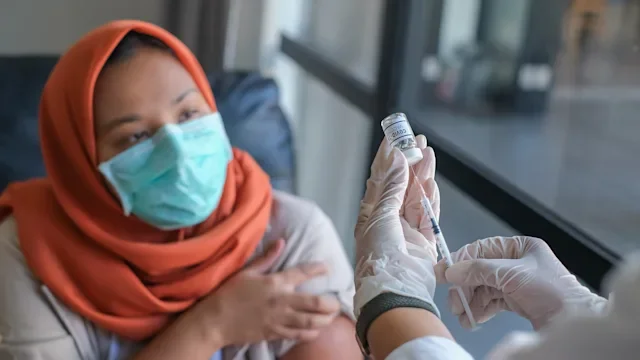
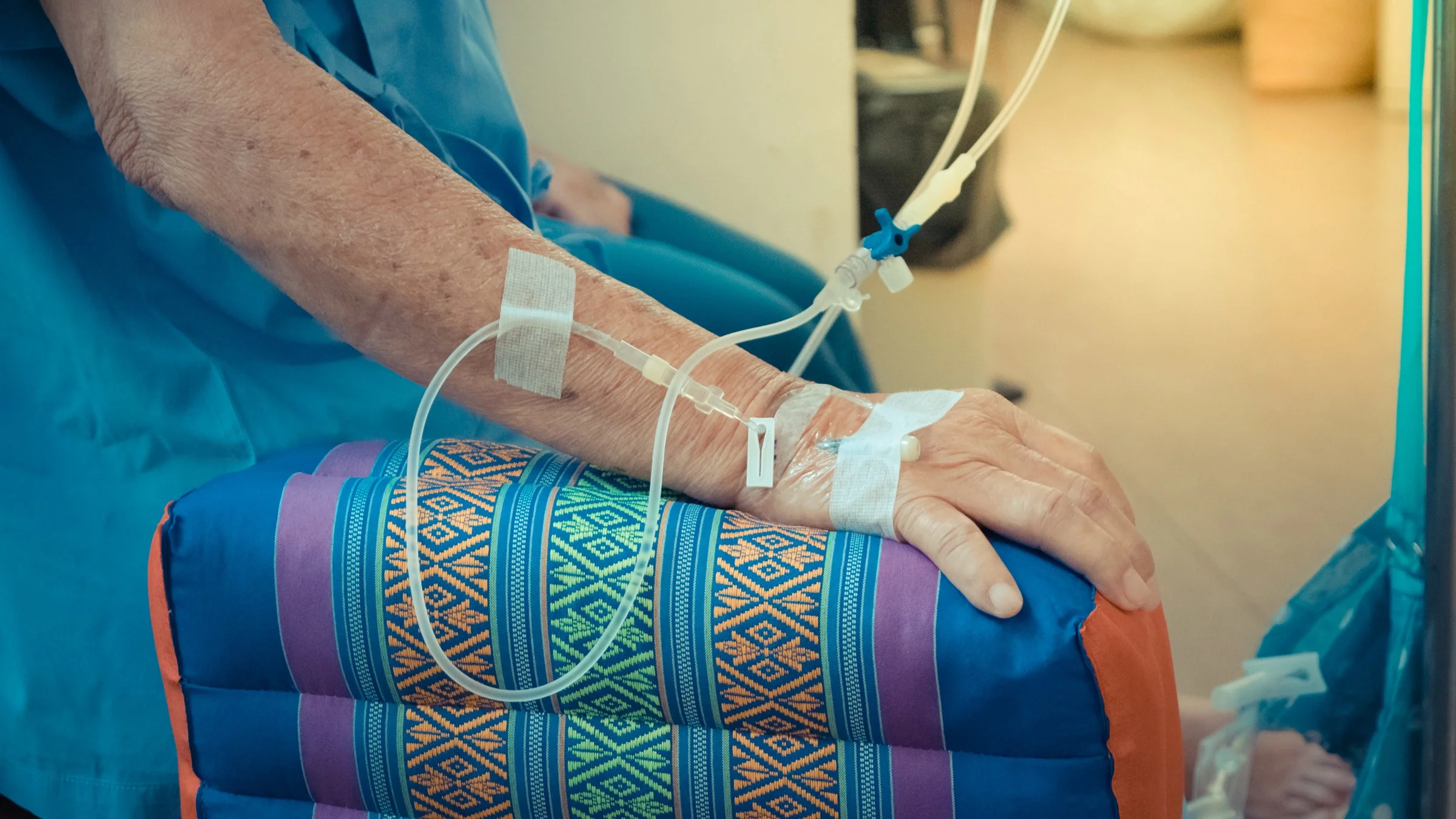
Rituxan Hycela contains two medications: Rituxan and hyaluronidase. Rituxan Hycela is a subcutaneous (under the skin) injection, whereas Rituxan is an IV infusion (given into a vein). Hyaluronidase allows Rituxan to be injected under the skin.
Rituxan Hycela is injected under the skin of the belly area. The injection takes about 5 to 7 minutes. Before you can receive Rituxan Hycela, you need to complete one IV infusion of Rituxan without experiencing any serious side effects.
Rituxan Hycela has been shown in many studies to work just as well as Rituxan in treating follicular lymphoma (FL), diffuse large B-cell lymphoma (DLBCL), and CLL. FL and DLBCL are types of NHL.
An advantage of Rituxan Hycela is that it’s quick to administer, whereas an IV infusion of Rituxan can take up to 90 minutes or longer. But because Rituxan Hycela is injected under the skin, it can cause an injection site reaction and/or an allergic skin reaction.
Are there any other similar types of Rituxan?
Other types of Rituxan are also available: They’re called Truxima (rituximab-abbs), Ruxience (rituximab-pvvr), and Riabni (rituximab-arrx). They’re all biosimilars of Rituxan. A biosimilar medication is a biologic medication that’s very similar to the original medication. Rituxan biosimilars are often made by manufacturers other than Genentech, Rituxan’s manufacturer.
Biosimilars are FDA-approved medications and are sometimes used instead of the original medication. This is because biosimilar medications usually cost less than the original medication. Biosimilars are shown in studies to be very similar to the original medication.
Which type of Rituxan you receive may be up to which medication your insurance covers.
What cancers can Rituxan treat?
Rituxan is most often used to treat the following types of cancers:
Chronic lymphocytic leukemia (CLL): CLL is a type of cancer that starts in the white blood cells (lymphocytes).
Diffuse large B-cell lymphoma (DLBCL): DLBCL is an aggressive type of non-Hodgkin lymphoma (NHL), a cancer that also starts in the white blood cells.
Follicular lymphoma (FL): FL is a less aggressive — or indolent — type of NHL.
But, as mentioned, potential doses and treatments differ depending on the type and stage of the cancer.
How does Rituxan work?
Rituxan works by targeting the CD20 protein on the surface of B blood cells. In cancers like CLL and NHL, B cells grow out of control. Rituxan works to lower the amount of cancerous B cells in the body. It finds these B cells by looking for the CD20 protein.
Once attached to CD20, Rituxan works by triggering your own immune system to destroy these cancer cells.
But Rituxan can also affect healthy cells. This may cause some side effects. Side effects of Rituxan are discussed later on.
How long does Rituxan treatment take to work?
Rituxan begins working after the first dose is given. But it may take weeks to months to see a response.
In one study of people who received Rituxan for FL, the median time to notice a response to the medication was 50 days. Cancer-related symptoms were resolved in 64% of people who received Rituxan in the same study.
But, ultimately, the length of time to respond to treatment with Rituxan differs from person to person.
What side effects are associated with Rituxan?
As with all medications, Rituxan has a number of possible side effects. Common side effects can include:
Fever and chills
Weakness
Nausea
Headache
Cough
Runny nose
Throat irritation
Although less common, serious risks and side effects are also possible. These serious side effects may include:
Hepatitis B virus reactivation, which may cause symptoms like fever, tiredness, or appetite changes
Progressive multifocal leukoencephalopathy, which includes a number of brain-related side effects
Infusion reaction, which can include symptoms like skin rash, difficulty breathing, and a drop in blood pressure
Shortness of breath
Higher chance of getting an infection
Skin reactions
Irregular heartbeats
Tumor lysis syndrome, which can cause dangerous chemical and electrolyte imbalances
If you have any of these symptoms, seek medical attention right away if you’re not still at an infusion center.
How to save on Rituxan
There are ways to save on Rituxan. GoodRx can help you navigate between patient assistance programs and copay savings cards to save money on your prescription.
Save with patient assistance programs. If you’re uninsured or underinsured, you may be eligible for Rituxan’s patient assistance program, which offers the medication free of cost.
Save with a copay savings card. If you have commercial insurance, you may be eligible to pay as little as $5 for Rituxan using a savings card from the manufacturer.
The bottom line
Rituxan is a medication that’s used to treat many different types of blood cell cancers, like NHL and CLL. It can be given as an IV or an under-the-skin injection. Cheaper versions of Ritxuan, called biosimilars, are also available. The choice of which Rituxan formulation to receive and when to incorporate Rituxan as part of your cancer treatment should be discussed with a cancer specialist.

Why trust our experts?




References
American Cancer Society. (2018). What is chronic lymphocytic leukemia?
American Cancer Society. (2018). What is non-hodgkin lymphoma?
Amgen. (2020). Riabni [package insert].
Casulo, C. (2019). How I manage patients with follicular lymphoma. British Journal of Haematology.
Cephalon. (2020). Truxima [package insert].
Cerny, T., et al. (2002). Mechanism of action of rituximab. Anti-Cancer Drugs.
Davies, A., et al. (2017). Efficacy and safety of subcutaneous rituximab versus intravenous rituximab for first-line treatment of follicular lymphoma (SABRINA): A randomised, open-label, phase 3 trial. The Lancet Haematology.
Feugier, P., et al. (2005). Long-term results of the R-CHOP study in the treatment of elderly patients with diffuse large B-cell lymphoma: A study by the Groupe d’Etude des Lymphomes de l’Adulte. Journal of Clinical Oncology.
Genentech. (2021). Rituxan [package insert].
Genentech. (2021). Rituxan Hycela [package insert].
Genentech. (2021). Rituxan immunology access solutions.
Genetic and Rare Diseases Information Center (GARD). (2018). Pemphigus vulgaris.
HealthWell Foundation. (2021). Do I qualify for assistance?
Lugtenburg, P., et al. (2017). Efficacy and safety of subcutaneous and intravenous rituximab plus cyclophosphamide, doxorubicin, vincristine, and prednisone in first-line diffuse large B-cell lymphoma: The randomized MabEase study. Haematologica.
National Cancer Institute. (2014). Using the immune system in the fight against cancer: Discovery of Rituximab.
National Cancer Institute. (2021). Biologic agent.
National Cancer Institute. (2021). CD20 antigen.
National Cancer Institute. (2021). CHOP regimen.
National Cancer Institute. (2021). Lymphoma—patient version.
National Cancer Institute. (2021). Monoclonal antibody.
NCCN Guidelines for Patients. (2019). Follicular lymphoma.
NCCN Guidelines for Patients. (2020). Diffuse large B cell lymphoma.
NCCN Guidelines for Patients. (2021). Chronic lymphocytic leukemia.
PAN Foundation. (2021). Apply for patient financial assistance.
Pfizer. (2020). Ruxience [package insert].
Pierpont, T. M., et al. (2018). Past, present, and future of Rituximab—the world’s first oncology monoclonal antibody therapy. Frontiers in Oncology.
Smith, M. R. (2003). Rituximab (monoclonal anti-CD20 antibody): Mechanisms of action and resistance. Oncogene.
Teva. (2021). Truxima savings support program.
Yelvington, B. J. (2018). Subcutaneous Rituximab in follicular lymphoma, chronic lymphocytic leukemia, and diffuse large B-cell lymphoma. Journal of the Advanced Practitioner in Oncology.