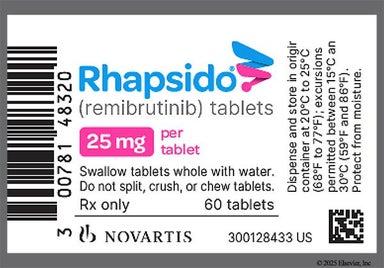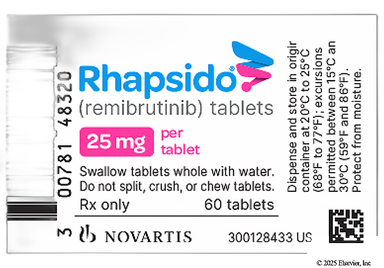
Rhapsido
Rhapsido (remibrutinib) is used to treat chronic spontaneous urticaria (also known as chronic hives). It's FDA approved for adults who have already tried antihistamines. Rhapsido (remibrutinib) is a kinase inhibitor that works to help stop hives. This medication comes as a tablet that you take by mouth twice a day. Side effects can include runny nose, bleeding, and headache.


What is Rhapsido (remibrutinib)?
What is Rhapsido (remibrutinib) used for?
- Chronic spontaneous urticaria (hives)
How Rhapsido (remibrutinib) works
Rhapsido (remibrutinib) is a kinase inhibitor. It works by blocking a protein called Bruton's tyrosine kinase (BTK). This protein normally causes immune cells to release histamine and other chemicals that lead to hives and itching.
By blocking BTK, Rhapsido (remibrutinib) stops these chemicals from being released into the body. This helps improve symptoms of chronic hives.
Drug facts
| Common Brands | Rhapsido |
|---|---|
| Drug Class | Kinase inhibitor |
| Controlled Substance Classification | Not a controlled medication |
| Generic Status | No lower-cost generic available |
| Availability | Prescription only |

Side effects of Rhapsido (remibrutinib)
The following side effects may get better over time as your body gets used to the medication. Let your healthcare provider know immediately if you continue to experience these symptoms or if they worsen over time.
Common Side Effects
- Common cold symptoms (e.g., stuffy nose, runny nose, sore throat; 11%)
- Bleeding (9%)
- Headache (7%)
Less Common Side Effects
- Nausea
- Stomach pain
Rhapsido (remibrutinib) serious side effects
Contact your healthcare provider immediately if you experience any of the following.
- Bleeding: easy bruising, red or purple skin marks, pink or brown urine, red or black stools, headache, dizziness, confusion, weakness
The following Rhapsido (remibrutinib) side effects have also been reported
Side effects that you should report to your care team as soon as possible:
- Allergic reactions—skin rash, itching, hives, swelling of the face, lips, tongue, or throat
- Bleeding—bloody or black, tar-like stools, vomiting blood or brown material that looks like coffee grounds, red or dark brown urine, small red or purple spots on skin, unusual bruising or bleeding
Side effects that usually do not require medical attention (report these to your care team if they continue or are bothersome):
- Headache
- Nausea
- Runny or stuffy nose
- Sore throat
- Stomach pain

Get your GoodRx coupon

Pros and cons of Rhapsido (remibrutinib)
Pros
- A tablet that's taken by mouth
- Can take with or without food
- Might be a good option when antihistamines aren't working well
Cons
- Must take twice a day
- Might raise the risk of bruising or bleeding (like nosebleeds)
- Not for children, people with liver problems, or people with other forms of hives

Pharmacist tips for Rhapsido (remibrutinib)

- You can take Rhapsido (remibrutinib) with or without food. Food doesn't affect how well the medication works.
- Swallow the Rhapsido (remibrutinib) tablet whole with water. Don't split, crush, or chew it.
- Rhapsido (remibrutinib) can raise your risk of bleeding. Look out for nosebleeds, easy bleeding from gums (like when flossing), and easy bruising. Also keep an eye out for blood in the urine or stool. If this happens, call your care team.
- It's important to share a list of your medications with your care team. Rhapsido (remibrutinib) interacts with many medications. Taking it with blood thinners or fluconazole (Diflucan) can raise your risk of bleeding. And the herbal supplement St. John's wort can make Rhapsido (remibrutinib) not work as well. Your care team can make sure your medications are safe to take together.
- Tell your prescriber about any surgeries or procedures you're planning to have. Also let your surgery team know you're taking Rhapsido (remibrutinib). You'll need to stop taking the medication for 3 to 7 days before the procedure. Your care team will tell you when it's safe to start taking it again. This helps lower your risk of bleeding from the procedure.
- Before getting any vaccines, tell the healthcare professional that you're taking Rhapsido (remibrutinib). They can make sure it's okay for you to get the vaccine. Avoid getting live vaccines while taking this medication. It's not clear if Rhapsido (remibrutinib) can affect how safe live vaccines are or how well they work.
- Keep Rhapsido (remibrutinib) at room temperature in its original container. This helps protect it from moisture.

Risks and warnings for Rhapsido (remibrutinib)
Rhapsido (remibrutinib) can cause some serious health issues. This risk may be even higher for certain groups. If this worries you, talk to your doctor or pharmacist about other options.
Risk of bleeding
- Risk factors: Taking a blood thinner | Surgery
Rhapsido (remibrutinib) can raise your risk of bleeding. In studies, some people had nosebleeds, bleeding from the gums (like when flossing), or easy bruising. Tell your prescriber if you notice any bleeding, including bleeding that takes longer to stop or blood in your urine or stool. They'll help decide if it's safe for you to keep taking the medication.
Your risk might be higher if you also take blood thinners. Talk to your prescriber about the risks and benefits of taking Rhapsido (remibrutinib). Watch closely for signs of bleeding.
Before any surgery or procedure, tell your prescriber ahead of time. Also let the surgery team know you're taking Rhapsido (remibrutinib). You might need to stop the medication for 3 to 7 days before and after the procedure to lower the risk of bleeding.
Avoid live vaccines
It's not known if live vaccines are safe or work well while taking Rhapsido (remibrutinib). Examples of live vaccines include FluMist for the flu and the MMR vaccine for measles, mumps, and rubella.
It's recommended to avoid live vaccines while you're taking Rhapsido (remibrutinib). You can get other vaccines, but always check with your healthcare professional first.

Rhapsido (remibrutinib) dosage
 Tablet
| Dosage | Quantity | Price as low as | Price per unit |
|---|---|---|---|
| 25mg of | 60 tablets | $0.00 | $0.00 |
Typical dosage for Rhapsido (remibrutinib)
The typical dose is 25 mg by mouth twice a day.

How much does Rhapsido (remibrutinib) cost?
$0.00
0
What are alternatives to Rhapsido (remibrutinib)?

Rhapsido (remibrutinib) images