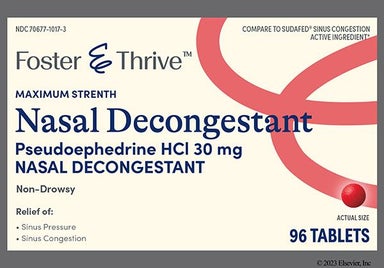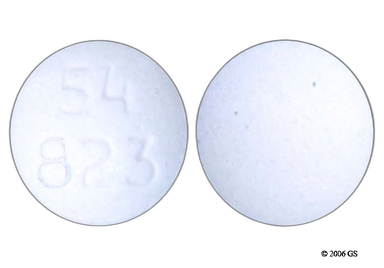
pseudoephedrine
Sudafed (pseudoephedrine) is a non-drowsy decongestant taken by mouth to treat nasal and sinus congestion from allergies and the common cold. It's available in a short-acting version that's taken once every 4 to 6 hours. It also comes in longer-acting versions that are taken every 12 or 24 hours, depending on the dose. Side effects of Sudafed (pseudoephedrine) include anxiety and headache. This medication might also keep you awake at night if you take it too close to bedtime. Sudafed (pseudoephedrine) is an OTC medication, but it's restricted, so you can only purchase it at the pharmacy counter.


What is Sudafed (pseudoephedrine)?
What is Sudafed (pseudoephedrine) used for?
- Short-term relief of nasal and sinus congestion and pressure
How Sudafed (pseudoephedrine) works
Sudafed (pseudoephedrine) is a decongestant. It works by squeezing the blood vessels around your nose and sinuses, which helps to clear your congestion and pressure.
Drug facts



Side effects of Sudafed (pseudoephedrine)
The following side effects may get better over time as your body gets used to the medication. Let your healthcare provider know immediately if you continue to experience these symptoms or if they worsen over time.
Common Side Effects
- Sweating
- Nervousness
- Excitability
- Difficulty sleeping
- Low appetite
- Difficulty urinating
Less Common Side Effects
- Nausea
- Vomiting
- Weakness
- Muscle tremor
- Blurred vision
Sudafed (pseudoephedrine) serious side effects
Contact your healthcare provider immediately if you experience any of the following.
- High blood pressure or fast heart rate: chest pain, blurry vision, headache, fatigue
More on Sudafed (pseudoephedrine) side effects

The following Sudafed (pseudoephedrine) side effects have also been reported
Side effects that you should report to your care team as soon as possible:
- Allergic reactions—skin rash, itching, hives, swelling of the face, lips, tongue, or throat
- Heart palpitations—rapid, pounding, or irregular heartbeat
- Increase in blood pressure
Side effects that usually do not require medical attention (report to your care team if they continue or are bothersome):
- Anxiety, nervousness
- Headache
- Trouble sleeping

Get your GoodRx coupon

Pros and cons of Sudafed (pseudoephedrine)
Pros
- Works well to treat congestion
- Available in longer-acting versions that last 12 hours or 24 hours
- Children's oral liquids can be taken by kids as young as 4 years old
- Available as lower-cost generics
Cons
- Several products have different age cut-offs for use in children, so can be confusing
- Might make it hard for some people to sleep
- Can raise blood pressure and heart rate
- Not recommended during pregnancy

Pharmacist tips for Sudafed (pseudoephedrine)

- Don't take Sudafed (pseudoephedrine) close to bedtime because it can cause difficulty falling asleep.
- Stop using Sudafed (pseudoephedrine) and contact your provider if you experience nervousness, dizziness, or trouble sleeping. These might be serious side effects of Sudafed (pseudoephedrine) and your provider might recommend a different medication to ease your congestion.
- Let your provider know if your nasal congestion doesn't get better within a week of starting Sudafed (pseudoephedrine) or if any other new symptoms that appear. These might be signs of a more serious medical condition that your provider needs to check out.
- Sudafed (pseudoephedrine) interacts with several medications. Don't start any new medications while taking Sudafed (pseudoephedrine), especially other decongestants, without talking to your provider or pharmacist first. Many combination OTC cold and flu medications already contain pseudoephedrine. Taking too much Sudafed (pseudoephedrine) or other decongestants can raise your risk of overdose and severe side effects, including high blood pressure, fast heart rate, or even death.
- Sudafed (pseudoephedrine) shouldn't be taken with a monoamine oxidase inhibitor (MAOI), such as selegiline. This combination can raise your risk for severe side effects (e.g., dangerously high blood pressure). If you're currently taking an MAOI or have taken one in the last 14 days, don't use Sudafed (pseudoephedrine) and contact your provider for other options to treat your congestion symptoms.
- It's best to avoid or limit caffeine while taking Sudafed (pseudoephedrine) because this combination can raise your risk for side effects (e.g., fast heart rate, high blood pressure, difficulty sleeping).
- Don't split or cut the extended-release tablets. These tablets have a special coating that allows the medication to be slowly released in your body over time. Splitting the tablet will ruin the special coating. This might cause too much medication to be released all at once and lead to side effects, such as irregular heart beats, chest pain, and nervousness.
More tips for Sudafed (pseudoephedrine) 15 mg/5 mL oral liquid only:
- Make sure to only use a medication dose cup or syringe from the pharmacy to measure out your dose. Don't use household spoons because they aren't accurate and might cause you to take the wrong dose.
- Store the liquid at room temperature in the original bottle it came in from the pharmacy.



Common questions about Sudafed (pseudoephedrine)
Immediate-release Sudafed (pseudoephedrine) starts to work within 30 minutes after you take it. But if you're taking extended-release versions of the medication, it might take you twice as long to feel relief from your symptoms.
Maybe, it depends on which Mucinex product you choose. Mucinex is a brand that makes multiple products, including combination medications, to treat cold and flu symptoms. Some of these products contain medications such as acetaminophen for pain, dextromethorphan for cough, and phenylephrine for congestion. It's not recommended to take a Mucinex product with Sudafed (pseudoephedrine) if that product has phenylephrine. This medication works very similarly to Sudafed (pseudoephedrine) and has similar side effects as well. Taking Sudafed (pseudoephedrine) with phenylephrine can raise your risk of side effects, such as high blood pressure and nervousness. Talk with your pharmacist if you've trouble choosing a Mucinex product that you can take with Sudafed (pseudoephedrine).
Sudafed (pseudoephedrine) might be a possible treatment for blocked ears if your ears feel clogged because of a sinus infection or allergies. These conditions cause swelling in your nasal passages that can lead to blocked ears. In these cases, taking Sudafed (pseudoephedrine) can ease the swelling in your nose and sinus, which in turns relieves blocked ears. Sudafed (pseudoephedrine) won't help if you have blocked ears from other conditions, such as earwax. If you're not sure whether you can take Sudafed (pseudoephedrine), talk with your provider or pharmacist.
Yes, Sudafed (pseudoephedrine) can raise blood pressure, but not by much. Research show that typically, people experienced a rise in blood pressure by about 1 to 2 mmHg (in systolic blood pressure (SBP), or the top number). This rise in blood pressure is more likely to happen with higher doses of Sudafed (pseudoephedrine) than with lower doses; with immediate-release Sudafed (pseudoephedrine) than with the extended-release versions. If you have high blood pressure, talk with your provider to see if you can take Sudafed (pseudoephedrine). They might recommend a different decongestant for you if they don't think this medication is a safe option.
Sudafed (pseudoephedrine) and phenylephrine (Sudafed PE) are both taken by mouth to treat congestion. But pseudoephedrine and phenylephrine are different medications. While they work in similar ways to help you breathe better, most researchers agree that Sudafed (pseudoephedrine) provides better congestion relief than phenylephrine (Sudafed PE). This is likely because your body might absorb pseudoephedrine better. Keep in mind that Sudafed (pseudoephedrine) has to be purchased at the pharmacy counter, while phenylephrine (Sudafed PE) is readily found among the over-the-counter products on the shelves at your local pharmacy. Sudafed (pseudoephedrine) is a restricted medication because it has the potential for misuse. Ask your pharmacist if you have more questions about the differences between Sudafed (pseudoephedrine) and phenylephrine (Sudafed PE).
Maybe, but it depends on the specific Sudafed (pseudoephedrine) product and your child's age. For examples, children ages 6 years and older can take the immediate-release tablets, while children as young as 4 years old can take the oral liquid. But before giving your child Sudafed (pseudoephedrine), carefully check the age cut-off on the medication box of your specific product. If your child has congestion but is too young to take medications, ask your child's provider or pharmacist about other options. Those might include using a humidifier or taking a warm bath.
The safety of pseudoephedrine during pregnancy isn't completely clear because of inconsistent safety results. Your provider will likely recommend that you avoid Sudafed (pseudoephedrine) at least during the first 3 months of pregnancy because of the potential risk of harm to babies. Additionally, Sudafed (pseudoephedrine) can potentially dry up your breast milk production and might cause your baby to be irritable. If you're pregnant, thinking of getting pregnant, or breastfeeding, don't take Sudafed (pseudoephedrine) until you've talked to your provider first about the risks and benefits of using the medication.

How to save using GoodRx



Risks and warnings for Sudafed (pseudoephedrine)
Sudafed (pseudoephedrine) can cause some serious health issues. This risk may be even higher for certain groups. If this worries you, talk to your doctor or pharmacist about other options.
Fast heart rate and high blood pressure
- Risk factors: Heart problems | High blood pressure
Sudafed (pseudoephedrine) can raise your heart rate and blood pressure, even at recommended doses. If you have a history of heart problems or high blood pressure, ask your provider if Sudafed (pseudoephedrine) is safe for you before using it. If you get severe headaches, nosebleeds, difficulty breathing, irregular heartbeat, or chest pain while taking Sudafed (pseudoephedrine), stop taking it and get medical attention right away.
Worsening of medical conditions
- Risk factors: Heart disease or high blood pressure | Thyroid problems | Diabetes | Urinary problems
Don't take Sudafed (pseudoephedrine) if you have any of the risk factors listed above unless your provider said it is safe to do so. Taking Sudafed (pseudoephedrine) can worsen your condition(s) and cause serious side effects. Make sure your provider knows about all medical conditions you have or have had in the past before starting Sudafed (pseudoephedrine).
Accidental overdose
Sudafed (pseudoephedrine) is a decongestant, which is in many other over-the-counter products. Using more than one medication containing a decongestant can lead to an accidental overdose and cause serious side effects, including high blood pressure, high heart rate, difficulty breathing, dizziness, seizures, hallucinations (seeing things that aren't real), or even death. Tell your provider or pharmacist about the medications you take before starting Sudafed (pseudoephedrine) to make sure it's safe for you. Don't start any new medications while taking Sudafed (pseudoephedrine) without talking to your provider or pharmacist. To prevent an accidental overdose, read package labels carefully. If you're not sure if a product has a decongestant, ask your pharmacist. If you or your loved one experiences an accidental overdose, get medical help right away or contact a poison control center at 1-800-222-1222.
More on Sudafed (pseudoephedrine) warnings

Sudafed (pseudoephedrine) dosage
 Tablet
| Dosage | Quantity | Price as low as | Price per unit |
|---|---|---|---|
| 30mg | 30 tablets | $4.20 | $0.14 |
| 120mg | 60 tablets | $15.41 | $0.26 |
| 60mg | 30 tablets | $4.13 | $0.14 |
Typical dosage for Sudafed (pseudoephedrine)
Sudafed (pseudoephedrine) comes in different formulations made by different manufacturers. Make sure to check the dosing for your specific product on the manufacturer's label before you take it.
Some examples of directions for Sudafed (pseudoephedrine) include:
Pseudoephedrine 30 mg or 60 mg immediate-release pill (Sudafed, SudoGest, generic):
- Adults and children age 12 years and up: The typical dose is 60 mg by mouth every 4 to 6 hours. Don't take more than 240 mg in 24 hours.
- Children ages 6 to under 12 years: The typical dose is 30 mg by mouth every 4 to 6 hours. Don't take more than 120 mg in 24 hours.
- Children under 6 years of age: Don't use. Contact your child's provider.
Pseudoephedrine 120 mg extended-release tablet (Sudafed Sinus Congestion 12 hour, SudoGest 12 hour, generic):
- Adults and children age 12 years and up: The typical dose is 120 mg by mouth every 12 hours. Don't take more than 240 mg in 24 hours.
- Children under 12 years of age: Don't use. Contact your child's provider.
Pseudoephedrine 240 mg extended-release tablet (Sudafed Sinus Congestion 24 hour):
- Adults and children age 12 years and up: The typical dose is 240 mg by mouth once daily. Don't take more than 240 mg in 24 hours.
- Children under 12 years of age: Don't use. Contact your child's provider.
Pseudoephedrine liquid (Children's Sudafed):
Each 5 mL of liquid contains 15 mg of pseudoephedrine.
- Children ages 6 to under 12 years old: The typical dose is 30 mg by mouth every 4 to 6 hours. Don't take more than 120 mg per day.
- Children ages 4 to under 6 years old: The typical dose is 15 mg by mouth every 4 to 6 hours. Don't take more than 60 mg per day.
- Children ages less than 4 years old: Don't use. Contact your child's provider.
More on Sudafed (pseudoephedrine) dosage


How much does Sudafed (pseudoephedrine) cost?

Sudafed (pseudoephedrine) contraindications
Contraindications are specific health conditions or situations in which a person should not take a medication due to safety concerns. If you have any of the following conditions or if any of the following apply to you, let your healthcare provider know because Sudafed (pseudoephedrine) will not be safe for you to take.
- Currently take or have taken an MAOI in the last 14 days

What are alternatives to Sudafed (pseudoephedrine)?

News about Sudafed (pseudoephedrine)











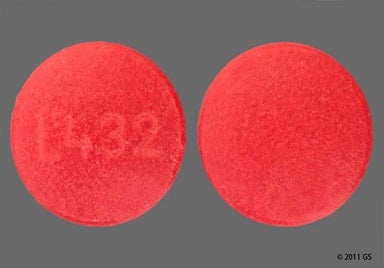
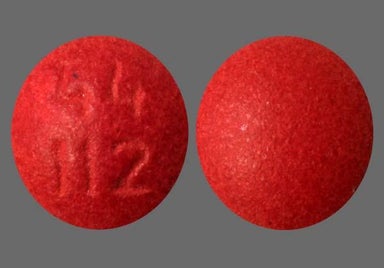
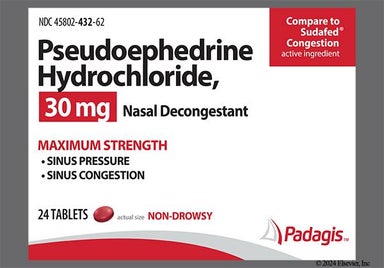
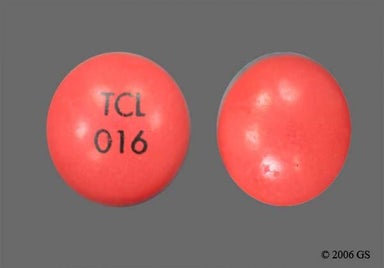
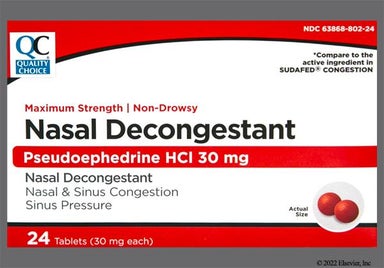
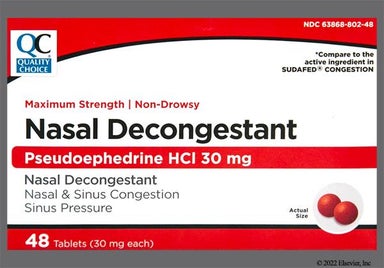
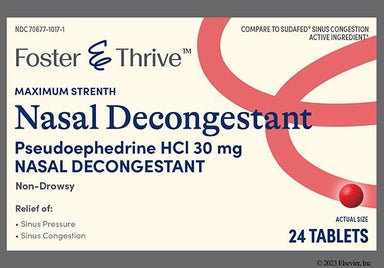
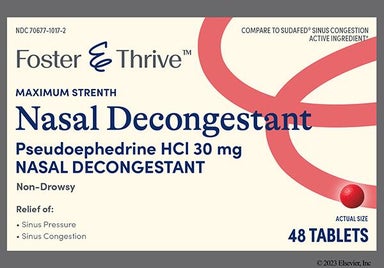
Sudafed (pseudoephedrine) images