Key takeaways:
Younger dogs whose bones are developing are more likely to experience a broken toe.
Symptoms such as paw swelling and limping can be signs that your dog’s toe is broken.
If you suspect that your dog has a broken toe, the best thing you can do is take them to the vet for X-rays and a professional diagnosis.
We want to give our fur babies the best care possible, especially when they’re sick or injured. That means always keeping an eye out for possible health issues, such as a broken toe.
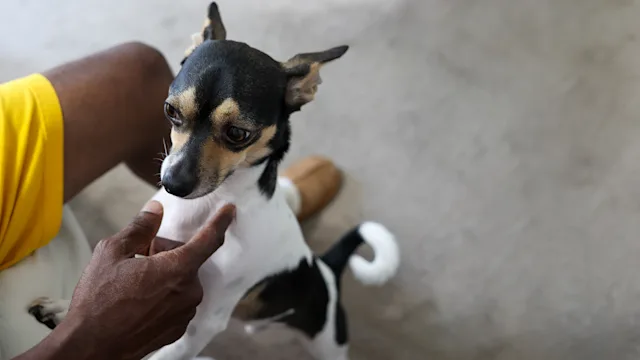
Broken toes aren’t common in dogs, according to Zachary Nesbit, DVM, a vet with Godley Station Animal Hospital in Pooler, Georgia. But broken toes can happen, especially in younger pups with developing bones.
What are the symptoms of a broken toe or paw?
Your dog’s paws are made up of many small bones and four larger bones called the metatarsals and metacarpals. Attached to the metatarsals and metacarpals are a set of smaller bones called phalanges.
Search and compare options
If any of these bones break, your pup may have one or more of the following symptoms:
Swelling
Limping or staying off the affected paw
Wincing in pain when you touch their paw
Losing interest in doing things they normally enjoy, such as eating or going for walks
Licking or gnawing at their paw
Stress-panting
What should you do if your dog has a broken toe?
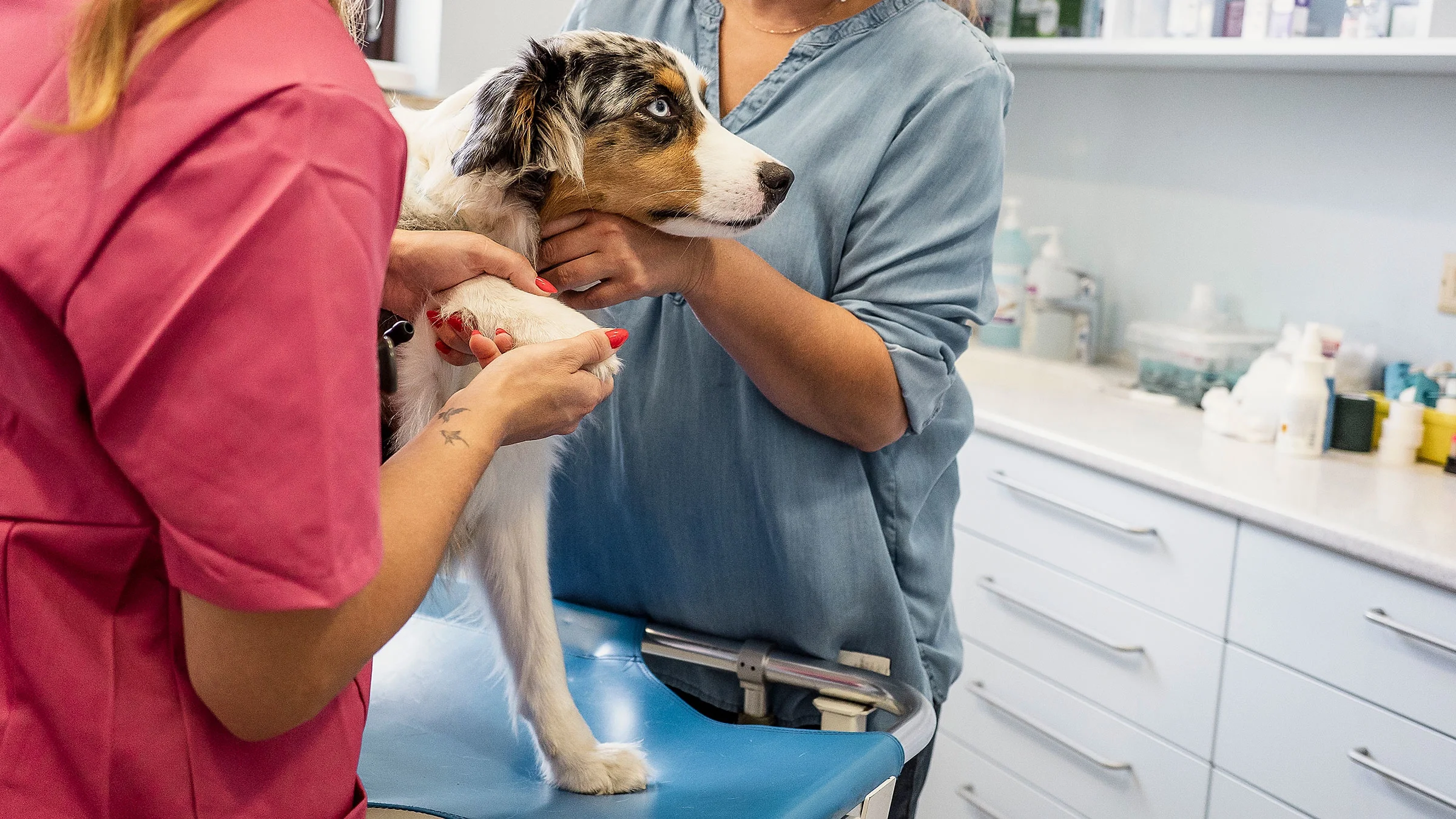
Don’t try to splint your dog’s broken toe at home. Call your vet right away, or visit your local emergency pet hospital. Your dog will need X-rays to see which bone or bones are broken. This will also determine what kind of treatment your dog might need.
How do you treat broken dog toes?
Depending on your dog’s age and the severity and location of the break, your vet may recommend the following treatments.
Rest
“A lot of young, healthy dogs will heal without doing anything,” Nesbit told GoodRx Health. “If it’s a hairline fracture, most dogs will heal on their own.”
The key to helping your dog heal on their own is to limit their activity by:
Crating them for a couple of weeks
Limiting their outdoor activity to peeing and pooping
Walking them on a leash to keep them from running freely
Splinting or casting
Your pup may need to wear a splint or cast for 4 to 8 weeks to prevent the affected bones from moving, Nesbit said.
If your dog has a splint or cast, you may need to do the following:
Regularly check for toe swelling to make sure the splint isn’t too tight.
Look out for raw areas that can be caused by the splint or cast rubbing against the skin.
Wrap the splint or cast in a plastic bag when your pet goes outside to make sure it stays dry.
Clean or change the splint regularly. Or, take your dog to the vet to have their splint changed.

Read more like this
Explore these related articles, suggested for readers like you.


Whether you’ll be able to change the splint at home will depend on your comfort level, as well as your dog’s. “Depending on the dog and the level of pain, the animal may need to be sedated,” Nesbit said, noting that some dogs will need to go to the vet to get it changed.
Medication
Nesbit said that most vets will prescribe anti-inflammatory medications to dogs when they have a broken toe. These can help reduce inflammation related to your dog’s injury. They also help reduce pain. Specific medications a vet may prescribe include:
Carprofen (Rimadyl)
Grapiprant (Galliprant)
Deracoxib (Deramaxx)
Meloxicam (Metacam)
If your dog has an open wound, your vet may also recommend antibiotics to prevent infection, such as:
Amoxicillin / clavulanic acid (Clavamox)
Other medications your vet might consider are gabapentin, to ease nerve pain, and tramadol, an opioid that is safe for dogs to take under a vet’s supervision.
Surgery
If three or more metatarsal and metacarpal bones are broken, your pup may need surgery. The procedure involves sedating your pup with anesthesia and using pins, screws, wires, or plates to repair the fractures.
“Pins can better align the bones to help with healing,” Nesbit said.
After surgery, your pet will most likely wear a splint or cast for 6 to 12 weeks.
Amputation
There’s also a chance that your pup’s toe will need to be amputated if the bones don’t fuse and heal properly.
Most dogs can get around fine without their innermost or outermost toes. Unfortunately, if they lose either or both of their middle toes, they could become lame. Those toes bear most of their weight.
What can cause a dog to break their toe?
Here are a few common causes of broken toes in dogs:
Getting stepped on
Being run over by a tire
Getting a toe stuck in a slatted floor, fence, or under a rock
Stubbing the toe
Being too active on weak or underdeveloped bones
Falling or jumping from a height
Having something heavy fall on the toe, such as furniture or a weight
Being bitten by another dog
Frequently asked questions
A veterinarian will best be able to determine if your dog’s foot is broken or sprained. A sprain usually involves the ligaments and soft tissue in a dog’s foot. A break involves the bones. But the symptoms can be similar.
Signs of a sprain can include:
Limping
Lethargy
Licking the injured area
Symptoms of a broken bone in dogs include:
Limping
Swelling
Pain when their paw is touched
Lack of interest in their usual activities
Licking the affected paw
Stress-panting
It depends on your dog’s age and the severity of the broken toe. Younger, healthy dogs will likely take a shorter amount of time to heal than older dogs. If your dog needs a splint or cast, it could take 4 to 8 weeks for the bone to heal. If surgery is required, it could take up to 12 weeks.
A veterinarian will best be able to determine if your dog’s foot is broken or sprained. A sprain usually involves the ligaments and soft tissue in a dog’s foot. A break involves the bones. But the symptoms can be similar.
Signs of a sprain can include:
Limping
Lethargy
Licking the injured area
Symptoms of a broken bone in dogs include:
Limping
Swelling
Pain when their paw is touched
Lack of interest in their usual activities
Licking the affected paw
Stress-panting
It depends on your dog’s age and the severity of the broken toe. Younger, healthy dogs will likely take a shorter amount of time to heal than older dogs. If your dog needs a splint or cast, it could take 4 to 8 weeks for the bone to heal. If surgery is required, it could take up to 12 weeks.
The bottom line
Even though broken toes aren’t common in dogs, it’s good to be aware of the symptoms. These include paw swelling, limping, and wincing. If you notice these symptoms, take your dog to the vet immediately. They can take X-rays, diagnose the break, and go over treatment options with you.
Most breaks, such as hairline fractures, heal on their own with rest and anti-inflammatory medications. But if the break is more severe, your pup may need a splint, cast, or surgery to heal properly.

Why trust our experts?




References
Animal Surgical Center of Michigan. (n.d.). Fractured toes.
BluePearl Specialists. (2019). Toe fractures in your pet’s paws. BluePearl Pet Hospital.
Gfeller, R., et al. (2018). Fractures and injuries: First aid. Veterinary Partner.
Godley Station Animal Hospital. (n.d.). Meet our specialized staff.
Manchester Veterinary Specialists. (n.d.). Phalangeal fractures in the dog.
Tinga, S., et al. (2015). Splint application. Clinician’s Brief.
Zeltzman, P. (2014). Three techniques to treat toe fractures. Veterinary Practice News.