Key takeaways:
Latanoprost (Xalatan) is a medication that lowers inner eye pressure in dogs with glaucoma.
Latanoprost is given to dogs as an eye drop, usually once or twice every day.
The most common side effects of latanoprost in dogs are small pupils and eye irritation.
Like people, dogs can have high inner eye pressure, which is called glaucoma. Latanoprost (Xalatan) is one type of eye medication prescribed to treat canine glaucoma.
Learn more about latanoprost, how it is used, its common side effects, and tips for giving the eye drops to your dog.
Latanoprost for dogs at a glance
Common names | Latanoprost (Xalatan) |
What it treats | Glaucoma (high inner eye pressure) |
How it comes (forms) | Eye drops |
Dosage | 0.005% ophthalmic solution |
Common side effects | Small pupil, eye irritation, watery eyes, redness, itching |
Average cost |
What is latanoprost for dogs, and what is it used for?
Latanoprost is a topical ophthalmic (eye) medication. Veterinarians prescribe latanoprost for dogs with high pressure inside their eyes. The medical term for high inner eye pressure is glaucoma.
Search and compare options
How does latanoprost work for dogs?
Latanoprost is a prostaglandin analogue. Prostaglandin is a fat molecule with some hormone-like functions. You apply latanoprost to the eye’s surface. The medication then lowers eye pressure by increasing outflow of aqueous humor. Aqueous humor is clear, water-like fluid that fills the front of the eye.
What is the dosage of latanoprost for dogs, and how is it given?
Latanoprost is a topical eye medication that comes in a dropper bottle containing 0.005% ophthalmic solution. One drop is applied to the surface of an affected eye once or twice a day. Your veterinarian or veterinary ophthalmologist will tell you how often to apply it.
Latanoprost is not FDA approved for use in pets. Veterinarians prescribe latanoprost off-label, which is common in veterinary medicine.
How to give your dog latanoprost eye drops
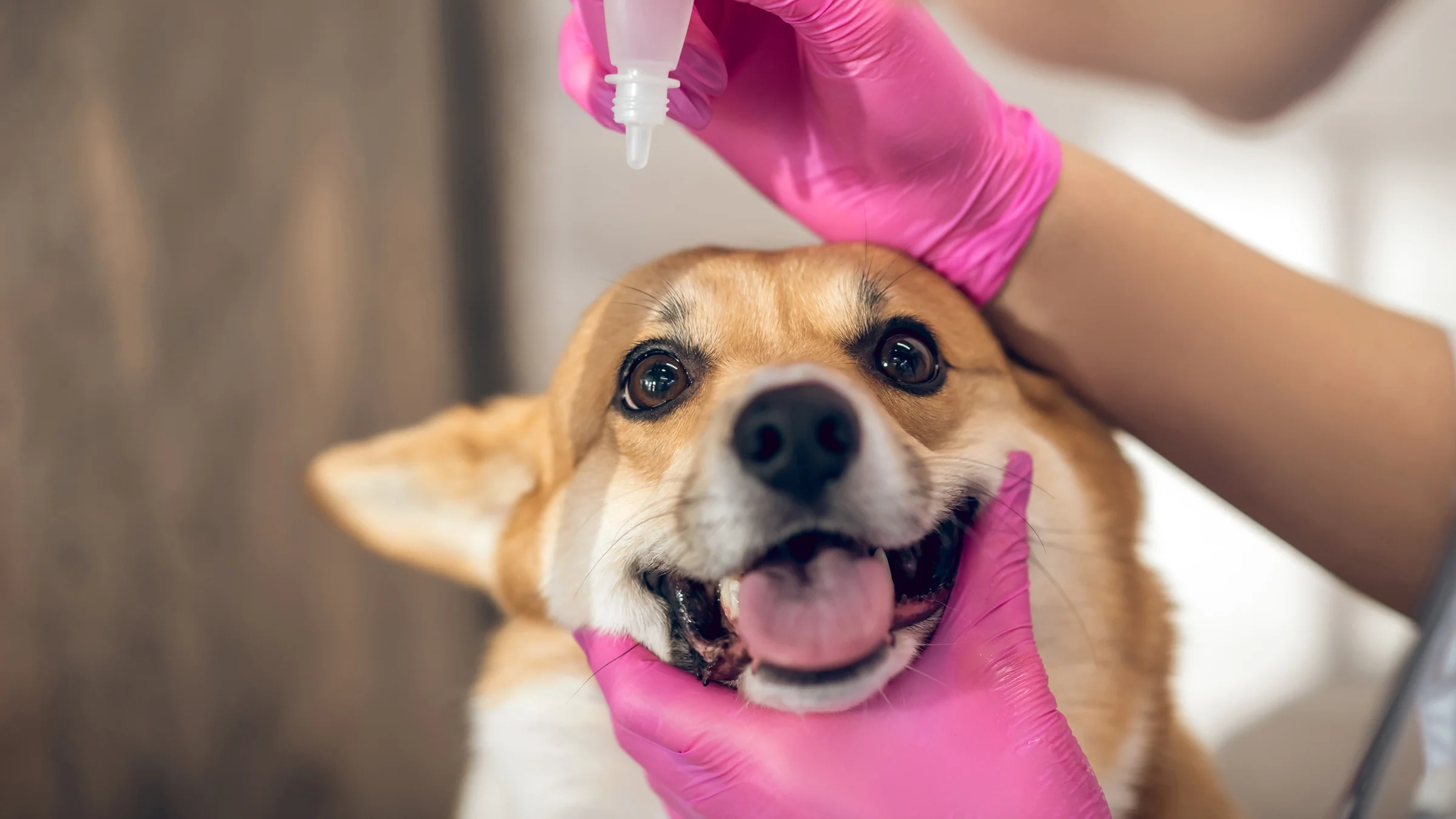
To apply latanoprost, follow these three steps:
Hold your dog’s head steady.
Lift the upper eyelid with your thumb and hold open the lower lid with your index finger.
Use your other hand to squeeze one drop onto the eye’s surface.
You may apply the eye drops while facing your dog. Or you may find your dog does not like this position. If so, have your dog face away from you in a sitting position and tilt their head back toward you.
Your veterinarian may want to track your dog’s eye pressure while they’re being treated.
What should you do if your dog misses a dose of latanoprost?
If you forget to give your dog a dose of latanoprost, what to do next will depend on how often you give your dog the drops.
If you give your dog latanoprost once a day and it’s been less than 12 hours since you missed the dose, give them a dose as soon as possible. If it’s been more than 12 hours, it’s usually best to skip the missed dose and give the next dose at the regular time.
Have you missed a twice-daily dose by 6 hours or less? If so, give your dog the missed dose as soon as possible. Has it been more than 6 to 8 hours? It may be best to wait until the next dose is due.
What are the common side effects of latanoprost in dogs?
Applying latanoprost will cause your dog’s pupil to shrink (miosis). This is a normal and expected effect.
Latanoprost can also cause some irritation when applied to the eye. Possible side effects include:
Blurred vision
Burning
Stinging
Eye redness
Watery eyes or tearing
Squinting and blinking
Itching
Darkening of the iris
What are the most serious risks of latanoprost for dogs?
Latanoprost can cause serious side effects in some dogs with certain eye problems. If your dog’s eye is already inflamed, which is called uveitis, latanoprost may worsen it. Latanoprost must be used carefully in these situations or not used at all.
In dogs, glaucoma can be caused by the lens of the eye slipping out of place and into the front chamber of the eye. For these dogs, latanoprost may also not be the best treatment option. Latanoprost causes shrinking of the pupil. This can trap the lens and cause complications.
Does latanoprost interact with any other dog medications?
As a topical eye medication, latanoprost does not interact with oral medications for dogs.
Do not combine or mix latanoprost with other eye medications. If your dog has been prescribed more than one eye medication, wait 5 minutes between each one to prevent mixing or interference.
The bottom line
Latanoprost (Xalatan) is an important medication to lower eye pressure in dogs with glaucoma. Latanoprost comes as an eye drop that you apply to your dog’s eye either once or twice a day. Some dogs may experience eye irritation from latanoprost. Other side effects can include small pupils, watery eyes, squinting, and redness. Latanoprost typically doesn’t interact with other medications. But always talk to your veterinarian about your dog’s complete medical and medication history.

Why trust our experts?




References
Armour, M. (2015). Your treatment options for glaucoma in small animals. DVM360.
Budde, J. A., et al. (2023). Latanoprost ophthalmic [professional app]. Plumb's Veterinary Drug Handbook, 10th Edition. Wiley-Blackwell.
Plumb’s. (2024). Latanoprost, ophthalmic. VetMedux.
Strøm, A. R. (2017). Glaucoma: Diagnosis and management. World Small Animal Veterinary Association World Congress Proceedings.
Studer, M. E., et al. (2000). Effects of 0.005% latanoprost solution on intraocular pressure in healthy dogs and cats. American Journal of Veterinary Research.