



GoodRx Quarterly Report: Q1 2019
In an effort to continue to shed light on drug prices and increase transparency, we are excited to present the first ever GoodRx Quarterly Report—an
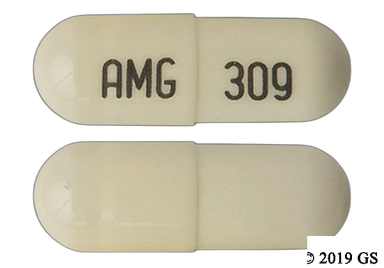
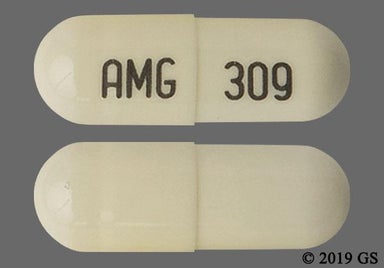
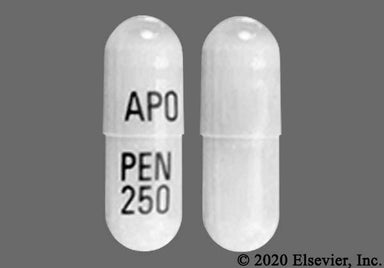
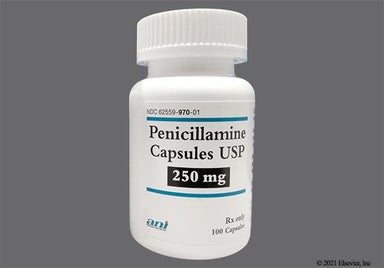
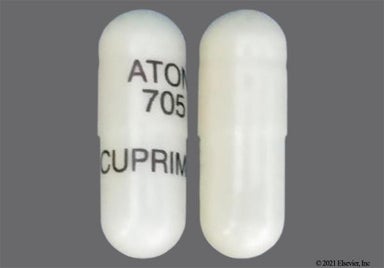
Penicillamine (Depen) is used to treat Wilson's disease, cystinuria, and severe rheumatoid arthritis (RA). It has many side effects, such as upset stomach and changes in taste, and requires careful monitoring by your provider. The dose is taken on an empty stomach, but you'll have to follow specific instructions on how to time penicillamine (Depen) with your meals and other medications. This medication comes as tablets (under the brand name Depen) and capsules (under the brand name Cuprimine). Penicillamine (Depen) is also available as a lower-cost generic.

Penicillamine (Depen) is a chelating agent, meaning that it attaches to heavy metals in your body. It helps your body get rid of certain substances that cause Wilson’s disease and cystinuria.
Wilson’s disease is a genetic condition that causes copper to build up in your liver, brain, and other organs. Penicillamine (Depen) attaches to the copper so your body can remove it through your urine.
Cystinuria is a genetic condition that causes stones made of cystine (a protein) to form in your kidneys and bladder. Penicillamine (Depen) lowers the amount of cystine in your urine by attaching to it and forming a substance that your body can get rid of more easily. This lowers your risk of forming kidney stones and can help dissolve stones that are already formed.
Rheumatoid arthritis (RA) is a condition where your body's immune system attacks your joints, which causes swelling and pain. The way penicillamine (Depen) works to help treat RA isn’t known.
| Common Brands | Cuprimine, Depen |
|---|---|
| Drug Class | Chelating agent |
| Controlled Substance Classification | Not a controlled medication |
| Generic Status | Lower-cost generic available |
| Availability | Prescription only |

The following side effects may get better over time as your body gets used to the medication. Let your healthcare provider know immediately if you continue to experience these symptoms or if they worsen over time.
Contact your healthcare provider immediately if you experience any of the following.
Along with its needed effects, a medicine may cause some unwanted effects. Although not all of these side effects may occur, if they do occur they may need medical attention.
Check with your doctor as soon as possible if any of the following side effects occur:
More common
joint pain
lesions on the face, neck, scalp, and/or trunk
swollen and/or painful glands
ulcers, sores, or white spots on lips or in mouth
Less common
Bloody or cloudy urine
shortness of breath, troubled breathing, tightness in chest, or wheezing
sore throat and fever with or without chills
swelling of face, feet, or lower legs
unusual bleeding or bruising
unusual tiredness or weakness
Rare
Abdominal or stomach pain (severe)
blisters on skin
bloody or black, tarry stools
coughing or hoarseness
dark urine
difficulty in breathing, chewing, talking, or swallowing
eye pain, blurred or double vision, or any change in vision
general feeling of discomfort or illness or weakness
lower back or side pain
muscle weakness
painful or difficult urination
pale stools
pinpoint red spots on skin
redness, tenderness, itching, burning, or peeling of skin
red or irritated eyes
red, thick, or scaly skin
ringing or buzzing in the ears
spitting blood
yellow eyes or skin
Some side effects may occur that usually do not need medical attention. These side effects may go away during treatment as your body adjusts to the medicine. Also, your health care professional may be able to tell you about ways to prevent or reduce some of these side effects. Check with your health care professional if any of the following side effects continue or are bothersome or if you have any questions about them:
Other side effects not listed may also occur in some patients. If you notice any other effects, check with your healthcare professional.
Call your doctor for medical advice about side effects. You may report side effects to the FDA at 1-800-FDA-1088.




Penicillamine (Depen) can cause some serious health issues. This risk may be even higher for certain groups. If this worries you, talk to your doctor or pharmacist about other options.
 You should be under close supervision of your provider while you're taking penicillamine (Depen). This medication can cause many side effects, like blood problems, kidney problems, skin problems, and fever. You'll need regular lab work done and follow ups with your provider to make sure penicillamine (Depen) is safe for you. Tell your provider if you have any side effects while taking this medication.
Penicillamine (Depen) can cause potential blood problems. These problems include low white blood cells, low red blood cells, and low platelets (blood cells that help clot blood when you get a cut). Taking certain medications like gold therapy (e.g., Ridaura (auranofin)), antimalarial medications, cytotoxic medications (e.g., methotrexate), oxyphenbutazone, or phenylbutazone can raise your risk of developing blood problems. Let your provider know if you have a history of blood problems or are taking any medications that might cause them before starting penicillamine (Depen). While you're taking this medication, you'll need to get blood tests done so your provider can check your blood cell counts. If you notice a fever, sore throat, chills, bruising, or bleeding, contact your provider right away.
Penicillamine (Depen) might cause you to have protein or blood in your urine, which can be a sign of kidney damage. This is more likely to happen if you have a history of kidney problems or take certain medications. Don’t take penicillamine (Depen) if you currently have kidney problems, and talk to your provider about alternative medications. You'll have to get regular urine tests done while you're taking penicillamine (Depen) so your provider can check your kidney health. If you notice any blood in your urine, tell your provider right away.
Some people might experience a fever in response to taking penicillamine (Depen), usually in the second or third week of therapy. If you experience a fever, stop taking the medication and let your provider know right away. If you're taking penicillamine (Depen) to treat Wilson's disease or cystinuria, your provider might start it again at a low dose once your fever goes away and then raise your dose slowly. For RA, your provider will probably change your medication because there are other options available.
Penicillamine (Depen) can sometimes cause rash. Rashes can occur as early as during the first few months of treatment or as late as 6 months or more after starting penicillamine (Depen). Let your provider know if you get a rash. If you get a very itchy rash on your stomach or back after 6 months or longer of penicillamine (Depen) treatment, your provider might stop the medication. And if you experience a rash with fever, swollen lymph nodes, or joint pain, tell your provider right away.
Penicillamine (Depen) can cause lower vitamin B6 levels in your body. Vitamin B6 is an important nutrient that helps keep you healthy. Penicillamine (Depen) attaches to vitamin B6 and prevents the vitamin from working in your body. In addition, if you need to be on a special diet for your condition, you might not be getting enough protein from your diet. This can cause low iron levels in your body. Ask your provider if you or your child should take supplements while taking penicillamine (Depen) to make sure your body gets the nutrients it needs.
Some people using penicillamine (Depen) have experienced nerve problems affecting different parts of the body. Sometimes, these nerve problems are worse when you first start the medication. But, they should get better as you continue treatment. Symptoms of nerve problems can include drooping eyelids, double vision, and muscle weakness. Tell your provider right away if you notice any of these side effects.
Some people taking penicillamine (Depen) have developed pemphigus, a condition where your body's immune system attacks your skin and causes blisters and sores. If this happens, you might need to stop penicillamine (Depen) and get treated with medications called steroids or immunosuppressants. Tell your provider if you notice any blisters or sores on your skin.


Although certain medicines should not be used together at all, in other cases two different medicines may be used together even if an interaction might occur. In these cases, your doctor may want to change the dose, or other precautions may be necessary. When you are taking this medicine, it is especially important that your healthcare professional know if you are taking any of the medicines listed below. The following interactions have been selected on the basis of their potential significance and are not necessarily all-inclusive.
Using this medicine with any of the following medicines is not recommended. Your doctor may decide not to treat you with this medication or change some of the other medicines you take.
Using this medicine with any of the following medicines is usually not recommended, but may be required in some cases. If both medicines are prescribed together, your doctor may change the dose or how often you use one or both of the medicines.
Using this medicine with any of the following medicines may cause an increased risk of certain side effects, but using both drugs may be the best treatment for you. If both medicines are prescribed together, your doctor may change the dose or how often you use one or both of the medicines.


Contraindications are specific health conditions or situations in which a person should not take a medication due to safety concerns. If you have any of the following conditions or if any of the following apply to you, let your healthcare provider know because Penicillamine (Depen) will not be safe for you to take.




Prescription savings
Stop paying too much for your prescriptions. Compare prices, get pharmacy coupons, and save up to 80%. Find expert answers to your health questions so you can make the best decisions for yourself and your family.
Health conditions
Medications & treatment
Access & affordability
 Our monthly healthcare membership can help you save thousands on your prescription costs.
Resources

For RA, Penicillamine works slowly compared to other medications. It might take 2 or 3 months before you notice the full effects of the medication. Generally, you should see improvement in symptoms, such as pain, tenderness, and swelling, by this time if you respond to Penicillamine.
It can take about 2 to 6 months of treatment with Penicillamine for you to see improvement if you have symptomatic Wilson's disease. Symptoms of Wilson's disease can include yellowing of the skin or whites of the eyes (jaundice) and stomach bloating It's important to note that symptoms of Wilson's disease related to the nervous system (trouble speaking, movement problems, changes in behavior) can sometimes get worse when you first start Penicillamine. But, they should improve as you continue treatment. Let your provider know if these symptoms don't improve after a few months of starting Penicillamine.
No, Penicillamine isn't the same as penicillin. These two medications are used for different conditions. Penicillamine is used to treat Wilson's disease, cystinuria, and severe rheumatoid arthritis. On the other hand, penicillin is an antibiotic that treats several bacterial infections. In the past, Penicillamine was made from penicillin. But now, Penicillamine is made in the lab without using penicillin directly.
If you're allergic to penicillin, it's possible you might have an allergic reaction to Penicillamine. But, the chance of having an allergic reaction from Penicillamine is quite low since it’s now made without using penicillin directly (unlike in the past).
No, it's not safe to take Penicillamine while pregnant. This medication can cause harm to your unborn baby. Talk to your provider about alternative medications if you're pregnant or planning on becoming pregnant. Let your provider know if you become pregnant while you're taking Penicillamine. This is especially important if you have Wilson's disease because stopping the medication can cause your condition to come back and have fatal effects. Discuss with your provider about the risks and benefits of taking Penicillamine during pregnancy.
Yes. Foods, supplements, and medications containing aluminum, calcium, iron, magnesium, and zinc can interact with Penicillamine. These minerals can attach to the medication in your stomach. As a result, Penicillamine can't get absorbed into your body and work properly. For this reason, it's important to take Penicillamine on an empty stomach, at least 1 hour before or 2 hours after meals, and at least 1 hour apart from any other foods or medications that contain the minerals mentioned above.
Penicillamine and trientine (Syprine) are both chelating agents. This means that they both attach to copper in your body to treat Wilson’s disease. Studies suggest that trientine (Syprine) might be better tolerated than Penicillamine. But, trientine (Syprine) isn't approved to treat cystinuria or rheumatoid arthritis. Compare between Penicillamine and trientine (Syprine), and talk to your provider about which medication is right for you.
