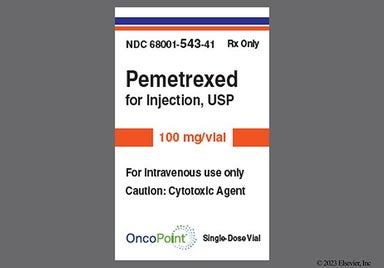
Advanced or metastatic non-squamous non-small cell lung cancer (NSCLC)
Advanced or metastatic malignant mesothelioma
How Pemetrexed works
Pemetrexed is a type of chemotherapy called an antimetabolite. It stops rapidly growing cells (like cancer cells) from producing the chemicals needed to build their genetic material and other substances important for cells to grow and divide.
The following side effects may get better over time as your body gets used to the medication. Let your healthcare provider know immediately if you continue to experience these symptoms or if they worsen over time.
Common Side Effects
Low blood cell counts (up to 85%)
Higher blood sugar levels (63%)
Feeling very tired (56%)
Nausea (56%)
Signs of stress to the liver and kidney on blood tests (up to 47%)
Constipation (35%)
Low blood electrolyte and protein levels (up to 39%)
Diarrhea (31%)
Please note: Side effects above were reported in studies by people who've received pemetrexed along with platinum-based chemotherapy, pembrolizumab (Keytruda), and pre-treatment medications.
Less Common Side Effects
Loss of appetite
Rash
Cough or trouble catching your breath
Vomiting
Fever
Pemetrexed serious side effects
Contact your healthcare provider immediately if you experience any of the following.
Lower blood cell counts: unusual bleeding or bruising, fever, chills, body aches, tiredness
Serious kidney problems: feeling confused, tiredness, nausea, vomiting, itchy skin, making little to no urine
Severe skin problems: burning, redness, rashes, blisters, or peeling skin
Lung damage: cough, trouble catching your breath, fever
The following Pemetrexed side effects have also been reported
Along with its needed effects, a medicine may cause some unwanted effects. Although not all of these side effects may occur, if they do occur they may need medical attention.
Check with your doctor or nurse immediately if any of the following side effects occur:
Some side effects may occur that usually do not need medical attention. These side effects may go away during treatment as your body adjusts to the medicine. Also, your health care professional may be able to tell you about ways to prevent or reduce some of these side effects. Check with your health care professional if any of the following side effects continue or are bothersome or if you have any questions about them:
More common
Burning, tingling, numbness, or pain in the hands, arms, feet, or legs
Need to take supportive medications, such as folic acid and vitamin B12, to prevent side effects
Commonly causes tiredness and higher risk of infection or bleeds
Pharmacist tips for Pemetrexed
Your provider will give you pemetrexed as an infusion over 10 minutes. Depending on the other treatments in your care plan, you might spend a few hours at the infusion center. Dress comfortably, and bring water, snacks, and an activity (e.g. books, music, puzzles) to help pass the time.
As part of your treatment, you’ll receive vitamin B12 as an injection into the muscle in the clinic or infusion center to prevent side effects. You’ll get your first dose before the first cycle, then every 9 weeks (every three 3-week cycles) after that. The vitamin B12 injection is enough as a supplement, so you don’t need to take extra vitamin B12 tablets on your own.
Your provider will also prescribe a folic acid supplement as part of your treatment. You’ll take it by mouth every day to prevent side effects from pemetrexed. Ideally, you should start taking folic acid at least 1 week before starting pemetrexed, and continue for 3 weeks after your last pemetrexed dose. Your provider will let you know what dose is best for you - the recommended dose can range from 400 mcg to 1000 mcg per day. If you already take a multivitamin every day, check the bottle to make sure you have at least 400 mcg of folic acid a day. If so, you might not need to take any additional folic acid supplements.
To prevent rash with pemetrexed, your provider will prescribe you an oral corticosteroid (e.g. dexamethasone). Most likely, you’ll take it the day before treatment, the day of treatment, and the day after treatment. Try to take your steroid in the morning, since it can make it hard for you to sleep if you take it too late in the day.
If you had kidney problems in the past, avoid ibuprofen (Advil) for 2 days before, the day of, and the day after pemetrexed treatment. Otherwise, you’re at higher risk for certain side effects, like stomach upset and kidney damage. If you can’t avoid taking ibuprofen (Advil), talk with your healthcare team. They might try to monitor you more closely for side effects while taking pemetrexed, or offer you alternatives to ibuprofen (Advil) while you’re on treatment with pemetrexed.
It’s likely that pemetrexed will harm the unborn baby. If you’re able to become pregnant, use effective birth control during treatment and for 6 months after the last dose. Males with partners who can become pregnant should make sure effective birth control is used during treatment and for 3 months after stopping. Avoid breastfeeding during treatment with pemetrexed and for 1 week after stopping treatment.
You shouldn’t breastfeed during treatment with pemetrexed and for 1 week after the last dose. This medication might harm the baby.
Risks and warnings for Pemetrexed
Pemetrexed can cause some serious health issues. This risk may be even higher for certain groups. If this worries you, talk to your doctor or pharmacist about other options.
Lower blood cell counts (bone marrow suppression)
Pemetrexed affects your bone marrow and causes your body to make fewer blood cells. Low amounts of blood cells can raise your chance of bleeding and make you more likely to get infections. You’ll need to take folic acid and vitamin B12 supplements to prevent these side effects. You’ll also have your blood drawn before each pemetrexed treatment to make sure the medication is safe to take. You might receive transfusions if your red blood cell counts are low. Your provider might also lower the pemetrexed dose if they notice low blood cell counts due to the medication. Talk to your healthcare provider right away if you suddenly have unusual bleeding or bruising, muscle weakness, changes in your speech and vision, or develop a fever.
Pemetrexed can harm the kidneys, especially if you’re taking other medications that can harm the kidneys, like ibuprofen (Advil). Sometimes, kidney problems can be life-threatening. Your provider will do a blood test to check that your kidneys are healthy before each treatment. Let your provider know if you have little or no urine. That could be a sign of kidney injury, and you might have to temporarily stop taking pemetrexed while your kidneys recover.
Severe skin problems
Risk factors: Having received radiation in the past
Pemetrexed can cause very rare, but serious and potentially life-threatening lung damage. Tell your healthcare provider right away if you have a new or worsened cough, trouble breathing, or fevers. Your provider will probably have you stop taking pemetrexed while they do scans to check on your lungs. If the scans show signs of lung damage, your provider might have you stop taking pemetrexed.
Harm to the unborn baby
Based on animal studies, pemetrexed can cause harm to unborn babies. If you’re able to have children, you’ll need to do a pregnancy test before starting pemetrexed. Use effective birth control while taking the medication and for 6 months after the last dose. If you’re male and have a partner who can have children, you must use condoms while taking pemetrexed and for 3 months after the last dose.
Pemetrexed dosage
Typical dosage for Pemetrexed
Your treatment team will determine your pemetrexed dose based on your body surface area (BSA), which is calculated using your height and weight.
The typical dose is 500 mg/m2 given as an infusion through the vein (IV) every 3 weeks by a healthcare provider.
Pemetrexed may interact with certain medications or supplements. Always let your doctor and pharmacist know about any other medications or supplements (including prescribed and over-the-counter medications, vitamins, and dietary or herbal supplements) that you are currently taking. The list below does not include all possible drug interactions with Pemetrexed. Please note that only the generic name of each medication is listed below.
Although certain medicines should not be used together at all, in other cases two different medicines may be used together even if an interaction might occur. In these cases, your doctor may want to change the dose, or other precautions may be necessary. When you are receiving this medicine, it is especially important that your healthcare professional know if you are taking any of the medicines listed below. The following interactions have been selected on the basis of their potential significance and are not necessarily all-inclusive.
Using this medicine with any of the following medicines is not recommended. Your doctor may decide not to treat you with this medication or change some of the other medicines you take.
Using this medicine with any of the following medicines is usually not recommended, but may be required in some cases. If both medicines are prescribed together, your doctor may change the dose or how often you use one or both of the medicines.
This medicine is Green-Yellow Vial.Green-yellow Not applicable - Pemetrexed 100mg/4mL Solution for InjectionThis medicine is Green-Yellow Vial.Green-yellow Not applicable - Pemetrexed 100mg Powder for InjectionThis medicine is Green-Yellow Vial.Green-yellow Not applicable - Pemetrexed 100mg Powder for InjectionThis medicine is Green-Yellow Vial.Green-yellow Not applicable - Pemetrexed 100mg Powder for InjectionThis medicine is White Vial.White Not applicable - Pemetrexed 100mg Powder for Injection
GoodRx Health has strict sourcing policies and relies on primary sources such as medical organizations, governmental agencies, academic institutions, and peer-reviewed scientific journals. Learn more about how we ensure our content is accurate, thorough, and unbiased by reading our editorial guidelines.
Prescription savings
Stop paying too much for your prescriptions. Compare prices, get pharmacy coupons, and save up to 80%.
Your provider will prescribe you vitamin B12 and folic acid as supportive medications when you start treatment with Pemetrexed. Studies show that people who took these supplements experienced less side effects of Pemetrexed, such as mouth sores, diarrhea, and low blood cell counts (which can put you at higher risk for infection).
Rash is a common side effect of Pemetrexed. Your provider will prescribe a medication called a corticosteroid to help prevent rash or help make the rash less severe. Typically, you’ll need to take the corticosteroid by mouth, the day before Pemetrexed treatment, the day of treatment, and the day after treatment. Usually, the rash with Pemetrexed is mild. But you notice a rash that is worsening, skin blistering, or skin peeling, let your healthcare team know. Those could be signs of a more serious rash that needs immediate medical attention.
How long you take Pemetrexed depends on whether you’re having side effects from the medication and whether the treatment is working for your cancer. For example, if you develop serious side effects from Pemetrexed, like serious skin reactions, or if your provider notices lower blood cell counts or signs of kidney damage on your blood tests, your provider might have to lower your Pemetrexed dose or have you temporarily stop taking the medication. Your provider will also do scans about every 2 months or so (depending on your cancer type) to check if the cancer is growing. If the cancer looks like it’s growing, that could be a sign that the treatment’s no longer working and they might have to adjust your treatment plan.
In clinical studies, people who received Pemetrexed alone experienced hair loss up to 6% of the time. It’s unlikely that you’ll lose all your hair with Pemetrexed treatment, but it also depends on whether the other medications in your treatment plan can also cause hair loss. If you’re concerned about hair loss, talk with your provider. They can recommend ways for you to prevent hair loss, such as with hair care strategies like avoiding chemical or heat treatments and styles that pull hair (like braids or ponytails).
Alimta, Pemfexy, and Pemrydi RTU are different formulations of Pemetrexed, but there’s no difference in the dosing or how well they work to treat cancer. The main difference is how each version is prepared - Alimta is a powder that has to be mixed with a fluid to make the dose for infusion, while the other two versions are already in liquid form. Your provider will choose the brand-name or generic medication for you depending on what’s available.