


Scratching the Surface: 8 Medications That Can Make You Feel Itchy
Itching can be an unexpected medication side effect. Certain drugs, including some blood pressure medications and cancer treatments, can cause itchiness.
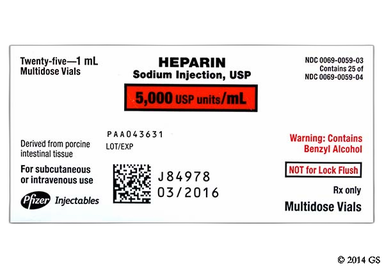
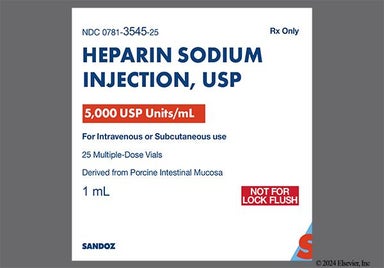
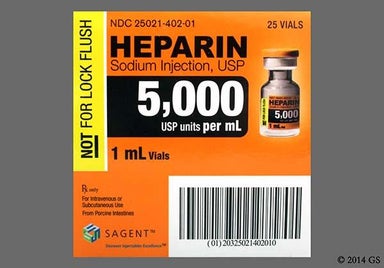
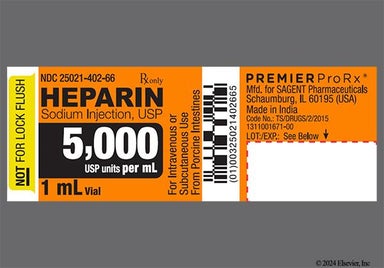
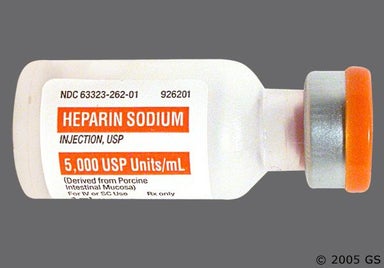
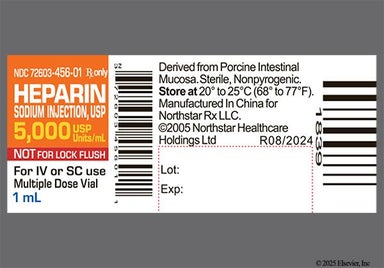
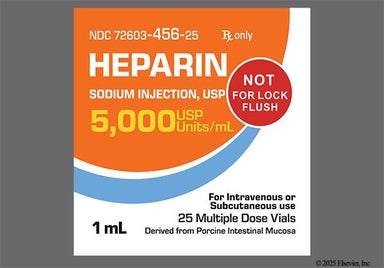
Heparin is a blood thinner that's used to treat and prevent blood clots and other clotting-related conditions. It's given as an injection through the veins or under the skin. Heparin works quickly, but requires regular blood tests to check how well it's working. The dose depends on several things, like your age, weight, and why you need heparin. This medication is typically used for people in the hospital, but there might be certain situations where you can use it at home. It's a safe medication with possible side effects like low red blood cells or bruising. But heparin can cause a serious problem called heparin-induced thrombocytopenia (HIT).

Heparin is an anticoagulant (or blood thinner). It blocks certain proteins in your blood that are responsible for forming blood clots. This helps prevent blood clots from getting bigger. It also lowers the risk of new blood clots from forming.
| Common Brands | No brands available |
|---|---|
| Drug Class | Anticoagulant |
| Controlled Substance Classification | Not a controlled medication |
| Generic Status | Lower-cost generic available |
| Availability | Prescription only |

The following side effects may get better over time as your body gets used to the medication. Let your healthcare provider know immediately if you continue to experience these symptoms or if they worsen over time.
The side effects from heparin that you experience will depend on how you receive the medication (through the vein or under the skin) and the dose.
Contact your healthcare provider immediately if you experience any of the following.
Along with its needed effects, a medicine may cause some unwanted effects. Although not all of these side effects may occur, if they do occur they may need medical attention.
Check with your doctor or nurse immediately if any of the following side effects occur:
Less common
Abdominal or stomach pain or swelling
back pain or backaches
bleeding from the gums when brushing teeth
blood in the urine
coughing up blood
dizziness
headaches, severe or continuing
heavy bleeding or oozing from cuts or wounds
joint pain, stiffness, or swelling
menstrual bleeding, unexpected or unusually heavy
unexplained bruising or purplish areas on the skin
unexplained nosebleeds
vomiting of blood or material that looks like coffee grounds
Rare
Blood under the skin (blood blister) at the place of injection
chills or fever
fast or irregular breathing
irritation, pain, redness, or ulcers at the place of injection
itching and burning feeling, especially on the bottom of the feet
nausea or vomiting
numbness or tingling in the hands or feet
pain, coldness, or blue color of the skin on the arms or legs
peeling of the skin
puffiness or swelling of the eyelids or around the eyes
shortness of breath
skin color change, especially near the place of injection or in the fingers, toes, arms, or legs
tearing of the eyes
tightness in the chest
trouble with breathing
After you stop using this medicine, it may still produce some side effects that need attention. During this period of time, check with your doctor immediately if you notice the following side effects:
Black, tarry stools
bleeding gums
blood in the urine or stools
pain in the chest, groin, or legs, especially calves of legs
pinpoint red spots on the skin
severe headaches of sudden onset
sudden loss of coordination
sudden shortness of breath for no apparent reason
sudden slurred speech
sudden vision changes
unusual bleeding or bruising
Other side effects not listed may also occur in some patients. If you notice any other effects, check with your healthcare professional.
Call your doctor for medical advice about side effects. You may report side effects to the FDA at 1-800-FDA-1088.



More tips for using heparin at home:

Heparin can cause some serious health issues. This risk may be even higher for certain groups. If this worries you, talk to your doctor or pharmacist about other options.
Taking heparin can raise your risk for bleeds. Your risk is higher if you're also taking other medications that can cause bleeding. If you do have a serious bleed from heparin use, your provider might be able to give you a medication called protamine to reverse the effects of heparin. Let your provider know if you have a fall, head injury, or other kinds of physical injury. They might need to check you for bleeding inside your body. Get medical help right away if you have dark or tarry stool, bleeds that are difficult to stop, or any unusual bleeding.
Heparin can cause your platelet counts to go down. In rare cases, a low platelet count can occur along with a life-threatening condition called heparin-induced thrombocytopenia (HIT). HIT happens when the immune system makes antibodies that affect the function of platelets. This can cause blood clots to form in various parts of the body and lead to blockages in your veins or arteries, a condition called heparin-induced thrombocytopenia with thrombosis (HITT).
These platelet and clotting problems can occur up to several weeks after stopping heparin. If your platelets become very low or if you experience any blood clots during or after treatment, it's likely that heparin will be stopped and your providers will consider a different blood thinner for you if needed. Make sure you keep up with your lab work so your provider can keep track of your platelet counts. Get medical help right away if you experience any symptoms of blood clots during or after heparin treatment.
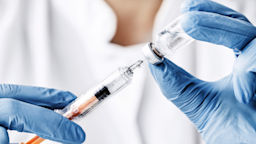
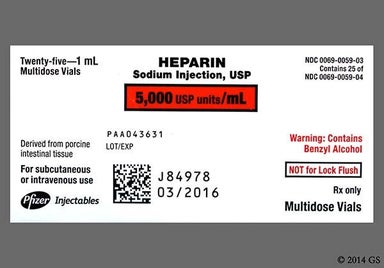
Benzyl alcohol is one of the preservatives found in certain heparin products. This preservative can cause a rare, but serious and sometimes life-threatening medical condition called gasping syndrome. This condition is more likely to happen in newborns and infants with low birth weight. If you're pregnant or breastfeeding, talk with your provider before receiving heparin, since your baby could potentially be exposed to benzyl alcohol in the womb or through your breast milk. Tell your provider if your child experiences any major weight changes while receiving heparin. Get medical attention right away if your child has symptoms, such as gasping, slowed heart rate, clammy skin, dizziness, seizures, slurred speech, or weakness in an arm or leg.
Severe allergic reactions to heparin are possible, including life-threatening reactions like facial swelling, shock, and anaphylaxis (e.g., closing of the throat). Also, let your provider know if you have a pork allergy before taking this medication because heparin is made from porcine (pigs). If you notice difficulty breathing, a choking sensation, swelling around your eyes, swelling of the lips or tongue, dizziness, or nausea after using heparin, get medical attention right away.

 Syringe
| Dosage | Quantity | Price as low as | Price per unit |
|---|---|---|---|
| 1ml of 5000 units/ml | 24 syringes | $26.86 | $1.12 |
| 0.5ml of 5000 units/0.5ml | 60 syringes | $54.40 | $0.91 |
 Vial
Vial| Dosage | Quantity | Price as low as | Price per unit |
|---|---|---|---|
| 1ml of 5000 units/ml | 60 vials | $46.59 | $0.78 |
| 10ml of 1000 units/ml | 1 vial | $7.30 | $7.30 |
| 1ml of 10000 units/ml | 60 vials | $68.17 | $1.14 |
| 5ml of 10000 units/ml | 1 vial | $17.01 | $17.01 |
| 30ml of 1000 units/ml | 1 vial | $7.39 | $7.39 |
| 1ml of 1000 units/ml | 1 vial | $4.99 | $4.99 |
| 10ml of 5000 units/ml | 6 vials | $32.47 | $5.41 |
| 4ml of 10000 units/ml | 25 vials | $66.64 | $2.67 |
| 2ml of 1000 units/ml | 1 vial | $7.16 | $7.16 |
| 1ml of 20000 units/ml | 2 vials | $12.23 | $6.12 |
| 0.5ml of 5000 units/ml | 60 vials | $121.30 | $2.02 |
| 30ml of 30000 units/ml | 1 vial | $8.35 | $8.35 |
| 10ml of 10000 units/ml | 1 vial | $7.44 | $7.44 |
| 2ml of 2000 units/ml | 1 vial | $7.16 | $7.16 |
The dose of heparin varies from one person to another. Your provider will calculate your dose based on your age, weight, and why you need heparin. The dose will also depend on certain lab test results, including complete blood count (CBC) and those measuring how long it takes for your blood to clot.
Heparin is given as an injection into the veins (intravenous or IV) or under the skin (subcutaneous or SC). It's typically given in a hospital or at home by a healthcare provider. But if your provider says it's safe to do so, they might allow you to give yourself under-the-skin heparin injections at home.
Prevention of blood clots The typical dose is 5,000 units injected under the skin every 8 to 12 hours.
Treatment of blood clots The dose is based on your weight, the reason you need heparin, and certain lab values that measure how long it takes your blood to clot. It also depends on whether heparin is given to you as a continuous infusion through the veins, an injection into the veins at regular time intervals, or an injection under the skin.
Hospitals typically have a specific protocol or program in place that outlines how to monitor and change the heparin dose based on these lab values so it works well and is as safe for you as possible.
The following are general dosing options and how often heparin is given:

Although certain medicines should not be used together at all, in other cases two different medicines may be used together even if an interaction might occur. In these cases, your doctor may want to change the dose, or other precautions may be necessary. When you are receiving this medicine, it is especially important that your healthcare professional know if you are taking any of the medicines listed below. The following interactions have been selected on the basis of their potential significance and are not necessarily all-inclusive.
Using this medicine with any of the following medicines is not recommended. Your doctor may decide not to treat you with this medication or change some of the other medicines you take.
Using this medicine with any of the following medicines is usually not recommended, but may be required in some cases. If both medicines are prescribed together, your doctor may change the dose or how often you use one or both of the medicines.
Using this medicine with any of the following medicines may cause an increased risk of certain side effects, but using both drugs may be the best treatment for you. If both medicines are prescribed together, your doctor may change the dose or how often you use one or both of the medicines.


Contraindications are specific health conditions or situations in which a person should not take a medication due to safety concerns. If you have any of the following conditions or if any of the following apply to you, let your healthcare provider know because Heparin will not be safe for you to take.






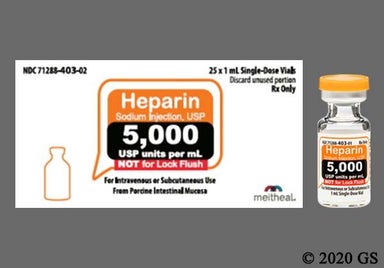
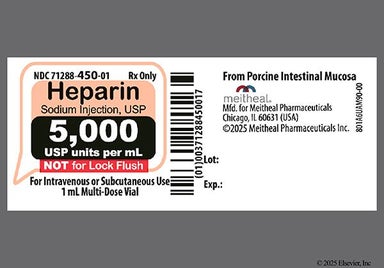
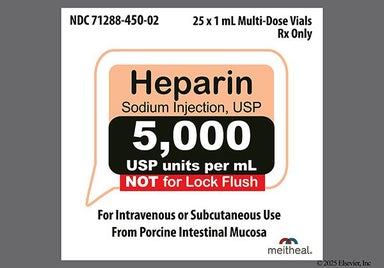
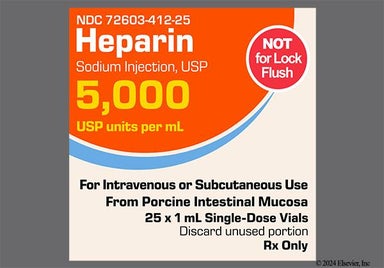
Prescription savings
Stop paying too much for your prescriptions. Compare prices, get pharmacy coupons, and save up to 80%. Find expert answers to your health questions so you can make the best decisions for yourself and your family.
Health conditions
Medications & treatment
Access & affordability
Medication discounts


In general, Heparin Sodium stays in your system for about 5 to 7.5 hours after you stop taking the medication, but it could be longer depending on your dose. Keep in mind that this time frame is estimated based on the half-life of Heparin Sodium, a measure of how long it takes your body to remove the medication from your system.
No, Heparin Sodium doesn't actually dissolve or break apart blood clots that have already formed. Heparin Sodium prevents the blood clot from getting bigger and allows your body to break down the formed clot over time. It also lowers the risk of new blood clots from forming. If the clot is severe and needs to be broken right away, your provider might give you a medication that works to dissolve the clot before giving you Heparin Sodium, depending on the situation. These medications are called fibrinolytics (or thrombolytics), and they include TNKase (tenecteplase) and alteplase (Activase).
The antidote (or reversal agent) for Heparin Sodium is protamine. Protamine is given as an injection through the vein for people who have signs or symptoms or are at high risk of severe bleeding while receiving Heparin Sodium. It works by attaching to Heparin Sodium so Heparin Sodium can't work anymore.
It's possible for Heparin Sodium to affect your international normalized ratio (INR), but not by much. INR is a blood test that tells how well your blood can clot, but this test is specific for measuring how well a different blood thinner called warfarin (Coumadin) works, not Heparin Sodium. Instead, blood tests that measure how well Heparin Sodium is working include activated partial thromboplastin time (aPTT), anti-factor Xa, and activated clotting time (ACT).
The term "bridging anticoagulation" means taking two different blood thinners at the same time for a short period of time when switching from one to the other. This is sometimes required when you're switching from a short-acting blood thinner (e.g., Heparin Sodium) to a long-acting blood thinner (e.g., warfarin (Coumadin)). Short-acting blood thinners work right away and are continued typically until the long-acting blood thinner kicks in. For example, you'll typically need to continue using Heparin Sodium for at least 5 days when you first start warfarin (Coumadin). Once your INR is where it needs to be to make sure warfarin (Coumadin) is working well and safe for you, your provider will probably have you stop Heparin Sodium. It's important to take both blood thinners together until your provider says it's safe for you to stop the short-acting blood thinner; otherwise, you're at risk for more clots.
No. Both Heparin Sodium and enoxaparin (Lovenox) are injectable blood thinners, but they're two completely different medications. They're used to prevent or treat the same types of blood clots. But they're each FDA approved for clotting problems in slightly different situations. For example, Heparin Sodium can help prevent clots in people with atrial fibrillation (AFib), whereas enoxaparin (Lovenox) is FDA approved for people who've had heart attacks. Enoxaparin (Lovenox) is known as a low-molecular-weight heparin; it has a slightly different chemical structure than Heparin Sodium that allows it to have longer-lasting effects. Enoxaparin (Lovenox) is typically given once or twice per day, while Heparin Sodium is given every 4 to 12 hours or by continuous infusion. Additionally, enoxaparin (Lovenox) doesn't require routine blood test monitoring, whereas Heparin Sodium typically does. Speak with your provider to learn more about how both medications compare to each other.
Yes, Heparin Sodium is considered safe for pregnant women who need it. Additionally, several human studies have shown babies born to mothers given Heparin Sodium weren't harmed and neither the baby nor mother had bleeding problems.
