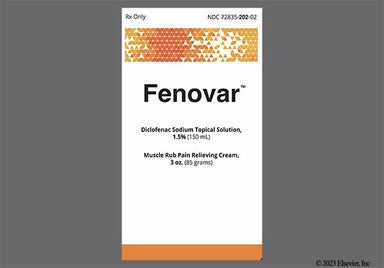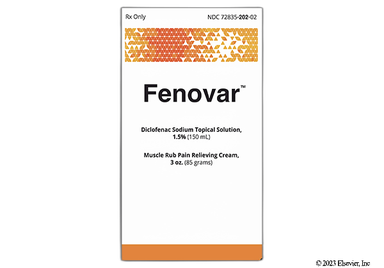
Fenovar
Fenovar is a prepackaged kit with two different topical (on the skin) products. It contains diclofenac solution and Muscle Rub (menthol / methyl salicylate) cream. These medications work together to temporarily helps relieve aches and pains from osteoarthritis of the knee. Fenovar should only be used on skin that is intact, and not on wounds or on damaged skin.


What is Fenovar?
What is Fenovar used for?
- To relieve aches and pains from osteoarthritis of the knee
How Fenovar works
Fenovar is a prepackaged kit with two different topical products.
- Diclofenac is a nonsteroidal anti-inflammatory drug (NSAID). It works by blocking proteins called cyclooxygenase 1 and 2 (COX-1 and COX-2), which are enzymes that make chemicals called prostaglandins. Prostaglandins play many roles in your body, including causing pain and swelling. By blocking your body from making prostaglandins, diclofenac treats osteoarthritis by easing joint pain and swelling.
- Muscle Rub (menthol / methyl salicylate) cream is a combination of two medications. Menthol is often found in peppermint or other mint plants. It works by causing a cooling sensation that makes the nerves on your skin less sensitive to pain. Methyl salicylate acts as a counter-irritant. This means that it first activates pain sensors in the skin, and then makes them less sensitive to pain signals. Methyl salicylate also causes blood vessels in the skin to widen. More blood flow to the skin causes a warming sensation, which can help soothe pain.
Drug facts
| Common Brands | Fenovar, Orthaphen, Orthrexo, Torvex, Varophen |
|---|---|
| Drug Class | Local analgesic / NSAID |
| Controlled Substance Classification | Not a controlled medication |
| Generic Status | No lower-cost generic available |
| Availability | Prescription only |

Side effects of Fenovar
The following side effects may get better over time as your body gets used to the medication. Let your healthcare provider know immediately if you continue to experience these symptoms or if they worsen over time.
Common Side Effects
Diclofenac topical solution
- Dry skin at application site (32%)
- Red and hardened skin at application site (9-13%)
- Indigestion (8%)
- Belly pain (6%)
- Itchy skin at application site (4%)
- Extra gas (4%)
- Diarrhea (4%)
- Nausea (4%)
- Sore throat (4%)
__Menthol 10% / Methyl salicylate 15% cream: __
- Skin reactions: dryness, redness, burning
Less Common Side Effects
Diclofenac topical solution
- Constipation
- Swelling
- Infection
- Bruising
- Blisters at application site
- Tingling sensation
- Bad breath
Fenovar serious side effects
Contact your healthcare provider immediately if you experience any of the following.
- Heart attack: trouble breathing, chest pain or tightness
- Stroke: blurred vision, difficulty speaking, difficulty walking, weakness on one side of the body
- Stomach bleeds: blood in your vomit, stool that looks like black coffee grounds, pain in your stomach that doesn't go away
- Heart failure: trouble breathing, tiredness, swelling in your body, sudden weight gain
- Severe asthma attack: chest pain, cough, difficulty breathing, wheezing
- Serious allergic or skin reaction: fever, body aches, cough, peeling skin, rash, trouble breathing, swelling of the face, painful blisters all over your body

Pros and cons of Fenovar
Pros
- Can be applied directly to the painful area
- Combines three topical medications into one kit for convenience
- Works just as well as some oral (by mouth) NSAIDs for osteoarthritis pain
- Can be used with other topical medications once the treated area is dry, unlike diclofenac gel
Cons
- Recommended to avoid sun exposure during treatment because of possible higher risk for skin damage or irritation
- Can sometimes cause a skin reaction where applied
- Risks of harm to unborn babies in second and third trimesters of pregnancy
- Needs to be used multiple times a day

Pharmacist tips for Fenovar

- Fenovar should only be used on the outside of your body (i.e., skin) on skin that's not broken. You shouldn’t use it on wounds or on damaged skin. Don't take Fenovar by mouth, and never use it in your eyes, nose, or ears to avoid side effects.
- Wash your hands before and after using Fenovar to help prevent getting the medication in your eyes or mouth. If it does get into your eyes, wash your eyes with water or saline and contact your provider if irritation lasts more than an hour.
- Make sure to read the Instructions for Use before using diclofenac topical solution in your kit. Before applying the medication, clean and dry the affected area(s) of your skin. Apply 10 drops of the solution at a time (to your hand or directly to the knee) to avoid spilling it. Gently massage the medication around the front, back, and sides of the knee. Repeat this step 4 times until all 40 drops are applied.
- Avoid taking a shower or bath for at least 30 minutes after applying Fenovar so it can be absorbed into your skin properly.
- Don't cover the treated area with a bandage or heating pad after applying Fenovar. This can accidentally burn your skin and cause blisters.
- Avoid direct exposure of the treated area(s) to natural or artificial sunlight, such as sunbathing or using a tanning bed. Even though it's rare, the diclofenac in Fenovar can make your skin more sensitive to the sun, which can result in redness, irritation, or rash. If you're going out, make sure to wear sunscreen or clothing to protect the treated area(s) from sun exposure.
- Let your provider or pharmacist know what medications you're taking, including over-the-counter products and supplements, before you start Fenovar. They can help you screen for interactions.
- Stop using Fenovar and talk with your provider if you've been using this medication for more than a week. Also let your provider know if you get excessive irritation on the skin, or if your pain has gotten worse. Your provider can make sure there are no other serious medical conditions going on.
- Store Fenovar at room temperature and up and away out of children's reach and sight. This prevents them from accidentally swallowing medication that's left out. Always put medication away every time you use it. If you think that your child might’ve accidentally swallowed Fenovar, call your Poison Control Center at 1-800-222-1222 right away even if you aren't completely sure.

Risks and warnings for Fenovar
Fenovar can cause some serious health issues. This risk may be even higher for certain groups. If this worries you, talk to your doctor or pharmacist about other options.
Heart attack and stroke
- Risk factors: History of heart problems, including heart attack | Using high doses of topical diclofenac | Using topical diclofenac for a long time | History of heart bypass surgery
 NSAIDs, like diclofenac in Fenovar, can raise your risk of having blood clots, heart attacks, or strokes. The risk might be higher if you have a history of heart problems, use this medication at higher doses, or use this medication for a long period of time. To prevent heart attack or stroke from happening, your provider will prescribe the lowest possible dose of Fenovar for the shortest amount of time that works well for you. If you have heart problems, talk to your healthcare provider before starting this medication. Don't use Fenovar if you've had or will be having heart bypass surgery. Call 911 or seek immediate medical help if you experience chest pain, trouble breathing, weakness on one side of your body, or trouble speaking or walking.
Stomach bleeding and ulcers
- Risk factors: History of stomach bleeding or ulcers | Older adults | Taking other medications that can cause stomach problems | Drinking alcohol | Smoking | Having poor health | Bleeding problems | Using topical diclofenac for a long time | Using higher doses of topical diclofenac
The diclofenac ingredient in Fenovar can cause stomach bleeding and ulcers. These problems can occur without warning or symptoms, so it's best to use the lowest possible dose for the shortest possible time to minimize your risk. Some medications, such as oral corticosteroids and blood thinners, can raise your risk of stomach bleeding. Tell your provider about all the medications that you take before starting Fenovar. If you have severe stomach pain, black and tarry stools, or blood in the urine while using this medication, get medical help promptly.
Blood problems
- Risk factors: History of blood problems | Taking blood thinners or certain antidepressants
Topical diclofenac in Fenovar can lower the level of red blood cells in your body. This might be due to stomach bleeding or swelling caused by diclofenac. Your provider will do blood tests to check your blood cell counts for these problems if you seem weaker than usual, have cold hands and feet, or shortness of breath. Additionally, NSAIDs like diclofenac can affect the way your blood clots. Please let your provider know if you have a history of blood problems or if you take certain medications that raise your risk of bleeding (e.g., blood thinners, SSRIs, SNRIs). Your provider can make sure Fenovar is safe for you.
Liver damage
- Risk factors: History of liver damage | Taking other medications that can cause liver damage
Rarely, diclofenac (an ingredient in Fenovar) taken by mouth has caused life-threatening liver damage. This can happen as early as within the first 2 months of starting this medication. Your risk is higher if you use Fenovar with other medications that can also cause liver damage, such as acetaminophen (Tylenol). Liver damage can happen with or without symptoms, so it's best to use the lowest possible dose for the shortest possible time to minimize your risk. Your provider might order blood tests to check your liver function regularly. Stop Fenovar and talk to your provider right away if you experience symptoms such as fever, chills, fatigue, nausea, vomiting, yellowing of the skin or whites of the eyes, clay-colored stool, or dark urine.
High blood pressure, heart failure, and swelling of your arms and legs
- *Risk factors: High blood pressure | Heart failure *
NSAIDs, like diclofenac in Fenovar, can raise your blood pressure, as well as cause your body to hold onto more water. This can lead to new or worsen existing blood pressure problems, heart failure, and swelling of your arms and legs. Fenovar can also cause some medications used to treat these conditions to work less well, such as furosemide (Lasix), lisinopril (Zestril), and losartan (Cozaar). Monitor your blood pressure closely while using Fenovar. Fenovar isn't recommended if you have heart failure, so discuss your health conditions with your provider before starting this medication. Let your provider know right away if you notice any changes in your blood pressure or experience symptoms, such as trouble breathing, tiredness, swelling in your body, or sudden weight gain.
Kidney damage and high potassium levels
- Risk factors: Kidney or liver problems | Heart failure | Taking certain high blood pressure medications, such as water pills, ACEIs, or ARBs | Older adults | Loss of body fluid through conditions such as severe vomiting, bleeding, or diarrhea | Using topical diclofenac for a long time
Diclofenac (an ingredient in Fenovar) can damage your kidneys by slowing down blood flow to the kidneys. The risk is higher if you're taking certain blood pressure medications (like ACE inhibitors, ARBs, or water pills) or have certain medical conditions (e.g., kidney problems, liver problems, heart failure). Kidney damage is usually reversible once you stop taking this medication. If you have very severe kidney problems, discuss the risks of using this medication with your provider. Let your provider know if you notice a change in how often you urinate after starting Fenovar.
Diclofenac in Fenovar can also lead to high potassium levels, even in people with healthy kidneys. If you experience signs of high potassium levels, such as muscle weakness or abnormal heartbeat, tell your healthcare provider right away because it might be dangerous.
Severe asthma attack and allergic reactions
- Risk factors: Asthma and stuffy nose with or without nasal polyps | History of allergic reaction to aspirin or other NSAIDs
Rarely, Fenovar can cause life-threatening allergic reactions. Diclofenac in Fenovar can cause your airways to tighten, which might lead to severe asthma attacks. Be careful using this medication if you have asthma. People who've experienced asthma attacks triggered by aspirin or other NSAIDs in the past should avoid Fenovar. Get medical help right away if your throat tightens and you can't breathe.
Serious skin reactions
Diclofenac in Fenovar might cause sudden and serious skin reactions. Symptoms can include fever, body aches, rash, peeling skin, painful blisters all over your body, and swelling of the face. Stop Fenovar and get medical attention right away if you experience these symptoms. Don't apply this medication to open wounds, skin infections, or inflamed skin as this can change how the medication gets absorbed or delay you from receiving the right medication in the meantime.
Harm to unborn babies
- Risk factor: Currently in second or third trimester of pregnancy
Don't use Fenovar, specifically topical diclofenac, starting at 30 weeks of pregnancy. It can cause serious complications, such as heart, lung, or kidney problems in your unborn baby. If you want to use Fenovar between 20-30 weeks of pregnancy, talk with your provider first to see if the benefit of pain relief is greater than the risk of harm in your unborn baby.
For topical use only
Fenovar should only be used on your skin. Don't take this medication by mouth, and never use it in your eyes, nose, or ears. If you think that your child might’ve accidentally swallowed this medication, call your Poison Control Center at 1-800-222-1222 right away.

Fenovar dosage
 Kit
Kit| Dosage | Quantity | Price as low as | Price per unit |
|---|---|---|---|
| 150ml/85g of 1.5% | 1 kit | $3,310.25 | $3,310.25 |

How much does Fenovar cost?
$3,310.25

Fenovar contraindications
Contraindications are specific health conditions or situations in which a person should not take a medication due to safety concerns. If you have any of the following conditions or if any of the following apply to you, let your healthcare provider know because Fenovar will not be safe for you to take.
- History of asthma, hives, or allergy to aspirin or other NSAIDs
- Recent or upcoming heart bypass surgery

What are alternatives to Fenovar?

Fenovar images