Key takeaways:
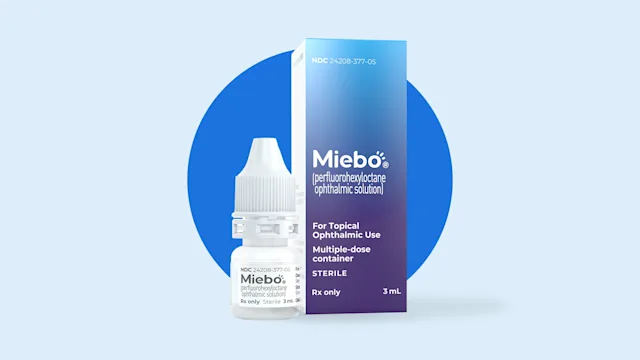
Miebo (perfluorohexyloctane) is a prescription-only eye drop that treats dry eye symptoms in adults. Most Miebo side effects are mild and temporary.
Blurry vision is the most common side effect of Miebo. Any bluriness usually clears up within minutes of applying the drops. Eye redness is another possible side effect.
Eye pain, hypersensitivity reactions, and eye discharge are less common Miebo side effects. Reach out to your healthcare professional about any side effects that feel serious or don’t get better.
Save on related medications
Blurry vision and red eyes are frustrating to experience. Sometimes, these issues happen sporadically, but they’re also common symptoms of dry eye disease. Thankfully, there are home remedies and medications that can help relieve these bothersome symptoms when they persist.
Miebo (perfluorohexyloctane) is one prescription option to consider. These eye drops are FDA approved to treat adults with dry eye disease. Miebo works by reducing tear evaporation, which helps prevent your eyes from drying out.
Whether you’re starting treatment with Miebo or can’t get the catchy commercial out of your head, it’s natural to want to learn more about these eye drops. And while Miebo is typically well tolerated, it’s important to know what potential side effects to expect.
Miebo side effects at a glance
Miebo side effects are typically mild. Blurred vision and eye redness were the most common side effects reported in clinical studies. Rare risks and side effects of Miebo include eye pain, hypersensitivity reactions (allergic reactions), and eye discharge.
Below, we’ll review five Miebo side effects in more depth and tips to manage them.
1. Blurred vision
It’s common for eye drops to cause blurry vision. Miebo is no different. In fact, bluriness is the most common side effect of Miebo.
The good news is blurry vision with Miebo should be temporary. It generally goes away within minutes of applying the eye drops. It’s best to wait for your vision to clear up before driving or doing other attention-oriented tasks.
Keep in mind that dry eye disease itself can also cause blurry vision. So Miebo may not be the true or only culprit. Miebo can actually help resolve blurry vision from dry eye disease. You may just need time for it to start working.
You should start seeing improvements in dry eye symptoms within about 14 days (2 weeks) of starting Miebo. It could take up to 8 weeks (2 months) to see the full benefits.
2. Eye redness
Miebo could make your eyes red. But this Miebo side effect is generally short-lived.
On the other hand, eye redness is also a dry eye disease symptom. And any eye redness from the condition should get better once Miebo starts working. You can also try over-the-counter (OTC) artificial tears, such as Refresh Plus (carboxymethylcellulose sodium 0.5%), to soothe red eyes in the meantime.
If you’re using Miebo and artificial tears, make sure to separate them by at least 5 to 15 minutes. This gives the different eye drops time to absorb, so they can work to the best of their ability.
3. Eye pain
Miebo may cause eye pain after you apply the drops. But this isn’t common overall.
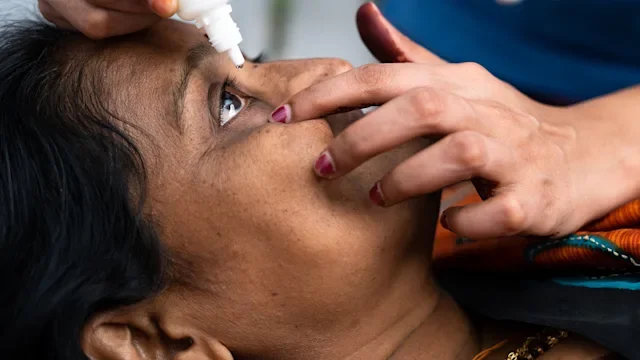
One unique feature of Miebo is the drop size is very small. So you may not even feel the drops touch your eye when you apply them. If you do experience eye pain while you’re applying Miebo, it should get better once the drops are absorbed.
Reach out to your prescriber if you experience eye pain that doesn’t go away. This can be a sign of a more serious problem, such as an infection or eye injury.
Good to know: If you wear contact lenses, it’s recommended to remove them before applying Miebo. Then, wait at least 30 minutes after applying Miebo to place your contact lenses back in your eyes. The eye drops can actually irritate your eyes if you apply them while you’re wearing your contact lenses. The eye drops can also damage your contact lenses.
4. Eye discharge
Waking up with eye discharge (eye boogers) isn’t the way most of us want to start our day. But it can happen for various reasons, including medication.
Some people using Miebo have reported eye discharge. But it’s not a common Miebo side effect. Washing your eyelids with baby shampoo or trying an eyelid scrub like OCuSOFT can help remove any eye discharge. This can also help prevent and manage dry eye symptoms.
Since discharge can also be a sign of an eye infection, reach out to a healthcare professional if you experience any of these other symptoms:
Eye redness
Eye burning or a gritty feeling
Eye crusting in the morning
Eyelid swelling and redness
Eye itching
Good to know: Hand hygiene is key to preventing an eye infection. Make sure to wash your hands with soap and water for at least 20 seconds before applying Miebo. Don’t let the tip of the eye drop bottle touch your eye.
5. Hypersensitivity reactions
While rare, Miebo can cause allergic reactions. Eye swelling, irritation, and hives are a few examples.
However, since Miebo is preservative-free, it’s less likely to cause allergic reactions than an eye drop with a preservative. That’s because preservatives — such as benzalkonium chloride — can irritate your eyes, especially with chronic use.
If you do experience an allergic reaction, your prescriber will likely recommend that you stop using Miebo.
Does Miebo cause any full-body side effects?
Since Miebo targets the eyes, it’s unusual to experience body-wide side effects from the medication. However, some people have reported a few side effects that aren’t eye related.
Check out the table below to learn more along with how to manage these side effects.
Side effect | How to manage it |
|---|---|
• Staying hydrated • Prioritizing your sleep • Trying OTC pain relievers like acetaminophen (Tylenol) or ibuprofen (Advil, Motrin) | |
Pain | • Applying cold or heat • Exercising • Trying OTC pain relievers |
• Drinking fluids • Trying OTC cough and cold medications | |
Sinus infection | • Using saline nasal wash • Trying OTC pain relievers or decongestants |
• Staying hydrated • Resting • Trying OTC fever reducers like acetaminophen or ibuprofen |
Before trying any OTC products, reach out to your pharmacist or prescriber. They can check for interactions with any prescription or OTC medications you’re already taking. They’ll also make sure any OTC products are safe to take with any health conditions you’re living with.
The bottom line
Miebo (perfluorohexyloctane) is a prescription-only eye drop that treats dry eye symptoms. Miebo side effects are typically mild and temporary. Blurry vision and eye redness are common ones. But keep in mind that these are also dry eye symptoms. Once Miebo starts working, these symptoms should improve if they’re related to your condition.
Eye pain, hypersensitivity reactions, and eye discharge are less common Miebo side effects. Reach out to your healthcare professional with any concerns about Miebo side effects.

Why trust our experts?




References
American Academy of Allergy, Asthma & Immunology. (2024). Tips for administering eye drops.
Azhar, A., et al. (2024). Miebo (perfluorohexyloctane): A novel approach to treating dry eye disease. Annals of Medicine & Surgery.
Baudouin, C., et al. (2010). Preservatives in eyedrops: The good, the bad and the ugly. Progress in Retinal and Eye Research.
Bausch & Lomb. (2025). Miebo digital patient brochure.
Bausch & Lomb. (2025). Miebo - perfluorohexyloctane solution [package insert].
Gudgel, D. T. (2023). How to put in eye drops. American Academy of Ophthalmology.
Karpecki, P. M., et al. (2023). Perfluorohexyloctane ophthalmic solution: A review of a prescription treatment for dry eye disease that directly targets tear evaporation. Expert Review of Ophthalmology.
MedlinePlus. (2023). Perfluorohexyloctane ophthalmic.
Munsab, R., et al. (2025). Efficacy and safety of perfluorohexyloctane (PFHO) in patients with dry eye disease (DED) due to meibomian gland dysfunction (MGD): Systematic review and meta-analysis. Medicine.
Protzko, E. E., et al. (2023). Long-term safety and efficacy of perfluorohexyloctane ophthalmic solution for the treatment of patients with dry eye disease: The KALAHARI study. Cornea.
Steven, P., et al. (2017). Semifluorinated alkane eye drops for treatment of dry eye disease due to meibomian gland disease. Journal of Ocular Pharmacology and Therapeutics.
Taloni, A., et al. (2024). Efficacy of perfluorohexyloctane for the treatment of patients with dry eye disease: A meta-analysis. Ophthalmic Research.
Tauber, J., et al. (2020). A randomized clinical study (SEECASE) to assess efficacy, safety, and tolerability of NOV03 for treatment of dry eye disease. Cornea.
Tauber, J., et al. (2023). NOV03 for dry eye disease associated with meibomian gland dysfunction. Ophthalmology.
U.S. Food and Drug Administration. (2024). Drug trials snapshot: Miebo.