


HER2 Inhibitors: 6 Medications That Fight HER2-Positive Breast Cancer
HER2-positive breast cancer responds well to therapies that target the HER2 receptor. Read about six commonly prescribed HER2 inhibitors and their side effects.
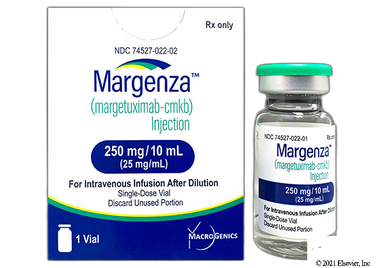
Margenza (margetuximab or margetuximab-cmkb) is a targeted anticancer treatment for metastatic, HER2-positive breast cancer that has spread to other areas of the body. It’s typically used when you’ve already tried a few other similar targeted treatments before. Margenza (margetuximab) is an infusion through your veins, and it’s used together with other anticancer medications in your treatment plan.

Margenza (margetuximab) is a monoclonal antibody that acts as a human epidermal growth factor receptor 2 (HER2) inhibitor. It blocks a specific protein in the body that’s important for cell growth called HER2. HER2 is found on both normal and cancer cells. Cancer cells usually have more HER2 proteins than normal cells. This can cause cancer cells to grow more quickly than normal cells. When HER2 is blocked by Margenza (margetuximab), cancer cells can’t grow and spread as well.
| Common Brands | Margenza |
|---|---|
| Drug Class | HER2 receptor antagonist |
| Controlled Substance Classification | Not a controlled medication |
| Generic Status | No lower-cost generic available |
| Availability | Prescription only |

The following side effects may get better over time as your body gets used to the medication. Let your healthcare provider know immediately if you continue to experience these symptoms or if they worsen over time.
*Side effects when used together with other anticancer medications.
Contact your healthcare provider immediately if you experience any of the following.
Side effects that you should report to your care team as soon as possible:
Side effects that usually do not require medical attention (report these to your care team if they continue or are bothersome):




Margenza (margetuximab) can cause some serious health issues. This risk may be even higher for certain groups. If this worries you, talk to your doctor or pharmacist about other options.
 Margenza (margetuximab) can cause new or worsening heart failure and affect how well your heart pumps blood through your body. Make sure your provider has your full medical history, so they can closely monitor your heart through imaging using an echocardiogram or a MUGA scan. You’ll need to get this scan before starting treatment and about every 3 months while receiving Margenza (margetuximab). Let your care team know if you experience any signs and symptoms of heart failure, including shortness of breath; dry cough; swelling of legs, arms, or face; irregular heartbeats; dizziness; or rapid weight gain.
Margenza (margetuximab) might cause harm to an unborn baby. If you're a female of childbearing age receiving Margenza (margetuximab), your provider might check to see if you’re pregnant before you start treatment. If you’re female who is able to become pregnant, use birth control while you’re receiving Margenza (margetuximab) and for at least 4 months after your last dose. Let your provider know right away if you become pregnant during this time.
People receiving Margenza (margetuximab) might experience infusion reactions. Symptoms include fever, chills, dizziness, headache, nausea, sweating, rash, or trouble breathing. Most of the reactions happened during the first infusion and went away within 1 day. If a reaction occurs, your healthcare provider can slow down the infusion and help manage or treat the symptom. To lower your risk of future reactions, your provider might also give you other medications (like antihistamines or corticosteroids) before your next infusions. Alert your provider or get medical help right away if you experience any symptom of an infusion reaction.

Your healthcare provider will determine your dose of Margenza (margetuximab) based on your body weight.
The typical dose is 15 mg/kg injected into the veins (intravenously or IV) by a provider every 3 weeks.


Prescription savings
Stop paying too much for your prescriptions. Compare prices, get pharmacy coupons, and save up to 80%.Resources
About GoodRx
 Find expert answers to your health questions so you can make the best decisions for yourself and your family.
Health conditions
Medications & treatment
Access & affordability
Well-being
Medication discounts

In general, your first Margenza infusion should take about 2 hours to complete. Then, your next infusions can take as little as 30 minutes. But the length of time can depend on how well you tolerate the infusion. If you’re experiencing an allergic reaction (e.g., rash, trouble breathing, feeling faint), your provider might need to temporarily stop or slow the infusion to manage your symptoms. This will make the infusion take longer to finish.
Possibly. It depends on how severe your reaction was. Your provider should discuss with you about the risks and benefits of using Margenza again after you’ve had an infusion reaction. There are a few things your provider can do to try to prevent future reactions or to lower their severity. Your provider can give you antihistamines or corticosteroids before future infusions. They can also slow down how fast you receive the infusion. But if your reaction is severe or life-threatening, you might not be able to use Margenza again. Talk to your provider if you’re concerned about receiving this treatment.
No. Although there are many different types of breast cancer, Margenza is used to treat metastatic, HER2-positive breast cancer. Your provider will perform a biopsy or surgery to remove a small piece of breast tissue. This procedure helps your provider figure out the receptor type of your cancer. Knowing what type of receptor your cancer has will help your provider decide what treatment plan is best for you. Margenza is specifically used for people who’ve already tried at least two other HER2-targeted treatment plans, such as those with Herceptin (trastuzumab) or Perjeta (pertuzumab).
No. Chemotherapy is a term used for cancer medications that kill cancer cells in your body. Unlike traditional chemotherapy, Margenza slows cancer cell growth. However, your breast cancer treatment plan with Margenza includes certain chemotherapy medications. Possible chemotherapy medications used with Margenza include capecitabine (Xeloda), Halaven (eribulin), gemcitabine (Infugem), or vinorelbine. Your provider will decide which medications are best for you and your cancer.
It isn’t known if Margenza can pass into breast milk, but there’s a risk of serious harm to nursing infants if it does. Because of this risk, you shouldn’t breastfeed during Margenza treatment. There’s also a risk of potential harm to nursing infants for up to 4 months after your last dose. Talk with your provider if you have any questions about breastfeeding or other ways to feed your baby while receiving Margenza or after treatment.
