



What Vitiligo Treatments Work? A Look at 7 Effective Options
There's no cure for vitiligo, but phototherapy, topical steroids, and even natural supplements can restore pigment. Here are your options for vitiligo treatment.
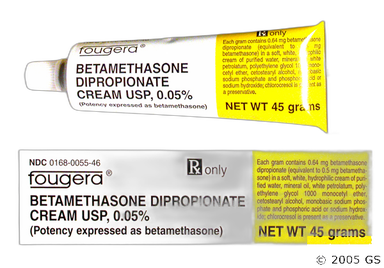
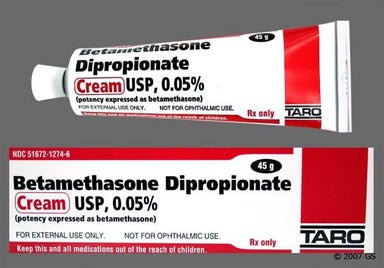
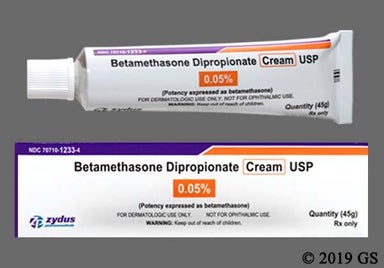
Betamethasone is a potent (strong) medication used to relieve the inflammation (redness, swelling, warmth, pain) and itching from different skin conditions. This medication is available as many different formulations, but most can only be used for up to 2 weeks at a time.

Betamethasone is a corticosteroid. It provides relief for certain skin conditions by lessening the release of chemicals in your body that cause swelling and inflammation.
| Common Brands | Diprolene, Luxiq, Sernivo |
|---|---|
| Drug Class | Corticosteroid |
| Controlled Substance Classification | Not a controlled medication |
| Generic Status | Lower-cost generic available |
| Availability | Prescription only |

The following side effects may get better over time as your body gets used to the medication. Let your healthcare provider know immediately if you continue to experience these symptoms or if they worsen over time.
Contact your healthcare provider immediately if you experience any of the following.
Along with its needed effects, a medicine may cause some unwanted effects. Although not all of these side effects may occur, if they do occur they may need medical attention.
Check with your doctor immediately if any of the following side effects occur:
Less common
Blistering, burning, crusting, dryness, or flaking of the skin
cracking or tightening of the skin
flushing or redness of the skin
irritation
itching, scaling, severe redness, soreness, or swelling of the skin
thinning of the skin with easy bruising, especially when used on the face or where the skin folds together (eg, between the fingers)
unusually warm skin
Rare
Blistering, peeling, or loosening of the skin
Some side effects may occur that usually do not need medical attention. These side effects may go away during treatment as your body adjusts to the medicine. Also, your health care professional may be able to tell you about ways to prevent or reduce some of these side effects. Check with your health care professional if any of the following side effects continue or are bothersome or if you have any questions about them:
Less common
Raised, dark red, or wart-like spots on the skin, especially when used on the face
Incidence not known
burning and itching of the skin with pinhead-sized red blisters
increased hair growth on the forehead, back, arms, and legs
lightening of normal skin color
lightening of treated areas of dark skin
reddish purple lines on the arms, face, legs, trunk, or groin
softening of the skin
Other side effects not listed may also occur in some patients. If you notice any other effects, check with your healthcare professional.
Call your doctor for medical advice about side effects. You may report side effects to the FDA at 1-800-FDA-1088.




Betamethasone can cause some serious health issues. This risk may be even higher for certain groups. If this worries you, talk to your doctor or pharmacist about other options.
Betamethasone can pass through your skin and cause changes to your body's hormone levels, especially if this medication is used for a long period of time or used over a large area. Covering the treated area can affect hormone levels as well. Although this problem is reversible, hormone changes can include glucocorticosteroid (or adrenal) insufficiency, a condition called Cushing's syndrome, high blood sugar, and sugar in the urine. Children are at higher risk of experiencing these effects, because their body might be too small to handle the amount of medication that gets absorbed. Rarely, hormone changes in children due to topical betamethasone can lead to slow growth and delayed weight gain. In general, hormone changes from betamethasone can happen during your treatment or after you stop using the medication. Depending on your usage, your provider might monitor your hormone levels often.
Certain formulations of betamethasone, such as the augmented forms and Sernivo spray, might raise the risk of eye problems like cataracts and glaucoma. Avoid getting betamethasone in your eyes. Let your provider know right away if you have blurry vision or changes to your eyesight.
Although rare, betamethasone might weaken your immune system and raise your risk of getting infections. If you experience a skin infection while using betamethasone, speak to your provider to get the appropriate treatment for the infection. If your infection doesn't improve, your provider might temporarily stop betamethasone until your infection clears up.
Betamethasone might cause an allergic reaction and prevent your skin from healing properly, especially after a cut or wound. Let your provider know if you experience any skin irritation while using betamethasone.


Although certain medicines should not be used together at all, in other cases two different medicines may be used together even if an interaction might occur. In these cases, your doctor may want to change the dose, or other precautions may be necessary. Tell your healthcare professional if you are taking any other prescription or nonprescription (over-the-counter [OTC]) medicine.





Prescription savings
Stop paying too much for your prescriptions. Compare prices, get pharmacy coupons, and save up to 80%. Find expert answers to your health questions so you can make the best decisions for yourself and your family.
Health conditions
Medications & treatment
Access & affordability
Medication discounts


For most formulations of Betamethasone Dipropionate, you can use it for up to 2 weeks in a row, unless your provider tells you otherwise. For the Sernivo spray, you can use it for up to 4 weeks. Let your provider know if your skin condition doesn't get better after 2 weeks (or 4 weeks for Sernivo). They will determine if you should continue or change your treatment plan. Stop using Betamethasone Dipropionate once your skin condition is under control.
Unless directed by your provider, avoid using Betamethasone Dipropionate on the face, groin, armpit, or areas where the skin has been thinned out. Also, avoid the scalp if you're using the Sernivo spray. The skin in these areas are thinner and are more sensitive, so there is a higher risk of side effects or irritation. Only apply Betamethasone Dipropionate on the outside of your skin. Don't put it in your eyes or genitals.
No, you shouldn't use anything to cover the treated area. Doing so can cause your body to absorb more medication and you could develop more side effects, such as skin irritation.
Betamethasone Dipropionate dipropionate and Betamethasone Dipropionate valerate are different chemical forms of the steroid medication Betamethasone Dipropionate. These two chemical forms of Betamethasone Dipropionate differ in how potent (strong) they are to treat your skin condition. Betamethasone Dipropionate dipropionate is generally stronger than Betamethasone Dipropionate valerate. These two chemical forms of Betamethasone Dipropionate also differ in the dosage formulations (e.g., cream, ointment, spray) they come in.
The augmented formulations are made to absorb through the skin faster and better. This means they're stronger and work faster than regular formulations of Betamethasone Dipropionate. Augmented Betamethasone Dipropionate isn't approved for young children. The amount of medication they absorb might be too much for their body, so they're at a higher risk of hormone changes and skin irritation.
Speak with your provider to get the best formulation for you or your child, because certain forms can't be used in children. Betamethasone Dipropionate dipropionate lotion and most of the augmented formulations are only approved for children 13 years of age or older. The augmented gel formulation is only approved for children 12 years of age or older.
