Livtencity
Livtencity (maribavir) is a newer antiviral medication that treats cytomegalovirus (CMV) in people who've received a transplant. It's not a first-choice medication, but only used if the CMV infection didn't respond to traditional treatment, such as ganciclovir, valganciclovir, and cidofovir.


What is Livtencity (maribavir)?
What is Livtencity (maribavir) used for?
- Post-transplant CMV infection that didn't respond well to other treatments (people 12 years and older who weigh at least 77 lbs)
How Livtencity (maribavir) works
Livtencity (maribavir) is an antiviral drug against CMV. It works by blocking the activity of a special viral enzyme (protein) called pUL97. This process helps stop the growth and survival of the CMV virus.
Drug facts
| Common Brands | Livtencity |
|---|---|
| Drug Class | Antiviral |
| Controlled Substance Classification | Not a controlled medication |
| Generic Status | No lower-cost generic available |
| Availability | Prescription only |

Side effects of Livtencity (maribavir)
The following side effects may get better over time as your body gets used to the medication. Let your healthcare provider know immediately if you continue to experience these symptoms or if they worsen over time.
Common Side Effects
- Changes in taste (46%)
- Nausea (21%)
- Diarrhea (19%)
- Vomiting (14%)
- Tiredness (12%)
The following Livtencity (maribavir) side effects have also been reported
Side effects that you should report to your care team as soon as possible:
- Allergic reactions—skin rash, itching, hives, swelling of the face, lips, tongue, or throat
Side effects that usually do not require medical attention (report to your care team if they continue or are bothersome):

Get your GoodRx coupon

Pros and cons of Livtencity (maribavir)
Pros
- Good option if CMV infection doesn't respond to typical therapies
- Taken by mouth
- Can be used in people 12 years and older (who weight at least 35 kg)
- Likely safe to use in people with kidney or liver problems
Cons
- Interacts with a lot of medications
- Still a chance that the virus could come back after treatment and be harder to treat
- Unknown if safe for children 11 years and younger
- Brand only, so might be expensive

Pharmacist tips for Livtencity (maribavir)

- Since Livtencity (maribavir) is available as 200 mg tablets, you'll need to take 2 tablets (400 mg) twice a day. Try to take your dose at the same times every day so the amount of medication in your body stays consistent.
- If you start any new medication or supplement while taking Livtencity (maribavir), tell your healthcare provider or pharmacist first so that they can make sure that Livtencity (maribavir) is safe to take.
- Livtencity (maribavir) interacts with many medications, including transplant medications. For this reason, your transplant provider might have you get lab draws more often. This is so they can monitor your transplant medication levels while you're taking Livtencity (maribavir).
- It's common for Livtencity (maribavir) to cause changes in taste. For many people, this goes away while continuing treatment. But it can take up to 2 months to resolve. For most people, this side effect goes away completely after stopping the medication.
- There isn't enough information to know if Livtencity (maribavir) is safe to take while pregnant. If you're pregnant or thinking of becoming pregnant, speak to your provider about the risks and benefits of this medication.
- If you or your child experiences any weight changes, let the provider know. It isn't known if Livtencity (maribavir) is safe or works well in people less than 77 lbs.

Risks and warnings for Livtencity (maribavir)
Livtencity (maribavir) can cause some serious health issues. This risk may be even higher for certain groups. If this worries you, talk to your doctor or pharmacist about other options.
Livtencity (maribavir) not working well
There's a possibility that your CMV infection is resistant (won't respond well) to Livtencity (maribavir). This means that the infection won't go away even after you take Livtencity (maribavir). Sometimes, the infection goes away, but comes back 1 to 2 months later. Please monitor yourself for symptoms of CMV infection while you're taking Livtencity (maribavir) and for 2 months after treatment. Let your provider know if you experience fever, sore throat, or tiredness.
Drug interactions
There are many medications that interact with Livtencity (maribavir). Some medications, including Livtencity (maribavir), might need to have the dosages adjusted or you might need to stop taking them altogether. Taking a medication that interacts with Livtencity (maribavir) can cause it to be less effective and cause a CMV infection that's harder to treat. Or, some interactions can give you severe side effects. Make sure to tell your provider about all of the medications you take before starting Livtencity (maribavir). This includes prescriptions, over-the-counter medications, and supplements. Don't start any new medications while taking Livtencity (maribavir) without talking to your provider or pharmacist first.

Livtencity (maribavir) dosage
 Tablet
| Dosage | Quantity | Price as low as | Price per unit |
|---|---|---|---|
| 200mg | 112 tablets | $25,495.12 | $227.64 |

How much does Livtencity (maribavir) cost?
$25,495.12

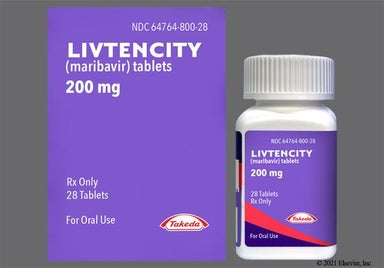
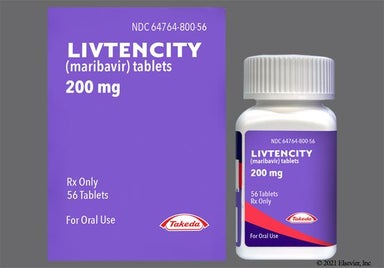
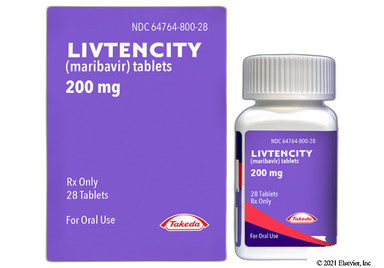
Livtencity (maribavir) images