

7 Statin Alternatives You Can Take to Help Lower Your Cholesterol
Statins may not be safe and effective for all people with high cholesterol. Some statin alternatives, like fibrates, may be able to help. Review your options here.
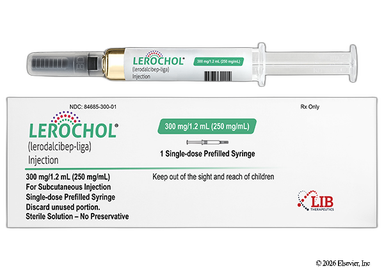
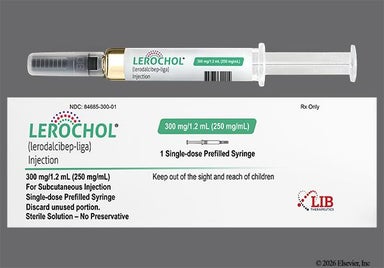
Lerochol (lerodalcibep) is a PCSK9 inhibitor used along with a healthy diet and regular exercise to help lower cholesterol in adults with high cholesterol. It comes as a prefilled syringe that’s injected under the skin once a month. Common side effects include injection site reactions and common cold symptoms.

Lerochol (lerodalcibep) is a PCSK9 inhibitor, meaning it blocks a protein called PCSK9. Normally, PCSK9 breaks down LDL receptors in your liver. These receptors remove LDL ("bad") cholesterol from your blood.
By blocking PCSK9, Lerochol (lerodalcibep) allows more of those receptors to stay active. This helps your liver remove more LDL cholesterol from your blood, lowering your cholesterol levels.
| Common Brands | Lerochol |
|---|---|
| Drug Class | PCSK9 inhibitor |
| Controlled Substance Classification | Not a controlled medication |
| Generic Status | No lower-cost generic available |
| Availability | Prescription only |

The following side effects may get better over time as your body gets used to the medication. Let your healthcare provider know immediately if you continue to experience these symptoms or if they worsen over time.
High cholesterol levels
HeFH
High cholesterol levels
HeFH
Side effects that you should report to your care team as soon as possible:
Side effects that usually do not require medical attention (report these to your care team if they continue or are bothersome):



How to inject Lerochol (lerodalcibep):

 Syringe
| Dosage | Quantity | Price as low as | Price per unit |
|---|---|---|---|
| 1.2ml of 300 mg/1.2 mL | 1 syringe | $199.00 | $199.00 |
Lerochol (lerodalcibep) is injected under the skin into your stomach or thigh. A caregiver or healthcare professional can also inject it into your upper arm.
The typical dose is 300 mg injected under the skin once a month.



Prescription savings
Stop paying too much for your prescriptions. Compare prices, get pharmacy coupons, and save up to 80%. Find expert answers to your health questions so you can make the best decisions for yourself and your family.
Health conditions
Medications & treatment
Access & affordability
Medication discounts

Yes. Lerochol was approved by the FDA in December 2025 to treat adults with high cholesterol.
In studies, Lerochol lowered LDL by about 50% to 55% after 1 year in adults with high cholesterol and by 59% over 24 weeks in adults with HeFH when used with diet and other cholesterol-lowering treatment. Your results might be different depending on your starting cholesterol level, other medications you take, and how closely you follow your treatment plan.
Yes. Lerochol is a biologic medication. Biologics are made from living cells instead of chemicals like many traditional medications.
LIB Therapeutics, Inc. makes Lerochol.
