Koselugo
Koselugo (selumetinib) is a targeted therapy that works as a MEK inhibitor. It treats certain tumors caused by a genetic condition called neurofibromatosis type 1 (NF1). More specifically, it’s for adults and children 1 year and older with NF1 who have plexiform neurofibromas (PN), or small tumors around nerve tissue. Koselugo (selumetinib) comes as capsules and oral granules that are taken by mouth twice a day. But it can cause side effects like vomiting, diarrhea, and rash.


What is Koselugo (selumetinib)?
What is Koselugo (selumetinib) used for?
- Neurofibromatosis type 1 (NF1) with symptomatic plexiform neurofibromas (PN) that can’t be removed by surgery
How Koselugo (selumetinib) works
Koselugo (selumetinib) is a type of kinase inhibitor called a MEK inhibitor. It blocks a protein in the body called MEK, which is part of a signaling pathway that’s too active in people with NF1. This overactive signaling causes too much cell growth, leading to tumors like plexiform neurofibromas (PN).
When Koselugo (selumetinib) blocks the MEK protein, the signaling pathway gets disrupted. This stops the tumors from growing or spreading as well.
Drug facts
| Common Brands | Koselugo |
|---|---|
| Drug Class | MEK inhibitor |
| Controlled Substance Classification | Not a controlled medication |
| Generic Status | No lower-cost generic available |
| Availability | Prescription only |

Side effects of Koselugo (selumetinib)
The following side effects may get better over time as your body gets used to the medication. Let your healthcare provider know immediately if you continue to experience these symptoms or if they worsen over time.
Common Side Effects
Children:
- Nausea
- Vomiting
- Diarrhea
- Higher creatine phosphokinase levels
- Dry skin
- Acne-like rash
- Nail infection
- Fever
Adults:
- Rash
- Acne-like rash
- Diarrhea
Less Common Side Effects
Children:
- Stomach pain
- Constipation
- Rash or skin irritation
- Itching
- Muscle, bone, or joint pain
- Mouth sores
- Tiredness
- Headache
- Lower white blood cells
- Hair changes (e.g., hair loss, hair color change)
- Higher liver enzyme levels
- Lower hemoglobin levels
Adults:
- Nausea
- Vomiting
- Muscle, bone, or joint pain
- Swelling of the legs or feet
- Tiredness
- Higher creatine phosphokinase levels
- Higher liver enzyme levels
- Lower hemoglobin levels
Koselugo (selumetinib) serious side effects
Contact your healthcare provider immediately if you experience any of the following.
- Lower heart function: coughing or wheezing that doesn’t go away, feeling short of breath, swelling in the ankles or feet, feeling tired, fast heartbeat
- Eye problems: blurry vision, vision loss, dark spots in vision (floaters), other changes in vision
- Diarrhea that won’t stop
- Skin problems: widespread rash, raised bumps on your skin, acne-like bumps on your skin, itchy rash, skin peeling, blisters
- Possible muscle problems: muscle aches or pain, muscle spasms, muscle weakness, dark red urine
The following Koselugo (selumetinib) side effects have also been reported
Side effects that you should report to your care team as soon as possible:
- Allergic reactions—skin rash, itching, hives, swelling of the face, lips, tongue, or throat
- Bleeding—bloody or black, tar-like stools, vomiting blood or brown material that looks like coffee grounds, red or dark brown urine, small red or purple spots on skin, unusual bruising or bleeding
- Blurry vision, vision loss, seeing wavy or bent objects or blind spots with dark, light, or flashing spots
- Heart failure—shortness of breath, swelling of the ankles, feet, or hands, sudden weight gain, unusual weakness or fatigue
- Muscle injury—unusual weakness or fatigue, muscle pain, dark yellow or brown urine, decrease in amount of urine
- Redness, swelling, and blistering of the skin over hands and feet
- Severe or prolonged diarrhea
- Stomach pain that is severe, does not go away, or gets worse
- Sudden or severe stomach pain, bloody diarrhea, fever, nausea, vomiting
Side effects that usually do not require medical attention (report these to your care team if they continue or are bothersome):

Pros and cons of Koselugo (selumetinib)
Pros
- Taken by mouth
- Oral granules also available for people who can’t swallow pills whole
- Can help shrink or keep NF1 PNs from growing when surgery can’t completely remove them
Cons
- Must take twice a day
- Can cause rash, dry skin, and upset stomach
- Need regular eye exams and heart checks for safety

Pharmacist tips for Koselugo (selumetinib)

- Take Koselugo (selumetinib) twice a day, with or without food. But avoid grapefruit, grapefruit juice, and Seville oranges. These foods can raise the risk of side effects from the medication.
- If you miss a dose of Koselugo (selumetinib), take the medication as soon as possible. But if the next dose is in less than 6 hours, skip the missed dose and wait for the next dose to take the usual amount. Don’t double up to make up for a missed dose because it can lead to more side effects.
- If you vomit right after taking Koselugo (selumetinib), don’t take another dose. Just wait to take the usual dose at the next scheduled time.
- Koselugo (selumetinib) can cause dry skin and rash. If your skin starts getting dry, moisturizer can help. But if it gets too uncomfortable or if you have an acne-like rash, tell your NF1 specialist. They can suggest other ways to manage this.
- Koselugo (selumetinib) often causes diarrhea. To manage this side effect, your care team might suggest giving anti-diarrheal medication, like loperamide (Imodium A-D), after the first loose or watery stool. Be sure to drink plenty of fluids to stay hydrated. If diarrhea won’t stop or if you have signs of severe dehydration, get medical help right away.
- Call your care team right away if you have blurry vision, see floaters, or notice other changes in your eyesight. Koselugo (selumetinib) can cause vision changes that can sometimes be serious. An eye specialist can check your eyes to see what’s going on.
- Make sure you get your eye exams and heart scans on time. Your NF1 specialist will order these tests regularly to watch for possible dangerous side effects from Koselugo (selumetinib). Ask your care team what the results mean.
- Tell your care team and pharmacist about all the medications you take or plan to take. Koselugo (selumetinib) can interact with many medications. Some, like St. John’s wort, can affect how well Koselugo (selumetinib) works. Others, like fluconazole (Diflucan), can make side effects more likely. Your care team can make changes to the treatment plan to keep you safe.
Tips for Koselugo (selumetinib) capsules
- Swallow the capsule whole. Don’t chew, dissolve, crush, or open them because it can affect how the medication works.
- Don’t take any supplements that contain vitamin E unless your care team says it’s okay. Koselugo (selumetinib) capsules contain vitamin E. Too much vitamin E can be harmful and raise your bleeding risk.
Tips for Koselugo (selumetinib) oral granules
- Open the prescribed number of capsules and sprinkle the granules onto a spoon or small cup of 1 to 3 teaspoons of soft food. This can be smooth yogurt or fruit puree (apple, banana, pear, or strawberry). Don’t mix with liquids or anything made with grapefruit or Seville oranges.
- After it’s prepared, take the mixture within 30 minutes while sitting up straight. Make sure to swallow it all without chewing.
- If you’re using a spoon: Take 1 capsule of oral granules at a time. Repeat the steps to prepare and take each capsule until you've taken your full dose.
- If you’re using a small cup: After you first take the dose, add a little more of the same food into the cup and then eat it. This makes sure you take your full dose.
- Don't swallow or chew the capsule shells. Also don’t dissolve the capsule shells. Don’t chew or crush the oral granules.
- Throw away any mixture left after 30 minutes of preparing. If you don't take the full dose in time, wait until the next scheduled time to prepare and take the medication again.
- Store Koselugo (selumetinib) granules at room temperature (up to 77ºF). If it’s hotter than 86ºF, keep them in the fridge (between 36ºF and 46ºF). If you need to go somewhere with the medication, place it in a cooler bag with a cool pack. Heat can make the granules stick together or to the capsule shell and affect how much medication you actually take.

Risks and warnings for Koselugo (selumetinib)
Koselugo (selumetinib) can cause some serious health issues. This risk may be even higher for certain groups. If this worries you, talk to your doctor or pharmacist about other options.
Lower heart function
Koselugo (selumetinib) can affect how well the heart pumps blood. In studies, some people had lower heart function, which was found on heart ultrasounds (echocardiograms). This has happened during the first year of treatment and got better a few months later.
Before starting Koselugo (selumetinib), you'll need an echocardiogram to check how well your heart is working. During treatment, you'll also have regular heart scans. In some cases, you might need a different kind of heart scan called a cardiac MRI.
If any signs of heart problems show up on your scans, your NF1 specialist will probably have you stop Koselugo (selumetinib) until your heart improves. Then, you might be able to restart the medication at a lower dose. If the heart problem is serious, the specialist might stop treatment completely.
Tell your care team right away if you have any symptoms of heart problems. Look out for cough or wheezing that doesn’t go away, shortness of breath, swelling of your ankles or feet, tiredness, or a fast heart rate.
Eye problems
Koselugo (selumetinib) can cause eye problems like blurry vision and sensitivity to bright light. Some eye problems can be more serious. This includes higher eye pressure, cataracts, or damage to the retina.
Before you start Koselugo (selumetinib), an eye specialist (ophthalmologist) will do a detailed eye exam. You'll also need regular eye exams during treatment.
Tell your NF1 specialist and ophthalmologist right away if there are any new or worsening changes in vision. They’ll do more eye exams to check what’s going on. If needed, the specialist might pause Koselugo (selumetinib) and restart it later at a lower dose. If the eye problem is very serious, you might need to stop the medication.
Diarrhea, nausea, vomiting, and mouth sores
Koselugo (selumetinib) can often cause nausea, vomiting, mouth sores, and diarrhea. In studies, diarrhea usually happened within the first 2 months of treatment and sometimes lasted for about 5 to 7 days.
If you have diarrhea, call your NF1 specialist right away. They can tell you how to help stop diarrhea, such as using medication like loperamide (Imodium A-D) after the first loose stool. Make sure to drink plenty of fluids to prevent dehydration.
If the side effects are severe, the specialist might have you take a break from Koselugo (selumetinib) and restart later at a lower dose. In more severe cases, the specialist might decide to stop treatment completely.
Get medical help right away if you have severe stomach pain, swelling, nausea, vomiting, constipation, diarrhea, or bloody stools. These can be signs of a serious stomach problem that needs medical attention.
Skin problems
Koselugo (selumetinib) can often cause rashes. These rashes can be acne-like, raised, or itchy. Tell your NF1 care team if you notice any new or worsening rash, peeling skin, or blisters.
Depending on the type of rash, the specialist might suggest using moisturizers or other topical medications to help. They might also lower the Koselugo (selumetinib) dose, pause treatment, or stop the medication altogether.
Higher creatine phosphokinase levels
Koselugo (selumetinib) can cause higher creatine phosphokinase (CPK) levels. This lab result can sometimes be a sign of muscle injury.
In studies, these lab changes were usually mild. But it sometimes led prescribers to lower the dose of Koselugo (selumetinib) or stop the medication. Also, most people didn’t have symptoms from higher CPK levels, but some also had muscle pain.
Your NF1 specialist will check your CPK levels with blood tests before starting Koselugo (selumetinib) and during treatment. If levels are high, they’ll try to figure out why. Also tell the specialist if you have muscle pain while taking this medication. The specialist might lower the dose, pause treatment, or stop the medication completely.
Higher vitamin E and bleeding risk (capsules only)
Koselugo (selumetinib) capsules contain vitamin E as one of the inactive ingredients. But too much vitamin E can interfere with how well your blood can clot. This can raise the risk of bleeding.
Talk to a healthcare professional before taking or giving any extra vitamin E, such as supplements. Also, tell your prescriber if you take blood thinners before starting Koselugo (selumetinib). These medications can raise the risk of bleeding even more. Your prescriber might need to monitor your bleeding risk or adjust your medications.
Koselugo (selumetinib) oral granules don’t contain vitamin E, so they don’t have this risk.
Harm to an unborn baby
Based on animal studies and the way it works, Koselugo (selumetinib) could harm an unborn baby if taken while pregnant. If you can become pregnant, or can get someone pregnant, you should use effective birth control during treatment. Continue to use birth control for 1 week after your last dose of Koselugo (selumetinib). If you or your partner gets pregnant during treatment, tell the prescriber right away.

Koselugo (selumetinib) dosage
 Bottle
| Dosage | Quantity | Price as low as | Price per unit |
|---|---|---|---|
| 60 capsules of oral granules of 5mg | 1 bottle | $4,038.25 | $4,038.25 |
| 60 capsules of oral granules of 7.5mg | 2 bottles | $12,102.25 | $6,051.13 |

How much does Koselugo (selumetinib) cost?
$4,038.25

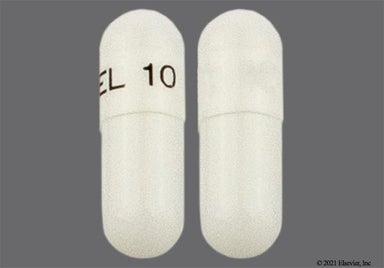
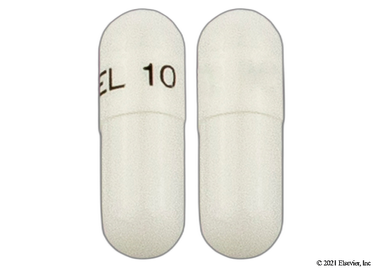
Koselugo (selumetinib) images