

Muscle Pain, Low Calcium, and More: 7 Prolia Side Effects You Should Know About
Prolia (denosumab) is a medication that promotes bone health. Here are seven side effects to know before receiving it and when to consult your prescriber.
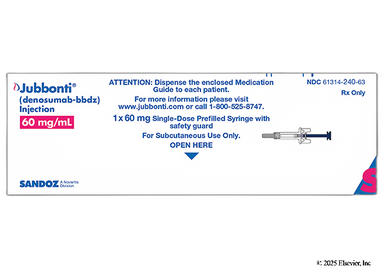
Jubbonti (denosumab or denosumab-bbdz) is a RANKL inhibitor used to treat osteoporosis and certain types of bone loss caused by treatment. It’s approved for adults at high risk of fractures, including after menopause, during long‑term steroid use, and during some prostate or breast cancer treatments. The medication is injected under the skin by a healthcare professional once every 6 months. Common side effects can include back pain, joint or muscle pain, and higher cholesterol.
Jubbonti (denosumab) is an interchangeable biosimilar to Prolia (denosumab).

Jubbonti (denosumab) is a RANKL inhibitor. It works by blocking a protein in your body called RANK ligand (RANKL). This protein plays a role in breaking down bones. When too much bone is broken down, your bones can become weak.
By blocking RANKL, Jubbonti (denosumab) slows bone breakdown and helps your bones become stronger over time.
| Common Brands | Jubbonti |
|---|---|
| Drug Class | RANKL inhibitor |
| Controlled Substance Classification | Not a controlled medication |
| Generic Status | No lower-cost generic available |
| Availability | Prescription only |

The following side effects may get better over time as your body gets used to the medication. Let your healthcare provider know immediately if you continue to experience these symptoms or if they worsen over time.
Postmenopausal women with osteoporosis:
Men with osteoporosis:
Osteoporosis caused by corticosteroids:
Bone loss from cancer treatments:
Postmenopausal women with osteoporosis:
Men with osteoporosis:
Osteoporosis caused by corticosteroids:
Bone loss from cancer treatments:
Contact your healthcare provider immediately if you experience any of the following.
Side effects that you should report to your care team as soon as possible:
Side effects that usually do not require medical attention (report these to your care team if they continue or are bothersome):




Jubbonti (denosumab) can cause some serious health issues. This risk may be even higher for certain groups. If this worries you, talk to your doctor or pharmacist about other options.
 Jubbonti (denosumab) can cause very low calcium levels in your blood. Your risk is higher if you have serious kidney problems, have had certain surgeries, have trouble absorbing nutrients, or take other medications that lower calcium. In some cases, low calcium can last for weeks or months and might need ongoing treatment.
Before starting Jubbonti (denosumab), your prescriber might check your calcium levels and treat them if they’re too low. After each injection, your prescriber will check your calcium and other mineral levels within 2 weeks, then monitor your levels regularly.
It's important to take calcium and vitamin D while receiving Jubbonti (denosumab). These help keep your calcium levels in a safe range. Tell your care team right away if you notice symptoms like confusion, muscle cramps, or tingling in your mouth, hands, or feet.
Jubbonti (denosumab) can cause serious allergic reactions, including anaphylaxis. Symptoms include trouble breathing, tightness in your throat, swelling of your face or airway, itching, or hives. If this happens, get medical help right away and let your prescriber know.
Although it's rare, some people taking Jubbonti (denosumab) have had jawbone damage, called osteonecrosis of the jaw (ONJ). Your risk is higher if you’ve had recent dental work, poor oral hygiene, gum problems, or wear dentures that don’t fit well. It might also be higher if you have cancer, anemia, blood-clotting problems, or if you take steroids or get chemotherapy. Your prescriber might recommend a dental exam before starting the medication.
To lower your risk, practice good oral hygiene. Brush and floss every day and get regular dental checkups. Tell your care team if you plan to have dental work, and let your dentist know you’re taking Jubbonti (denosumab).
Call your prescriber or dentist right away if you have jaw pain, swelling, or drainage. These can be signs of ONJ.
People getting Jubbonti (denosumab) might have unusual fractures in the thigh bone. These can happen with little or no injury and may occur in both legs. It’s not clear if the medication directly causes these fractures.
Before a fracture happens, you might feel a dull, aching pain in your thigh, hip, or groin for weeks or months. This can be an early warning sign. Tell your care team right away if you notice any new or unusual pain in these areas.
Fractures in the spine have happened after stopping Jubbonti (denosumab) treatment, sometimes as early as 7 months after the last dose. Your risk might be higher if you’ve had a spine fracture before. Your prescriber will weigh the risks and benefits before starting treatment.
If you need to stop Jubbonti (denosumab), your prescriber will usually start another medication to help lower your risk. Stay on your 6-month injection schedule and call your care team right away if you miss an appointment.
Some people taking Jubbonti (denosumab) have had serious infections. In studies, some infections were severe enough to require hospital care, including infections of the skin, stomach, urinary tract, ear, and heart.
Your risk is higher if you have a weak immune system or take other medications that affect your immune system, like steroids and transplant medications.
Tell your prescriber if you notice any signs of infection while taking Jubbonti (denosumab). Call your care team right away if you have symptoms of a serious infection, such as fever, chills, severe pain, or redness and swelling of the skin.
Jubbonti (denosumab) can cause skin problems like dermatitis, eczema, or rashes. They can occur on different parts of your body, not just where the injection is given.
Tell your care team if you notice any new or worsening skin symptoms. If the reaction is severe, your prescriber might decide to stop treatment.
It’s not common, but some people taking Jubbonti (denosumab) have had severe bone, muscle, or joint pain. This can start as early as 1 day after beginning treatment or might take several months to appear. In some cases, the pain can make it hard to move or do daily activities.
Tell your care team right away if you have new or worsening pain. If the pain is severe, your prescriber might decide to stop treatment.

 Syringe
| Dosage | Quantity | Price as low as | Price per unit |
|---|---|---|---|
| 1ml of 60mg/ml | 1 syringe | $1,546.22 | $1,546.22 |
Jubbonti (denosumab) is an injection that's given to you by a trained healthcare professional at a medical office.
The typical dose is 60 mg injected under the skin once every 6 months.


Contraindications are specific health conditions or situations in which a person should not take a medication due to safety concerns. If you have any of the following conditions or if any of the following apply to you, let your healthcare provider know because Jubbonti (denosumab) will not be safe for you to take.




Prescription savings
Stop paying too much for your prescriptions. Compare prices, get pharmacy coupons, and save up to 80%. Find expert answers to your health questions so you can make the best decisions for yourself and your family.
Health conditions
Medications & treatment
Access & affordability
 Our monthly healthcare membership can help you save thousands on your prescription costs.
Resources

Jubbonti is what's called a biosimilar to Prolia (denosumab). This means it’s highly similar to Prolia and works the same way in your body to treat bone loss and prevent fractures. Both medications contain the same active ingredient (denosumab) and are given as an injection once every 6 months. Talk to your prescriber if you have questions comparing the two.
Yes. Jubbonti is interchangeable with Prolia. Your pharmacist might even be able to switch your prescription to it without you needing to see your prescriber first.
Sandoz Inc. is the manufacturer of Jubbonti.
Jubbonti was approved by the FDA in March 2024.
You'll receive Jubbonti at a medical office since it's injected by a healthcare professional. They'll inject the dose under the skin on your upper arm, upper thigh, or stomach.
