Isturisa
Isturisa (osilodrostat) is a medication used in people with Cushing's disease. It's taken by mouth and is an alternative to surgery, but it's expensive and can cause a lot of side effects.


What is Isturisa (osilodrostat)?
What is Isturisa (osilodrostat) used for?
- Treatment of Cushing's disease in adults who can't receive pituitary gland surgery.
How Isturisa (osilodrostat) works
Isturisa (osilodrostat) is a cortisol synthesis inhibitor used in people with Cushing's disease, which is a condition that causes high levels of cortisol, a hormone produced by your body. Isturisa (osilodrostat) stops a protein in your adrenal gland from making cortisol to keep your cortisol level low.
Drug facts
| Common Brands | Isturisa |
|---|---|
| Drug Class | Cortisol synthesis inhibitor |
| Controlled Substance Classification | Not a controlled medication |
| Generic Status | No lower-cost generic available |
| Availability | Prescription only |

Side effects of Isturisa (osilodrostat)
The following side effects may get better over time as your body gets used to the medication. Let your healthcare provider know immediately if you continue to experience these symptoms or if they worsen over time.
Common Side Effects
- Adrenal insufficiency (43%)
- Fatigue (39%)
- Nausea (37%)
- Headache (31%)
- Edema (swelling) (21%)
- Redness and swelling of the nose and throat (20%)
- Vomiting (19%)
- Joint pain (18%)
- Back pain (15%)
- Rash (15%)
- Diarrhea (15%)
Less Common Side Effects
- Dizziness
- Stomach pain
- Muscle pain
- Low appetite
- Low blood pressure
- Urinary tract infection
- Fever
- Cough
- Flu infection
Isturisa (osilodrostat) serious side effects
Contact your healthcare provider immediately if you experience any of the following.
- Adrenal insufficiency (Addison's disease): fatigue, muscle weakness, low appetite, weight loss, and pain in muscles and joints
- Abnormal heart rhythm (QT prolongation): Chest pounding, short of breath, chest pain, feeling faint or lightheaded
The following Isturisa (osilodrostat) side effects have also been reported
Side effects that you should report to your care team as soon as possible:
- Allergic reactions—skin rash, itching, hives, swelling of the face, lips, tongue, or throat
- Heart rhythm changes—fast or irregular heartbeat, dizziness, feeling faint or lightheaded, chest pain, trouble breathing
- Increase in blood pressure
- Low adrenal gland function—nausea, vomiting, loss of appetite, unusual weakness or fatigue, dizziness
- Low blood sugar (hypoglycemia)—tremors or shaking, anxiety, sweating, cold or clammy skin, confusion, dizziness, rapid heartbeat
- Low potassium level—muscle pain or cramps, unusual weakness or fatigue, fast or irregular heartbeat, constipation
Side effects that usually do not require medical attention (report these to your care team if they continue or are bothersome):

Pros and cons of Isturisa (osilodrostat)
Pros
- Can be taken with or without food
- Dose can be adjusted based on your individual response (no one-size-fits-all dosing)
- Good option for people who can't receive pituitary gland surgery
Cons
- Can cause a lot of side effects
- Can't be used in children less than 18 years old
- It's an expensive medication

Pharmacist tips for Isturisa (osilodrostat)

- You'll need to get blood tests (e.g., cortisol, potassium, magnesium) done before and during treatment with Isturisa (osilodrostat). Make sure to mark your calendar for when you need to see your provider and get your labs checked.
- Don't breastfeed during treatment and for at least 1 week after your last dose of Isturisa (osilodrostat) because it's not known if the medication can pass into your breast milk and harm your baby.
- If you miss your dose, take the next dose at the regularly scheduled time. Don't double up on the dose to make up for the missed dose.
- Since Isturisa (osilodrostat) can interact with a lot of medications, make sure to tell your provider about all the medications you're taking before starting Isturisa (osilodrostat). Don't start any new medications while taking Isturisa (osilodrostat).

Risks and warnings for Isturisa (osilodrostat)
Isturisa (osilodrostat) can cause some serious health issues. This risk may be even higher for certain groups. If this worries you, talk to your doctor or pharmacist about other options.
Low cortisol level (Addison's disease)
It's possible for Isturisa (osilodrostat) to lower your cortisol levels too much. This can lead to a life-threatening condition called adrenal insufficiency (Addison's disease). Symptoms of Addison's disease include fatigue, muscle weakness, low appetite, weight loss, and pain in muscles and joints. If you get any of these while taking Isturisa (osilodrostat), stop taking it and call 911 right away.
Life-threatening abnormal heart rhythm (QT prolongation)
- Risk factors: History of known QT prolongation | History of abnormal heart rhythm (arrhythmias), including torsades de pointes | Taking certain antiarrhythmic medications (e.g., quinidine, procainamide, amiodarone (Pacerone), or sotalol) | Take other medications that cause QT prolongation (e.g., atypical antipsychotics, typical antipsychotics, erythromycin, pimozide, moxifloxacin (Avelox), tricyclic antidepressants) | Low blood potassium or magnesium levels
Isturisa (osilodrostat) can lengthen the time period from when the heart squeezes and then relaxes. This is known as QT prolongation. When this happens, this raises the risk for life-threatening abnormal heart rhythms. Your risk of QT prolongation is higher if you have any of the risk factors listed above. Make sure to tell your provider about all the medications you're taking and don't start any new medications while taking Isturisa (osilodrostat) without talking to your provider or pharmacist first. If you feel your chest pounding, feel short of breath, faint, or lightheaded, or have chest pain while taking Isturisa (osilodrostat), call 911 right away.
Changes in hormone levels
The levels of the hormones that make cortisol can become too high since Isturisa (osilodrostat) stops your body from making cortisol. Symptoms of high levels of these precursor hormones include low blood potassium levels, swelling, high blood pressure, hair growth throughout the body (in both men and women), and acne. If you get any of these symptoms while taking Isturisa (osilodrostat), contact your provider.

Isturisa (osilodrostat) dosage
Typical dosage for Isturisa (osilodrostat)
The typical starting dose is 2 mg by mouth twice a day. Your provider will then adjust the dose based on your cortisol levels, side effects, and improvement of your Cushing's disease symptoms. The maximum dose is 30 mg twice a day.
Your dose will differ if you have moderate to severe liver problems.

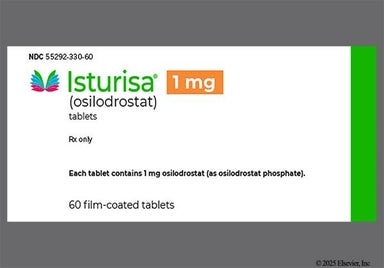
Isturisa (osilodrostat) images