Used for Benign Prostatic Hyperplasia, Hypertension
Used for Benign Prostatic Hyperplasia, Hypertension
Terazosin is a medication that’s typically used to treat difficulty urinating caused by an enlarged prostate (also known as benign prostatic hyperplasia or BPH). It can also be used to treat high blood pressure, but it’s not a first-choice option for this condition due to the risk of side effects, like feeling dizzy or weak, particularly for older adults. Terazosin is taken by mouth, typically once daily at bedtime. It’s only available as a lower-cost generic (former brand name Hytrin).
The following side effects may get better over time as your body gets used to the medication. Let your healthcare provider know immediately if you continue to experience these symptoms or if they worsen over time.
Common Side Effects
Benign prostatic hyperplasia (BPH):
Dizziness (9%)
Weakness (7%)
High blood pressure:
Dizziness (19%)
Headache (16%)
Weakness (11%)
Less Common Side Effects
Feeling tired
Swelling in the arms or legs
Back or limb pain
Weight gain
Fast or pounding heartbeat
Shortness of breath
Feeling nervous
Nausea
Blurry vision
Stuffy nose
Terazosin serious side effects
Contact your healthcare provider immediately if you experience any of the following.
Priapism: painful erection that lasts more than 4 hours
The following Terazosin side effects have also been reported
Along with its needed effects, a medicine may cause some unwanted effects. Although not all of these side effects may occur, if they do occur they may need medical attention.
Check with your doctor as soon as possible if any of the following side effects occur:
Some side effects may occur that usually do not need medical attention. These side effects may go away during treatment as your body adjusts to the medicine. Also, your health care professional may be able to tell you about ways to prevent or reduce some of these side effects. Check with your health care professional if any of the following side effects continue or are bothersome or if you have any questions about them:
Can cause dizziness, especially if you stand up quickly
If you miss your dose for many days, you may need to restart treatment at the starting dose
Pharmacist tips for Terazosin
Terazosin can be taken with or without food, and it’s best to take it at bedtime.
Terazosin can make you feel dizzy or light-headed, especially when you start taking it for the first time and when your dose is raised. If you’ve been sitting or lying down, get up slowly to avoid the risk of falling.
Because terazosin can cause dizziness, avoid driving and doing things that may be dangerous until your body gets used to the medication.
Common side effects of terazosin include feeling more tired than usual or having a hard time standing up. If you feel dizzy or lightheaded, it may be helpful to tell your loved ones or caregiver since they might be able to help you stay steady.
Terazosin can raise your risk of falls since it causes dizziness. If you fall down and hit your head or are in pain after a fall, the safest choice is to seek medical care right away. This is because there could be bleeding inside the body, and it’s best to have your provider check for these injuries. This is particularly important if you’re taking blood thinners, which can raise your risk for bleeds that are difficult to stop.
If you miss taking your terazosin for 2 or more days in a row, talk to your provider about how to safely restart terazosin. You might need to start taking a lower dose to avoid side effects that could cause you to fall or faint, like dizziness and weakness.
Risks and warnings for Terazosin
Terazosin can cause some serious health issues. This risk may be even higher for certain groups. If this worries you, talk to your doctor or pharmacist about other options.
Dangerously low blood pressure and risk of fainting
Risk factors: Age 65 years or older | Taking other blood pressure medications
Terazosin can cause you to feel dizzy or faint when you stand up after sitting or lying down. This is because your blood pressure may change quickly when you change positions (also known as orthostatic hypotension). The risk of this side effect is highest after your first dose. But it’s also more likely to happen during the first 7 days of taking terazosin and whenever your dose is raised. Typically, you tend to feel most dizzy within 90 minutes of taking a dose.
When you take terazosin for the first time or take a higher dose, avoid activities that could be dangerous for 12 hours after your dose. This includes driving, operating heavy machinery, and exercising. If you feel dizzy, lightheaded, or like your heart is pounding, make sure to stop doing anything that could be hazardous. If these symptoms are bothersome, let your healthcare provider know because they might need to change your dose.
Painful erection (priapism)
In some rare cases, terazosin can cause a painful erection (also known as priapism) that continues for more than 4 hours. If this happens to you, contact your provider right away to avoid the risk of permanent erectile dysfunction.
Eye problems during surgery
Risk factors: Cataract surgery
If you take terazosin and plan to get cataract eye surgery, let your provider know. In some rare cases, this medication can cause changes to your iris, a condition called Intraoperative Floppy Iris Syndrome (IFIS). Keep in mind that terazosin is probably less likely to cause IFIS than other medications used to treat BPH, like tamsulosin. You don’t need to stop taking terazosin before the surgery, but your surgeon needs to adjust how they perform the operation. Letting your provider know ahead of time can help them prepare accordingly.
Terazosin dosage
The average cost for 90 capsules of 5mg of Terazosin is $25.45 with a free GoodRx coupon. This is 72.18% off the average retail price of $91.48.
Terazosin may interact with certain medications or supplements. Always let your doctor and pharmacist know about any other medications or supplements (including prescribed and over-the-counter medications, vitamins, and dietary or herbal supplements) that you are currently taking. The list below does not include all possible drug interactions with Terazosin. Please note that only the generic name of each medication is listed below.
Although certain medicines should not be used together at all, in other cases two different medicines may be used together even if an interaction might occur. In these cases, your doctor may want to change the dose, or other precautions may be necessary. When you are taking this medicine, it is especially important that your healthcare professional know if you are taking any of the medicines listed below. The following interactions have been selected on the basis of their potential significance and are not necessarily all-inclusive.
Using this medicine with any of the following medicines is usually not recommended, but may be required in some cases. If both medicines are prescribed together, your doctor may change the dose or how often you use one or both of the medicines.
Using this medicine with any of the following medicines may cause an increased risk of certain side effects, but using both drugs may be the best treatment for you. If both medicines are prescribed together, your doctor may change the dose or how often you use one or both of the medicines.
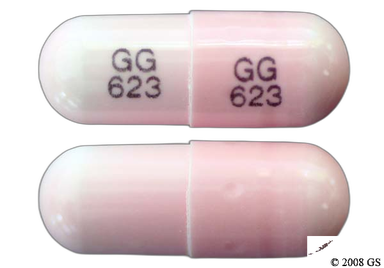
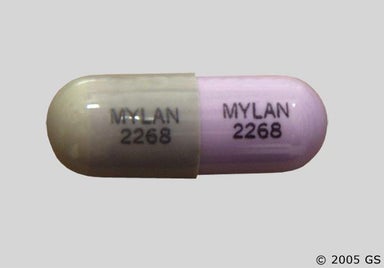
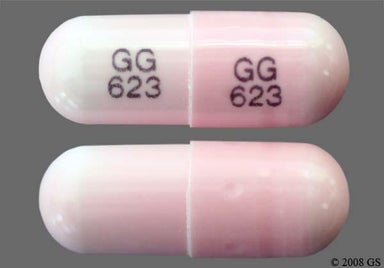
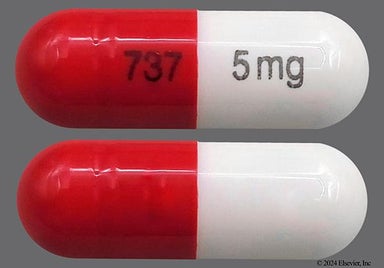
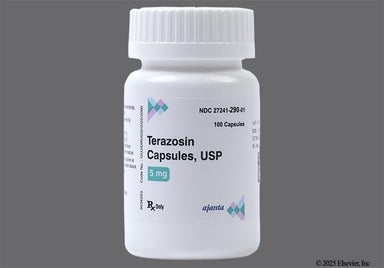
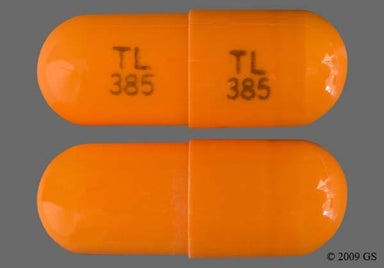
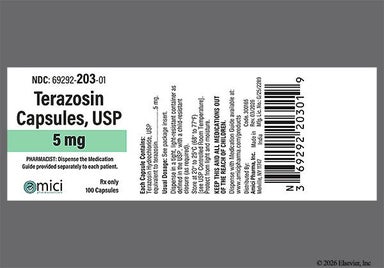
This medicine is Gray And Purple Capsule Imprinted With "Mylan 2268 Mylan 2268".Gray And Purple Mylan 2268 Mylan 2268 - Terazosin Hydrochloride 5mg CapsuleThis medicine is Pink Capsule Imprinted With "Gg 623 Gg 623".Pink Gg 623 Gg 623 - Terazosin Hydrochloride 5mg CapsuleThis medicine is Orange And White Capsule Imprinted With "737 5 Mg".Orange And White 737 5 Mg - Terazosin Hydrochloride 5mg CapsuleThis medicine is Pink Capsule Imprinted With "Ap 783".Pink Ap 783 - Terazosin Hydrochloride 5mg CapsuleThis medicine is Orange Capsule Imprinted With "Ap Te5".Orange Ap Te5 - Terazosin Hydrochloride 5mg CapsuleThis medicine is Orange Capsule Imprinted With "Tl 385 Tl 385".Orange Tl 385 Tl 385 - Terazosin Hydrochloride 5mg CapsuleThis medicine is Pink Capsule Imprinted With "Ap 783".Pink Ap 783 - Terazosin Hydrochloride 5mg CapsuleThis medicine is Pink Capsule Imprinted With "Ap 783".Pink Ap 783 - Terazosin Hydrochloride 5mg CapsuleThis medicine is Orange Capsule Imprinted With "Te3".Orange Te3 - Terazosin Hydrochloride 5mg CapsuleThis medicine is Orange Capsule Imprinted With "Te3".Orange Te3 - Terazosin Hydrochloride 5mg Capsule
GoodRx Health has strict sourcing policies and relies on primary sources such as medical organizations, governmental agencies, academic institutions, and peer-reviewed scientific journals. Learn more about how we ensure our content is accurate, thorough, and unbiased by reading our editorial guidelines.
Prescription savings
Stop paying too much for your prescriptions. Compare prices, get pharmacy coupons, and save up to 80%.
Terazosin is typically taken once daily at bedtime to lower your risk of falling. This is because terazosin can make you feel dizzy or light-headed, especially right after you take it. If you need to get up during the night, you may need more support than usual to safely get out of bed. To avoid falling, change positions slowly. It’s also helpful to have something to hold on to when you stand up. While dizziness is expected, let your provider know if this side effect is too bothersome or doesn’t get better after you’ve taken Terazosin for a week or two. They can talk with you about your options.
If you take Terazosin for BPH, your symptoms may start to improve in 2 to 4 weeks. You might notice that your urine stream is more consistent or that you can better empty your bladder. But if your symptoms aren’t getting better by then, let your provider know because they might need to raise your dose. Keep in mind that sometimes you may need to take your dose for 4 to 6 weeks to see the full effect. If you take Terazosin for high blood pressure, it can start to lower your blood pressure within 15 minutes after you take it. But it might take up to 2 to 3 hours for the medication to have the most effect. Your provider might tell you to check your blood pressure a few times a day, especially when you first start Terazosin, to see how it’s working.
While some medications that are used for BPH and high blood pressure can directly cause erectile dysfunction, this isn’t a known side effect of Terazosin. In some rare cases, Terazosin can cause priapism (prolonged erection), which can lead to erectile dysfunction if it’s not treated right away. If you experience painful erections that last for several hours, get medical help as soon as possible to avoid permanent damage.
Ask your provider if taking Terazosin and sildenafil (Viagra) is a possible option for you. Taking Terazosin and sildenafil (Viagra) at the same time can increase your risk of side effects, like dizziness. This is because sildenafil (Viagra), like Terazosin, relaxes your blood vessels to lower your blood pressure. Your provider may have you avoid using both Terazosin and sildenafil (Viagra) in order to prevent your blood pressure from dropping too low. Or, they might allow you to take both medications together, but at lower dosages or at separate times. Discuss with your provider if you have questions about this interaction.
Terazosin and tamsulosin are both alpha-1 blockers that are used for symptoms of BPH. Both medications are effective and can help ease urine flow. The American Urology Association doesn’t recommend one over the other. But your provider might choose either Terazosin or tamsulosin (Flomax) for you based on what other conditions you have. For example, tamsulosin (Flomax) is less likely to cause dizziness because it typically doesn’t lower blood pressure as much as Terazosin. So your provider might choose tamsulosin (Flomax) for you if you’re too dizzy from Terazosin. But if you have high blood pressure that’s not well-controlled, your provider might consider Terazosin over tamsulosin (Flomax) to help bring down your blood pressure.