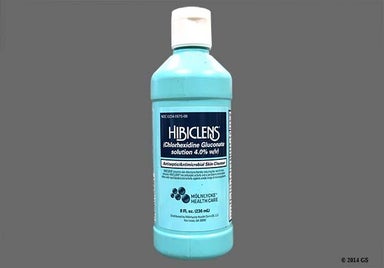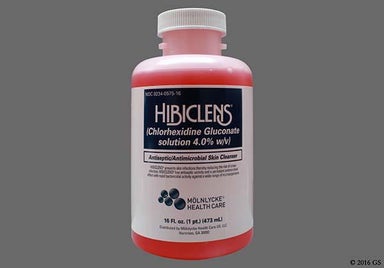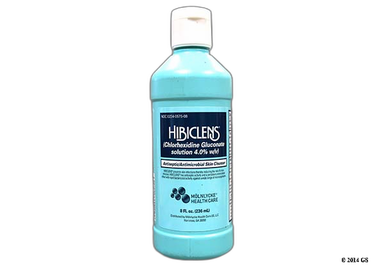
Hibiclens
Hibiclens (chlorhexidine gluconate) is an over-the-counter, antiseptic product that's used to clean the skin. It helps prevent skin infections by killing germs; it doesn't treat skin infections that you already have. Hibiclens (chlorhexidine) is available as solutions (soaps), gels, and cloths that are used on the skin of adults and children. Side effects aren't common, but can sometimes include skin irritation.


What is Hibiclens (chlorhexidine)?
What is Hibiclens (chlorhexidine) used for?
- General skin cleansing
- Skin wound cleansing
- Skin cleansing to prepare for surgery
- Hand washing and scrubbing for healthcare staff
How Hibiclens (chlorhexidine) works
Hibiclens (chlorhexidine) is an antiseptic skin cleanser. It destroys the protective covering of bacterial cells, which kills the bacteria. Hibiclens (chlorhexidine) also works against some fungi and viruses, though experts aren't exactly sure how it kills them.
Drug facts
| Common Brands | Hibiclens, Antiseptic Skin Cleanser |
|---|---|
| Drug Class | Antiseptic |
| Controlled Substance Classification | Not a controlled medication |
| Generic Status | No lower-cost generic available |
| Availability | Over-the-counter |

Side effects of Hibiclens (chlorhexidine)
The following side effects may get better over time as your body gets used to the medication. Let your healthcare provider know immediately if you continue to experience these symptoms or if they worsen over time.
Common Side Effects
- Side effects aren't common. See Risks and Warnings.
Less Common Side Effects
- Skin irritation or sensitivity
Hibiclens (chlorhexidine) serious side effects
Contact your healthcare provider immediately if you experience any of the following.
- Severe allergic reaction: wheezing, trouble breathing, shock, facial swelling, hives, rash
The following Hibiclens (chlorhexidine) side effects have also been reported
Side effects that you should report to your care team as soon as possible:
- Allergic reactions—skin rash, itching, hives, swelling of the face, lips, tongue, or throat
Side effects that usually do not require medical attention (report these to your care team if they continue or are bothersome):
- Mild skin irritation, redness, or dryness

Get your GoodRx coupon

Pros and cons of Hibiclens (chlorhexidine)
Pros
- Prevents infections on the skin
- Prevents spread of infection in healthcare settings
- Available over the counter
Cons
- Not recommended for repeated use over large body areas or on deep wounds
- Doesn't treat infections that you already have
- Risk of irritation or chemical burn if used on infants under 2 months of age or premature babies

Pharmacist tips for Hibiclens (chlorhexidine)

- Be careful not to get Hibiclens (chlorhexidine) in your eyes, ears, mouth or genital area. If this happens, rinse the area with cold water right away to prevent skin or tissue injury.
- Don't apply Hibiclens (chlorhexidine) to deep wounds or over large parts of your body repeatedly, unless your provider instructs you to do so.
- Stop using Hibiclens (chlorhexidine) and talk to your provider if you notice that the medication starts irritating your skin.
- If you get Hibiclens (chlorhexidine) on clothing, don't use chlorine bleach to wash it off. Bleach reacts with Hibiclens (chlorhexidine) and can leave an orange, red, or brown stain.
- Ask your child's provider whether it's safe to use Hibiclens (chlorhexidine) on premature babies or infants under 2 months old. If the provider says it's okay, be careful using the medication on these young children because it might cause irritation and chemical burns on them.
- Keep Hibiclens (chlorhexidine) away from children so they can't reach it. Get medical help or contact a poison control center at 1-800-222-1222 right away if someone accidentally swallows Hibiclens (chlorhexidine).
- Keep Hibiclens (chlorhexidine) at room temperature. Avoid keeping the product at very hot temperatures (above 104 degrees Fahrenheit).

Risks and warnings for Hibiclens (chlorhexidine)
Hibiclens (chlorhexidine) can cause some serious health issues. This risk may be even higher for certain groups. If this worries you, talk to your doctor or pharmacist about other options.
Allergic reactions
It's possible to have an allergic reaction from Hibiclens (chlorhexidine). These allergic reactions can include anaphylaxis (closing of the throat), which can be life-threatening. Call 911 if this happens. Contact your provider or seek medical care as soon as possible if you experience rash, hives, swelling of the face or neck, wheezing, trouble breathing, or feeling like you might faint. These can be signs of an allergic reaction that needs medical attention.
Use only on appropriate parts of the skin
Don't use Hibiclens (chlorhexidine) in the genital area or in your eyes, ears, or mouth. Otherwise, the medication can injure or damage those areas of the body. In rare cases, permanent problems with eyesight can happen if the eye isn't rinsed after Hibiclens (chlorhexidine) gets in the eye. Likewise, permanent problems with hearing can happen if the medication stays in the ear. Make sure to rinse these areas well with cold water as soon as possible if Hibiclens (chlorhexidine) gets in your eyes, ears, mouth, or genital area.

Hibiclens (chlorhexidine) dosage
 Bottle of cleanser
| Dosage | Quantity | Price as low as | Price per unit |
|---|---|---|---|
| 118ml of 4% | 1 bottle | $5.92 | $5.92 |

How much does Hibiclens (chlorhexidine) cost?
$5.92

What are alternatives to Hibiclens (chlorhexidine)?

Hibiclens (chlorhexidine) images