Key takeaways:
The best way to prepare for your child’s vaccine visit is to talk with your child’s pediatrician in advance about their vaccine schedule. And learn which vaccines your child will get at each visit.
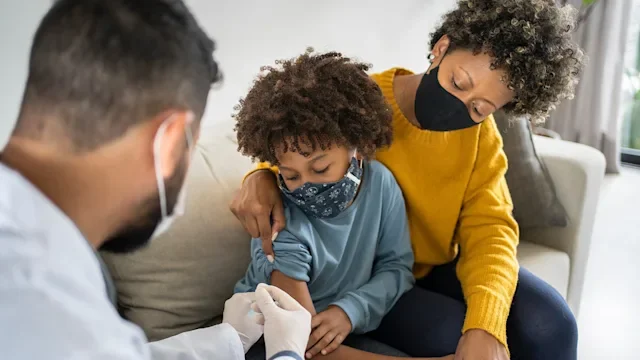
If you’re calm and prepared, then your child will be, too. Distraction and feeding are some of the ways to reduce pain during the shots themselves.
Most vaccine reactions are mild and resolve quickly. Allergic reactions to vaccines in children are very rare.
It’s totally normal to feel a little nervous about your child’s vaccine visit. After all, shots can be stressful for both kids and parents.
Vaccines play an important role in protecting children from serious diseases by helping their bodies build immunity before they encounter those germs in the real world. But knowing what to expect and how to prepare can make the experience smoother for everyone.
That’s why it helps to have a plan for your child's vaccine visit. When you’re calm and prepared, your child is more likely to feel calm too. Below, we’ll walk through what vaccines are given when, how to get ready as a parent, and practical tips for helping kids stay comfortable before, during, and after shots.
How many vaccines should my child get?
The American Academy of Pediatrics (AAP) recommends 18 vaccines for most children from birth to 18 years of age including:
Hepatitis A
Hepatitis B
Rotavirus
Haemophilus influenza type B
Diphtheria
Tetanus
Pertussis (whooping cough)
Pneumococcal conjugate
Inactivated polio
Measles
Mumps
Rubella
Varicella (chicken pox)
Human papillomavirus (HPV)
Meningococcal
Influenza (the flu)
COVID
Respiratory syncytial virus (RSV)
The good news is that many of these vaccines are available as combination shots, which protect against more than one disease at a time. This reduces the total number of shots your child needs.
The not-so-good news is that some vaccines require more than one dose. These extra doses (boosters) help your child’s immune system build stronger, longer-lasting protection. In other words, the first dose starts the immune response, and later doses reinforce it so protection doesn’t fade over time.
The AAP's vaccine schedule is carefully designed around how children’s immune systems develop and when they’re most vulnerable to certain infections. The schedule is designed to:
Protect children when they’re most vulnerable. Vaccines are timed so immunity develops before a child is likely to encounter a serious infection. Booster doses help keep that protection strong as they grow.
Limit the number of shots while still providing strong protection. The schedule maximizes combination vaccines. This lowers the numbers injections kids need at a single visit while still allowing the immune system to build a strong, lasting response.
Seasonal vaccines: Flu and COVID
The AAP recommends a yearly flu vaccine. That’s because the influenza virus changes over time. As it spreads, it can develop new strains that your immune system may not recognize as well. Each year, the flu vaccine is updated to match the strains expected to circulate that season, helping keep your child protected from year to year.
COVID vaccines work in a similar way. Updated versions are designed to improve protection against the most recent variants. The AAP recommends staying up to date with the current COVID vaccine. Studies have shown that COVID vaccines are safe and effective in children.
How do I prepare for the vaccine visit as a parent?
As a parent, preparing in advance can help you stay more comfortable during the visit. Here are some ways to get ready for vaccine day:
Find out the vaccine schedule in advance. Many doctors provide a handout with the expected vaccine schedule at a child’s initial visit.
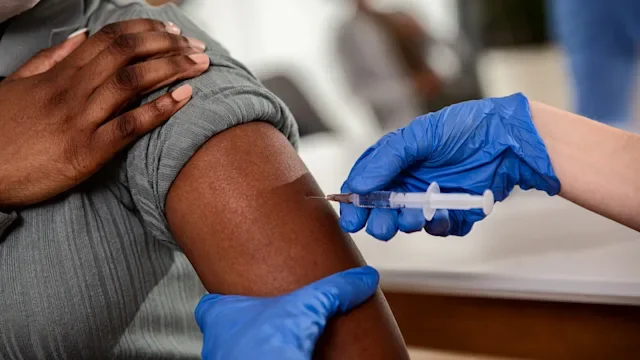
Try to dress your child in clothing that provides easy access to their thighs or arms. Babies get the injections in their thighs, and older children get them in their upper arms.
Bring snacks or a treat for after the vaccines. If you have a younger infant, try to plan the visit around their feeding schedule so that they can breastfeed or bottle feed right after the shots.
Take a book your child can read. This will help distract them. You can also bring a favorite stuffed animal for comfort afterward.
Have someone come with you. If you’re worried that your nerves might make your child more anxious, consider bringing along another caregiver to stay with your child while they get their shots.

Read more like this
Explore these related articles, suggested for readers like you.


How do I prepare my child?
Here are some ways to help your child get comfortable in advance:
Play “doctor” with a toy doctor kit at home. Let your child trade off between being doctor and patient as you give each other shots. This works best for younger children.
Have them read a book or watch a video. Children of preschool age can benefit from watching the Daniel Tiger or Doc McStuffines episodes on getting a shot. Here are some book suggestions.
Answer questions honestly. Rather than saying, “It won’t hurt at all,” it’s better to say, “Well, you’ll feel a pinch and it might hurt a little, but it’ll be over very soon.”
Give them information. Some children benefit from knowing all the details in advance. But others might get more anxious thinking about the shots too soon. You know your child best! If they ask, “Will I get a shot?,” it’s OK to say, “We’ll have to ask the doctor tomorrow and see.”
Talk with your pediatrician. For an especially anxious child, it can help to plan ahead and have a conversation with their pediatrician to come up with a plan together to reduce anxiety.
How can I keep them calm during their shots?
Even if you’ve prepared for the appointment, your child might still be anxious once you’re in the doctor’s office. You can try these tips to keep them relaxed while they get their shots:
Try to stay calm yourself. Children naturally look to their parents to see how fearful they should be. Even if you’re nervous, it helps to project an air of calmness.
Give them something sweet. Studies have shown that sugar water can decrease a baby’s pain sensitivity. So feeding or nursing either during or just after vaccines can help ease any discomfort.
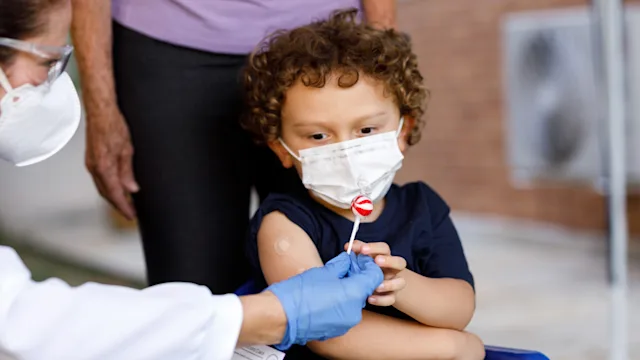
Distract them. This helps take the focus away from pain. For younger children, this might involve singing, watching videos, or blowing bubbles. For older kids, reading a book or doing a guided-imagery exercise can be helpful.
Ice or numb the area beforehand. For a child who is especially anxious, sometimes it helps to ice the area in advance. You can use numbing cream, or bring a Buzzy Bee — a handheld device that vibrates on the skin and decreases pain sensation.
Should I avoid giving my child medications before they get their shots?
Some studies suggest that giving fever-reducing medication before a vaccine can lower a child’s immune response. In these studies, children who received acetaminophen or ibuprofen before their shots produced lower antibody levels to some routine vaccines.
Because of this, experts no longer recommend giving acetaminophen (Tylenol) or ibuprofen (Advil, Motrin) before a child’s vaccination appointment. Instead, it’s better to wait and see how your child feels afterward. If they develop fever or discomfort, you can treat those symptoms at that time.
Can I give them Tylenol, Advil, or other painkillers afterward?
Yes. Studies show that if you wait 6 hours after the shots to give anti-fever medications, they had no effect on the immune system. If a child develops a fever in response to their vaccines, it’s usually a sign that they’re already developing an appropriate immune response (and those symptoms usually show up more than 6 hours after the vaccine is given).
Pain relievers such as acetaminophen (Tylenol) or ibuprofen (Advil, Motrin) can be very helpful for relieving any discomfort after a shot and for treating a child’s fever. But, since plenty of children have no side effects with vaccines, it’s better to wait and see if they need any treatment before offering medication.
Your pediatrician can recommend the correct dose of acetaminophen or ibuprofen based on your child’s age and weight.
How many children have allergic reactions to vaccines?
Severe allergic reaction to vaccines is quite rare. The risk is about 1 in a million. Allergic reactions usually occur in the first 4 hours after receiving the shot. Symptoms include:
Hives
Wheezing
Swelling of the face
Vomiting
Seek immediate medical attention if your child develops any of these symptoms after a vaccine.
What to watch for after they get their shots
Most children do not develop any side effects. And most reactions are very mild and go away quickly. The most common side effects after vaccines are:
Fever
Muscle aches
Tiredness
Headache
Increased fussiness, or waking up more often at night (usually seen with younger children)
These are all signs the immune system is responding to the vaccine. They are not signs of an allergy or serious vaccine reaction. Acetaminophen or ibuprofen can relieve most of these side effects.
The bottom line
Vaccines are safe and lifesaving. They help protect your child from many diseases. And vaccines help ensure the health and safety of those around them. To keep your child calm during their shots, stay calm yourself and try distractions and sweets. To help with any discomfort or side effects after their vaccines, you can use over-the-counter medications such as Tylenol or Motrin.

Why trust our experts?



References
Children’s Hospital of Orange County. (n.d.). Guided imagery.
Chung, E. H. (2014). Vaccine allergies. Clinical and Experimental Vaccine Research.
Healthy Children. (n.d.). All About the AAP Recommended Immunization Schedule.
Hu M., et al. (2023). Safety of the BNT162b2 COVID-19 vaccine in children aged 5 to 17 years. JAMA Pediatrics.
Pannell, N. (2016). 7 books to get your kid comfortable with getting vaccinated. Romper.
Scheifele, D., et al. (2018). Fever prophylaxis can reduce vaccine responses: A caution. Paediatrics & Child Health.
Taddio, A., et al. (2010). Reducing the pain of childhood vaccination: An evidence-based clinical practice guideline (summary). CMAJ: Canadian Medical Association Journal.
Wu, Q., et al. (2024). Real-world effectiveness of BNT162b2 against infection and severe diseases in children and adolescents. Annals of Internal Medicine.
Wysocki, J., et al. (2017). A randomized study of fever prophylaxis and the immunogenicity of routine pediatric vaccinations. Vaccine.