Key takeaways:
Some peptide creams and oral collagen supplements may slightly improve skin appearance. But the evidence is limited, and results vary widely by product.
For visible signs of skin aging, start with sunscreen and retinoids. These have the strongest evidence supporting their use.
Injectable peptides aren’t ready for human use. Their safe dosage and long-term safety are unknown. They haven’t been shown to slow aging or help people live longer.
From face creams to injections, peptides are being promoted as a way to get younger-looking skin and live a longer, healthier life. But how much can peptides deliver?
Peptides are short chains of amino acids, the building blocks of proteins. Some act as messengers in your body that signal collagen production, tissue repair, and other processes linked to aging. But that doesn’t mean that putting them in a cream, supplement, or injection delivers those benefits.
Here’s what the evidence says peptides can and can’t offer for your skin and overall health.
What are the best peptides for anti-aging?
There isn’t enough research to recommend any “best” anti-aging peptides.
And the best known treatments for visible signs of skin aging aren’t peptides.
But there are a number of experimental peptides that are being studied for their effect on aging skin, which we detail in the sections below.
Topical peptides
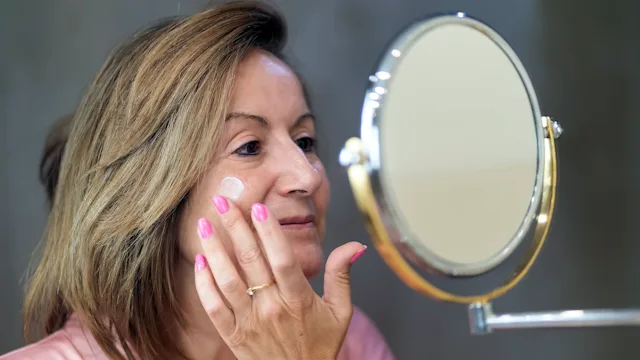
Topical peptides are mixed into creams, serums, and lotions that you apply to your skin. They’re often combined with other cosmeceutical ingredients. These products are intended to work where you apply them. But peptides don’t always pass easily through the skin’s protective outer layer, which can limit their effects.
Topical peptides you may see in ingredient lists include:
Palmitoyl pentapeptide-4: Marketing claims it stimulates collagen production and may soften wrinkles.
Copper peptides, such as GHK-Cu: These are marketed for firmer skin and skin repair.
Acetyl hexapeptide-8, also called Argireline: These are promoted to reduce expression lines.
Oral peptides
Oral peptides are taken by mouth. For skin aging, these are mostly collagen peptides. Collagen peptides are collagen supplements that have been broken down into smaller molecules. They’re also called hydrolyzed collagen. These supplements come as powders, capsules, and drinks.
They’re marketed to improve skin hydration, firmness, and wrinkles. But swallowing collagen doesn’t deliver it directly to your skin. Digestion breaks it down into amino acids and smaller peptide fragments. It’s possible these peptide fragments may influence skin cells, but the evidence just isn’t there yet.
Injectable peptides
Injectable peptides are given through a needle, often under the skin. This bypasses digestion, but it also bypasses the skin. It’s possible they may affect cell signaling pathways in the body that are linked to tissue repair and aging. But there’s no solid evidence that they result in younger-looking skin or help people live longer.
Examples of injectable peptides marketed for anti-aging include:
GHK-Cu: Promoted for skin rejuvenation and repair
CJC-1295 and ipamorelin: Promoted to increase growth-hormone levels
Epitalon: Promoted to slow cellular aging and extend life
Can peptides really make you look younger?
Some topical peptides and oral collagen supplements may slightly improve skin appearance. But the evidence is limited, and younger-looking skin isn’t the same as slowing aging.
Let’s look at the evidence by the type of peptide.
Evidence for topical peptides
Small studies on humans suggest that some peptide creams may soften fine lines and wrinkles. For example, studies of palmitoyl pentapeptide-4 and Argireline found small improvements in wrinkling or wrinkle depth. But many studies test products containing several ingredients, making it difficult to compare products and isolate an individual peptide’s effects.
What’s more, much of the research supporting topical peptides comes from laboratory or animal studies, and hasn’t been shown to translate into benefits for humans.
Evidence for collagen peptide supplements
Some human studies suggest modest improvements in skin hydration and the appearance of fine wrinkles. There’s less evidence for improved skin firmness and elasticity.
Similar to topical peptides, the studies of collagen peptides are often small and funded by companies trying to sell their products. So one review focused only on studies the researchers thought to be higher quality. They didn’t include studies that were biased or poorly designed. In this review, there was no convincing evidence that collagen supplements improved hydration, elasticity, or wrinkles.
Evidence for injectable peptides
There’s no reliable human evidence that experimental peptide injections make skin look younger, slow aging, or extend healthy life.
Much of the interest in injectable peptides comes from laboratory and animal research, and cannot be applied to humans. And there’s a big difference between what researchers observe in a petri dish and what actually happens inside the human body. This research also can’t provide any information on dosage or safety.
Here’s a summary of where the science is on some popular longevity peptides:
BPC-157: It may improve tissue repair in rodents. Limited research in humans hasn’t established benefits for skin aging or longevity.
CJC-1295: Small trials on humans show increased growth-hormone and IGF-1 levels. But research doesn’t prove that these changes in hormone levels improve skin appearance or slow aging.
Ipamorelin: Human research shows it can stimulate growth-hormone release, but there’s no reliable evidence linking this to anti-aging benefits.
Epitalon: Laboratory and animal studies mostly done in Russia have explored effects on cellular aging. There’s no reliable human evidence that it slows aging or extends life.
Injectable GHK-Cu: Evidence for skin benefits is based on topical use in skin care products. But these benefits don’t prove that GHK-Cu injections improve skin appearance or provide longevity benefits.
The health risks associated with injectable peptides are also much greater than with topical peptides or even oral supplements. More on these risks below.
Risks of peptides
There’s still a lot we don’t know about peptide safety. How safe a peptide is depends on the specific peptide, formulation, and how you use it. And while risks exist for all peptides, they are highest for experimental peptide injections. Most peptides haven’t undergone large, well-designed human trials. Small, short studies can miss uncommon side effects or harms that develop over time.
Here are some real risks to be aware of:
Skin irritation: Peptide creams and serums may cause redness, itching, or burning.
Allergies: Reactions are possible with topical products, supplements, or injections. Collagen supplements may come from fish, cattle, or other animal sources, so check the ingredients if you have allergies.
Injection risks: Injections can cause pain, swelling, infection, or immune reactions.
Contamination and dosage errors: Poor manufacturing or handling can introduce harmful microbes or impurities. The actual ingredients or concentrations may not match the product label.
Toxicity: Without standard dosage or regulation, it can be easy to inject a harmful amount. For example, injectable GHK-Cu may cause copper toxicity.
Long-term health risks: There isn’t enough research to say if anti-aging peptides are safe in humans in the long term. Some experimental peptides stimulate growth signals or new blood vessel formation, which could theoretically cause tumor growth.
Are any anti-aging peptides FDA approved?
None of the peptide products discussed here are FDA-approved treatments for skin aging or longevity. Some peptide medications are FDA approved for specific medical conditions. But these approvals don’t establish that peptide products are safe or effective for anti-aging.
When it comes to anti-aging peptide products, here’s how different types of products are regulated:
Peptide cosmetics: Creams and serums sold as cosmetics generally don’t need FDA approval before sale. Manufacturers are responsible for their safety and labeling.
Collagen supplements: Here, too, manufacturers are responsible for product safety and labeling. Supplements are monitored by the FDA, but they aren’t FDA approved for safety or effectiveness before sale.
Compounded peptide injections: Compounding pharmacies and facilities are subject to state and federal oversight. But their products aren’t FDA approved, which means that the FDA hasn’t reviewed each product’s safety, effectiveness, and quality before use.
Frequently asked questions
There isn’t a reliable timeline. Most studies of topical peptides and collagen supplements assess results after 4 to 12 weeks, but this doesn’t mean a noticeable improvement is guaranteed within this — or any — time frame. Any benefits are likely to be subtle and depend on the product.
There’s no reliable evidence that peptide injections work for skin aging. Some creams have a small amount of evidence of cosmetic benefits in humans. Currently, no injectable peptides have evidence they are effective in humans.
Peptide creams, serums, and collagen supplements are sold over the counter. Some clinics prescribe compounded peptide injections, but these aren’t FDA-approved treatments for anti-aging. Avoid products labeled “research use only.” They aren’t intended for people and may not meet standards for human medications.
The bottom line
The research on peptides for anti-aging is in the very early stages — and mostly in the lab or in animals. And injectable peptides are particularly risky for human use. Scientific research hasn’t established safe and effective anti-aging peptide dosages, treatment schedules, or duration of use. These uncertainties remain even when a healthcare professional prescribes the product.

Why trust our experts?



References
Bassila, C., et al. (2026). Efficacy and safety of hydrolyzed collagen supplementation on skin health outcomes: a systematic literature review of randomized controlled trials. European Journal of Clinical Nutrition.
Blanes-Mira, C., et al. (2002). A synthetic hexapeptide (Argireline) with antiwrinkle activity. The International Journal of Cosmetic Science.
Chan, L. K. W., et al. (2024). Cosmeceuticals in photoaging: A review. Skin Research & Technology.
Mavrych, V., et al. (2026). Therapeutic peptides in gerontology: Mechanisms and applications for healthy aging. Frontiers in Aging.
Myung, S. K., et al. (2025). Effects of collagen supplements on skin aging: A systematic review and meta-analysis of randomized controlled trials. The American Journal of Medicine.
Nukaly, H. Y., et al. (2026). Oral and topical peptides for skin aging: Systematic review and meta-analysis of randomized controlled trials. Frontiers in Medicine.
Robinson, L. R., et al. (2005). Topical palmitoyl pentapeptide provides improvement in photoaged human facial skin. The International Journal of Cosmetic Science.