Key takeaways:
Losing hair in the shower is normal, but how much you see can vary based on hair type, density, and wash frequency.
Shedding can seem heavier on wash days, especially if you don’t wash daily and loose hairs have built up over a few days.
Normal hair shedding looks a bit different for everyone, so it’s best to pay attention to patterns. Sudden changes, like bald spots or clumps, should be evaluated by a dermatologist.
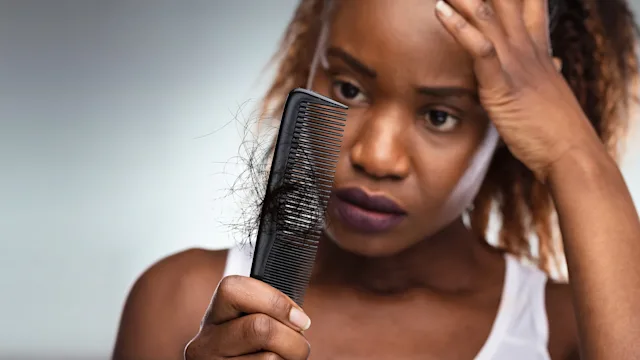
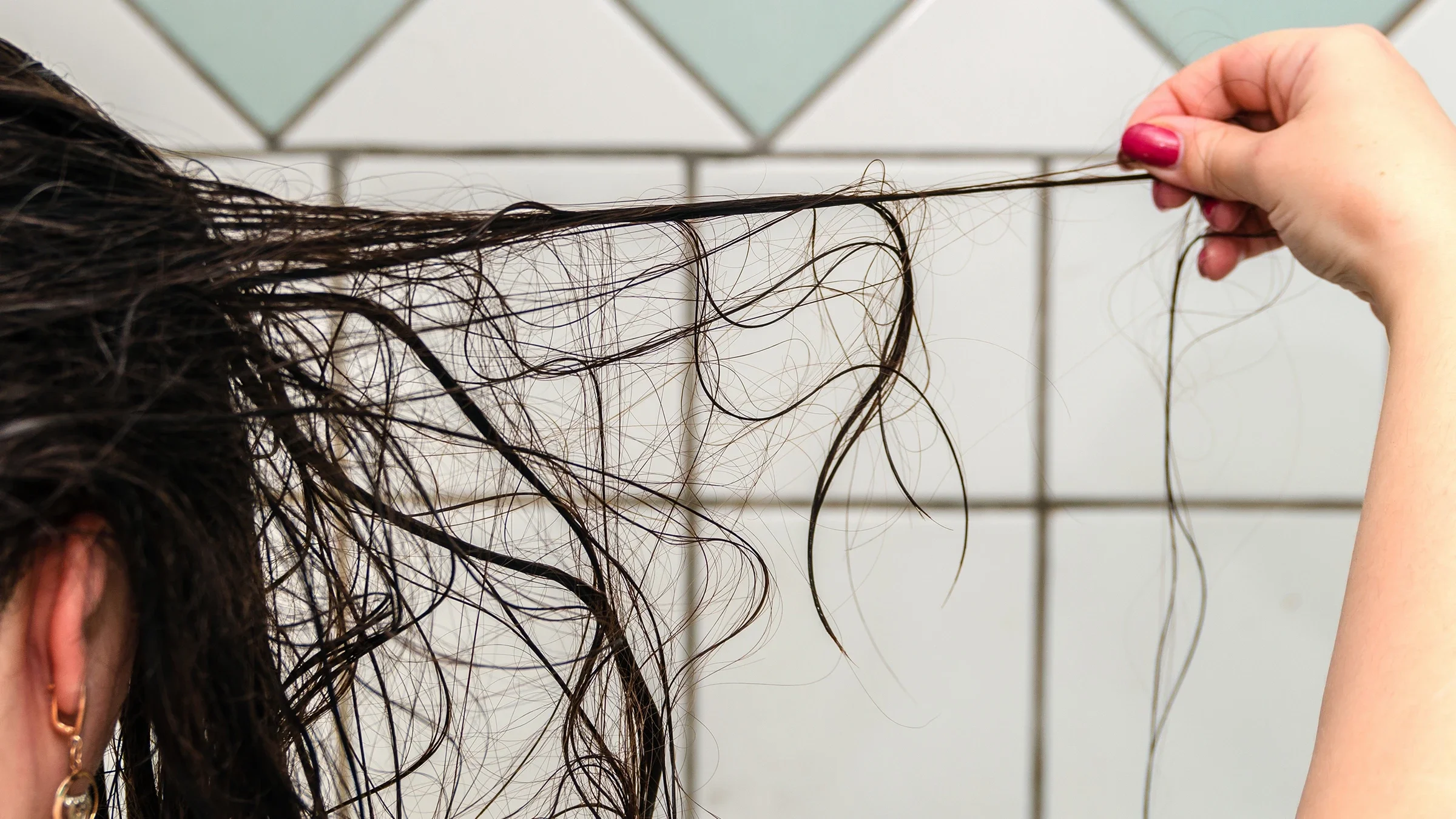
Hair shedding is a normal part of life. Strands fall out throughout the day — when you brush your hair, get dressed, or even sleep. But it often feels more noticeable in the shower, when loose hairs collect in the drain.
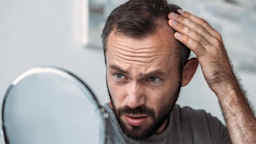
Seeing that clump of hair can be alarming. Here’s how much hair is considered normal to lose in the shower, what affects shedding, and when it may be time to check in with a healthcare professional.
How much hair is normal to lose in the shower?
In general, it’s normal to lose up to 100 hairs a day, according to Dr. Megan Couvillion, a board-certified dermatologist with a subspecialty in hair loss.
“But not all of the hair that’s being released from the scalp is going to come out in the shower,” she said. It’s also important to keep in mind that what’s “normal” varies from person to person. Some may lose less than this, while others may lose more.
How much hair you’ll lose in the shower depends on several factors, such as:
Hair density (how many hairs you have per square inch of scalp)
Hair thickness (the width of the strands)
How often you wash your hair
How often you brush your hair
What causes hair loss in the shower?
Shedding in the shower is normal when you shampoo your hair. But, Couvillion said, it’s not the washing that causes hair loss.
“Showering typically isn’t increasing the release of hair from the scalp,” Couvillion said. Rather, hairs are released over time and get caught in the bulk of your hair, she said. The shower happens to be the place where those hairs come out.
In addition to hair that sheds as part of its normal life cycle, here are some other common causes of hair loss:
Physical or emotional stress
Hormonal conditions, like polycystic ovary syndrome (PCOS) and congenital adrenal hyperplasia (CAH)
Hormonal changes caused by childbirth, menopause, or hypothyroidism
Getting older
Certain hair products and treatments
Nutritional deficiencies, including vitamin D, vitamin B, iron, and zinc
Medical conditions, like thyroid and autoimmune disease
Acute illnesses, like COVID-19
Certain medications, like some antidepressants, chemotherapy, and Ozempic
How to reduce hair shedding
While shedding hair is normal, it can also be stressful. Over-the-counter (OTC) and prescription hair-loss treatments may be appropriate for some people, depending on the cause of their hair loss. But in many cases, it’s worth making a few lifestyle and diet changes to see if it reduces the amount of hair you’re losing.
Foods
The foods you eat can play a role in the health of your hair, especially if you’re missing any key nutrients from your diet.
Nutrients that may be particularly important for hair growth include:
Protein
Biotin
Iron

Read more like this
Explore these related articles, suggested for readers like you.

Foods that contain these nutrients may help with hair growth and will also benefit your overall health. Some of these foods include:
Avocado
Yogurt
Fatty fish, like salmon and mackerel
Nuts, like cashews, walnuts, almonds, and peanuts
Soybeans
Natural remedies
An advantage to natural hair-growth products is that they may be gentler than some prescription hair-loss treatments. There isn’t as much research backing these treatments. But, because of their minimal side effects, they’re often worth a try:
Caffeine: When applied topically, caffeine may stimulate the hair follicles to promote new hair growth.
Melatonin: In people with a type of hair loss called androgenetic alopecia (male- or female-pattern baldness), melatonin applied to the scalp may slow hair loss and increase hair density.
Vitamins and supplements: If your hair loss is due to vitamin deficiency, supplements may help with hair growth. It’s always a good idea to talk with your dermatologist, who can order blood tests to determine whether you’re deficient in any vitamins.
Scalp massage: Some limited research suggests that scalp massage may lead to thicker hair. It may be that scalp massage leads to hair growth by increasing blood flow to the scalp.
Red light therapy: Regularly using a red light cap or helmet may stimulate hair growth and density.
Daily hair care and styling
Paying attention to the way you treat your hair day to day can improve the overall health of your hair, and it may decrease hair loss. Try to do the following:
Limit or avoid highlighting or coloring your hair.
Limit heat styling and chemical styling. When you do apply heat to your hair, use low-heat settings.
Use quality conditioners to keep dry hair moisturized, and apply leave-in conditioner or detangler regularly to minimize breakage.
Avoid pulling your hair back into tight buns, ponytails, or cornrows.
Wrap wet hair in a microfiber towel to start the drying process (which can reduce blow-drying time).
Brush and comb your hair gently to avoid pulling.
When should you be worried about hair loss in the shower?
Seeing a pile of hair in the shower can be unsettling. Signs that it may be a good idea to check in with a dermatologist include:
An increase in hair loss
Hair loss that’s not improving on its own
Loss of hair in clumps
A dermatologist can run tests and diagnose the underlying cause of your hair loss, then recommend treatment options.
“I tell my patients to ask themselves, ‘Am I having an increase in the amount that’s coming out without changing how frequently I’m showering, or the amount of brushing?’” Couvillion said.
“While it can be normal to lose up to 100 hairs a day, each person’s norm may vary,” she added. “So I recommend looking at the overall pattern of your hair rather than counting hairs.”
Frequently asked questions
Physical or emotional stressors — such as childbirth or an infection with high fever — can trigger acute hair loss. Stress-related hair loss is called telogen effluvium. Usually, there’s a delay of several months between the stressor and the onset of the shedding. This makes it difficult to detect the cause.
A dermatologist can help you determine the cause of hair shedding and can tell you if you need treatment or if the hair will regrow on its own.
If you’re consistently finding clumps of hair in the shower or notice visible thinning or bald patches on your scalp, you may be losing too much hair. Your dermatologist can evaluate your scalp and do some tests to see if that’s the case.
Still, you know yourself best. If you’re worried you’re losing too much hair, it’s important to talk to your dermatologist.
It can be. Some people may lose up to 200 hairs, especially if they wash their hair infrequently or have thick or long hair.
Physical or emotional stressors — such as childbirth or an infection with high fever — can trigger acute hair loss. Stress-related hair loss is called telogen effluvium. Usually, there’s a delay of several months between the stressor and the onset of the shedding. This makes it difficult to detect the cause.
A dermatologist can help you determine the cause of hair shedding and can tell you if you need treatment or if the hair will regrow on its own.
If you’re consistently finding clumps of hair in the shower or notice visible thinning or bald patches on your scalp, you may be losing too much hair. Your dermatologist can evaluate your scalp and do some tests to see if that’s the case.
Still, you know yourself best. If you’re worried you’re losing too much hair, it’s important to talk to your dermatologist.
It can be. Some people may lose up to 200 hairs, especially if they wash their hair infrequently or have thick or long hair.
The bottom line
Losing hair in the shower is usually part of normal hair shedding. It’s typical to lose about 100 hairs per day. But the amount you notice can vary based on how often you wash your hair and your individual hair characteristics. Instead of counting strands, pay attention to patterns, like sudden increases in hair loss or bald patches. If something feels off, a dermatologist can help pinpoint the cause and guide next steps.

Why trust our experts?



References
American Academy of Dermatology Association. (n.d.). Hair loss: Tips for managing.
English, R. S., Jr., et al. (2019). Self-assessments of standardized scalp massages for androgenic alopecia: Survey results. Dermatology and Therapy.
Fischer, T. W., et al. (2012). Topical melatonin for treatment of androgenetic alopecia. International Journal of Trichology.
Koyama, T., et al. (2016). Standardized scalp massage results in increased hair thickness by inducing stretching forces to dermal papilla cells in the subcutaneous tissue. Eplasty.
Natarelli, N., et al. (2023). Integrative and mechanistic approach to the hair growth cycle and hair loss. Journal of Clinical Medicine.
Völker, J. M., et al. (2020). Caffeine and its pharmacological benefits in the management of androgenetic alopecia: A review. Skin Pharmacology and Physiology.