Key takeaways:
A skin rash can develop after your skin comes into contact with something that causes an allergic reaction or irritation. This is called contact dermatitis.
Contact dermatitis is usually itchy and develops where your skin touched the trigger.
Depending on your skin tone, the rash may look red, pink, purple, brown, or darker than the surrounding skin.
The best way to treat and prevent contact dermatitis is to identify and avoid what’s causing it. Home remedies and over-the-counter (OTC) treatments can also help relieve symptoms.
If you develop an itchy rash after trying a new skin care product, wearing jewelry, or coming into contact with a plant, you may wonder if you’re having an allergic skin reaction. And it’s common: about 1 in 5 people have experienced some type of allergic skin reaction at some point.
Often, these kinds of rashes are a form of contact dermatitis — a skin reaction caused by something that touches and either irritates your skin or triggers an allergy.
Contact dermatitis can look different from person to person and can vary depending on your skin tone. Here, we’ll show you what these skin reactions can look like, common triggers to watch for, and what you can do to help your skin heal.
Search and compare options
What causes an allergic skin rash?
Contact dermatitis happens when something that touches your skin causes a reaction. There are two main types:
Allergic contact dermatitis happens when your immune system reacts to something your skin comes into contact with. This is a true allergic reaction, but it’s the least common type of contact dermatitis. Common allergic triggers include nickel, fragrances, preservatives, and poison ivy. You can develop an allergy to something even if you’ve used it before without a problem.
Irritant contact dermatitis happens when something irritates or damages your skin. This isn’t a true allergy, but people often describe it as one, so we’re including it here. It’s also way more common than allergic contact dermatitis. Common irritant triggers include soaps, detergents, bleach, and other chemicals.
Both types can cause a similar-looking rash, so it isn’t always possible to tell which one you have based on appearance alone.
What does an allergic skin rash look like?
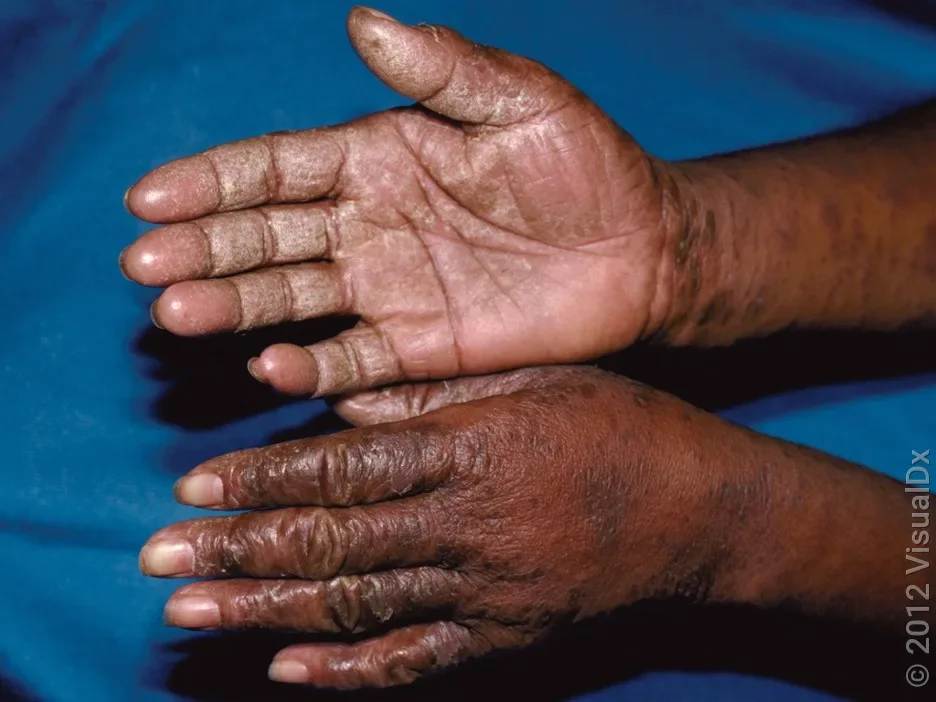
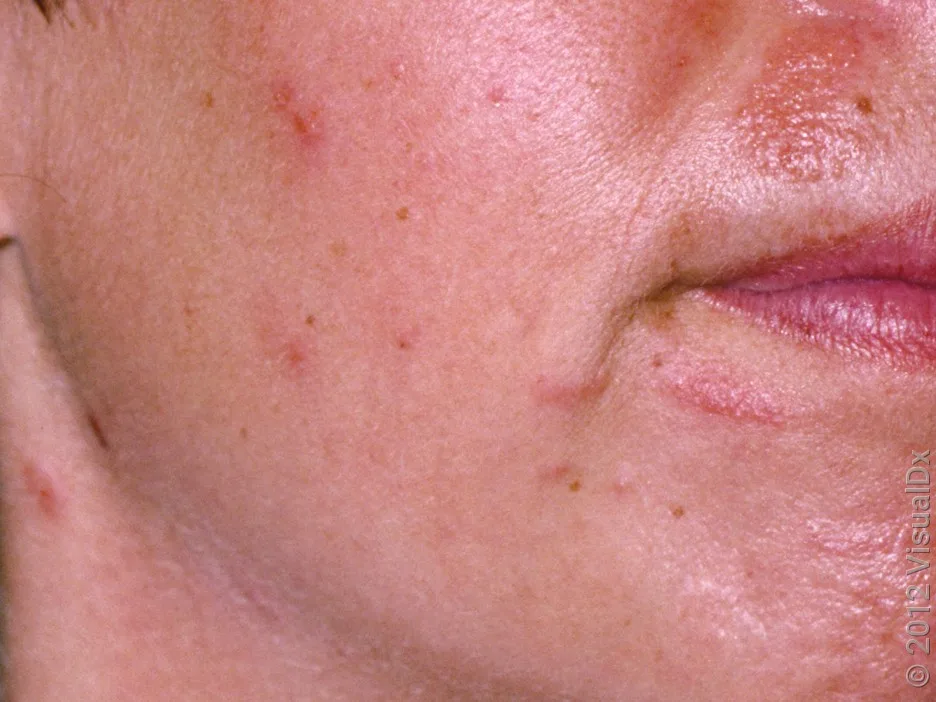
Contact dermatitis usually develops on the part of your skin that came into contact with the trigger. The rash can look different depending on the cause, how severe the reaction is, and your underlying skin tone.
Common symptoms include:
Itching
Pink/red, purple/violet, or brown patches
Small bumps or blisters
Swelling
Dry, cracked, or scaly skin
Oozing or crusting skin
Burning or pain
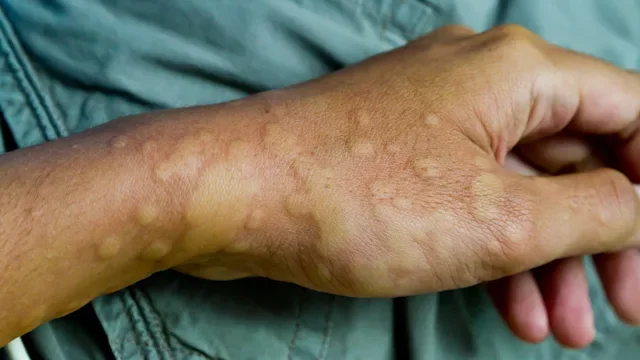
Hives (smooth, raised bumps that vary in size and appear suddenly)
Symptoms can develop within minutes or hours of contact with an irritant. With an allergic reaction, the rash may not show up until a day or two after exposure.
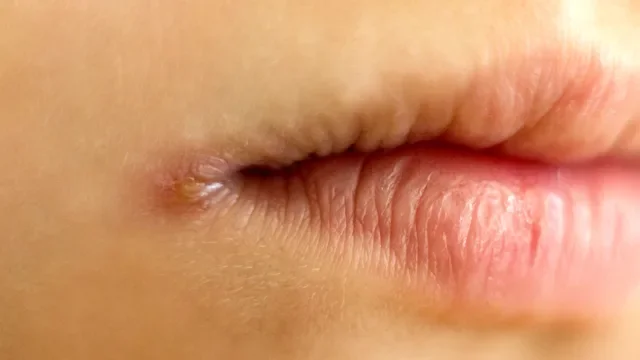
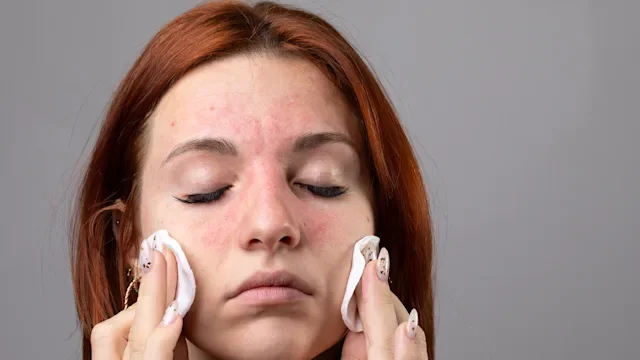
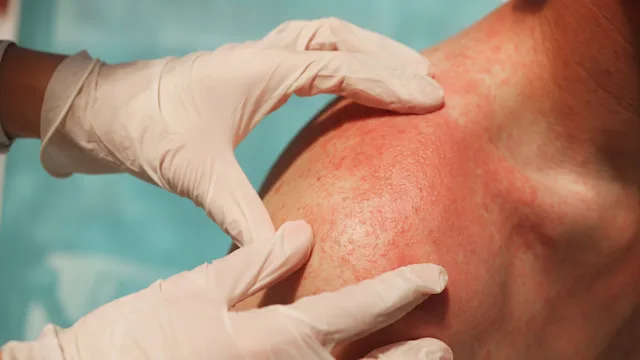
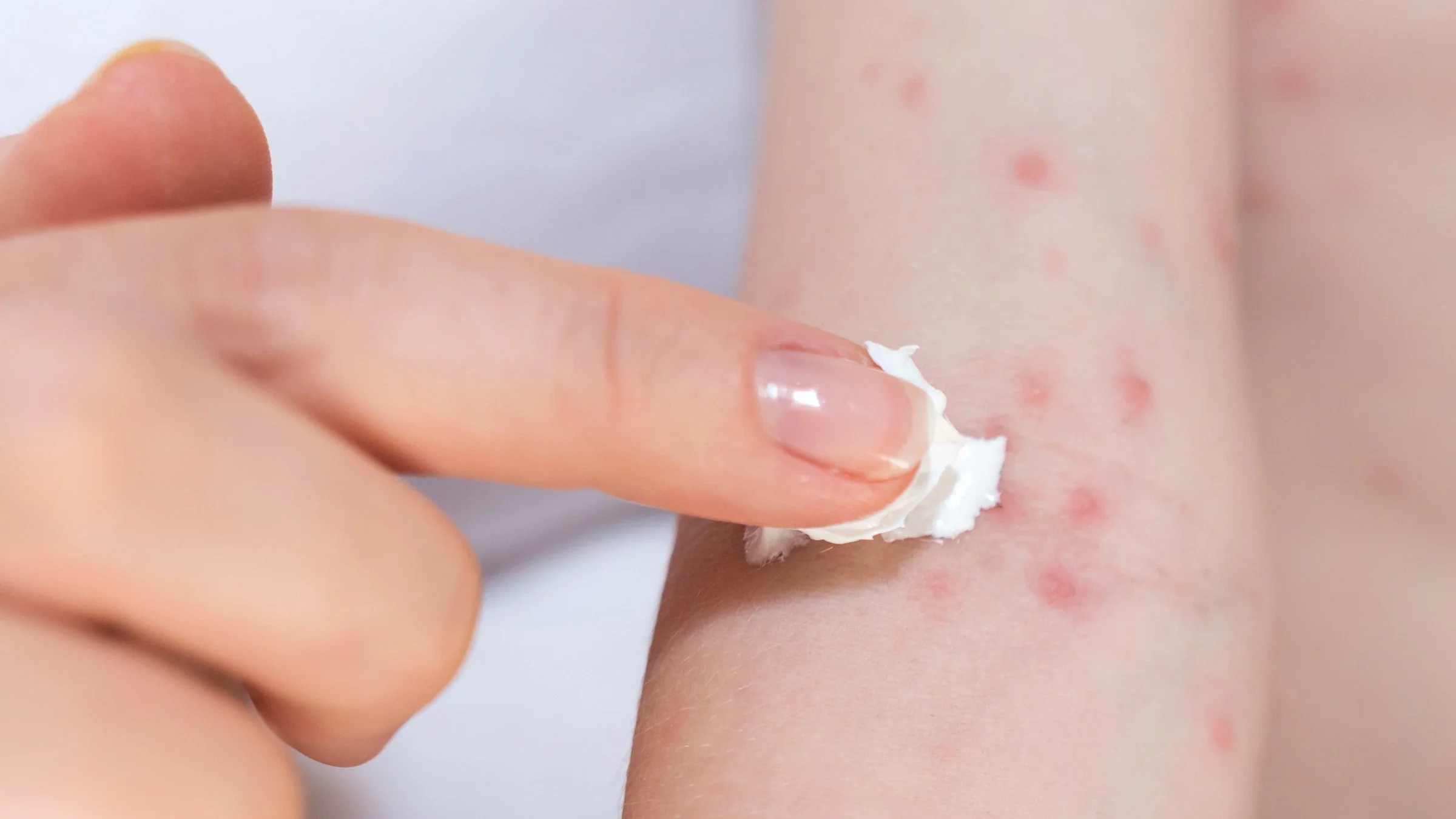
Here are some images of contact dermatitis from exposure to different products so you can see what it looks like.
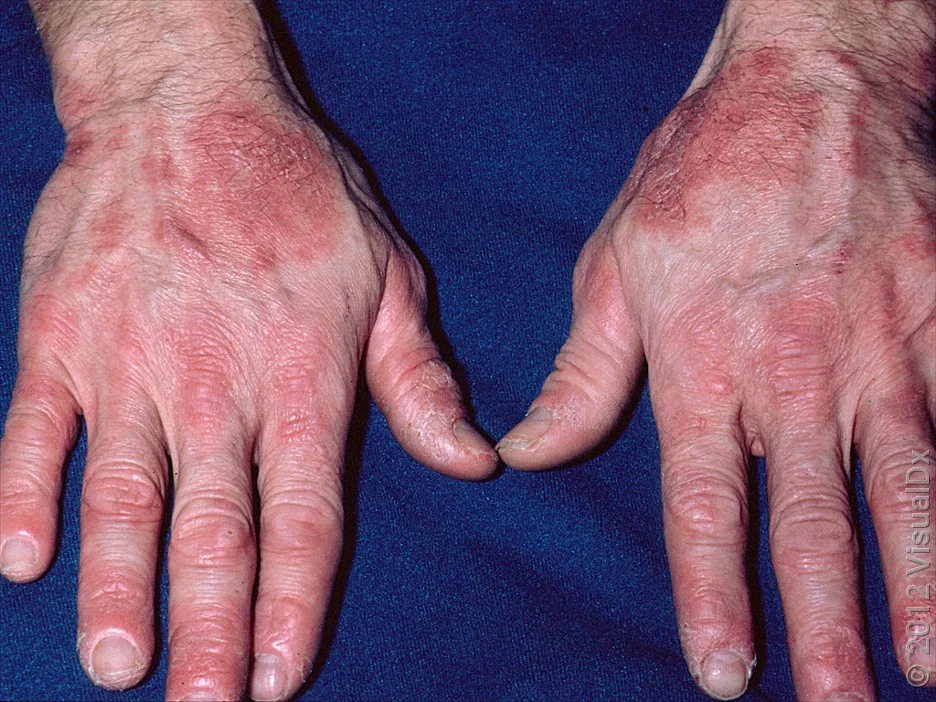
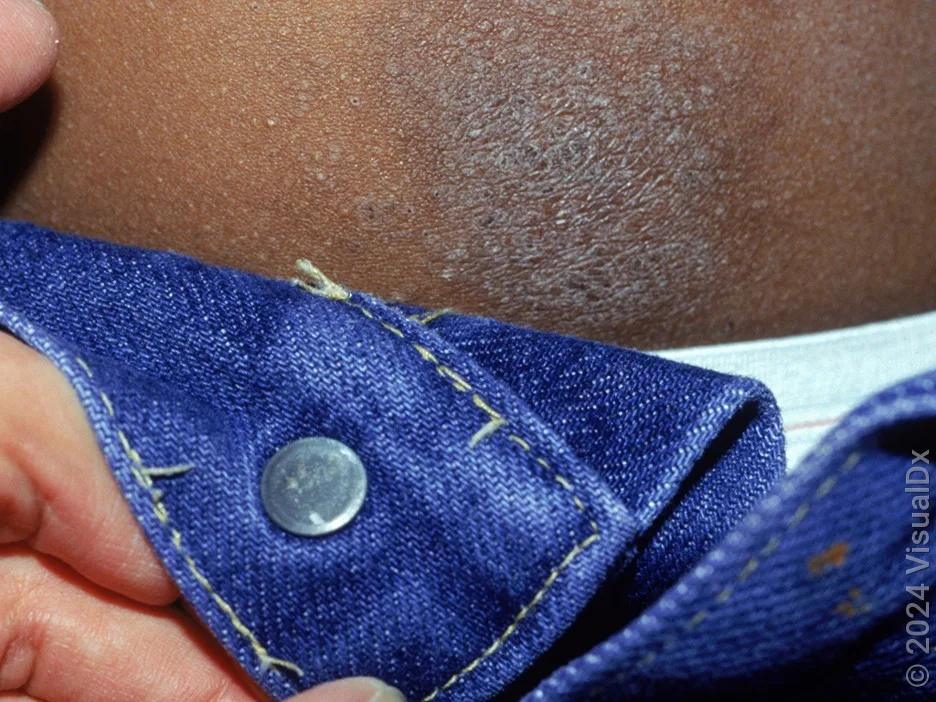
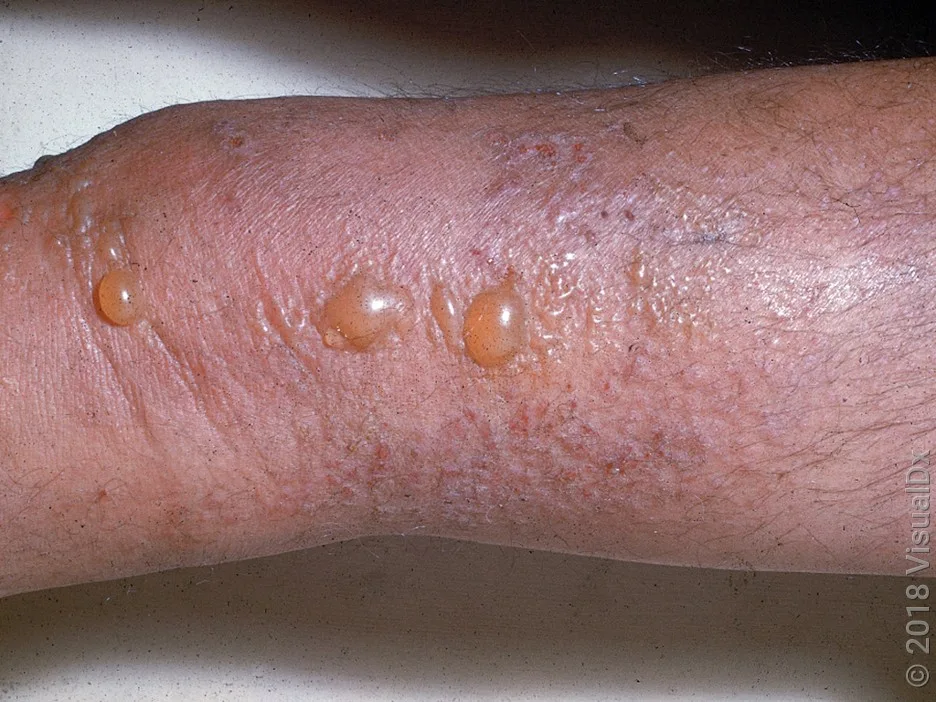
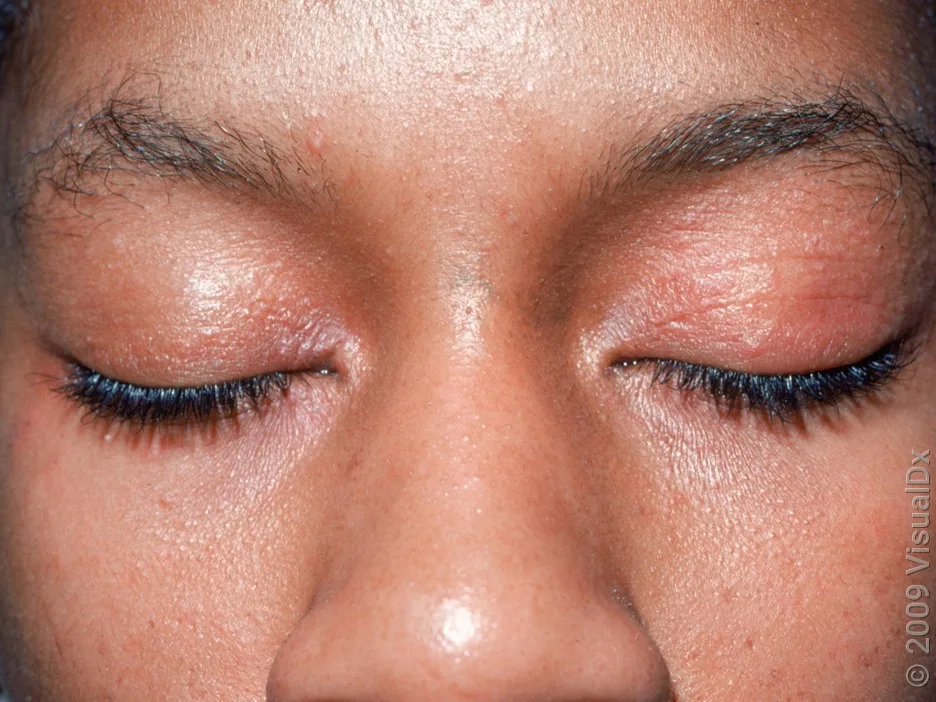
How can you tell if a rash is an allergic reaction?
It’s not always possible to tell whether a rash is caused by an allergy just by looking at it. Allergic and irritant contact dermatitis can look and feel very similar. Knowing what your skin came into contact with, and when the rash appeared, can sometimes help identify the cause.

Read more like this
Explore these related articles, suggested for readers like you.




It’s also important to know that not all allergic skin reactions are contact dermatitis. Hives, for example, cause raised, itchy welts that can appear anywhere on the body and often come and go quickly. They can develop as part of an allergic reaction to something you ate, a medication you took, or an insect sting. But hives aren’t always caused by an allergy.
If you’re not sure what’s causing your rash, or it keeps coming back, a dermatologist can help. Patch testing can sometimes identify whether you have an allergy to something that comes into contact with your skin.
Home remedies for allergic skin reactions
The best way to treat contact dermatitis is to identify and avoid the trigger. For mild reactions, a few simple steps can also help soothe your skin and relieve itching:
Don’t scratch. Scratching can worsen irritation and increase your risk of getting a skin infection.
Use cold compresses. Apply a cold compress or ice pack for 5 to 10 minutes several times a day to help reduce itching and inflammation.
Take oatmeal baths. If a large area of skin is affected, an oatmeal bath can help soothe itching and irritation. You can make your own or use a product containing colloidal oatmeal.
If your rash is large or severe — or you’re not sure if it’s contact dermatitis — see a dermatologist or healthcare professional to get the right diagnosis and treatment.
Over-the-counter treatments for allergic skin reactions
In addition to the steps above, some over-the-counter (OTC) treatments can help relieve itching and inflammation:
Topical steroids: Hydrocortisone is a low-dose topical steroid that can help reduce itching. It can be used once or twice a day for up to 2 weeks.
Antihistamines: For severe itching, an antihistamine like diphenhydramine (Benadryl) can help. Just remember that some antihistamines can make you sleepy.
Cooling agents: Ingredients like menthol, camphor, calamine, and pramoxine can help relieve itching. Some products, like Sarna Original Anti-Itch Lotion, combine multiple agents.
Refrigerated creams: Keeping creams in the fridge can provide an extra cooling effect when applied to irritated skin.
How do you treat an allergic reaction on your face?
To treat an allergic reaction on your face, first identify and avoid the trigger. Then, treat any symptoms you have.
Identifying
Identifying the trigger can take some detective work. Start by thinking about any new or recently changed skin care products (like cosmetics, hair products, or fragrances). Stop using products you suspect may be causing the reaction. And stick with a simple, fragrance-free routine while your skin heals. Then, reintroduce one at a time to see which one causes a reaction.
If the rash keeps coming back or you can’t identify the trigger, a dermatologist can perform patch testing to identify the cause.
Treating
Some of the OTC treatments discussed above can be used on the face. But keep in mind that facial skin is more sensitive, and some products may cause irritation. Make sure not to use hydrocortisone for more than 2 weeks on the body and more than 1 week on the face in order to minimize side effects.
How long does it take an allergic reaction rash to go away?
Most allergic skin rashes go away in about 2 weeks. This timeframe assumes you’re no longer coming into contact with the irritant or allergen. If your rash lasts longer than 2 weeks, this might be one of the reasons to see a healthcare professional.
When to see a healthcare professional
Many irritant and allergic skin reactions are mild and can be treated at home. But you should see a dermatologist or other healthcare professional in these cases:
Your symptoms feel severe.
Your rash involves a large patch of skin.
Your rash doesn’t improve, or it keeps coming back.
You can’t figure out what’s causing the rash.
You have signs of a skin infection, such as pus, pain, or spreading of the rash.
An allergic skin reaction doesn’t usually cause serious symptoms. But if you experience any of the symptoms below, it could be a sign of a serious allergic reaction (called anaphylaxis) that requires immediate medical attention:
Fever
Weakness
Dizziness
Shortness of breath
Vomiting or diarrhea
How to prevent contact dermatitis
When it comes to contact dermatitis, prevention is the best treatment. The most important step is to identify and avoid the allergen or irritant causing your rash.
Here are some other ways to prevent contact dermatitis:
Wear gloves or use other hand protection when you may come into contact with an irritant.
Moisturizers and barrier creams can help protect the skin.
Use a mild, fragrance-free soap and avoid washing your hands more than necessary.
Learn about common irritants, so you know when to take extra precaution.
If you come into contact with a potential irritant, gently rinse the area with cold tap water.
The bottom line
An allergic reaction rash can be itchy and uncomfortable. It can develop in response to everyday items, like jewelry and personal care products. But sometimes it’s hard to pinpoint the trigger. The key to treating it is to identify and avoid the trigger.
Cold compresses, oatmeal baths, and over-the-counter (OTC) treatments can help relieve itching and inflammation while your skin heals. If your rash is severe or keeps coming back, see a dermatologist or healthcare professional to determine the cause and find the right treatment.

Why trust our experts?



Images used with permission from VisualDx (www.visualdx.com).
References
Bauer, A., et al. (2018). Interventions for preventing occupational irritant hand dermatitis. The Cochrane Database of Systematic Reviews.
Johnson & Johnson Consumer Inc. (2024). Aveeno soothing bath treatment- oatmeal powder [package insert]. DailyMed.
Ludmann, P. (2020). Eczema types: Contact dermatitis causes. American Academy of Dermatology Association.
Nowosielski, B. (2025). Allergic contact dermatitis remains prevalent, negatively impacts quality of life. Dermatology Times.