Key takeaways:
Some skin bumps on your face may look like acne but actually are something else.
Most causes of small bumps on the skin are harmless, although some can be more serious and need to be checked out.
See a dermatologist (skin doctor) if your skin bump doesn’t go away after a few weeks, it grows quickly, or it bleeds or changes color.
If you’re like most people, you probably know what an acne breakout looks and feels like. But what if you notice small bumps on your skin that don’t seem like acne? Maybe they have a different shape or texture than acne. Or maybe they last for months without going away.
Most of these skin bumps are harmless and nothing to worry about. But sometimes they can be a sign of something serious that needs treatment.
Here are 12 types of small bumps on your skin, along with clues to help you know what’s causing them and how to get rid of them quickly.
Search and compare options
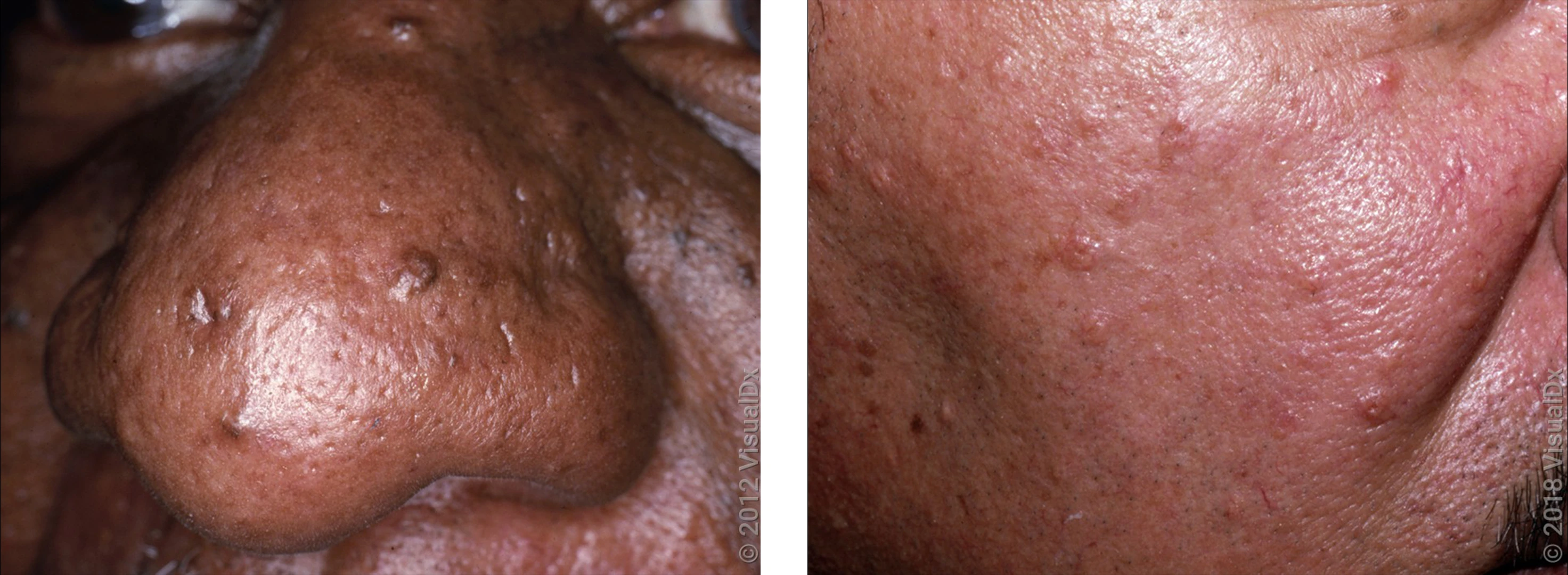
1. Sebaceous hyperplasia
Oil glands are common on the face, but sometimes they can become enlarged and form small yellow or brown bumps called sebaceous hyperplasia. In the center of the bump, you can usually see a tiny dent. It’s most common to have just one or two, but some people can have dozens at a time.
Sebaceous hyperplasia isn’t cancerous, but sometimes it can look like skin cancer. So it’s important to have them checked by a dermatologist (skin doctor). They may need to do a skin biopsy to confirm the diagnosis.
Causes: Sebaceous hyperplasia is mainly caused by hormonal changes that happen as people get older. This is why they are common in women after menopause and in men in their 70s and older.
Treatment: Common ways they may remove sebaceous hyperplasia include:
Using a laser
Freezing it (cryosurgery)
Cutting it out
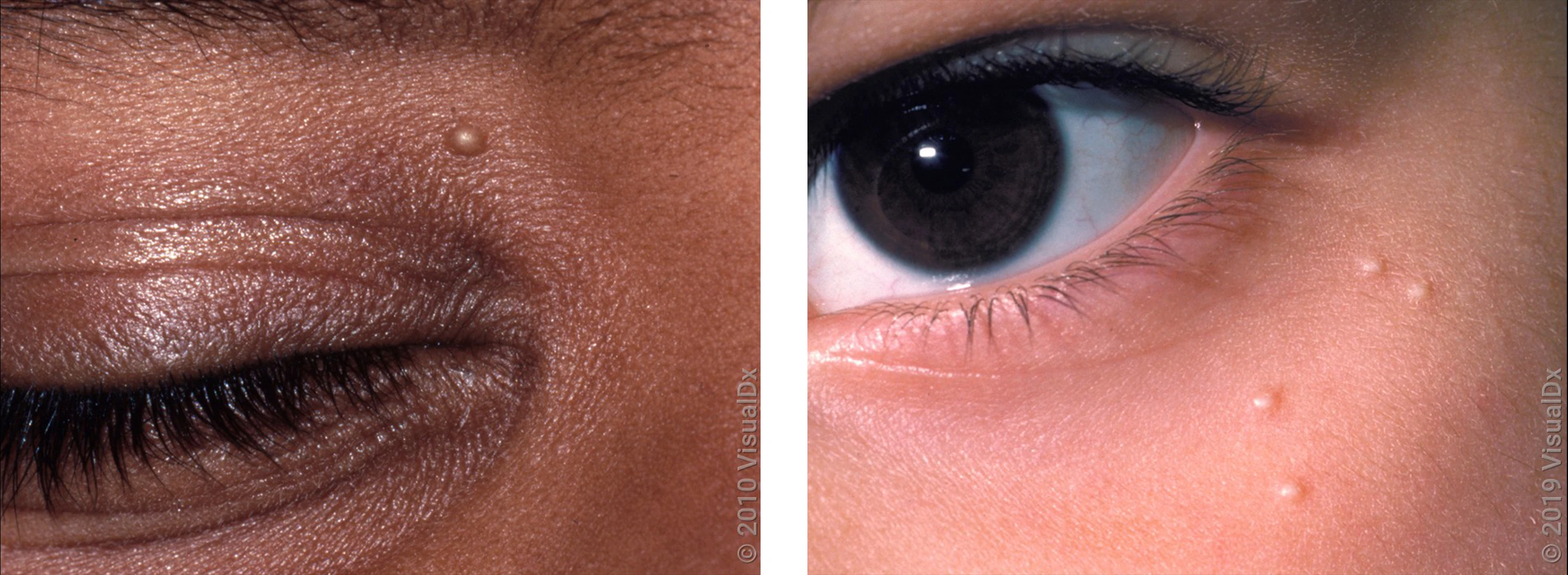
2. Milia
If the bumps are smooth and white and they’re not going away, they may be milia. These are tiny cysts in the skin that tend to arise in groups. They can show up anywhere, but they’re most common on the cheeks, nose, and around the eyes. Milia are common in infants and often called milk spots. But they can affect people of all ages and skin types.
Causes: It’s not clear what causes milia. One theory is that they form when dead skin cells get trapped under new skin instead of falling off.
Treatment: These harmless growths may go away on their own. In adults, you can try using gentle exfoliating creams or topical retinols to help them clear up.
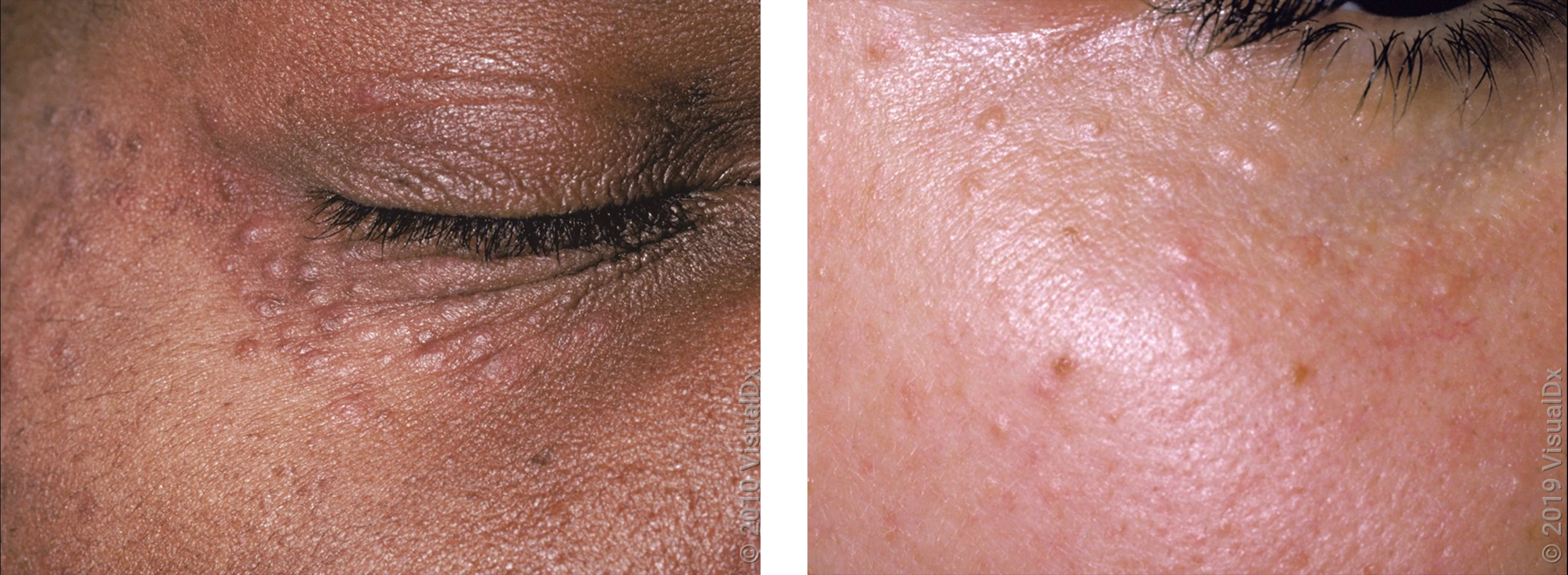
3. Syringoma
Syringoma are noncancerous growths that form from sweat glands in your skin. They’re most common around the eyes or on the neck. They form small bumps that usually come in clusters. They can be yellow, brown, or pink in color. Syringomas can affect people of all ages, but they usually start during adolescence.

Read more like this
Explore these related articles, suggested for readers like you.



Causes: It’s not clear what causes syringomas. It could be a combination of factors, like hormonal changes, an injury to the skin, and autoimmune disorders.
Treatment: You don’t need to treat them. But, if you want to get rid of them, a dermatologist can remove them in an in-office procedure, such as:
Laser therapy
Dermabrasion
Electrosurgery (a small electrical pulse)
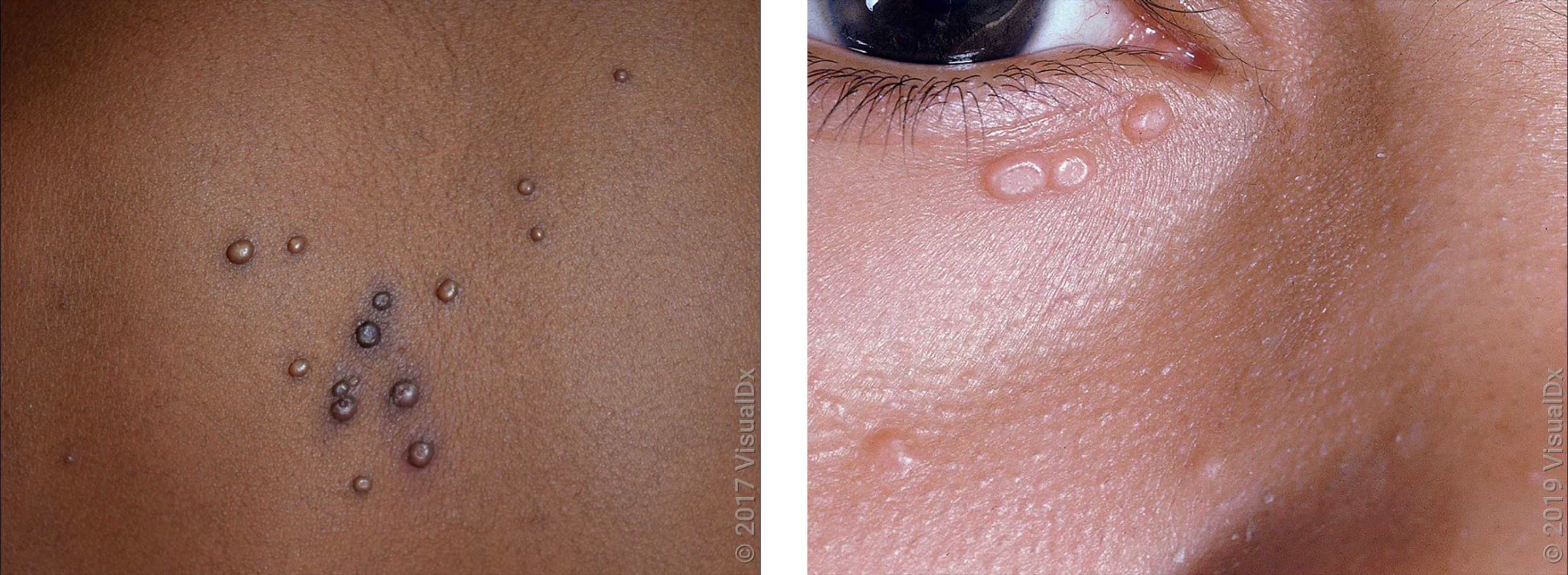
4. Molluscum contagiosum
Molluscum contagiosum are harmless wart-like growths. They usually form pink, brown, or skin-colored smooth bumps with a central dimple. Sometimes they can be very itchy, and the skin around them can become red or irritated.
Causes: Molluscum contagiosum is an infection caused by a virus, and they are contagious. They’re most common in children, but they can happen in adults, too. Molluscum can spread through close contact, including sexual contact. It can also be transmitted by touching objects, like towels or sheets, that have the virus on it.
Treatment: Molluscum usually goes away on its own. But it can take months — and sometimes even years — to clear. You should see a dermatologist if you want them treated. There are a number of ways they can be removed, including:
Medications like cantharidin (Ycanth)
Cryosurgery (freezing)
Curettage (cutting them away)
5. Impetigo
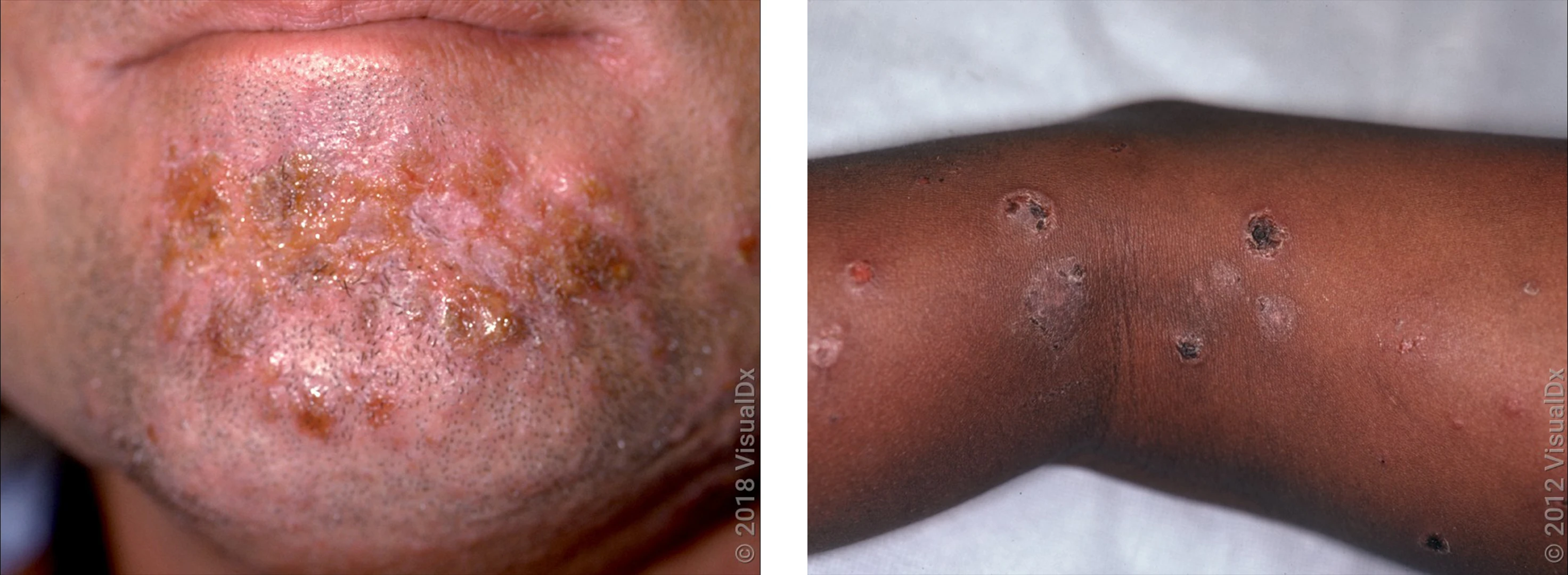
This is a very contagious skin infection that’s most common in children, but it can happen in adults, too. Impetigo can look like small, oozing blisters in its early phase. After 1 to 2 days, these blisters turn into a scab with yellow crusting.
Causes: Impetigo is caused by bacteria that usually live on the skin. When there’s a break in the skin, such as from a scratch or other injury, the bacteria can get in and cause an infection.
Treatment: Impetigo can spread easily to other people through touching. So it’s important to treat it quickly with either antibiotic creams (like mupirocin ointment) or pills (like cephalexin).
6. Keratosis pilaris
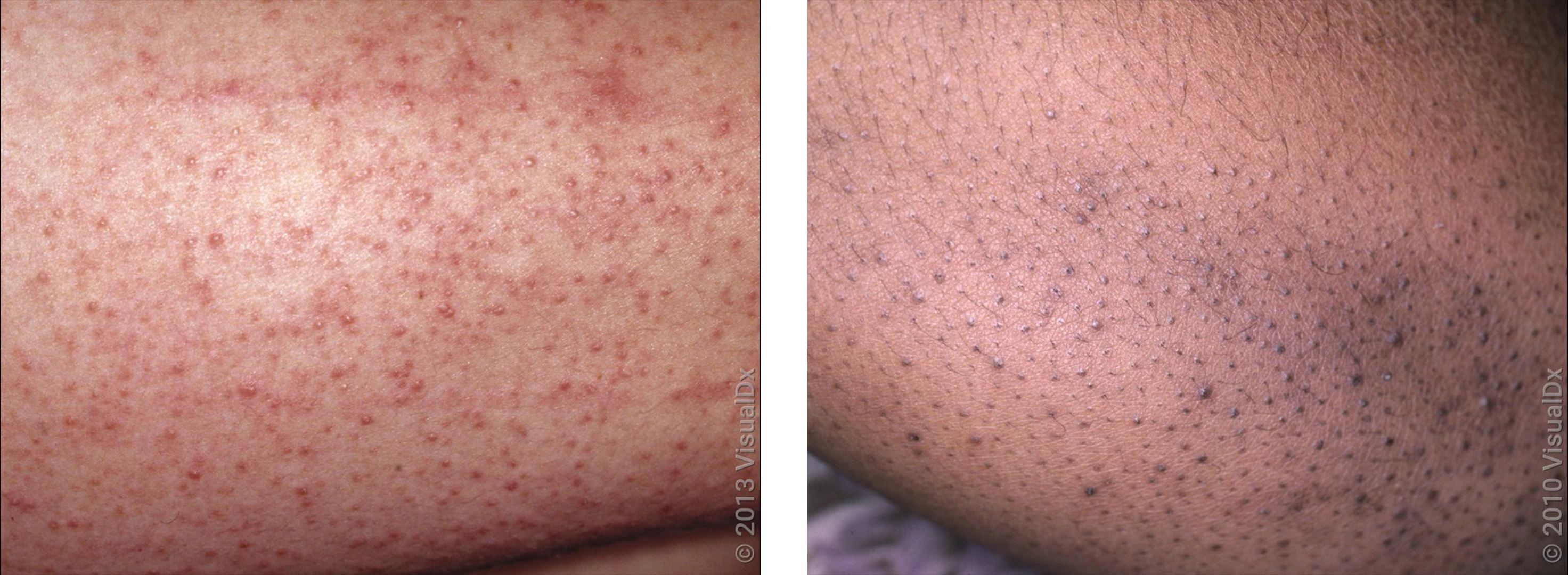
Keratosis pilaris is a very common skin rash that produces tiny red, purple, or skin-colored bumps that feel rough. It’s sometimes referred to as “chicken skin” because of its look and feel. It’s most common on the upper arms or thighs, but it can also show up on the face (usually the cheeks).
Causes: The exact cause of keratosis pilaris isn’t known. But it does run in families and is more likely in people with eczema.
Treatment: No treatment is needed for keratosis pilaris. For many people, it improves with age. Moisturizing or exfoliating creams (like ammonium lactate or urea cream) can help reduce the bumps.
7. Cysts
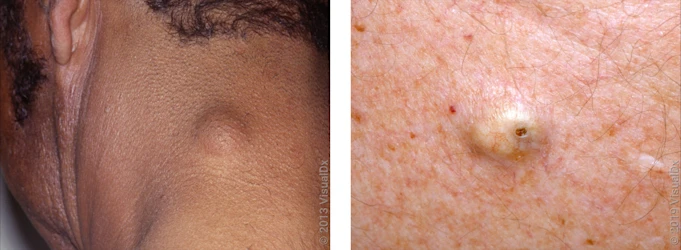
Cysts are common, noncancerous growths under the skin. They usually appear like a smooth skin-colored bump that can be small or grow to the size of a quarter or larger. Sometimes they have a small central opening called a punctum. If cysts get infected or inflamed, they may turn red or violet and become painful.
Causes: Cysts usually develop when hair follicles become clogged. This can happen for a number of reasons, including:
Inflammation (like from acne)
Skin injury
Genetic conditions
Chronic sun damage
Treatment: If a cyst causes symptoms or you don’t like the way it looks, a dermatologist can remove it by excision. This is a minor in-office surgical procedure that involves cutting the cyst out and closing the skin with stitches. Keep in mind that this procedure may leave a small scar.
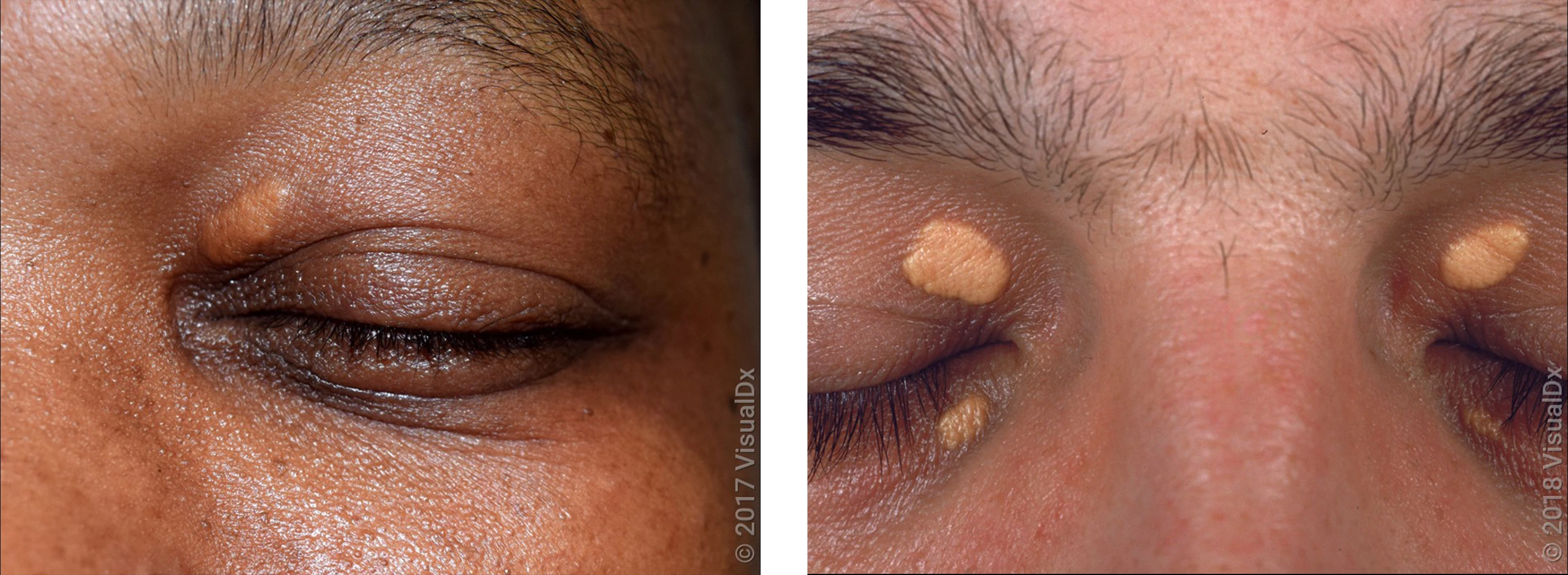
8. Xanthelasma
Xanthelasma are harmless, flat, yellowish growths that usually happen near or on the eyelids. They’re made of cholesterol deposits that collect in the skin, and they usually don’t cause any symptoms. These spots are noncancerous.
Causes: In some people, they can be a sign of an underlying health condition, like high cholesterol or diabetes. If you develop these growths, your dermatologist may suggest doing blood tests to make sure nothing else is going on.
Treatment: A dermatologist can remove xanthelasma with different procedures, including:
Lasers
Chemical peels
Minor skin surgery
9. Moles
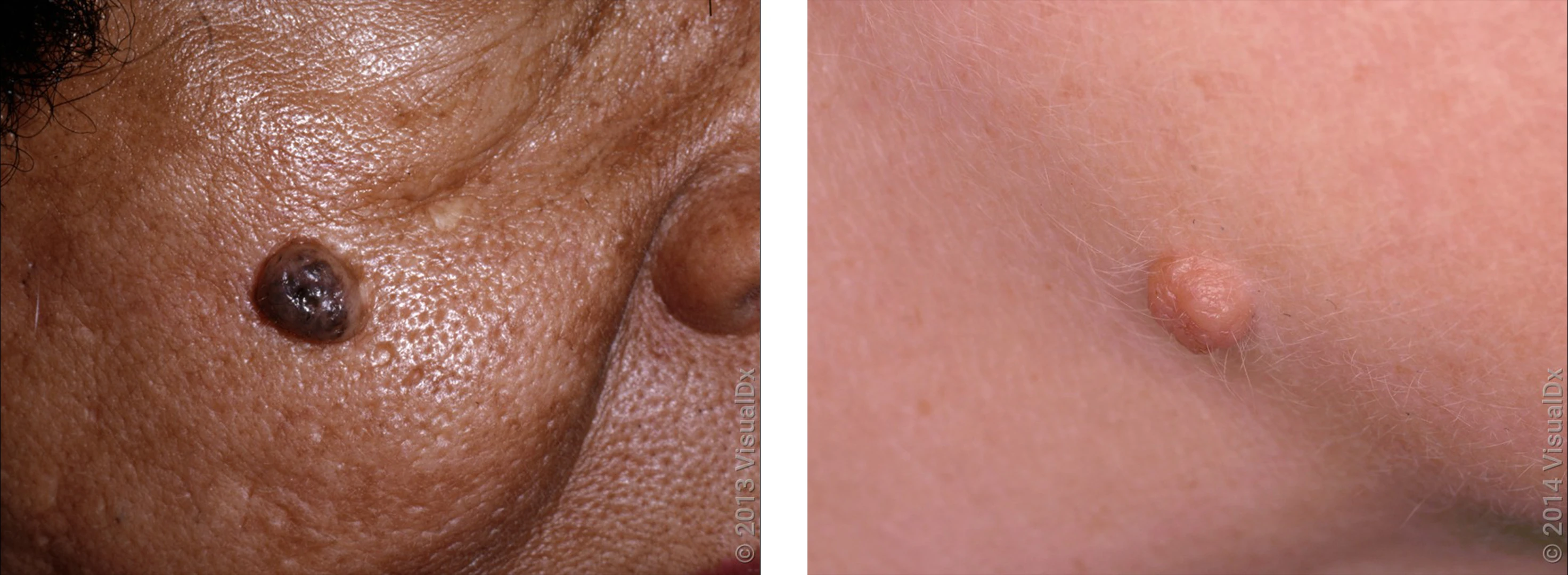
Moles are one of the most common skin growths, and most people will have one at some point in their life. They can be different sizes and colors, like pink, red, brown, or the color of your skin. These growths happen when melanocytes (the pigment-producing cells in the skin) grow together in a cluster.
Causes: The exact cause of moles isn’t known. But factors that may contribute are your genetics and sun exposure (ultraviolet radiation).
Treatment: Most of the time, moles are completely harmless. But some may be more likely to turn into melanoma, a dangerous type of skin cancer. You should have a mole examined by a dermatologist if the mole has these “ABCDE” features:
Asymmetry: The moles are irregularly shaped.
Border: The mole’s border is uneven.
Color: The mole has different shades of brown, tan, black, or blue.
Diameter: The mole is bigger than 6 mm in diameter (the size of a pencil eraser).
Evolving: You’ve noticed changes in the mole.
Your dermatologist may remove a suspicious mole to test it for cancer. But never try to remove a mole by yourself.
10. Seborrheic keratosis / dermatosis papulosa nigra
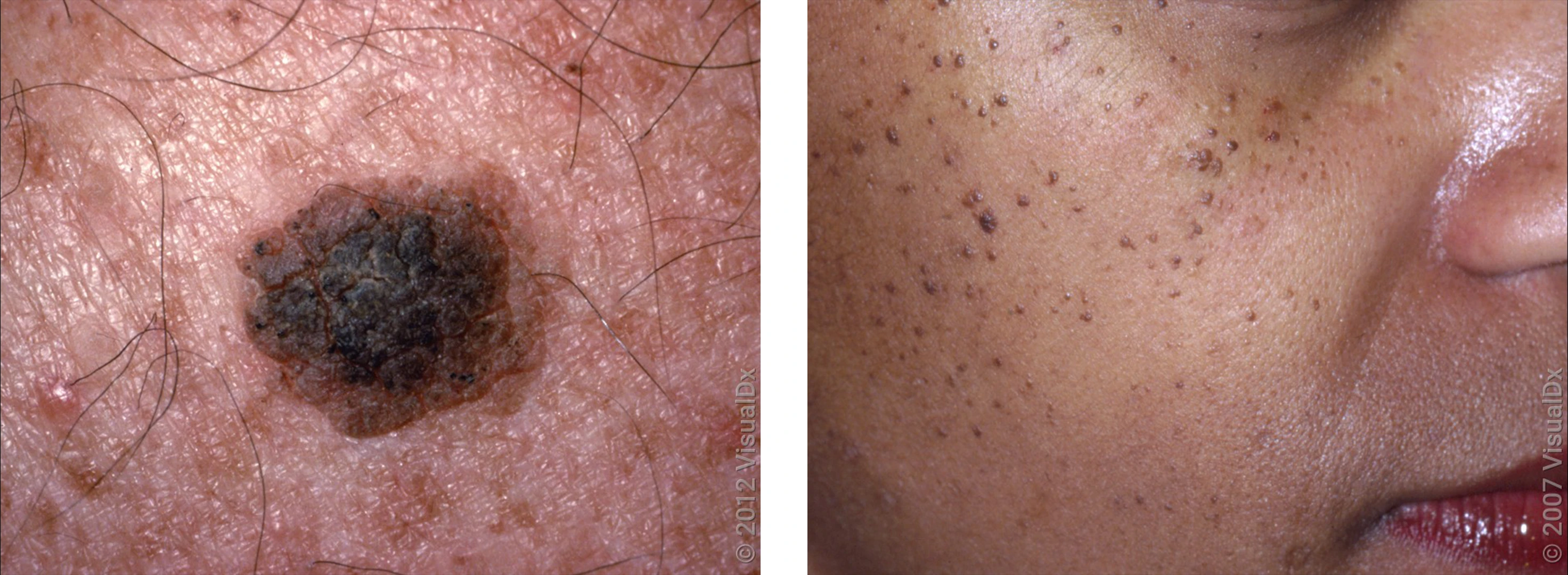
These growths can start showing up in your 20s and 30s, but they’re more common as you get older. They’re usually tan or brown and can be small or grow to the width of a quarter. Their texture is rough or waxy, and people can have anywhere from one to dozens. In darker skin, seborrheic keratoses can cause many small, brown bumps on the face called dermatosis papulosa nigra.
Causes: It’s not entirely clear what causes seborrheic keratoses, but genetics and sun exposure may play a role.
Treatment: Seborrheic keratoses aren’t cancerous, but sometimes they look like certain types of skin cancer. This means you may need to see a dermatologist, and even get a biopsy, to make sure it’s not something else.
11. Skin cancer
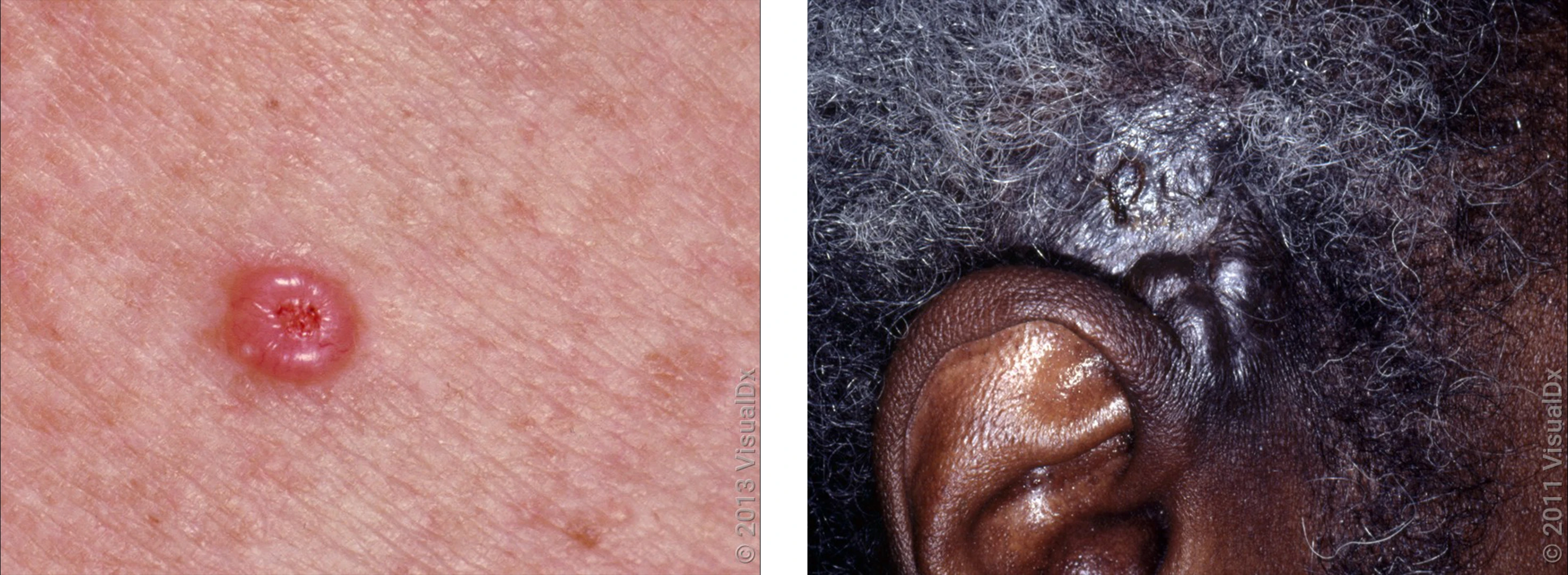
Basal cell carcinoma (BCC) is the most common type of skin cancer. These bumps are typically the color of your skin. But they can be tan or brown, especially in darker skin. Sometimes BCC can look like a pimple, and they may bleed or be crusty. A BCC will get bigger over time and doesn’t go away on its own.
BCC is common in areas that get a lot of sun exposure, like the face. And it can happen in people of all skin colors.
Causes: BCC is mainly caused by too much ultraviolet (UV) exposure from the sun and/or tanning beds.
Treatment: BCC needs treatment with surgery or medicated creams to remove the cancer.
12. Folliculitis
Folliculitis is inflammation of the hair follicles. Folliculitis causes bumps that are pink, brown, or violet and full of pus. Folliculitis can happen anywhere you have hair, including your face. On the face, it usually occurs where there’s visible hair, like the hairline or the cheeks and neck in men.
Causes: Folliculitis can be caused by a range of things that irritate the hair follicle, including:
An infection (from bacteria or fungus)
Irritation, for example, from shaving
Hair follicle blockage
Some skin diseases
Treatment: To treat folliculitis, you need to treat the underlying cause. For example, if you have an infection, you may need to use a topical or oral antibiotic.
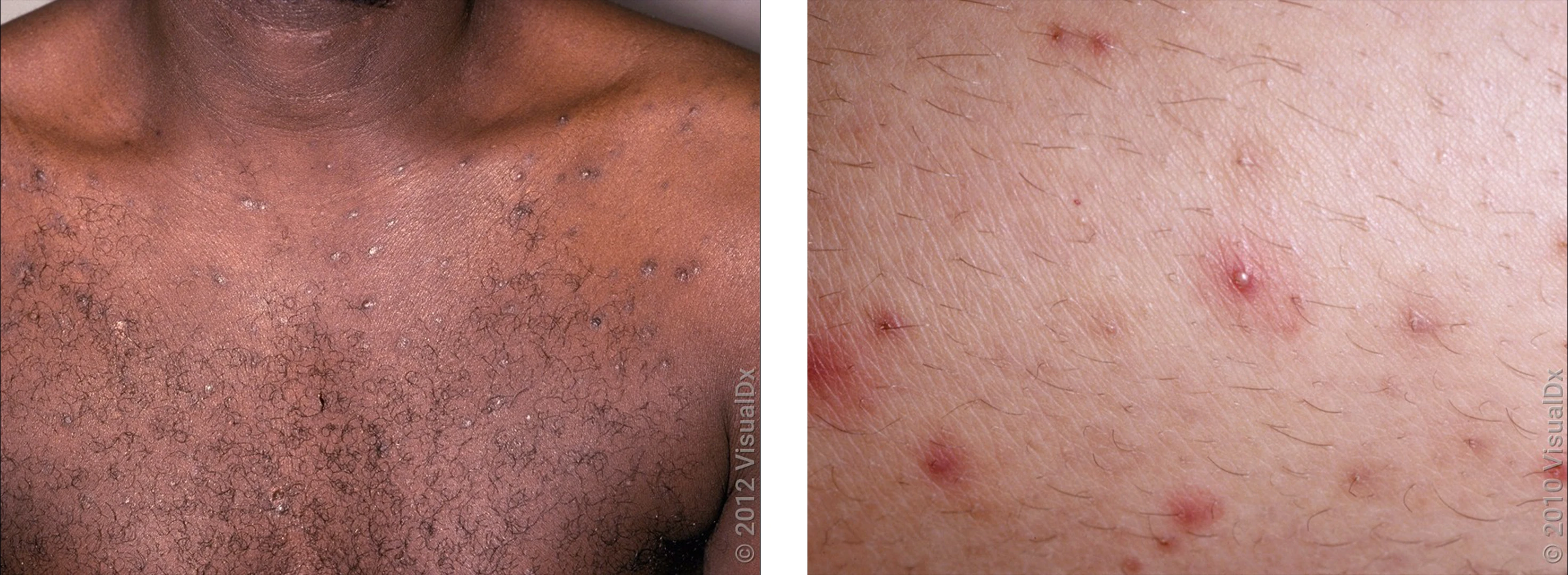
How to tell the difference between acne and other skin bumps
If you develop little red bumps on your face, it’s important to know if it’s acne or something else. Here are a few clues to help you tell the difference:
Acne pimples typically last for a few weeks before they get better and eventually clear.
Some acne pimples turn into pus-filled bumps that can be squeezed or popped (but popping causes more harm than good).
When acne pimples are deep and inflamed, they can also be painful to the touch (unlike many other skin growths).
A pimple doesn’t usually appear on its own. There’s often background whiteheads or blackheads, or other pimples that are also forming.
When to get professional help
If you’re not sure what you’re dealing with, and your skin bump isn’t going away, then it’s a good idea to get checked out by your primary care provider or a dermatologist.
Here are some signs that your spot needs professional evaluation:
It bleeds and doesn’t heal.
It’s getting bigger or darker in color.
There’s an open sore that doesn’t heal.
It grows quickly.
Frequently asked questions
Yes, friction can cause small bumps called friction blisters. When skin repeatedly rubs against an object (like a shoe), skin cells separate from the pressure. This space then fills with a clear fluid from the body, forming a blister. Friction blisters heal on their own. Covering it with a dressing can help protect it from more damage.
Two common causes of white bumps on the face are milia and whiteheads. Milia are tiny cysts underneath the skin’s surface that usually develop around the eyes and on the cheeks. Whiteheads (also called closed comedones) are a type of acne. They form when pores are closed off with oil and dead skin cells. Whiteheads have a white or yellow head. They’re most common where you have more oil glands, like the forehead and chin.
Stress bumps are a type of rash called hives that can be triggered by stress. They are itchy raised bumps that usually develop on the torso, arms, and legs. They don’t usually occur on the face. When you’re stressed, your body releases chemicals including histamine. Histamine triggers the swelling and itchiness associated with hives.
Yes, friction can cause small bumps called friction blisters. When skin repeatedly rubs against an object (like a shoe), skin cells separate from the pressure. This space then fills with a clear fluid from the body, forming a blister. Friction blisters heal on their own. Covering it with a dressing can help protect it from more damage.
Two common causes of white bumps on the face are milia and whiteheads. Milia are tiny cysts underneath the skin’s surface that usually develop around the eyes and on the cheeks. Whiteheads (also called closed comedones) are a type of acne. They form when pores are closed off with oil and dead skin cells. Whiteheads have a white or yellow head. They’re most common where you have more oil glands, like the forehead and chin.
Stress bumps are a type of rash called hives that can be triggered by stress. They are itchy raised bumps that usually develop on the torso, arms, and legs. They don’t usually occur on the face. When you’re stressed, your body releases chemicals including histamine. Histamine triggers the swelling and itchiness associated with hives.
The bottom line
For many people, skin bumps — especially on the face — are caused by an acne breakout. But not all bumps are acne. Growths, like moles, cysts, and milia, can also form small bumps. You can also get cancers on your skin. There are some clues that can help you figure out if you’re dealing with acne or something else. Make sure you visit a dermatologist if your skin bump doesn’t go away after a few weeks, grows quickly, or it bleeds or changes color.

Why trust our experts?


Images used with permission from VisualDx (www.visualdx.com)
References
American Academy of Dermatology Association. (n.d.). Moles: Overview.
American Academy of Dermatology Association. (n.d.). Seborrheic keratoses: Overview.
Farci, F., et al. (2023). Sebaceous hyperplasia. StatPearls.
Geist, R., et al. (2024). Syringoma. StatPearls.
Greco, M. J., et al. (2024). Seborrheic keratosis. StatPearls.
Hoss, E. (2024). Skin lesion removal. MedlinePlus.
Ludmann, P. (2024). Hives: Signs and symptoms. American Academy of Dermatology Association.
MedlinePlus. (2022). Are moles determined by genetics?
Oakley, A. (2014). Comedonal acne. DermNet.
Oakley, A. (2022). Cryotherapy. DermNet.
Oakley, A. (2013). Friction blister. DermNet.
Oakley, A. (2014). Sebaceous hyperplasia. DermNet.
Pennycook, K. B., et al. (2024). Keratosis pilaris. StatPearls.
Porter, D. (2021). What is xanthelasma? American Academy of Ophthalmology.
Singh, A., et al. (2024). Syringoma. DermNet.
Winters, R. D., et al. (2023). Folliculitis. StatPearls.