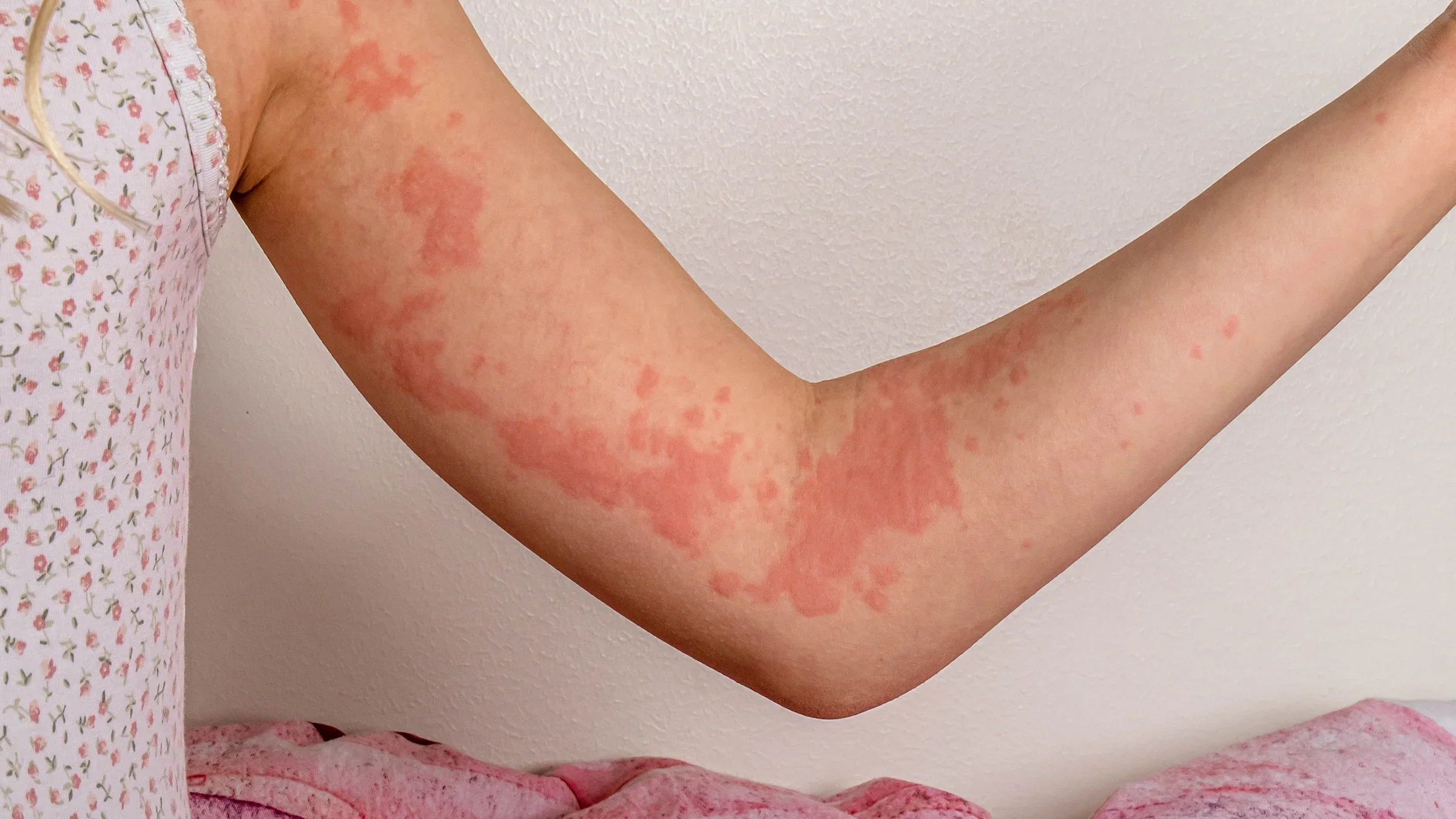
Key takeaways:
Barzolvolimab is an investigational injection that actually removes mast cells themselves rather than blocking their signals.
In phase 3 trials, about half of patients were completely free of itch and hives at 24 weeks, compared with about 1 in 6 on placebo.
About half of treated patients had hair color changes, and about 1 in 10 had skin lightening or low neutrophil counts. The FDA filing is planned for 2027, so it’s unlikely to reach patients before 2028.
Your patient has had hives most days for over 8 months. She takes cetirizine 4 times per day, and you added omalizumab in the spring. It helped a bit, but she still wakes up with welts, and lip swelling isn’t unusual for her.
Patients like her may soon have another option: In September 2026, Celldex announced phase 3 results for barzolvolimab, an investigational monoclonal antibody for chronic spontaneous urticaria (CSU). In two large trials, it met every main goal, including in patients who hadn’t responded to omalizumab.
Here’s what you need to know about barzolvoliumab, including how it compares with the treatments you can prescribe today.
1. Overview
Mast cells drive CSU. When they release histamine and other chemicals, the result is itching, hives, and swelling.
Every approved treatment works on one step of that process:
Antihistamines block histamine after it’s released.
Omalizumab (Xolair) binds IgE, blocking the antibody that primes mast cells to release.
Dupilumab (Dupixent) blocks IL-4 and IL-13, two steps in the allergic-type inflammation pathway.
Remibrutinib (Rhapsido) blocks an enzyme mast cells use to release histamine.
Barzolvolimab works differently. It blocks KIT, a receptor that mast cells need to survive. Without it, mast cells die off.
KIT also sits on pigment cells and hematopoietic stem cells, which explains some of the drug’s unusual side effects (more on that below).
2. Phase 3 data
According to the manufacturer, two trials enrolled over 1,900 adults whose hives persisted despite using antihistamines, some taking them at up to four times the standard dose. About two-thirds of participants had severe disease, and about 1 in 7 had already failed omalizumab.
Patients received placebo or barzolvolimab as an injection under the skin, either every 4 weeks or every 8 weeks. Both schedules worked about equally well.
The results:
Complete response (no itch, no hives): More than 4 in 10 patients saw a complete response at 12 weeks and about half of patients at 24 weeks. (In the placebo group, it was about 1 in 10, and 1 in 6, respectively).
Patients who failed omalizumab: About half of these patients were symptom-free at 12 weeks (versus less than 15% on placebo).
Angioedema: Among patients who experienced swelling, over two-thirds had none at 12 weeks (versus about a third on placebo).
Keep in mind that these are topline results from a company announcement. They haven’t been peer reviewed, and the full data haven’t been presented.
3. Side effects
Barzolvolimab’s side effects included changes to patients’ appearance and neutrophil count, consistent with expected effects of KIT inhibition.
Side effect | Percent of patients affected |
|---|---|
Hair color changes | ~50% |
Skin lightening | ~10% |
Skin darkening | ~10% |
Low neutrophil count | ~10% |
Altered taste | ~10% |
A few things to know about these side effects:
Most side effects were mild. Serious side effects were no more common than with placebo.
Low neutrophils didn’t translate to more infections. Infection rates were roughly equal in all groups, including placebo.
The changes appear to reverse. In a phase 2 trial, hair and skin color changes resolved after patients stopped the drug, and neutrophil counts returned to baseline.
Hair hypopigmentation can occur on the head, face, and body. For some patients, this may be a dealbreaker. Others who’ve had daily hives for years may accept it. It’s important to discuss this possibility before the first dose.
4. Timeline
If you’re wondering when barzolvolimab will be available, here’s the anticipated timeline:
Clinical trials will continue through 52 weeks, with those results expected in February 2027.
Celldex plans to file with the FDA in 2027.
Since a standard FDA review takes about a year, a realistic approval won’t come before 2028.
Both trials enrolled adults only, so approval would likely be limited to adults.
Current treatment options for CSU
Until barzolvoliumab or another treatment option comes to the forefront, treatment for CSU remains unchanged. The international, multi-group urticaria guidelines recommend a step-by-step approach:
Start with a second-generation antihistamine (like cetirizine) at the standard dose.
If hives persist, increase it up to four times the standard dose. Don’t go higher.
If that fails, add omalizumab. Dupilumab or remibrutinib are other options.
Consider cyclosporine if those options don’t work.
Oral steroids in a short course may be considered for severe exacerbation, but should otherwise be avoided.
Frequently asked questions
No, approval is likely at least a year or two away, and many patients do well on the options available now. Keep moving through current treatments rather than holding out.
It’s unclear at this point. In a phase 2 trial, many patients stayed free of hives for months after their last dose. The phase 3 trials haven’t tested this.
Yes, phase 3 trials are underway in cold urticaria and symptomatic dermographism. A phase 2 trial in prurigo nodularis missed its main goals.
No, approval is likely at least a year or two away, and many patients do well on the options available now. Keep moving through current treatments rather than holding out.
It’s unclear at this point. In a phase 2 trial, many patients stayed free of hives for months after their last dose. The phase 3 trials haven’t tested this.
Yes, phase 3 trials are underway in cold urticaria and symptomatic dermographism. A phase 2 trial in prurigo nodularis missed its main goals.
The bottom line
Barzolvolimab is the first CSU treatment designed to remove mast cells themselves, instead of blocking one of their signals. In two large phase 3 trials, about half of patients were free of itch and hives by 24 weeks, and it worked well in patients whose hives persisted on omalizumab.
The side effects appear to be mostly cosmetic. About half of patients had hair color changes, and another 20% had changes to their skin color. Both of these seemed to reverse after stopping the medication. About 10% of patients developed neutropenia, but this did not appear to have clinical significance.
But with approval of the medication unlikely before 2028, the stepwise path of antihistamines, then omalizumab, dupilumab, or remibrutinib, remains the plan for the patient in front of you today.

Why trust our experts?




References
Celldex Therapeutics. (2026). Celldex announces positive results from phase 3 EMBARQ-CSU1 and EMBARQ-CSU2 studies of barzolvolimab which met primary and all key secondary endpoints.
Celldex Therapeutics. (2026). Barzolvolimab EMBARQ-CSU1/CSU2 phase 3 topline results.
Celldex Therapeutics. (2026). Celldex reports results from phase 2 study of barzolvolimab in prurigo nodularis. Global Newswire.
Maurer, M., et al. (2025). Anti‐KIT Barzolvolimab for chronic spontaneous urticaria. Allergy.
Munoz, M., et al. (2026). Letter to the editor: Differential susceptibility of hair colour changes after barzolvolimab. Journal of the European Academy of Dermatology & Venerology.
Santoro, C. (2025). Barzolvolimab shows long-term efficacy in chronic spontaneous urticaria, improving patient quality of life. AJMC.
Zuberbier, T., et al. (2026). The international guideline for the definition, classification, diagnosis and management of urticaria. Allergy.