



10 Medications That May Raise Your Risk of Kidney Damage
Diuretics and nonsteroidal anti-inflammatory drugs, like ibuprofen, could harm your kidneys. Here are common medications that may cause kidney damage.
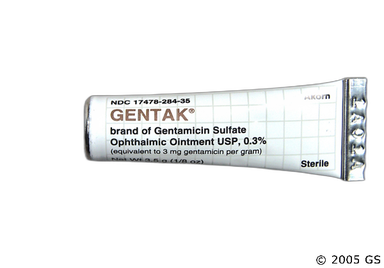
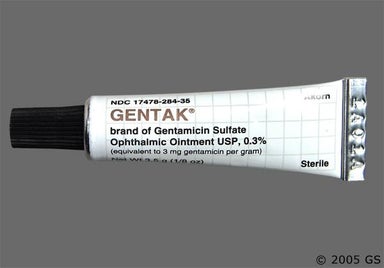
Gentamicin (Gentak) is a popular, affordable antibiotic for treating different types of bacterial eye infections. It comes as an eye drop and an eye ointment.

Gentamicin (Gentak) is an aminoglycoside antibiotic. It kills bacteria by blocking their ability to make proteins that are necessary for their protective covering.
| Common Brands | Gentak |
|---|---|
| Drug Class | Aminoglycoside antibiotic |
| Controlled Substance Classification | Not a controlled medication |
| Generic Status | Lower-cost generic available |
| Availability | Prescription only |

The following side effects may get better over time as your body gets used to the medication. Let your healthcare provider know immediately if you continue to experience these symptoms or if they worsen over time.
See Risks and Warnings.
Contact your healthcare provider immediately if you experience any of the following.
Along with its needed effects, a medicine may cause some unwanted effects. Although not all of these side effects may occur, if they do occur they may need medical attention.
Check with your doctor immediately if any of the following side effects occur:
Less common
Itching, redness, swelling, or other sign of irritation not present before use of this medicine
redness of eye, eyelid, or inner lining of eyelid
Rare
Black, tarry stools; blood in urine or stools; or unusual bleeding or swelling
blurred vision, eye pain, sensitivity to light, and/or tearing
seeing, hearing, or feeling things that are not there
hallucinations
Some side effects may occur that usually do not need medical attention. These side effects may go away during treatment as your body adjusts to the medicine. Also, your health care professional may be able to tell you about ways to prevent or reduce some of these side effects. Check with your health care professional if any of the following side effects continue or are bothersome or if you have any questions about them:
Less common
Burning or stinging
After application, eye ointments usually cause your vision to blur for a few minutes.
Other side effects not listed may also occur in some patients. If you notice any other effects, check with your healthcare professional.
Call your doctor for medical advice about side effects. You may report side effects to the FDA at 1-800-FDA-1088.




Gentamicin (Gentak) can cause some serious health issues. This risk may be even higher for certain groups. If this worries you, talk to your doctor or pharmacist about other options.
It's possible to get a new infection from fungi or bacteria that are resistant to gentamicin (Gentak) after using this medication for a while. Don't use this medication longer than prescribed. Let your provider know if you notice symptoms of a new infection or if the original symptoms don't get better after using gentamicin (Gentak).
Gentamicin (Gentak) can cause eye irritation and, in some rare cases, it can cause an allergic reaction. Call your provider if you experience irritation, pain, rash, or redness that is severe or doesn't go away. Let your provider know if you've had allergic reactions to other aminoglycoside antiobiotics like tobramycin (Tobrex) in the past.
Eye ointments like gentamicin (Gentak) may slow healing of the cornea, which is the protective covering in the front of the eye. Remember to follow-up with your provider to make sure that your eye is healing appropriately.
Bacterial contamination of eyedrops can lead to eye infections. Wash your hands each time before you take a dose. Don't touch the tip of the container with your eye, hands, or any other surface. Remember to put the cap back on the container after each use.


Although certain medicines should not be used together at all, in other cases two different medicines may be used together even if an interaction might occur. In these cases, your doctor may want to change the dose, or other precautions may be necessary. When you are taking this medicine, it is especially important that your healthcare professional know if you are taking any of the medicines listed below. The following interactions have been selected on the basis of their potential significance and are not necessarily all-inclusive.
Using this medicine with any of the following medicines is not recommended. Your doctor may decide not to treat you with this medication or change some of the other medicines you take.
Using this medicine with any of the following medicines is usually not recommended, but may be required in some cases. If both medicines are prescribed together, your doctor may change the dose or how often you use one or both of the medicines.
Using this medicine with any of the following medicines may cause an increased risk of certain side effects, but using both drugs may be the best treatment for you. If both medicines are prescribed together, your doctor may change the dose or how often you use one or both of the medicines.






Prescription savings
Stop paying too much for your prescriptions. Compare prices, get pharmacy coupons, and save up to 80%. Find expert answers to your health questions so you can make the best decisions for yourself and your family.
Health conditions
Medications & treatment
Access & affordability
Medication discounts


Gentak is an antibiotic that treats bacterial infections of the eye (such as pink eye or corneal ulcers) or eyelid (such as blepharitis or oil gland infection). You may also get this medication after eye surgery or injury to help prevent bacterial infections from happening.
Gentak eyedrops and ointment work against many different bacteria; you may have heard of some of them, such as Staphylococcus ("staph"), Streptococcus ("strep"), and Escherichia coli ("E.coli"). Your provider will prescribe antibiotic eye medications that target the bacteria that are most likely to be causing your eye infection.
Since you're applying the medication directly where the infection is, Gentak should start to work right away, but it'll take a few days to see any changes. For most eye or eyelid infections, it usually takes 1 to 2 days for your symptoms to start clearing up, so contact your provider if your infection isn't looking better after that time. Be sure to use Gentak for the full amount of time your healthcare provider instructed, even if you start to feel better.
Gentak is not available over-the-counter. All antibiotic eyedrops and ointments require a prescription from a provider.
Gentak is not a steroid or corticosteroid. It is an antibiotic eye medication that kills bacteria. If you have a severe eye or eyelid infection, your provider may prescribe an additional steroid medication for you to take to help with the swelling.
