Gamifant
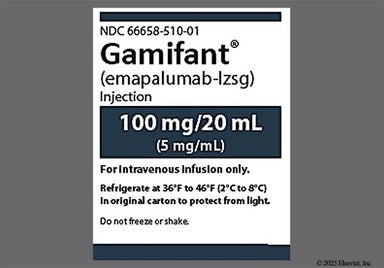
Gamifant (emapalumab or emapalumab-lzsg) is the first medication approved for the treatment of a potentially severe inflammatory problem called primary hemophagocytic lymphohistiocytosis (HLH). It's given as an infusion through the veins (intravenously or IV) every 3 to 4 days by a healthcare provider.


What is Gamifant (emapalumab)?
What is Gamifant (emapalumab) used for?
- Primary hemophagocytic lymphohistiocytosis (HLH) that doesn't respond to conventional treatment, comes back, or worsens
How Gamifant (emapalumab) works
Gamifant (emapalumab) is a type of monoclonal antibody called an interferon gamma (IFNγ) blocking antibody. It works to lower inflammation by blocking a protein in the immune system called interferon gamma. This helps to improve inflammatory symptoms of primary HLH.
Drug facts
| Common Brands | Gamifant |
|---|---|
| Drug Class | Interferon gamma blocking antibody |
| Controlled Substance Classification | Not a controlled medication |
| Generic Status | No lower-cost generic available |
| Availability | Prescription only |

Side effects of Gamifant (emapalumab)
The following side effects may get better over time as your body gets used to the medication. Let your healthcare provider know immediately if you continue to experience these symptoms or if they worsen over time.
Common Side Effects
- Infections (56%)
- High blood pressure (41%)
- Infusion-related reactions (fever, rash, redness, sweating; 27%)
- Fever (24%)
- Low blood potassium (15%)
- Constipation (15%)
Less Common Side Effects
- Stomach pain
- Diarrhea
- Rash
- Cough
- Fast heart rate
- Fast breathing rate
Gamifant (emapalumab) serious side effects
Contact your healthcare provider immediately if you experience any of the following.
- Serious infection: fever, weakness, cough, difficulty breathing, diarrhea, stomach pain, sweating, chills, burning when you urinate, urinating more frequently
The following Gamifant (emapalumab) side effects have also been reported
Side effects that you should report to your care team as soon as possible:
- Allergic reactions—skin rash, itching, hives, swelling of the face, lips, tongue, or throat
- Infection—fever, chills, cough, sore throat, wounds that don't heal, pain or trouble when passing urine, general feeling of discomfort or being unwell
- Infusion reactions—chest pain, shortness of breath or trouble breathing, feeling faint or lightheaded
- Stomach pain, unusual weakness or fatigue, nausea, vomiting, diarrhea, or fever that lasts longer than expected
Side effects that usually do not require medical attention (report these to your care team if they continue or are bothersome):
- Constipation
- Cough
- Diarrhea
- Stomach pain

Pros and cons of Gamifant (emapalumab)
Pros
- First treatment for primary HLH
- Can use for people of all ages
- Only given twice a week
Cons
- Given as an infusion through the veins
- Must be given by a trained healthcare professional
- Not a cure for primary HLH; only lowers inflammatory symptoms of HLH

Pharmacist tips for Gamifant (emapalumab)

- Make sure to mark your appointments on your calendar to see your provider to receive your Gamifant (emapalumab) doses or get blood work done. This can help you not miss any of your doses and allows your provider to make sure the medication is safe and working well for you.
- Gamifant (emapalumab) is given as an infusion into the veins by trained healthcare professionals at a clinic or infusion center. The infusion will take about 1 hour. Make sure you know when your infusions are scheduled so you don't miss a dose.
- Your provider will observe you during and after your Gamifant (emapalumab) infusion for reactions like fever, rash, redness, or sweating. These tend to be mild to moderate, and they typically get better when the infusion is slowed or stopped.
- Gamifant (emapalumab) can raise your risk of developing an infection that can be serious or even life-threatening. If you develop symptoms of an infection (e.g., fever, cough, difficulty breathing, diarrhea, weakness, sweating, chills) after starting Gamifant (emapalumab), go to the hospital right away so you can be tested for an infection. If you have an infection, you might have to stop taking Gamifant (emapalumab) so your body can fight it off and fully recover.

Risks and warnings for Gamifant (emapalumab)
Gamifant (emapalumab) can cause some serious health issues. This risk may be even higher for certain groups. If this worries you, talk to your doctor or pharmacist about other options.
Infections
- Risk factors: Active, long-term, or recurrent infection | Having other conditions that raise your risk of infection | Taking medications that weaken your immune system
Gamifant (emapalumab) can affect your body's ability to fight off infections. This can raise your risk of serious or life-threatening bacterial, viral, or fungal infections. Before starting Gamifant (emapalumab), you'll need to get tested for tuberculosis (TB) and get treatment if you test positive (meaning you have a confirmed TB infection). Then, during treatment, your provider will give you anti-infective medications before each Gamifant (emapalumab) dose to help lower your risk for infections. While taking Gamifant (emapalumab), go to the hospital immediately if you develop symptoms of an infection, like fever, cough, difficulty breathing, diarrhea, weakness, sweating, or chills. You'll need to get tested for an infection. You might have to stop taking Gamifant (emapalumab) so your body can fight the infection. Tell your provider about your medical conditions and medications so they can make sure Gamifant (emapalumab) is safe for you.
Might not be safe with some vaccines
You can still receive most vaccines, including the flu shot, while taking Gamifant (emapalumab). However, you shouldn't receive live vaccines while taking this medication and for at least 4 weeks after your last dose. This is because it's not known if they're safe for you while you're taking Gamifant (emapalumab). Examples of live vaccines include the FluMist Quadrivalent (live attenuated influenza vaccine), which is given through a nasal spray, and MMR (measles, mumps, and rubella vaccine). You should be brought up to date with all vaccines before starting Gamifant (emapalumab). Be sure to let your provider know you're taking Gamifant (emapalumab) before you receive any vaccines.

Gamifant (emapalumab) dosage
Typical dosage for Gamifant (emapalumab)
The typical dose is based on your body weight and is infused into the veins over 1 hour every 3 to 4 days. Your provider will adjust the dose based on how well it's helping your symptoms, your lab values, or if you're having side effects.

Gamifant (emapalumab) images