Used for Coronary Artery Disease, High Cholesterol
Used for Coronary Artery Disease, High Cholesterol
Fluvastatin is a low-to-moderate intensity statin that's usually added onto a heart-healthy diet for people with high cholesterol. It lowers "bad" cholesterol and triglycerides and raises "good" cholesterol in the body. It also helps lower the risk of complications like heart attack and stroke in adults with heart disease. Generic fluvastatin immediate-release (IR) capsules are taken once or twice a day. There are also extended-release (ER) tablets that are taken once a day. The ER tablets are available under the brand name Lescol XL and as generic. Side effects include headache and indigestion.
The following side effects may get better over time as your body gets used to the medication. Let your healthcare provider know immediately if you continue to experience these symptoms or if they worsen over time.
The following Fluvastatin side effects have also been reported
Along with its needed effects, a medicine may cause some unwanted effects. Although not all of these side effects may occur, if they do occur they may need medical attention.
Check with your doctor immediately if any of the following side effects occur:
puffiness or swelling of the eyelids or around the eyes, face, lips, or tongue
skin rash
tightness in the chest
Some side effects may occur that usually do not need medical attention. These side effects may go away during treatment as your body adjusts to the medicine. Also, your health care professional may be able to tell you about ways to prevent or reduce some of these side effects. Check with your health care professional if any of the following side effects continue or are bothersome or if you have any questions about them:
Can't crush, chew, or open the pills if you have trouble swallowing them whole
Pharmacist tips for Fluvastatin
Mark your calendar for your blood test appointments while you're taking fluvastatin. Your prescriber will check your cholesterol levels to see if the medication is working well and if your dose needs to be adjusted. They'll also check your liver health to make sure it's still safe for you to take.
Swallow fluvastatin pills whole. Take the medication with or without food. If it's hurting your stomach, try taking the medication with food to help.
For the fluvastatin immediate-release capsules: Take the immediate-release capsules once or twice a day as instructed by your prescriber. If you're taking the medication once a day, take it in the evening so it works as best as it can for you.
For the fluvastatin extended-release tablets: You can take the extended-release tablet at any time of the day. Try to take it at the same time every day so it becomes a part of your daily routine.
Avoid or limit the amount of alcohol you drink while you're taking fluvastatin. Drinking alcohol while taking this medication can raise your risk of serious liver problems and muscle pain. It can also raise your cholesterol levels. Talk to a healthcare professional about your drinking habits.
Get medical help right away if you have severe muscle pain, dark-colored urine, or fever. These might be signs of rhabdomyolysis (muscle breakdown). This is a rare but serious condition that needs immediate treatment.
Tell your care team about all the medications you take and plan to take. Several medications can interact with fluvastatin. These interactions can either make your medications work less well or put you at risk for certain side effects. For example, the risk for muscle damage is higher if you take fluvastatin with fenofibrate (Tricor) or azithromycin (Zithromax).
Work with your care team to create a plan that includes a healthy, low-fat diet and regular exercise while taking fluvastatin. This will help you get the most benefit from your treatment.
Fluvastatin can cause some serious health issues. This risk may be even higher for certain groups. If this worries you, talk to your doctor or pharmacist about other options.
Severe muscle pain and damage
Risk factors: Ages 65 years and older | Hypothyroidism that's not well-controlled | Kidney problems | Taking a higher dose of fluvastatin | Taking other medications that can also cause muscle problems or interact with fluvastatin
Rarely, statins like fluvastatin can cause immune-mediated necrotizing myopathy (IMNM). This is an autoimmune condition that causes muscle inflammation and muscle weakness. It might last even after you stop taking the statin. You'll need to take other medications to treat IMNM.
Tell your care team if you have unexplained muscle pain, tenderness, or weakness. They can check what's going on. But get medical care right away if you have severe muscle pain, dark-colored urine, or extreme tiredness. These can be signs of rhabdomyolysis. Depending on your symptoms, you might need to stop taking fluvastatin.
Liver problems
Risk factors: History of liver problems | Drinking large amounts of alcohol
Some people taking fluvastatin had higher liver enzyme levels. This can be a sign of liver damage. Most times, these changes are temporary and don't cause symptoms. But in rare cases, serious liver problems, including liver failure, have happened.
Before starting fluvastatin, you might need a blood test to check your liver health. People who have liver problems or high liver enzyme levels shouldn't take this medication. You might also need regular blood tests during treatment to make sure it's still safe to take.
Get medical help right away if you have yellowing of the skin or eyes, stomach swelling, stomach pain, nausea, vomiting, dark or bloody stools, or dark urine. These can be signs of liver damage. You might need to stop taking fluvastatin to prevent more harm to the liver.
Stop taking fluvastatin and tell your prescriber if you become pregnant. This medication isn't recommended during pregnancy unless the benefits are greater than the risks. Statins might harm an unborn baby. Talk to your prescriber about safer treatment options if you're pregnant or thinking of becoming pregnant.
Breastfeeding is also not recommended while you're taking fluvastatin. Some statins can get into breast milk and might harm the baby. Talk to your prescriber or a lactation consultant about safe feeding options.
Fluvastatin may interact with certain medications or supplements. Always let your doctor and pharmacist know about any other medications or supplements (including prescribed and over-the-counter medications, vitamins, and dietary or herbal supplements) that you are currently taking. The list below does not include all possible drug interactions with Fluvastatin. Please note that only the generic name of each medication is listed below.
Although certain medicines should not be used together at all, in other cases two different medicines may be used together even if an interaction might occur. In these cases, your doctor may want to change the dose, or other precautions may be necessary. When you are taking this medicine, it is especially important that your healthcare professional know if you are taking any of the medicines listed below. The following interactions have been selected on the basis of their potential significance and are not necessarily all-inclusive.
Using this medicine with any of the following medicines is not recommended. Your doctor may decide not to treat you with this medication or change some of the other medicines you take.
Using this medicine with any of the following medicines is usually not recommended, but may be required in some cases. If both medicines are prescribed together, your doctor may change the dose or how often you use one or both of the medicines.
Using this medicine with any of the following medicines may cause an increased risk of certain side effects, but using both drugs may be the best treatment for you. If both medicines are prescribed together, your doctor may change the dose or how often you use one or both of the medicines.
Contraindications are specific health conditions or situations in which a person should not take a medication due to safety concerns. If you have any of the following conditions or if any of the following apply to you, let your healthcare provider know because Fluvastatin will not be safe for you to take.
Liver problems, including liver failure or severe liver cirrhosis
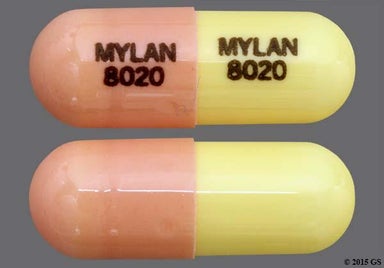
This medicine is Pink, White Capsule Imprinted With "Teva 7442".Pink, White Capsule TEVA 7442 - Fluvastatin Sodium 20mg CapsuleThis medicine is Pink, White Capsule Imprinted With "Mylan 8020 Mylan 8020".Pink, White Capsule MYLAN 8020 MYLAN 8020 - Fluvastatin Sodium 20mg Capsule
GoodRx Health has strict sourcing policies and relies on primary sources such as medical organizations, governmental agencies, academic institutions, and peer-reviewed scientific journals. Learn more about how we ensure our content is accurate, thorough, and unbiased by reading our editorial guidelines.
Prescription savings
Stop paying too much for your prescriptions. Compare prices, get pharmacy coupons, and save up to 80%.
Plans start at $9.99/mo. (when paid yearly). Terms apply.
Common questions about Fluvastatin
Yes, Fluvastatin is still available. Immediate-release capsules are available as generic. The brand-name for the immediate-release, Lescol, has been discontinued, though. On the other hand, extended-release tablets are available in both generic and brand-name versions (Lescol XL).
It's not clear whether statins like Fluvastatin cause weight gain. Weight gain wasn't reported in Fluvastatin clinical studies. But one study found that people who took statins gained up to 11 pounds over 10 years compared to those who didn't take them. This could be due to changes in diet, and it's not clear how statins play a role. Some research suggests that statins might lower the levels of a hormone that helps regulate appetite, but findings are mixed. To get the most from treatment, follow a heart-healthy diet and exercise regularly. Talk to a member of your care team if you notice changes in your weight or eating habits while taking Fluvastatin.
No. Neither immediate-release Fluvastatin capsules nor extended-release Fluvastatin tablets can be crushed. Also don't chew, split, or open them. This can affect how the medication gets released from the pill and absorbed into the body. If you're having trouble swallowing Fluvastatin whole, talk to your prescriber. They might switch you to a different medication that might be easier to take.
People with liver problems shouldn't take Fluvastatin. This includes people with elevated liver enzyme levels, cirrhosis, or liver failure. Statins like Fluvastatin can sometimes cause liver damage. Also, people who've had a severe allergic reaction to Fluvastatin shouldn't take it again. Statins have other side effects and risks. So tell your prescriber about all your medical conditions and medications to make sure that Fluvastatin is safe for you.
Fluvastatin and atorvastatin (Lipitor) are both statins, but they have some differences. Atorvastatin (Lipitor) lowers cholesterol levels more than Fluvastatin. Because of this, atorvastatin (Lipitor) is called a "moderate-to-high intensity" statin. And Fluvastatin is called a "low-to-moderate intensity" statin. They also have different drug interactions. Talk to your prescriber to compare these medications. They can talk to you about which one is best for you.
Tell your healthcare team right away if you're pregnant or planning to become pregnant. Fluvastatin usually isn't recommended during pregnancy because it might harm an unborn baby. Your prescriber will weigh the risks and benefits, especially if you have a high risk of complications from high cholesterol, like a heart attack or stroke.
It's generally not recommended to breastfeed while you're taking Fluvastatin. There isn't any data to know whether the medication can get into breast milk and how safe it is for you or your baby. Talk to your prescriber or lactation consultant about safe feeding options.