


Kesimpta, Tysabri, and More: 8 Injections and Infusions for Multiple Sclerosis
For people living with multiple sclerosis (MS), many injectable medications are available to manage the condition. Here are eight MS injections and infusions to know.
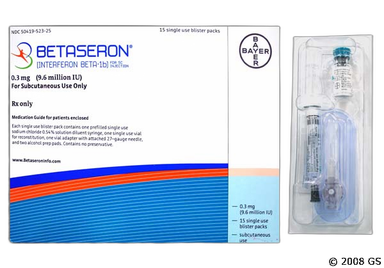
Betaseron (interferon beta-1b) is an injectable biologic medication used to treat relapsing forms of multiple sclerosis (MS). It's given every other day and can cause flu-like symptoms.

Betaseron (interferon beta-1b) is a biologic medication that affects your immune system. The exact way it works to treat multiple sclerosis is unknown.
| Common Brands | Betaseron, Extavia |
|---|---|
| Drug Class | Biologic |
| Controlled Substance Classification | Not a controlled medication |
| Generic Status | No lower-cost generic available |
| Availability | Prescription only |

The following side effects may get better over time as your body gets used to the medication. Let your healthcare provider know immediately if you continue to experience these symptoms or if they worsen over time.
Contact your healthcare provider immediately if you experience any of the following.
Along with its needed effects, a medicine may cause some unwanted effects. Although not all of these side effects may occur, if they do occur they may need medical attention.
Check with your doctor immediately if any of the following side effects occur:
More common
Abdominal or stomach pain
break in the skin at the injection site, with blue-black discoloration, swelling, or drainage of fluid
flu-like symptoms including chills, fever, generalized feeling of discomfort or illness, increased sweating, and muscle pain
headache or migraine
hives, itching, or swelling at the injection site
irregular or pounding heartbeat
redness, pain, or feeling of heat at the injection site
Less common
Bloody or cloudy urine
breast pain
changes in vision
cold hands and feet
difficult, burning, or painful urination
fast or racing heartbeat
frequent urge to urinate
pelvic pain
swollen glands
troubled breathing
unusual weight gain
Rare
Abnormal growth in the breast
benign lumps in the breast
bleeding problems
bloating or swelling
changes in menstrual periods
confusion
convulsions (seizures)
cyst (abnormal growth filled with fluid or semisolid material)
decreased sexual ability in males
dry, puffy skin
feeling cold
hyperactivity
increased muscle tone
increased urge to urinate
loss of memory
mental depression with thoughts of suicide
problems with speaking
red, itching, or swollen eyes
swelling of the front part of the neck
unusual weight loss
Some side effects may occur that usually do not need medical attention. These side effects may go away during treatment as your body adjusts to the medicine. Also, your health care professional may be able to tell you about ways to prevent or reduce some of these side effects. Check with your health care professional if any of the following side effects continue or are bothersome or if you have any questions about them:
Other side effects not listed may also occur in some patients. If you notice any other effects, check with your healthcare professional.
Call your doctor for medical advice about side effects. You may report side effects to the FDA at 1-800-FDA-1088.




Betaseron (interferon beta-1b) can cause some serious health issues. This risk may be even higher for certain groups. If this worries you, talk to your doctor or pharmacist about other options.
Although rare, Betaseron (interferon beta-1b) can cause serious liver problems that can lead to liver failure or death. You might need to get regular blood tests done to make sure your liver is working properly. Seek medical attention right away if you notice swelling of your stomach, yellowing of your skin or the whites of your eyes, stool changes (black, tarry, or bloody stools), coughing or vomiting up blood, confusion, slurred speech, mood swings, or changes in personality. You might need to stop using Betaseron (interferon beta-1b) to prevent further liver damage.
Betaseron (interferon beta-1b) can cause depression and thoughts of suicide. This can happen to anyone taking Betaseron (interferon beta-1b). Let your provider know if you or your loved ones notice a change in your mood or behavior, or if you have thoughts of hurting yourself while taking Betaseron (interferon beta-1b). Depending on how severe your symptoms are, your provider might have you stop taking the medication.
Betaseron (interferon beta-1b) can worsen heart failure symptoms in people with heart failure. Let your provider know if you currently have heart failure or have any signs of heart failure (e.g., shortness of breath, swelling in the legs, ankles, or feet, irregular heartbeat, unable to exercise, tiredness or weakness) while taking Betaseron (interferon beta-1b).
Betaseron (interferon beta-1b) can cause necrosis (cell death) in the skin at the site of injection. Typically, ISN happens within the first 4 months of using Betaseron (interferon beta-1b) and appear as small lesions that extend to the fat layer between the skin and muscle, but there have been reports of ISN happening over 1 year after starting therapy and appearing as larger lesions extending into the muscle. Contact your provider right away if you notice any broken skin, blue-black discoloration, swelling, or leaking of fluid in the injection site. If the condition is severe enough, you might have to stop taking Betaseron (interferon beta-1b) and get treatment for your skin.
Betaseron (interferon beta-1b) can lead to low white blood cell (WBC) count, which can raise your risk of serious infections. If your WBC count drop too low, you'll likely need to stop taking Betaseron (interferon beta-1b). If you develop any signs of infection, such as fever, tiredness, chills, cough, trouble breathing, contact your provider right away.
Rarely, Betaseron (interferon beta-1b) can cause a potentially deadly blood problem called thrombotic microangiopathy (TMA). It's a condition where tiny blood clots form in the small vessels of your body and it can happen weeks to years after you first start this medication. If you get TMA, you'll need to stop this medication. Let your provider know right away if you notice symptoms such as purple bruises or pin-point dots on the skin, pale skin, yellowing of the skin or whites of your eyes, fever, tiredness, and confusion.
Betaseron (interferon beta-1b) can cause drug-induced lupus. Lupus is a disease that occurs when your body's immune system attacks certain tissues and organs. If you get muscle or joint pain and swelling, rash, pelvic pain, frequent urination, pain while urinating, vomiting, cold fingers, toes, or ears after starting Betaseron (interferon beta-1b), contact your provider so you can be tested for lupus. If you're diagnosed with lupus, you'll have to stop taking Betaseron (interferon beta-1b).

 Kit
Kit| Dosage | Quantity | Price as low as | Price per unit |
|---|---|---|---|
| 0.3mg | 1 kit | $9,474.51 | $9,474.51 |

Although certain medicines should not be used together at all, in other cases two different medicines may be used together even if an interaction might occur. In these cases, your doctor may want to change the dose, or other precautions may be necessary. Tell your healthcare professional if you are taking any other prescription or nonprescription (over-the-counter [OTC]) medicine.


Contraindications are specific health conditions or situations in which a person should not take a medication due to safety concerns. If you have any of the following conditions or if any of the following apply to you, let your healthcare provider know because Betaseron (interferon beta-1b) will not be safe for you to take.


Prescription savings
Stop paying too much for your prescriptions. Compare prices, get pharmacy coupons, and save up to 80%. Find expert answers to your health questions so you can make the best decisions for yourself and your family.
Health conditions
Medications & treatment
Access & affordability
Medication discounts


Interferon-beta-1b is available as two brand name medications, Extavia and Betaseron. They have the same active ingredient and were approved based on the same clinical trials, but they're not considered interchangeable. This means you can't switch out one brand with the other during your treatment course. The two brands are also supplied differently. Extavia comes in a 30 day supply, while Betaseron comes in a 28 day supply.
Betaseron is administered through a subcutaneous injection, which is an injection under the skin into the fat tissue between your skin and muscle. Never inject it into your muscle or vein.
The best areas for injection are where your skin is loose and soft and away from joints, nerves, or bones, such as your thighs, stomach, back of your arms, or buttocks. Make sure to alternate injection sites to lower the risk of bruising and irritation to your skin.
No, it's not known if Betaseron is safe or effective in children younger than 18 years old.
There haven't been enough studies looking at how Betaseron affects pregnant women so it's not completely known if it's safe to use during pregnancy. In studies done on animals, Betaseron caused harm to unborn baby animals. If you're pregnant or thinking of getting pregnant, talk to your provider to see if Betaseron is right for you.
