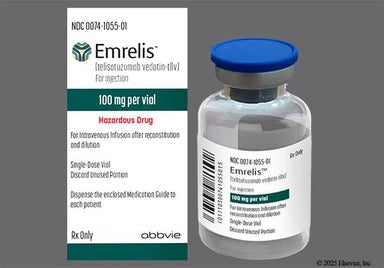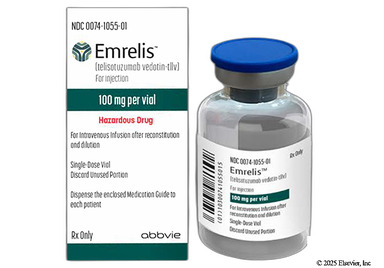
Emrelis
Emrelis (telisotuzumab vedotin) is an antibody-drug conjugate used to treat a certain type of lung cancer. It's approved for adults with advanced or metastatic non-small cell lung cancer (NSCLC) whose tumors have high levels of c‑Met protein and have worsened after other treatments. It's given as an intravenous (IV) infusion from a healthcare professional, usually every 2 weeks. Common side effects include nerve problems in your hands or feet, tiredness, and low appetite.


What is Emrelis (telisotuzumab vedotin)?
What is Emrelis (telisotuzumab vedotin) used for?
- Advanced or metastatic non-small cell lung cancer (NSCLC) whose tumors have high levels of c‑Met protein and have worsened after other treatments
How Emrelis (telisotuzumab vedotin) works
Emrelis (telisotuzumab vedotin) is an antibody‑drug conjugate. It targets cancer cells that have high levels of a protein called c‑Met on their surface. Once attached, the cancer cell pulls the medication inside.
Then Emrelis (telisotuzumab vedotin) releases a chemical called monomethyl auristatin E (MMAE) directly into the cell. This stops the cell from growing and causes it to die.
Drug facts
| Common Brands | Emrelis |
|---|---|
| Drug Class | Antibody-drug conjugate |
| Controlled Substance Classification | Not a controlled medication |
| Generic Status | No lower-cost generic available |
| Availability | Prescription only |

Side effects of Emrelis (telisotuzumab vedotin)
The following side effects may get better over time as your body gets used to the medication. Let your healthcare provider know immediately if you continue to experience these symptoms or if they worsen over time.
Common Side Effects
- Reduced albumin (61%)
- Higher blood sugar (58%)
- Nerve problems (51%)
- Reduced calcium levels (47%)
- Higher liver enzymes (up to 41%)
- Lower phosphorus levels (33%)
- Lower sodium levels (30%)
- Tiredness (29%)
- Swelling in the arms and legs (22%)
- Low appetite (22%)
Less Common Side Effects
- Nausea
- Blurred vision
- Constipation
- Vomiting
- Lung problems
- Dizziness
- Joint pain
- Dry eye
- Lower potassium levels
- Lower white blood cells
- Lower platelet levels
Emrelis (telisotuzumab vedotin) serious side effects
Contact your healthcare provider immediately if you experience any of the following.
- Nerve damage: numbness, tingling, burning sensation, pain or discomfort, muscle weakness, difficulty walking
- Lung problems: new or worse cough, shortness of breath, fever, wheezing
- Eye problems: blurred vision, eye pain, gritty/dry eyes, light sensitivity, redness
- Infusion‑related reactions: itching or rash, shortness of breath or wheezing, flushing, chills, nausea or vomiting, chest discomfort, low blood pressure, fever, back pain, headache, feel like passing out
The following Emrelis (telisotuzumab vedotin) side effects have also been reported
Side effects that you should report to your care team as soon as possible:
- Allergic reactions—skin rash, itching, hives, swelling of the face, lips, tongue, or throat
- Change in vision
- Dry cough, shortness of breath or trouble breathing
- Eye pain, redness, irritation, or discharge with blurry or decreased vision
- Infusion reactions—chest pain, shortness of breath or trouble breathing, feeling faint or lightheaded
- Pain, tingling, or numbness in the hands or feet
Side effects that usually do not require medical attention (report these to your care team if they continue or are bothersome):

Pros and cons of Emrelis (telisotuzumab vedotin)
Pros
- First and only medication to target tumors with high c‑Met protein
- Given every 2 weeks by IV infusion
- Good option when other treatment's haven't worked
Cons
- Risk of nerve damage, lung inflammation, and eye problems
- Needs regular monitoring (e.g., exams, labs, and scans)
- Not safe for people with moderate to severe liver problems

Pharmacist tips for Emrelis (telisotuzumab vedotin)

- Emrelis (telisotuzumab vedotin) is given as an IV infusion over about 30 minutes. You might need labs and a checkup before your dose. Bring a list of your medications and supplements.
- If you’ve ever had an infusion reaction with Emrelis (telisotuzumab vedotin), your team might give you medications 30 to 60 minutes beforehand (e.g., acetaminophen, diphenhydramine, famotidine, or methylprednisolone) before later doses to lower the chance of another reaction.
- If you miss an Emrelis (telisotuzumab vedotin) infusion appointment, call your clinic as soon as you can. They’ll help you reschedule so your treatment stays on track.
- Tell your care team right away if you have tingling, numbness, burning pain, or weakness while taking Emrelis (telisotuzumab vedotin). These can be signs of nerve problems.
- Watch for cough, fever, or shortness of breath with Emrelis (telisotuzumab vedotin). These could be signs of lung problems and need quick care.
- Speak up about any vision changes, eye pain, or gritty/dry feelings in your eyes. Your oncologist might pause Emrelis (telisotuzumab vedotin) and send you to an eye specialist to protect your vision.
- Emrelis (telisotuzumab vedotin) can affect your liver, blood sugar, and blood counts. Your care team will check labs and might adjust your treatment.
- Emrelis (telisotuzumab vedotin) might affect your ability to have children in the future. Talk to your oncologist if this is a concern.
- Pregnancy: Emrelis (telisotuzumab vedotin) can harm an unborn baby. Use birth control during treatment and for 2 months after your last dose (or 4 months if you’re male with a partner who can become pregnant).
- Breastfeeding: It's not known whether Emrelis (telisotuzumab vedotin) is safe in breastfeeding. Don’t breastfeed during treatment or for 1 month after the last dose.

Risks and warnings for Emrelis (telisotuzumab vedotin)
Emrelis (telisotuzumab vedotin) can cause some serious health issues. This risk may be even higher for certain groups. If this worries you, talk to your doctor or pharmacist about other options.
Nerve problems
Emrelis (telisotuzumab vedotin) can damage nerves in your hands and feet. Symptoms include tingling, numbness, burning pain, or weakness. In studies, nerve problems happened in about half of people, with some severe cases. They often started around a few months after treatment began but can happen sooner.
Tell your care team right away if you notice any new or worsening nerve symptoms. They might pause treatment, lower your dose, or stop treatment depending on how severe it is.
Lung problems
Rarely, Emrelis (telisotuzumab vedotin) can cause serious lung problems, such as lung inflammation or interstitial lung disease. In studies, lung problems were seen in some people and it tended to appear within the first 1 to 2 months.
Tell your care team right away if you have a new or worsening cough, trouble breathing, or fever. Your prescriber might pause, lower, or stop treatment depending on how severe your symptoms are.
Eye problems
Emrelis (telisotuzumab vedotin) can cause blurred vision, painful or gritty eyes, and corneal inflammation (keratitis). These problems are fairly common and can start within the first few weeks to months of treatment.
Your team might pause treatment and send you to an eye specialist for an exam and drops if needed. Tell your care team right away if you notice changes in your vision or eye discomfort.
Infusion‑related reactions
Some people feel unwell during or soon after the Emrelis (telisotuzumab vedotin) infusion, with symptoms like shortness of breath, flushing, chills, nausea, chest discomfort, or low blood pressure. Reactions can happen as early as the first few doses.
Your team will monitor you closely and slow, pause, or stop the infusion and give supportive care if needed. If you’ve had a reaction before, you’ll likely get premedications before future infusions to help prevent it.
Harm to unborn baby
Emrelis (telisotuzumab vedotin) can harm an unborn baby based on how it works and animal studies. Use effective birth control during treatment and for the recommended time after the last dose (women: 2 months; men with partners who can become pregnant: 4 months). Call your care team right away if you become pregnant during treatment.

Emrelis (telisotuzumab vedotin) dosage
Typical dosage for Emrelis (telisotuzumab vedotin)
Your dose is based on your weight.
The typical dose is 1.9 mg/kg (up to a maximum of 190 mg) injected in the vein (IV) over 30 minutes every 2 weeks.
Your dose might be different if you experience side effects.

What are alternatives to Emrelis (telisotuzumab vedotin)?

Emrelis (telisotuzumab vedotin) images