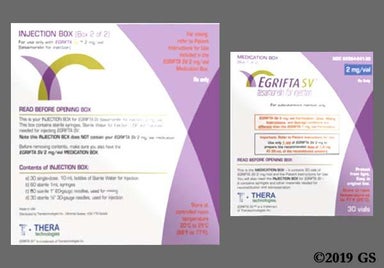
Egrifta SV
Egrifta SV (tesamorelin) is an injectable medication used to treat excess belly fat, known as lipodystrophy, in adults with human immunodeficiency virus (HIV). The dosage involves mixing the medication powder with the provided sterile water and injecting into the belly. The most common side effects are redness, itchiness, and pain at the injection site. Egrifta SV (tesamorelin) is only available as a brand-name medication.


What is Egrifta SV (tesamorelin)?
What is Egrifta SV (tesamorelin) used for?
- Lowering excess belly fat in adults with HIV
How Egrifta SV (tesamorelin) works
Egrifta SV (tesamorelin) is a growth hormone releasing factor agonist. It works by triggering your brain to release growth hormone. Growth hormone helps control the way fat is stored in the body. Some people with HIV get excess fat in the belly, which can be somewhat due to lower amounts of growth hormone. By raising the amount of growth hormone in the body, Egrifta SV (tesamorelin) can help get rid of excess belly fat.
Drug facts
| Common Brands | Egrifta SV |
|---|---|
| Drug Class | Growth hormone releasing factor agonist |
| Controlled Substance Classification | Not a controlled medication |
| Generic Status | No lower-cost generic available |
| Availability | Prescription only |

Side effects of Egrifta SV (tesamorelin)
The following side effects may get better over time as your body gets used to the medication. Let your healthcare provider know immediately if you continue to experience these symptoms or if they worsen over time.
Common Side Effects
- Itching, pain, irritation, or bruising at the injection site (17%)
- Joint stiffness (13%)
- Pain in the arms and legs (6%)
- Muscle pain (6%)
- Fluid build up in the body (6%)
Less Common Side Effects
- Tingling feeling
- Rash
- Vomiting
- Indigestion
- Fast or irregular heartbeat
- Night sweats
- Muscle stiffness
- Joint swelling
- Carpal tunnel syndrome
Egrifta SV (tesamorelin) serious side effects
Contact your healthcare provider immediately if you experience any of the following.
- Severe allergic reaction: itching, rash, reddening of the skin, flushing, or hives
- Cancer
More on Egrifta SV (tesamorelin) side effects

The following Egrifta SV (tesamorelin) side effects have also been reported
Side effects that you should report to your care team as soon as possible:
- Allergic reactions—skin rash, itching, hives, swelling of the face, lips, tongue, or throat
- High blood sugar (hyperglycemia)—increased thirst or amount of urine, unusual weakness or fatigue, blurry vision
Side effects that usually do not require medical attention (report to your care team if they continue or are bothersome):
- Joint pain
- Muscle pain or cramps
- Pain, redness, irritation, or bruising at the injection site
- Pain, tingling, or numbness in the hands or feet
- Swelling of the ankles, hands, or feet

Pros and cons of Egrifta SV (tesamorelin)
Pros
- Works to lower belly fat in adults with HIV
- Can be stored at room temperature
- Continues to work for up to at least 1 year if used every day
- Can be injected at home after proper training on mixing and injecting
Cons
- Might be hard to use for some people because of complicated instructions
- Needs to be injected daily
- Long-term effects on heart health are unknown
- Can cause changes in blood sugar or raise your risk of diabetes

Pharmacist tips for Egrifta SV (tesamorelin)

- Changing the site for each Egrifta SV (tesamorelin) injection helps to prevent bruising, pain, or irritation. You can write down the location of each daily injection to help you keep track of where your next injection should be.
- Wash your hands with soap and water, and dry with a clean towel before every Egrifta SV (tesamorelin) injection. Always wipe the injection site you choose with a new alcohol swab, and always use a new syringe and needle for each injection. Doing these things will help prevent an infection.
- Read over the detailed instructions for use before giving yourself an injection of Egrifta SV (tesamorelin). Talk to your prescriber or pharmacist to receive proper training before trying it at home.
- Only use the sterile water for injection included in the Egrifta SV (tesamorelin) kit to mix the medication. Using another kind of liquid to mix can damage the medication.
- Gently roll the vial of Egrifta SV (tesamorelin) between your hands for 30 seconds to mix. Never shake it since it might damage the medication.
- Mix your Egrifta SV (tesamorelin) dose only when you're ready to inject, since it doesn't last long after mixing. Throw away any leftover sterile water or medication in the vial after each use, regardless of the amount, to prevent infection. Each vial is for one-time use.
- Egrifta SV (tesamorelin) boosts growth hormone, which raises levels of a hormone called insulin-like growth factor 1 (IGF-1). High IGF-1 can lead to type 2 diabetes and complicate existing diabetes. Your prescriber might monitor your IGF-1 levels with regular blood tests during treatment. If these levels stay high, you might need to stop taking Egrifta SV (tesamorelin).

Risks and warnings for Egrifta SV (tesamorelin)
Egrifta SV (tesamorelin) can cause some serious health issues. This risk may be even higher for certain groups. If this worries you, talk to your doctor or pharmacist about other options.
Higher risk of cancer
- Risk factors: History of tumors or cancer | History of HIV
Egrifta SV (tesamorelin) causes the release of growth hormone, which can cause tumor or cancer cells to grow more quickly. The medication shouldn't be used in people with active tumors or cancer because it can make the condition worse. People with a previous history of cancer should be cautious about using Egrifta SV (tesamorelin) because the medication can sometimes cause cancer to come back. People with HIV already have a higher risk of getting cancer, so be sure to talk to your prescriber about the risks versus the benefits of Egrifta SV (tesamorelin) treatment.
Fluid build up in the body
Egrifta SV (tesamorelin) causes the release of growth hormone, which can lead to fluid buildup in the body. This can result in swelling in your arms and legs, joint pain, and stiffness. Sometimes this gets better after a short period of time, but your prescriber might want you to stop using Egrifta SV (tesamorelin) if the fluid buildup doesn't go away.
Changes in blood sugar and diabetes
- Risk factors: History of diabetes
Egrifta SV (tesamorelin) can cause high blood sugar and raise your risk of developing diabetes. Your prescriber will monitor your blood sugar before and regularly during treatment with the medication. If you develop diabetes, your prescriber might want you to stop using Egrifta SV (tesamorelin).
Serious allergic reactions
Egrifta SV (tesamorelin) can cause allergic reactions. If you start noticing a rash, itchiness, hives, redness, flushing, stop taking the medication and let your prescriber know right away.
Injection site reactions
Injection site reactions are common with injectable medications like Egrifta SV (tesamorelin). These reactions include pain, redness, itchiness, irritation, and bruising at the site of injection. Rotating the injection site on your belly can help reduce these side effects.
Higher risk of death in people who are severely ill
People being treated with growth hormone are at a higher risk of death after open heart or stomach surgery, serious injuries, or in people who have a severe breathing problem. Since Egrifta SV (tesamorelin) causes the release of growth hormone, your prescriber might want you to stop using the medication if you become severely ill.

Egrifta SV (tesamorelin) dosage
Typical dosage for Egrifta SV (tesamorelin)
The typical dose of Egrifta SV (tesamorelin) is 1.4 mg (0.35 mL of the mixed solution) injected under the skin in the belly once daily.

Egrifta SV (tesamorelin) contraindications
Contraindications are specific health conditions or situations in which a person should not take a medication due to safety concerns. If you have any of the following conditions or if any of the following apply to you, let your healthcare provider know because Egrifta SV (tesamorelin) will not be safe for you to take.
- Active tumor or cancer
- Pregnant or plan to become pregnant
- Problems related to the pituitary gland (e.g. tumor or surgery)
- Head injury or history of radiation treatment to the head

Egrifta SV (tesamorelin) images