Duvyzat
Duvyzat (givinostat) is an FDA approved medication used to treat Duchenne Muscular Dystrophy (DMD) in people ages 6 years and older, regardless of the type of genetic mutation (change) they have. This medication doesn’t contain a steroid and isn’t an injection. Instead, it’s available as a liquid solution that’s taken 2 times a day by mouth. Common side effects are diarrhea, nausea, and stomach pain. During treatment, you’ll work with your child's care team to regularly check labs, such as blood counts and triglyceride levels. These tests are important because they help monitor for potential issues that could lead to side effects, like excessive bleeding.


What is Duvyzat (givinostat)?
What is Duvyzat (givinostat) used for?
- Duchenne Muscular Dystrophy (DMD) for people age 6 and older
How Duvyzat (givinostat) works
Duvyzat (givinostat) is a histone deacetylase inhibitor, which means it blocks a protein called histone deacetylase from working. People with DMD are thought to have higher histone deacetylase activity in their weakening muscles. By blocking these proteins, Duvyzat (givinostat) helps muscles rebuild and reduces inflammation.
Drug facts
| Common Brands | Duvyzat |
|---|---|
| Drug Class | Histone deacetylase inhibitor |
| Controlled Substance Classification | Not a controlled medication |
| Generic Status | No lower-cost generic available |
| Availability | Prescription only |

Side effects of Duvyzat (givinostat)
The following side effects may get better over time as your body gets used to the medication. Let your healthcare provider know immediately if you continue to experience these symptoms or if they worsen over time.
Common Side Effects
- Diarrhea (37%)
- Stomach pain (34%)
- Low platelet counts in blood (33%)
- Nausea/vomiting (32%)
- Increase levels of fat in your blood (23%)
- Fever (13%)
Less Common Side Effects
- Muscle Pain
- Rash
- Pain in joints
- Constipation
- Tiredness
- Smaller appetite
Duvyzat (givinostat) serious side effects
Contact your healthcare provider immediately if you experience any of the following.
- Serious Bleeding: nosebleeds, excessive bleeding, unusual bleeding, blood in stool, tiredness
- Abnormal heart rhythm: heart pounding, dizziness, lightheadedness, passing out
- Severe diarrhea and vomiting: headache, increased thirst, dark-yellow urine, severe stomach pains
The following Duvyzat (givinostat) side effects have also been reported
Side effects that you should report to your care team as soon as possible:
- Allergic reactions—skin rash, itching, hives, swelling of the face, lips, tongue, or throat
- Heart rhythm changes—fast or irregular heartbeat, dizziness, feeling faint or lightheaded, chest pain, trouble breathing
- Severe or prolonged diarrhea
- Unusual bruising or bleeding
Side effects that usually do not require medical attention (report these to your care team if they continue or are bothersome):

Get your GoodRx coupon

Pros and cons of Duvyzat (givinostat)
Pros
- Is a liquid medication which can be easier for your child to take
- Is flavored (peach-cream) which may allow your child to enjoy the taste without spitting it out
- Doesn’t need to be stored in the refrigerator
- Can be used in all genetic variations of DMD making it more accessible
Cons
- Requires regular blood work to test for blood cell counts and triglyceride levels
- Your child needs to take it twice a day
- Can cause stomach side effects like diarrhea, nausea, and vomiting
- Needs to be taken with food

Pharmacist tips for Duvyzat (givinostat)

- Before you measure a dose of Duvyzat (givinostat), turn the medication bottle upside down and shake well for at least 30 seconds until the liquid is an even mixture throughout. This makes sure that your child receives the correct dose of medication.
- Only use the oral syringe that comes with Duvyzat (givinostat) to measure your child’s dose to make sure it’s accurate. If your child's dose is more than 5 mL, you will have to measure two separate times to give the full dose using the same syringe.
- Don’t throw away the syringe. After each use, wash the syringe with water and allow it to air dry. The syringe that comes with Duvyzat (givinostat) is designed to fit in the hole on top of the bottle.
- If your child missed a dose of Duvyzat (givinostat), go ahead and skip that dose and return to your normal schedule. Don’t give two doses of Duvyzat (givinostat) at one time since that can put your child at a greater risk of experiencing side effects.
- Give Duvyzat (givinostat) with food to help the body absorb more of the medication so it can work better. However, don't mix Duvyzat (givinostat) with other liquids or water.
- Duvyzat (givinostat) is good only for 60 days after opening. Write the date you opened Duvyzat (givinostat) directly on the bottle to help you remember. Throw away any medication that wasn’t used by the 60 days expiration.
- Store Duvyzat (givinostat) at room temperature, don’t store it in the refrigerator so the medication doesn't go bad.
- Create a calendar to help organize the many appointments for blood work while taking Duvyzat (givinostat). These appointments help to make sure that the medication continues to be safe for your child.
- Duvyzat (givinostat) commonly causes diarrhea and nausea. To avoid dehydration, be sure that your child drinks enough fluids while taking this medication.
- Duvyzat (givinostat) can interact with a lot of medications, and some combinations can dangerously affect your heart rhythm. So be sure to communicate what medications your child is taking to their care team, even if it’s over the counter, to make sure that Duvyzat (givinostat) is safe to use.

Risks and warnings for Duvyzat (givinostat)
Duvyzat (givinostat) can cause some serious health issues. This risk may be even higher for certain groups. If this worries you, talk to your doctor or pharmacist about other options.
Low blood cell counts
- Risk factors: RF 1 | RF 2
Taking Duvyzat (givinostat) can cause lower blood cell counts, particularly lower platelet levels. These levels drop to their lowest during the first two months of treatment, and continue to stay low as long as your child takes this medication. This is why your child will have their labs drawn every two weeks for the first 2 months, then monthly for the next 3 months, and eventually every 3 months after that while continuing treatment. These labs are important to make sure that the dose of Duvyzat (givinostat) continues to be safe for your child. Labs are completed to catch low platelet counts before they get dangerously low, which can lead to issues such as bleeding or increased risk for infections.
If your child has lower platelet counts, their prescriber may lower the dose of Duvyzat (givinostat) or temporarily stop the medication. If it still doesn’t get better, your child may have to stop taking the medication permanently. Be sure to look out for symptoms and contact your child’s prescriber if they experience unusual bruising, nosebleeds, or any type of excessive bleeding.
High triglyceride levels
Taking Duvyzat (givinostat) can raise fat levels in the blood. Having high triglycerides levels over time can increase the chances of heart disease. Your child should get their triglyceride labs checked during their 1st month, 3rd month, and 6th month of starting treatment, and then every 6 months after that. Because there usually aren’t any symptoms with having high triglycerides, it’s important for your child to go to their lab appointments. If your child has high triglycerides, their care team might lower their Duvyzat (givinostat) dose. A balanced diet with bland proteins, carbs, healthy fats, and fiber is important for people with DMD and can help keep triglycerides low.
Stomach problems
Diarrhea, nausea, and vomiting are common side effects of Duvyzat (givinostat). Children are more likely to experience diarrhea within the first few weeks of treatment, and nausea and vomiting within the first 2 months of treatment. Contact your child’s care team if they have severe diarrhea, nausea, or vomiting after taking Duvyzat (givinostat). Your child’s care team may recommend other medications, such as ondansetron (Zofran) or loperamide (Imodium A-D), that can help ease symptoms If symptoms become severe, your child’s prescriber might suggest reducing the dose or stopping the medication. It’s also important to make sure that your child is getting enough fluids to prevent dehydration. At home you can help by providing smaller meals throughout the day which may help relieve symptoms.
Abnormal heart rhythm
- Risk factors: Use of other medications that cause abnormal heart rhythm | Coronary artery disease | Electrolyte imbalance
Duvyzat (givinostat) can cause a potentially life-threatening abnormal heart rhythm known as QT prolongation. Your child might need an electrocardiogram (ECG or EKG) before starting the medication if they have a history of heart problems or are taking another medication that may cause QT prolongation. Sometimes QT prolongation doesn’t cause any noticeable symptoms unless it becomes more serious. Serious symptoms may include heart pounding, unusual dizziness, or passing out. It’s important to contact your child's care team right away if they experience any of those symptoms as Duvyzat (givinostat) may need to be stopped.

Duvyzat (givinostat) dosage
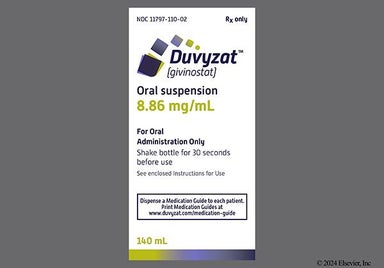
 Bottle of oral suspension
| Dosage | Quantity | Price as low as | Price per unit |
|---|---|---|---|
| 140ml of 8.86mg/ml | 1 bottle | $38,240.02 | $38,240.02 |
Typical dosage for Duvyzat (givinostat)
Duvyzat (givinostat) is approved for people ages 6 years and older.
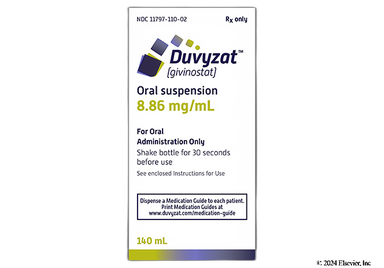
Duvyzat (givinostat) comes as an oral solution that contains 8.86 mg per mL.
Your child's dose will depend on their weight:
- 10kg to less than 20kg: The typical dose is 22.2 mg (2.5 mL) twice daily by mouth.
- 20kg to less than 40kg: The typical dose is 31 mg (3.5 mL) twice daily by mouth.
- 40kg to less than 60kg: The typical dose is 44.3 mg (5 mL) twice daily by mouth.
- 60kg or more: The typical dose is 53.2 mg (6 mL) twice daily by mouth.
The dose might be different if your child is experiencing side effects like severe diarrhea, low blood counts, and high triglycerides levels in the blood.

How much does Duvyzat (givinostat) cost?
$38,240.02

What are alternatives to Duvyzat (givinostat)?

Duvyzat (givinostat) images