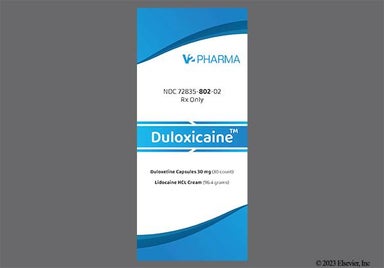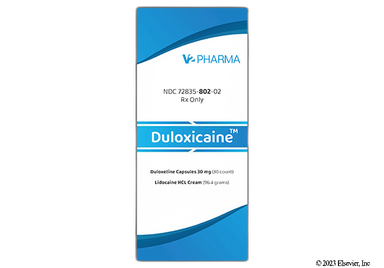
Duloxicaine
Duloxicaine (duloxetine / lidocaine) is a prepackaged kit with duloxetine capsules that you take by mouth and lidocaine cream that's applied onto the skin. Together, these medications can help to relieve muscle pain, fibromyalgia, and nerve pain. Depending on what pain condition you have, you might start the duloxetine capsules at a lower dose to get used to the medication before your dose is raised. While the lidocaine cream doesn't have many side effects, duloxetine can cause headache and dry mouth.


What is Duloxicaine (duloxetine / lidocaine)?
What is Duloxicaine (duloxetine / lidocaine) used for?
- Diabetic neuropathy (nerve pain caused by high blood sugar) in adults
- Fibromyalgia in adults
- Long-term muscle pain in adults
How Duloxicaine (duloxetine / lidocaine) works
Duloxicaine (duloxetine / lidocaine) is a prepackaged kit with two different medications.
- Duloxetine is a serotonin and norepinephrine reuptake inhibitor (SNRI). It's thought to help improve mood and pain by raising the level of chemicals called serotonin and norepinephrine in the brain and spinal cord. In particular, norepinephrine affects how the brain interprets pain. When there's a higher level of norepinephrine in the brain and spinal cord, it lowers the amount of pain throughout the rest of the body.
- Lidocaine is a type of anesthetic that numbs your nerves and makes them less sensitive to pain or skin irritation. It's considered a local anesthetic, meaning it only lowers pain in the area near or directly where you applied the medication onto the skin.
Drug facts
| Common Brands | Duloxicaine |
|---|---|
| Drug Class | SNRI / Local anesthetic |
| Controlled Substance Classification | Not a controlled medication |
| Generic Status | No lower-cost generic available |
| Availability | Prescription only |

Side effects of Duloxicaine (duloxetine / lidocaine)
The following side effects may get better over time as your body gets used to the medication. Let your healthcare provider know immediately if you continue to experience these symptoms or if they worsen over time.
Common Side Effects
Duloxetine 30 mg capsule
- Nausea (23%)
- Headache (14%)
- Dry mouth (13%)
- Drowsiness (10%)
- Feeling tired (9%)
- Trouble sleeping (9%)
- Dizziness (9%)
- Constipation (9%)
- Diarrhea (9%)
Lidocaine 4% cream
Less Common Side Effects
Duloxetine 30 mg capsule
- Low appetite
- Belly pain
- Indigestion
- Trouble urinating
- Upper respiratory tract infections (e.g., runny or stuffy nose, sore throat, cough)
- Tingling sensation
- Feeling agitated or distressed
- Excessive sweating
- Flushing
- Racing heart
- Low sex drive
Duloxicaine (duloxetine / lidocaine) serious side effects
Contact your healthcare provider immediately if you experience any of the following.
- Suicidal thoughts or behaviors
- Serotonin syndrome: high fever, sweating, fast heartbeat, muscle spasms, tremors, restlessness, confusion
- Liver damage: loss of appetite, severe stomach pain, yellowing of skin or eyes
- Severe skin reaction: blisters, peeling rash, sores
- Blood problems (methemoglobinemia): skin color turning blue; anxiety; feeling dizzy, faint, or tired; fast heartbeat; trouble breathing
- Too much lidocaine absorbed through the skin: lightheaded, dizzy, difficulty controlling muscle movements

Get your GoodRx coupon

Pros and cons of Duloxicaine (duloxetine / lidocaine)
Pros
- Contains two medications in one kit for convenience
- Can relieve both muscle and nerve pain, so might be a good option for people with several types of pain
- Duloxetine capsules taken only once a day
- Can apply lidocaine cream directly onto the skin of the painful area
Cons
- Lidocaine cream can sometimes cause a skin reaction where applied
- Need to apply lidocaine cream multiple times a day
- Duloxetine might raise your risk of bleeding.
- No lower-cost generic available for the prepackaged kit

Pharmacist tips for Duloxicaine (duloxetine / lidocaine)

Tips for the duloxetine capsules
- Talk to your provider first before using Duloxicaine (duloxetine / lidocaine) if you're taking or have recently taken medications for Parkinson's disease or depression that are known as monoamine oxidase inhibitors (MAOIs). These medications shouldn't be used with duloxetine because of the risk of a serious side effect called serotonin syndrome. If you've taken these medications in the past two weeks, talk to your provider about other options to relieve your symptoms.
- Don't drive a car or do anything that requires a lot of focus and attention until you know how duloxetine affects you. This is because duloxetine can cause side effects, like drowsiness, tiredness, and dizziness, which can affect your ability to think clearly.
- Avoid drinking alcohol with duloxetine because this combination can sometimes lead to liver damage.
- Contact your provider if you notice sudden mood changes or unusual thoughts since duloxetine can sometimes make certain mental health conditions worse.
- Let your provider know if you experience any vision changes since duloxetine can worsen glaucoma in certain people.
- If you have diabetes, ask your provider if you need to check your blood sugar levels more often while taking duloxetine. Duloxetine might raise your blood sugar levels.
- If you need to stop taking duloxetine, talk to your healthcare provider to figure out how to do so safely. Stopping duloxetine suddenly might cause withdrawal symptoms, such as nausea, dizziness, headache, anxiety, irritability, and trouble sleeping.
Tips for the lidocaine cream
- Always wash your hands after applying lidocaine cream to your skin. Otherwise, you might accidentally get lidocaine onto sensitive areas of your body, such as your eyes, which can cause bothersome irritation.
- Avoid applying lidocaine cream to large areas of your skin, especially if you have blisters or open wounds. Also don't cover the treated area with a bandage or heating pad after applying the cream. More medication can absorb through the skin and lead to serious side effects.
- Talk with your healthcare provider if your pain lasts more than 7 days, if your condition gets worse, or if your symptoms return after getting better.
- Only use the lidocaine cream on your skin. Don’t put it in your eyes, nose, mouth, or ears. If you think that your child might've accidentally swallowed this medication, call your Poison Control Center at 1-800-222-1222 right away.

Risks and warnings for Duloxicaine (duloxetine / lidocaine)
Duloxicaine (duloxetine / lidocaine) can cause some serious health issues. This risk may be even higher for certain groups. If this worries you, talk to your doctor or pharmacist about other options.
For duloxetine capsules
Suicidal thoughts and behavior
- Risk factors: Age 24 years or younger | History of major depressive disorder
 Duloxetine in the Duloxicaine (duloxetine / lidocaine) kit can raise the risk of suicidal thoughts or behavior. The risk is higher in young adults or people who've had depression. Watch for new or worsening depression, thoughts of harming yourself, or unusual behavior, especially during the first few months of taking duloxetine or when your dose changes. Let your healthcare provider know right away if you notice any unusual changes in mood or behavior, such as feeling more anxious, irritable, or having trouble sleeping, while taking duloxetine. Your provider will discuss with you about what next steps to take.
Mania
- Risk factors: Personal or family history of bipolar disorder
Sometimes, depression is the first symptom of bipolar disorder. Treating someone with bipolar disorder with duloxetine (which can also be used as an antidepressant) alone can cause a manic episode (great excitement, delusions, and overactivity). This is more likely to happen if you or someone in your family has had bipolar disorder. Talk to your provider right away if you notice unusual changes in your behavior after taking duloxetine from the Duloxicaine (duloxetine / lidocaine) kit.
Liver damage
- Risk factors: Drinking alcohol | History of liver problems
Although rare, some people taking duloxetine capsules have had serious and sometimes life-threatening liver problems. If you develop any stomach pain, swelling in your legs, changes in the color of your stool, nausea, vomiting, or yellowing of the whites of your eyes (jaundice), tell your provider right away. You might need to stop taking the duloxetine capsules to prevent further liver injury.
Serotonin syndrome
- Risk factor: Taking other medications that can affect the serotonin levels in your brain
Serotonin syndrome is a rare, but potentially life-threatening condition where there is an excess of serotonin in the brain. Serotonin is one of the chemicals in your brain responsible for your mood. Your risk for this condition goes up if you take the duloxetine capsules in the Duloxicaine (duloxetine / lidocaine) kit with other medications that affect serotonin levels, such as dextromethorphan (Delsym), tramadol (Ultram), and MAOIs. Make sure your provider knows about all the medications (including over-the-counter medications and supplements) you take or plan to take before you start using the Duloxicaine (duloxetine / lidocaine) kit so they can make sure they're safe for you. Get medical help as soon as possible if you have symptoms of serotonin syndrome, such as fast heart rate, sweating, muscle stiffness or spasms, high fever, and confusion.
Changes in blood pressure and electrolytes, leading to risk of falls
- Risk factors: Older adults | Balance problems | Taking more than 60 mg of duloxetine daily | Taking other medications that lower blood pressure
The duloxetine capsules in the Duloxicaine (duloxetine / lidocaine) kit can cause changes to your blood pressure (both up or down). For example, the medication can cause a sudden drop in blood pressure when you stand up from a sitting or lying down position. This can make you feel dizzy and put you at higher risk for falls. This type of blood pressure change tends to start within the first week of treatment, but can occur at any time, particularly after your duloxetine dose gets raised. Get up very slowly when you're changing positions, such as getting up after lying down. Also make sure to check your blood pressure regularly during treatment with Duloxicaine (duloxetine / lidocaine).
Duloxetine can also sometimes lower your blood sodium levels. Having low sodium levels can also put you at risk for falls because of the symptoms it causes. Talk to your provider if you experience frequent dizziness, headaches, confusion, or unsteadiness.
Higher bleeding risk
- Risk factor: Taking other medications that raise your risk of bleeding
The duloxetine capsules in the Duloxicaine (duloxetine / lidocaine) kit can raise the risk of bleeding or bruising. This risk is higher you're also taking aspirin, nonsteroidal anti-inflammatory drugs (NSAIDs), or blood thinners. The bleeding can range from nosebleeds to stomach bleeds and at times can be life-threatening. Tell your healthcare provider about any bruising that doesn't go away, black-colored stools, pink or red urine, or unusual bleeding from the nose or gums.
Sexual problems
In clinical studies, some males who took duloxetine capsules had sexual problems, such as low sex drive and erectile dysfunction. Some females might experience low sex drive with duloxetine use as well. If you notice any bothersome sexual problems while taking Duloxicaine (duloxetine / lidocaine), contact your provider.
For lidocaine cream
Risk of serious blood problem (methemoglobinemia)
- Risk factors: Newborns | Heart, lung, or liver problems | People with low levels of glucose-6-phosphodiesterase (G6PD)
The lidocaine cream in the Duloxicaine (duloxetine / lidocaine) kit can cause a rare but serious medical condition called methemoglobinemia. This condition prevents your red blood cells from bringing enough oxygen to your body. You can develop methemoglobinemia even if you’re using lidocaine at the recommended dose. If you have a risk factor for the condition (e.g., heart or lung problem, genetic problem called G6PD deficiency), please talk with your provider before using the lidocaine cream. Get medical attention right away if you notice signs and symptoms of methemoglobinemia, such as gray- or blue-colored skin, headache, fast heart beat, shortness of breath, dizziness, and lack of energy.
Absorbing too much lidocaine through the skin
- Risk factors: Applying lidocaine cream over large areas of skin | Using lidocaine cream on red, irritated, swollen, blistered, or broken skin | Using lidocaine cream for more than a week
Your body can absorb too much lidocaine through the skin over time if you use the lidocaine cream over large areas of skin or for longer than recommended. It might also happen if you apply the medication to broken skin or if you use a heating pad over the area with medication. If you absorb too much lidocaine through the skin, there's a potential for side effects that can be life-threatening. If you feel lightheaded or dizzy, or experience twitching or uncontrolled muscle movements in your body, wash off the medication and get medical help right away.

Duloxicaine (duloxetine / lidocaine) dosage
 Kit
Kit| Dosage | Quantity | Price as low as | Price per unit |
|---|---|---|---|
| 30 capsules of 30mg/96.4g | 30 kits | $104,406.25 | $3,480.21 |
Typical dosage for Duloxicaine (duloxetine / lidocaine)
Each Duloxicaine (duloxetine / lidocaine) kit consists of two separate ingredients.
Duloxetine 30 mg capsule
- Diabetic neuropathy: The typical dose is 60 mg by mouth once daily.
- Fibromyalgia or long-term muscle pain: The typical dose is 30 mg by mouth once daily for a week, then 60 mg by mouth once daily thereafter.
Lidocaine 4% cream
- The typical dose is to apply a small amount of cream to the affected area(s) 3 to 4 times daily.

How much does Duloxicaine (duloxetine / lidocaine) cost?
$104,406.25

Duloxicaine (duloxetine / lidocaine) contraindications
Contraindications are specific health conditions or situations in which a person should not take a medication due to safety concerns. If you have any of the following conditions or if any of the following apply to you, let your healthcare provider know because Duloxicaine (duloxetine / lidocaine) will not be safe for you to take.
- Currently take or have taken a monoamine oxidase inhibitor (MAOI) within the past 14 days
- Currently take linezolid (Zyvox)

What are alternatives to Duloxicaine (duloxetine / lidocaine)?

Duloxicaine (duloxetine / lidocaine) images