decitabine
Decitabine is used in adults to treat a group of blood problems called myelodysplastic syndromes (MDS). Although its brand name Dacogen is no longer available, generic decitabine is currently used for treatment. This medication is a type of chemotherapy called a hypomethylating agent. It’s an injection that’s given through the vein (IV) for either 3 or 5 days during each treatment cycle. Decitabine can cause side effects such as low blood cell counts, headache, and nausea.


What is Decitabine?
What is Decitabine used for?
How Decitabine works
In people with myelodysplastic syndromes (MDS), immature blood cells don’t develop properly into normal, healthy blood cells (such as white or red blood cells). Instead, the blood cells continue to grow as immature cells. As a result, people with MDS have a lot of immature blood cells and very few fully-developed, healthy blood cells.
Decitabine is a hypomethylating agent. It works by telling the immature blood cells to grow up and develop into mature, healthy cells. The medication also causes cell death in some immature blood cells.
Drug facts
| Common Brands | Dacogen |
|---|---|
| Drug Class | Hypomethylating agent |
| Controlled Substance Classification | Not a controlled medication |
| Generic Status | Lower-cost generic available |
| Availability | Prescription only |

Side effects of Decitabine
The following side effects may get better over time as your body gets used to the medication. Let your healthcare provider know immediately if you continue to experience these symptoms or if they worsen over time.
Common Side Effects
- Low white blood cells (90%)
- Low platelets (89%)
- Low red blood cells (anemia; 82%)
- Fever (53%)
- Nausea (42%)
- Cough (40%)
- Constipation (35%)
- Diarrhea (34%)
- Higher blood sugar (33%)
- Neutropenic fever (29%)
- Headache (28%)
- Trouble sleeping (28%)
- Swelling in the hands, feet, or ankles (25%)
- Vomiting (25%)
Less Common Side Effects
- Bruising
- Paleness
- Tiredness or low energy
- Shivering
- Rash
- Dizziness
- Joint pain
- Lower appetite
- Low magnesium
- Low potassium
Note: Side effects were reported by people who followed the 3-day treatment regimen for decitabine. Side effects and percentages might differ for people who followed the 5-day treatment schedule.
Decitabine serious side effects
Contact your healthcare provider immediately if you experience any of the following.
- Serious infection: temperature of 100.4 degrees Fahrenheit or higher, with or without other symptoms like chills, cough, muscle aches, very fast heartbeat, or confusion
- Bleeding: nosebleeds, unexplained bruising, blood in stool, blood in urine
The following Decitabine side effects have also been reported
Along with its needed effects, a medicine may cause some unwanted effects. Although not all of these side effects may occur, if they do occur they may need medical attention.
Check with your doctor or nurse immediately if any of the following side effects occur:
More common
Black, tarry stools
bladder pain
bleeding after defecation
bleeding gums
blood in the urine or stools
bloody or cloudy urine
blue lips and fingernails
blurred vision
body aches or pain
chills
congestion
coughing that sometimes produces a pink frothy sputum
decreased urination
difficult, burning, or painful urination
difficult, fast, or noisy breathing
dizziness, faintness, or lightheadedness when getting up from a lying or sitting position
drowsiness
dry mouth or throat
fainting
fast or irregular heartbeat
feeling unusually cold
flushed, dry skin
frequent urge to urinate
fruit-like breath odor
headache
hives or welts, itching, skin rash
hoarseness
increased hunger
increased sweating
increased thirst
increased urination
lightheadedness
loss of appetite
loss of consciousness
lower back or side pain
mood or mental changes
muscle pain, cramps, spasms, or twitching
nervousness
numbness or tingling in the hands, feet, or lips
pain, redness, swelling, tenderness, or warmth on the skin
pale skin
pinpoint red spots on the skin
redness or pain at the catheter site
seizures
shivering
small clicking, bubbling, or rattling sounds in the lung when listening with a stethoscope
small red or purple spots on the skin, lips or in the mouth
sore mouth, tongue, or throat
sores, ulcers, or white spots on the lips or in the mouth
sunken eyes
swelling of the face, hands, ankles, feet, or lower legs
swollen, painful, or tender lymph glands in the neck, armpit, or groin
tightness in the chest
trembling
trouble in swallowing
troubled breathing with exertion
uncomfortable swelling around the anus
unexplained weight loss
unusual bleeding or bruising
unusual tiredness or weakness
voice changes
vomiting
weakness or heaviness of the legs
wrinkled skin
yellow eyes or skin
Less common
Collection of blood under the skin
deep, dark purple bruise
pain or tenderness around the eyes and cheekbones
pain, warmth, or burning in the fingers, toes, and legs
problems with vision or hearing
skin scrape or burn
swelling at the injection site
Incidence not known
Fever sores on the skin
Some side effects may occur that usually do not need medical attention. These side effects may go away during treatment as your body adjusts to the medicine. Also, your health care professional may be able to tell you about ways to prevent or reduce some of these side effects. Check with your health care professional if any of the following side effects continue or are bothersome or if you have any questions about them:
More common
back pain
belching
bumps on the skin
chest discomfort
falls
hair loss or thinning of the hair
indigestion
loose stools
muscle stiffness
pain in the arms or legs
pain in joints
stomach discomfort or upset
swelling or inflammation of the mouth
trouble sleeping
unusual drowsiness, dullness, or feeling of sluggishness
Less common
Difficulty in moving
general feeling of discomfort or illness
postnasal drip
pressure in the stomach
swollen joints
Other side effects not listed may also occur in some patients. If you notice any other effects, check with your healthcare professional.
Call your doctor for medical advice about side effects. You may report side effects to the FDA at 1-800-FDA-1088.

Get your GoodRx coupon

Pros and cons of Decitabine
Pros
- Recommended treatment option for certain people with MDS
- Typically doesn’t cause hair loss
Cons
- Given as an infusion through the vein (IV) on several days during each treatment cycle
- Often causes low blood cell counts, which puts you at risk for infections and bleeding

Pharmacist tips for Decitabine

- The decitabine infusion might take a few hours (1 to 3 hours). You might need to get some lab work done at the clinic or medical office before your infusion. So be sure to plan time for your infusion appointments. Bring something to do, such as a book or an electronic device, to help pass the time.
- Be sure to wash your hands often and avoid crowds of people. Also wash raw fruits and vegetables thoroughly before you eat them. These tips help prevent you from getting sick. This is important because decitabine often causes you to have low white blood cells, which can make it hard for you to fight off infections.
- Check your temperature often (for example, once a day). Call your oncology care team right away if your temperature is 100.4 degrees Fahrenheit or higher. It’s important for them to know if you have a fever, especially because that’s sometimes the only sign that you’re sick.
- It’s possible for decitabine to make you feel nauseous or even vomit. Your oncologist will prescribe antiemetics like ondansetron (Zofran) or prochlorperazine that you can take if you feel nauseous at home. Contact your care team if the nausea or vomiting becomes too bothersome.
- If you or your partner can become pregnant, use birth control while you’re taking decitabine. You’ll also need to continue to use birth control for several months after you stop treatment. Tell your oncology care team right away if you or your partner becomes pregnant. Decitabine can harm an unborn baby.
- It’s best to avoid breastfeeding while you’re taking decitabine and for at least 2 weeks after your last dose. We don’t know whether the medication can get into breast milk and whether it can affect a breastfed baby. But there are possible risks to a baby if it does.
- Talk with your care team about fertility preservation options such as sperm banking. Decitabine might affect whether you can have children in the future.

Risks and warnings for Decitabine
Decitabine can cause some serious health issues. This risk may be even higher for certain groups. If this worries you, talk to your doctor or pharmacist about other options.
Low blood cell counts (myelosuppression)
- Risk factors: First or second treatment cycles with decitabine | Older than 65 years of age | Previously had chemotherapy or radiation
Decitabine commonly causes your blood cell counts to drop. Having low white blood cells can put you at risk for serious and life-threatening infections. Having low red blood cells can lead to problems like feeling more tired and anemia. And having low platelets can put you at risk for easy bleeding.
In particular, you might be more likely to develop low white blood cell counts if you’re older than 65 or if you’ve had chemotherapy or radiation before. Having low blood cell counts is also more common during the first or second treatment cycles of decitabine.
You’ll need to get a blood test done before every decitabine infusion so your oncologist can check your blood cell counts. If your counts are too low, your oncologist might make adjustments to your treatment to give your body time to make new blood cells. These adjustments might include lowering your decitabine dose or delaying your infusion. Your oncologist also might add medications to your treatment to boost the number of white blood cells you have or prescribe antibiotics to prevent infections.
Harm to unborn baby
- Risk factors: Pregnancy
Based on studies and the way the medication works, decitabine could cause harm to an unborn baby if it’s given during pregnancy. If you’re able to become pregnant, you should use effective birth control while you’re taking decitabine and for 6 months after your last dose. And if you’re a male who’s sexually active with a partner who can become pregnant, you should use birth control such as condoms while you’re taking decitabine and for 3 months after your last dose. Contact your oncology care team right away if you or your partner becomes pregnant while you’re taking decitabine.

Decitabine dosage
 Vial
Vial| Dosage | Quantity | Price as low as | Price per unit |
|---|---|---|---|
| 50mg | 5 vials | $521.00 | $104.20 |

Interactions between Decitabine and other drugs
Although certain medicines should not be used together at all, in other cases two different medicines may be used together even if an interaction might occur. In these cases, your doctor may want to change the dose, or other precautions may be necessary. Tell your healthcare professional if you are taking any other prescription or nonprescription (over-the-counter [OTC]) medicine.

How much does Decitabine cost?
$521.00

What are alternatives to Decitabine?

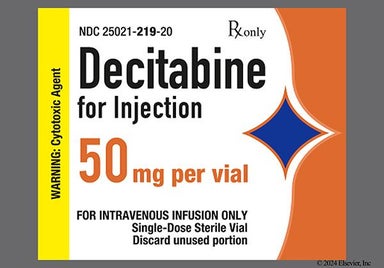
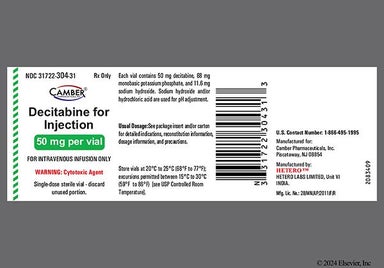
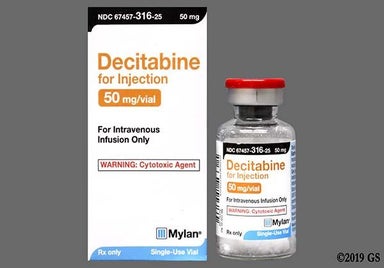
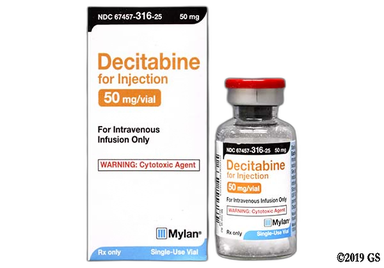
Decitabine images