Key takeaways:
At-home tests for vaginal yeast infections may be pH kits or swabs that you send to a laboratory.
A pH kit is less expensive and gives results right away. But send-in tests are more accurate and can check for a wider variety of infections.
People who are pregnant, have serious symptoms, or aren’t getting better should see a healthcare professional.
At some point in their lives, most women will have a vaginal yeast infection. Prescription or over-the-counter (OTC) treatments can relieve symptoms like discharge, itching, and irritation.
But not all vaginal infections are caused by yeast. Sometimes, the cause isn’t clear from symptoms alone. You may even have more than one infection at the same time. If you’ve thought about trying an at-home test for a yeast infection, here are some things to consider.
How do you use an at-home yeast infection test?
There are two main types of at-home tests for vaginal yeast infections:
pH tests
Send-in tests
Search and compare options
pH tests
A pH test checks the acid level inside your vagina. The results let you know if yeast is a possible cause of your infection — or if it’s more likely to be something else.
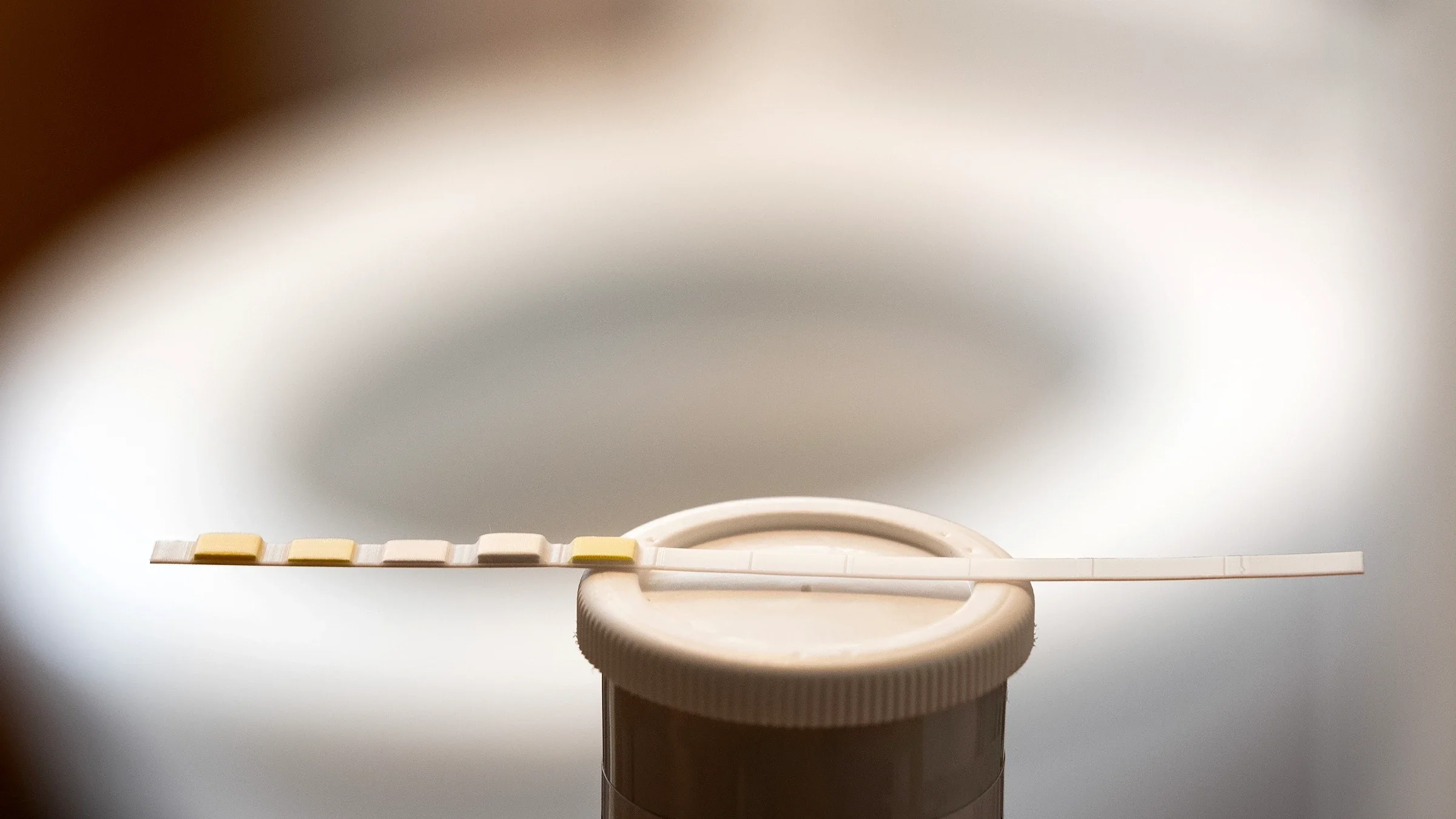
To use a pH test, you hold a swab or test strip inside your vagina for a few seconds. Then compare the color of the test strip to a chart. Each color corresponds to a different pH level.
A pH test gives you results right away. But it can’t tell you the exact type of infection. It only shows which causes are more or less likely.
Send-in tests
With a send-in test, you use a swab to collect a sample from inside your vagina. Then you send the swab to a lab. They send your results through secure messaging or on an app.
Some send-in tests look only for yeast. Others look for yeast and bacteria, including sexually transmitted infections (STIs).
With a send-in test, you may have to wait days for the results. But you’re more likely to get a clear answer about what’s causing your symptoms.
How do you interpret the results of a yeast infection test?
With a pH test, the color of the test swab will tell you the pH level inside your vagina. A level above 4.5 means the infection is less likely to be yeast. It may be something else, like bacterial vaginosis (BV) or trichomoniasis.
A pH test can’t tell you exactly what’s causing your symptoms, but it can point you in the right direction. After all, BV is the most common cause of vaginal infections. And sometimes those symptoms look like a yeast infection.
Send-in tests take longer — around 2 to 5 days — but they give more specific results. Some tests look only for yeast. Others also look for STIs, like gonorrhea, chlamydia, and trichomonas.
You’ll get a confidential report with your results, along with an explanation of what they mean. Some companies also offer a telehealth visit with a healthcare professional for treatment. There may be an additional charge for those services.
Are at-home yeast infection tests accurate?
Both pH tests and send-in tests are accurate in measuring what they’re designed to measure. But other factors can affect how accurate your diagnosis is — especially with pH tests.
If you use only a pH test, you’ll get the right diagnosis about two-thirds of the time. If you also understand what different symptoms mean, you’ll get your diagnosis about 80% of the time. But there are some pitfalls that can make this test less accurate:
Different types of vaginal infections can have similar symptoms
You may have more than one active infection at once
Other things can also affect the pH level in your vagina. And that can make a diagnosis confusing.
Besides infections, your vaginal pH level can change:
With changes in your menstrual cycle
During puberty and menopause
After douching
With use of lubricants
After unprotected sex
With hormone treatments, like estrogen cream
Swabs that you collect at home and then send out to a lab will test for bacteria and yeast. With a good sample, these tests are around 92% to 99% accurate. Doing the swab yourself can be just as accurate as having it done in a healthcare setting.
Still, getting an accurate result from a send-in test depends on factors like:
How much bacteria or yeast are present
The types of yeast or bacteria the test looks for
Getting a good sample
Using a kit that isn’t expired or damaged
Using a kit that uses certified lab techniques
Look for a testing kit that uses labs certified by CLIA (Clinical Laboratory Improvement Amendments) or CAP (College of American Pathologists). Vaginal test kit companies that meet this criteria include Evvy, Wisp, and MyLabBox.
How do I choose the test that’s right for me?
At-home testing isn’t right for everyone. If you have yeast infection symptoms like you’ve had before, you may not need to do a test. You could start with a treatment that has worked before and see if it helps again.
It also may be easier or safer to see a healthcare professional first. They can do an exam, run tests, and prescribe treatment right away.
But if you need a little extra information to figure out which way to go, an at-home test might help. Some factors to consider include:
Timeline: A pH test gives a result within minutes. A send-in lab test takes several days.
Accuracy: Send-in lab tests are more accurate and precise than pH tests.
Price: A pH test usually costs less than $20. A send-in lab test often costs more than $100.
Support: Lab tests may come with an option for consultation with a healthcare professional. This may cost extra or be included. Medical support is less common with pH tests.
When should you see a doctor for a yeast infection test instead?
At-home medical tests can help you make initial decisions about your health. But it’s always important to stay in contact with your healthcare team. This is especially true if you have questions or concerns about your symptoms.
There are times when you should skip the home test and contact your healthcare team. If you have symptoms of a vaginal infection, get medical care if you:
Have pelvic, belly, or back pain
Have a fever
Have abnormal vaginal bleeding
Are peeing more often or urgently
Are pregnant
Think you might have an STI
Don’t get better or your symptoms get worse
Frequently asked questions
Candida is a type of fungus known as yeast. In small numbers, it’s a normal part of the microbes that live in your vagina. But too much yeast causes the symptoms of an infection.
Vaginal yeast infections may have symptoms that include:
Thick, white discharge
Itching and irritation in your vagina and the skin around it
Burning during sex or when you urinate
Some of these symptoms can overlap with other kinds of infections, like bacterial vaginosis (BV) or STIs.
Yeast is the second most common cause of vaginal infections. BV is the most common. Around 75% of women will have at least 1 yeast infection in their lifetime. Almost 50% will have 2 or more.
Most yeast infections can be treated with OTC creams or suppositories, like miconazole (Monistat) or clotrimazole (Gyne-Lotrimin). There are also prescription treatments that are creams or pills (fluconazole or ibrexafungerp).
Candida is a type of fungus known as yeast. In small numbers, it’s a normal part of the microbes that live in your vagina. But too much yeast causes the symptoms of an infection.
Vaginal yeast infections may have symptoms that include:
Thick, white discharge
Itching and irritation in your vagina and the skin around it
Burning during sex or when you urinate
Some of these symptoms can overlap with other kinds of infections, like bacterial vaginosis (BV) or STIs.
Yeast is the second most common cause of vaginal infections. BV is the most common. Around 75% of women will have at least 1 yeast infection in their lifetime. Almost 50% will have 2 or more.
Most yeast infections can be treated with OTC creams or suppositories, like miconazole (Monistat) or clotrimazole (Gyne-Lotrimin). There are also prescription treatments that are creams or pills (fluconazole or ibrexafungerp).
The bottom line
At-home tests for vaginal yeast infections vary in accuracy, cost, and how long results take. They may be helpful if you’re unsure what’s causing your symptoms and you can’t see your healthcare team right away. They can also be helpful if you’ve had infections before but want more information. But if you have pain, fever, or worsening symptoms, skip the at-home test and check in with your healthcare team. They can diagnose and treat you more quickly and make sure there’s nothing more serious going on.

Why trust our experts?



References
Brown, H., et al. (2020). Improving the diagnosis of vulvovaginitis: Perspectives to align practice, guidelines, and awareness. Population Health Management.
College of American Pathologists. (n.d.). Laboratory accreditation program.
College of American Pathologists. (2025). The 5 best at-home yeast infection tests of 2025.
Informedhealth.org (2022). Overview: Vaginal yeast infection (trush).
Lin, Y. P., et al. (2021). Vaginal pH value for clinical diagnosis and treatment of common vaginitis. Diagnostics.
Lillis, R. A., et al. (2023). Clinical evaluation of a new molecular test for the detection of organisms causing vaginitis and vaginosis. Journal of Clinical Microbiology.
MedlinePlus. (n.d.). Bacterial vaginosis test.
Miller, J. M., et al. (2024). Guide to utilization of the microbiology laboratory for diagnosis of infectious diseases: 2024 update by the infectious diseases society of America (IDSA) and the American society for microbiology (ASM). Clinical Infectious Diseases.
Schwebke, J. R., et al. (2020). Clinical validation of the Aptima bacterial vaginosis and Aptima candida/trichomonas vaginitis assays: Results from a prospective multicenter clinical study. Journal of Clinical Microbiology.
Shen, C. J., et al. (2021). Clinical evaluation of a self-testing kit for vaginal infection diagnosis. Journal of Healthcare Engineering.
Srinivasan, S., et al. (2022). Impact of topical interventions on the vaginal microbiota and metabolome in postmenopausal women. JAMA Network.
U.S. Food and Drug Administration. (2018). Vaginal pH.
U.S. Food and Drug Administration. (2023). Clinical laboratory improvement amendments (CLIA).